Overview
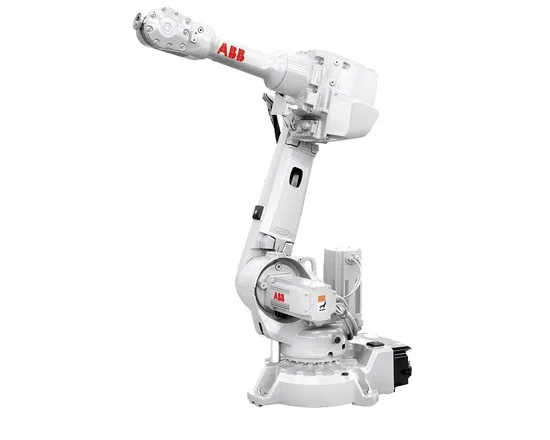
Industrial robot arms are high-speed, high-payload, high-precision articulated machines designed for caged, high-volume production environments. Unlike cobots, they are built for raw throughput — not human collaboration. They live behind fences, light curtains, or laser scanners, executing the same motion millions of times with sub-millimeter accuracy.
They are the workhorses of automotive plants, electronics fabs, metal stamping lines, foundries, and any operation where cycle time and uptime translate directly to revenue.
Market Snapshot:
- Global industrial robot market valued at ~$22B in 2024, projected to reach ~$45B by 2030
- Top-tier brands ("Big Four"): FANUC, ABB, KUKA, Yaskawa Motoman
- Mid-tier: Kawasaki, Mitsubishi, Stäubli, Comau, Nachi, Hyundai Robotics, Estun, Efort, Siasun
- Purchase price range: $25,000–$400,000/unit (arm + controller); fully integrated cells $80,000–$2M+
- Annual installations: 540,000+ units globally (2023, IFR data)
Buyer Personas
| Persona |
Primary Pain Point |
What They're Buying |
| Automotive Tier 1/2 Plant Engineer |
Cycle time, takt time pressure, downtime cost |
Speed, repeatability, proven uptime, brand standardization |
| Electronics/Semicon Process Engineer |
Sub-micron precision, cleanroom compatibility |
Accuracy, vibration damping, ISO Class 5+ compliance |
| Foundry / Heavy Industry Manager |
Hostile environments — heat, dust, sparks |
High IP rating, foundry-spec arm protection, payload capacity |
| Systems Integrator |
Margin protection, fast commissioning, ecosystem |
Open controllers, simulation tools, established service network |
| CFO / VP Operations |
Capital investment justification, lifecycle cost |
TCO over 15-year service life, residual value, financing options |
| Safety Manager / EHS |
Worker injury prevention, regulatory compliance |
Cat.4 PLe safety, lockout/tagout integration, redundant E-stops |
Spec Reference
Arm Mechanics — "Raw Capability"
| Spec |
Plain English |
Industry Range |
Sweet Spot |
Why It Matters to Buyer |
payload_kg |
Maximum weight at the wrist flange |
3–2300 kg |
Application-driven |
Payload maps directly to product class. Spot welding gun ≈ 30 kg; car body handling ≈ 200 kg; engine block ≈ 500+ kg. Always size up by 20% for end-effector + dynamic loads. |
reach_mm |
Maximum horizontal arm extension from base |
500–4700 mm |
1700–3100 mm (most common) |
Determines work envelope size. Long-reach arms cost 2–3x more and have lower payload. Don't oversize — every extra meter of reach is wasted money for fixed-station tasks. |
degrees_of_freedom |
Number of independent joints |
4–7 axes |
6 axes |
4-axis (SCARA) for flat pick-and-place; 6-axis articulated for general industrial use; 7-axis for redundant motion in tight spaces. |
repeatability_mm |
How precisely it returns to a programmed point |
±0.01–±0.5 mm |
±0.02–±0.05 mm |
At ±0.05 mm it can spot-weld a car body. At ±0.5 mm it cannot insert a 3 mm pin into a 3.1 mm hole. Match this number to your tightest tolerance task. |
path_accuracy_mm |
How closely it follows a curved path during continuous motion |
±0.1–±2.0 mm |
±0.1–±0.3 mm |
Critical for arc welding, dispensing, laser cutting. Different from repeatability — a robot can return to points perfectly but still curve poorly between them. |
max_tcp_speed_ms |
Maximum speed at the tool tip |
2.0–10.0 m/s |
4.0–8.0 m/s |
Direct lever on cycle time. A 4 m/s vs 8 m/s arm doubles throughput on long moves. But faster arms transmit more vibration to the workpiece. |
max_joint_speed_deg_s |
Fastest single-joint rotation |
200–600 °/s |
300–450 °/s |
High joint speeds enable aggressive trajectories but increase wear on harmonic drives. Most cycle-time gains come from joint 1–3 speed, not wrist speed. |
inertia_capacity_kgm2 |
How much rotational mass it can swing without faulting |
0.5–500 kg·m² |
Application-specific |
Often overlooked. A long end-effector (e.g. 1m fork) creates massive moment of inertia even with low weight. Underspeccing causes brownouts and overload faults. |
robot_weight_kg |
Total mass of the arm (excluding controller) |
25–8500 kg |
250–700 kg (mid-payload) |
Drives floor loading requirements. A 500 kg arm needs 20–30 mm steel plate or reinforced concrete. Heavy arms also need crane access for installation. |
mounting_options |
Allowed orientations |
Floor, ceiling, wall, shelf, inverted |
Floor primary; ceiling/inverted for space optimization |
Ceiling-mounted arms double the work envelope at the cost of installation complexity. Most arms support inverted but check derated payload curves. |
ip_rating_arm |
Dust/water resistance of the arm body |
IP54–IP69K |
IP67 minimum for production |
Foundry, food, and washdown environments need IP67+. Standard IP54 arms will fail within months in coolant-spray machining or food processing. |
ip_rating_wrist |
Dust/water resistance specifically at the wrist |
IP65–IP69K |
IP67+ for harsh duty |
Wrist is the most exposed and most prone to ingress. Always check separately — many arms list a high body rating but lower wrist rating. |
temperature_range_c |
Operating temperature range |
0°–45°C standard; -10°–55°C extended |
Application-driven |
Foundries require 55°C ratings; cold storage requires -10°C. Standard arms fault out and lose accuracy outside 0°–45°C. |
Performance & Cycle Time — "How Fast and How Reliably"
| Spec |
Plain English |
Industry Range |
Sweet Spot |
Why It Matters to Buyer |
cycle_time_25_305_25 |
Standard test: pick from 25mm, move 305mm, place at 25mm |
0.27–0.65 sec |
0.30–0.40 sec |
The industry-standard cycle time benchmark. A 0.3s vs 0.5s arm = 1,500 vs 900 cycles/hour. Multiplied across 5,000 working hours/year, this is millions in throughput. |
mtbf_hours |
Mean Time Between Failures |
50,000–100,000 hours |
80,000+ hours |
At 6,000 hours/year (multi-shift), 80,000 MTBF = 13 years before expected failure. Top-tier arms (FANUC, Yaskawa) routinely achieve this. |
mttr_hours |
Mean Time To Repair when something does break |
2–48 hours |
< 8 hours |
Combined with MTBF, this is your true uptime. A robot with 80,000 MTBF but 48h MTTR is worse than one with 50,000 MTBF and 4h MTTR for production. |
duty_cycle |
Continuous operation rating |
8h/day to 24/7 unattended |
24/7 unattended |
Critical for lights-out manufacturing. Some arms are derated below 24/7 — check the duty cycle spec, not just the marketing. |
joint_position_resolution_deg |
Smallest joint movement (encoder resolution) |
0.001°–0.01° |
≤ 0.005° |
Fine resolution = smooth curves and reduced motor torque ripple. Coarse resolution produces visible "stairsteps" on continuous paths. |
vibration_damping |
Active vibration suppression at high speeds |
None / Passive / Active model-based |
Active model-based |
High-speed pick-and-place arms develop end-of-arm wobble. Active damping uses motor compensation to settle within 50ms instead of 200ms — directly improves cycle time. |
Safety — "Caged but Not Careless"
| Spec |
Plain English |
Industry Range |
Sweet Spot |
Why It Matters to Buyer |
safety_standards |
Certifications passed |
ISO 10218-1, EN ISO 13849-1, IEC 62061 |
ISO 10218-1 + Cat.3 PLd minimum |
Industrial arms don't need ISO/TS 15066 (that's for cobots), but they DO need ISO 10218-1 for cage-rated operation. Without it, your insurance won't cover the cell. |
safety_category |
Performance level of safety circuits |
Cat.3 PLd to Cat.4 PLe |
Cat.3 PLd minimum, Cat.4 PLe for Class A guarding |
Cat.4 PLe means dual-channel redundancy with cross-monitoring — required where injury could be permanent. Most modern industrial controllers ship Cat.3 PLd standard. |
safety_io_pairs |
Dedicated safety inputs/outputs |
4–32 |
≥ 8 safety I/O pairs |
Industrial cells have many safety devices: door switches, light curtains, area scanners, pressure mats, E-stops. Insufficient safety I/O forces you to buy a separate safety PLC. |
dual_check_safety |
Independent secondary safety processor |
Optional / Standard |
Standard (DCS or equivalent) |
DCS (Dual Check Safety on FANUC, SafeMove on ABB, etc.) provides software-defined safe zones, safe speed, and safe orientation without external sensors. Replaces $20k+ of laser scanners in many cells. |
safe_zone_count |
Software-defined virtual fences |
2–32 zones |
≥ 8 zones |
Allows multi-station cells where the arm is "fenced" from station A while operator works there, then "fenced" from station B when it moves. Critical for human-adjacent industrial layouts. |
e_stop_response_ms |
How fast the arm halts after E-stop press |
50–500 ms |
< 100 ms |
Determines safety distance calculations per ISO 13855. Faster response = closer fence positioning = more compact cell footprint. |
Controller & Programming — "How You Tell It What to Do"
| Spec |
Plain English |
Industry Range |
Sweet Spot |
Why It Matters to Buyer |
controller_model |
Specific controller paired with the arm |
Vendor-specific |
Latest-gen controller (e.g. FANUC R-30iB Plus, ABB OmniCore, KUKA KR C5) |
Older controllers (5+ years) have slower processors, less memory, and may be approaching obsolescence. Check controller refresh cycle before committing. |
programming_languages |
Vendor scripting language used |
TP/KAREL, RAPID, KRL, INFORM, AS, etc. |
Multi-language support preferred |
Each Big Four uses a proprietary language. Programmers trained on KUKA KRL cannot directly write FANUC TP. This drives multi-vendor labor cost. |
teach_pendant_type |
Handheld programming device |
Wired pendant, wireless tablet, smart pad |
Tablet-style with HD touchscreen |
Modern pendants (FANUC iPendant Touch, ABB FlexPendant Plus) reduce teach time by 30–50% vs older button-driven units. |
offline_programming |
Simulate and program in software before deployment |
RobotStudio, RoboGuide, KUKA.Sim, MotoSim |
Vendor-included + RoboDK compatible |
Offline programming = zero production downtime for new programs. Mandatory for high-mix lines. RoboDK and Visual Components allow cross-vendor simulation. |
digital_twin_support |
Real-time virtual mirror of the physical robot |
None / Static simulation / Real-time twin |
Real-time twin (e.g. NVIDIA Isaac Sim, Siemens Process Simulate) |
Digital twin enables predictive maintenance and program testing on virtual robot while physical runs. Becoming standard for Industry 4.0 deployments. |
setup_time_hours |
First-program-to-running time for typical task |
8–80 hours |
< 24 hours |
Industrial integrations are slower than cobots — risk assessment, fixturing, safety sign-off all add weeks. But the controller itself should not be the bottleneck. |
Connectivity & Software — "Does It Fit the Factory?"
| Spec |
Plain English |
Industry Range |
Sweet Spot |
Why It Matters to Buyer |
communication_protocols |
Industrial fieldbus support |
DeviceNet, Profibus, Profinet, EtherNet/IP, EtherCAT, CC-Link, Modbus TCP, OPC-UA |
Profinet + EtherNet/IP + OPC-UA |
The "Big Three" protocols cover 90% of factories. Older arms (10+ years) only support DeviceNet or Profibus and need expensive gateway upgrades. |
ros_industrial_support |
Compatible with ROS-Industrial open-source stack |
None / Community / Vendor-supported |
Vendor-supported ROS2-Industrial |
ROS-Industrial is essential for advanced AI vision, machine learning, and academic R&D integration. Vendor support (vs community) means it actually works in production. |
mes_erp_integration |
Native interfaces to Manufacturing Execution and ERP systems |
None / Via gateway / Native (SAP, Siemens MES) |
Native OPC-UA + MQTT |
Modern factories require traceability — every part the robot handles must be logged to the MES with timestamps. Without native integration, you build custom middleware. |
iot_cloud_connectivity |
Cloud platform for remote monitoring |
None / Vendor-only / Open MQTT/AWS/Azure |
Open MQTT + vendor cloud |
Vendor cloud (FANUC ZDT, ABB Ability) provides predictive maintenance. Open MQTT ensures you aren't locked in if you switch vendors. |
cybersecurity_certifications |
Industrial cyber resilience standards |
None / IEC 62443 SL1 / SL2 / SL3 |
IEC 62443 SL2 minimum |
OT cybersecurity is becoming mandatory. NIS2 (EU) and CIRCIA (US) regulations require documented cyber posture. Ungrade cobots that have no cyber rating are increasingly uninsurable. |
predictive_maintenance |
Software that predicts component failure |
None / Threshold-based / ML-based |
ML-based with cloud telemetry |
Reduces unplanned downtime by 30–50%. The Big Four all offer this on their flagship controllers — check whether it's standard or paid subscription. |
End-Effector & Auxiliary — "What Goes on the Wrist"
| Spec |
Plain English |
Industry Range |
Sweet Spot |
Why It Matters to Buyer |
tool_flange_standard |
Mechanical connector at wrist |
ISO 9409-1, vendor-specific |
ISO 9409-1 compliant |
Non-standard flanges lock you to vendor-approved end-effectors. ISO 9409-1 lets you mount tools from Schunk, OnRobot, SMC, Yamaha, and 100+ others. |
tool_changer_iso |
Auto tool changer interface |
None / Proprietary / ATI / Stäubli |
ATI Industrial Automation standard |
Auto tool changers (ATC) let one arm do welding, dispensing, and assembly in sequence. ATI is the de facto standard. Proprietary changers cost 2–3x and lock you in. |
internal_cable_routing |
Wires/hoses routed inside the arm |
Through-arm / Through-wrist / External only |
Through-arm + through-wrist |
External cabling snags on workpieces, wears out fast, and limits arm movement. Internal routing is a one-time engineering cost that saves years of cable replacement. |
pneumatic_lines_count |
Air supply lines through the arm |
0–4 lines |
2 lines (typical) |
Each line passes through harmonic drives via slip rings — adding lines is expensive. Verify the count covers gripper open/close + tool blow-off + reserved line. |
electrical_lines_count |
Signal/power lines through the arm |
4–24 wires |
16+ for vision-equipped tools |
Vision systems and smart grippers need many signal lines. Insufficient internal routing forces external cable bundles, which break frequently. |
TCO & Commercial — "Real Cost Over 15 Years"
| Spec |
Plain English |
Industry Range |
Sweet Spot |
Why It Matters to Buyer |
price_usd |
Arm + controller list price |
$25,000–$400,000 |
Application-specific |
Sticker price is rarely the real price. Volume discounts of 15–35% are standard for orders ≥ 5 units. Always negotiate the controller, teach pendant, and 1st-year service together. |
integration_cost_multiplier |
True system cost as a multiple of arm price |
1.5x–4.0x |
2.0x–2.5x |
A $40k arm typically becomes a $100k cell after fixturing, end-effector, vision, safety, programming, and commissioning. Budget accordingly from day one. |
warranty_years |
Standard parts + labor coverage |
1–2 years |
2 years extended via service contract |
Industrial arms run 80,000+ hours but expect periodic gearbox/cable replacements at 20–30k hour intervals. A service contract ($3k–$8k/year) covers these. |
service_network_density |
Certified technicians per region |
Sparse to dense |
≥ 1 certified service center per major industrial city in your region |
A robot down 2 weeks awaiting an overseas technician costs more in lost production than the robot itself. The Big Four have global density; emerging brands often don't. |
spare_parts_lead_time_days |
Days to get critical replacement parts |
1–60 days |
< 5 days for in-region critical parts |
Servo motor or gearbox failure with 30-day lead time = 30 days of lost revenue. Verify the local distributor stocks critical spares — vendor websites often misrepresent this. |
expected_service_life_years |
Years of useful operation before major rebuild |
10–25 years |
15+ years |
Industrial arms are amortized over decades. Check residual value: top-tier brands hold 30–40% value at 10 years; tier-3 brands often 5–10%. |
typical_roi_months |
Payback period for typical application |
18–60 months |
24–36 months |
Industrial cells have higher upfront cost than cobots but longer life and higher throughput. ROI typically comes from labor displacement (3-shift coverage) plus quality gains (scrap reduction). |
Hidden Concerns
3.1 The Reach-Payload-Speed Triangle
- Marketing specs show maximum payload, maximum reach, and maximum speed independently
- In reality, you can pick two of three — never all three at maximum simultaneously
- A 10kg-rated arm at full reach often cannot move at full speed without joint torque faults
- Ask vendor: "Can you provide the full payload-reach-speed envelope diagram for my specific motion profile?"
3.2 The Controller Obsolescence Cliff
- Industrial controllers have a support lifecycle of 8–15 years after which spare parts become unobtainable
- Buying a 5-year-old controller model means only 3–10 years of guaranteed support
- A new arm with an old controller is a hidden time bomb
- Ask vendor: "What is the announced support lifecycle for the controller model you're quoting, and what is the upgrade path when it goes end-of-life?"
3.3 The Cabling Mortality Problem
- External cables on industrial arms have a typical service life of 6–18 months at high-cycle stations
- Replacement is a 4–8 hour job that often requires factory technicians
- This is rarely included in TCO calculations and silently destroys the ROI math
- Ask vendor: "What is the expected cable replacement interval for my application duty cycle, and is internal cabling available as a factory option?"
3.4 Programming Lock-In
- Every Big Four vendor uses a proprietary language: FANUC TP/KAREL, ABB RAPID, KUKA KRL, Yaskawa INFORM
- A KUKA-trained programmer requires 3–6 months retraining for FANUC
- Multi-vendor factories pay either premium for cross-trained staff or duplicate engineering teams
- Ask vendor: "Do you offer a cross-platform abstraction layer or open API that lets us standardize programming across multiple robot brands?"
3.5 Vibration-Induced Quality Drift
- High-speed arms develop harmonic vibrations that don't show up in repeatability specs
- A robot with ±0.05mm static repeatability can produce ±0.3mm scatter at full-speed operation
- This is invisible until you measure it on actual produced parts
- Ask vendor: "Can you provide dynamic accuracy data at 80% of rated speed, not just static repeatability?"
3.6 The Digital Twin Reality Gap
- Vendor-provided simulators (RoboGuide, RobotStudio, KUKA.Sim) are typically 5–15% optimistic on cycle time
- Programs that run in 8.0s in simulation often run in 8.5–9.2s on real hardware
- Production line designs based on optimistic simulation underdeliver on quoted throughput
- Ask vendor: "What is the documented accuracy of your simulator vs real-world cycle time on equivalent applications?"
3.7 Cybersecurity is Now a Compliance Problem
- Industrial robots are increasingly classified as critical infrastructure under NIS2 (EU) and CIRCIA (US)
- An unpatched 10-year-old controller may be uninsurable as of 2025–2026
- Cybersecurity retrofits to older arms cost $5,000–$20,000 per unit
- Ask vendor: "What is your IEC 62443 security level rating, and what is your patch cadence for critical CVEs?"
3.8 Floor Loading and Foundation
- A 500kg arm at full reach with 200kg payload generates dynamic loads of 10–20 kN at the base
- Standard concrete factory floors (typically 100–150 mm thick) often cannot handle this
- Reinforcing pads or pedestal foundations cost $5k–$50k per cell
- Ask vendor: "What are the static and dynamic floor loading specifications, and do you have a standard pedestal design?"
3.9 Calibration Drift Over Lifetime
- Industrial arms drift in absolute accuracy by 0.1–0.5mm over 5–10 years even with good repeatability
- Recalibration ("mastering") requires factory tools and 4–8 hours per arm
- Arms used in vision-guided applications need recalibration every 12–24 months
- Ask vendor: "What is the recommended recalibration interval for vision-guided applications, and what is the cost?"
3.10 End-of-Life and Resale Value
- Top-tier brands (FANUC, ABB, KUKA, Yaskawa) retain 30–40% residual value at 10 years
- Tier-3 brands often have negligible resale value — effectively a write-off after 7–8 years
- This dramatically affects total cost over a 15-year horizon
- Ask vendor: "What is your trade-in or buyback program, and what is the typical 5-year and 10-year residual value of this model on the used market?"
How to Evaluate a Robot
A robot must meet all criteria below:
Performance Minimums
Safety Minimums
Connectivity Minimums
Commercial Minimums
Top Products Compared
| Feature |
FANUC M-20iD/25 |
ABB IRB 4600 |
KUKA KR 60 R2100 |
Yaskawa GP25 |
Kawasaki RS025N |
Stäubli TX2-90L |
| Payload |
25 kg |
20–60 kg |
60 kg |
25 kg |
25 kg |
14 kg |
| Reach |
1831 mm |
2050–2550 mm |
2101 mm |
1730 mm |
2100 mm |
1200 mm |
| Repeatability |
±0.02 mm |
±0.05 mm |
±0.06 mm |
±0.03 mm |
±0.05 mm |
±0.02 mm |
| DOF |
6 |
6 |
6 |
6 |
6 |
6 |
| Max TCP Speed |
~6.0 m/s |
~5.5 m/s |
~5.0 m/s |
~6.5 m/s |
~5.0 m/s |
~10.0 m/s |
| MTBF (vendor claim) |
~100,000 h |
~80,000 h |
~80,000 h |
~80,000 h |
~70,000 h |
~80,000 h |
| IP Rating (Wrist) |
IP67 |
IP67 |
IP65 |
IP67 |
IP67 |
IP65 |
| Controller |
R-30iB Plus |
OmniCore C30/C90 |
KR C5 |
YRC1000 |
F-series |
CS9 |
| Programming Language |
TP / KAREL |
RAPID |
KRL |
INFORM III |
AS |
VAL3 |
| Built-in Vision Option |
iRVision (native) |
Integrated Vision (native) |
KUKA.VisionTech |
MotoSight |
KCONG / Cubic-S |
uniVAL |
| Predictive Maintenance |
ZDT (cloud) |
Ability Connected Services |
KUKA Connect |
Cockpit |
TrendMaster |
Stäubli Connect |
| ROS-Industrial |
Yes (vendor) |
Yes (vendor) |
Yes (vendor) |
Yes (vendor) |
Community |
Community |
| Est. Price (arm + controller) |
~$45k |
~$50k |
~$55k |
~$42k |
~$40k |
~$60k |
| Key Differentiator |
Highest MTBF, broad model range |
OmniCore controller versatility |
Open architecture, Industry 4.0 |
Best speed-to-price ratio |
Long-reach specialization |
Cleanroom + ultra-high speed |
Regulations & Compliance
| Regulation |
Scope |
What It Means for Deployment |
| ISO 10218-1 |
Robot manufacturer requirements |
Mandatory for all industrial robot arms. Defines safety functions, stop categories, and design requirements. |
| ISO 10218-2 |
Robot system integrator requirements |
Applies to the cell, not the arm. Integrator must conduct risk assessment, install guarding, validate stop performance. |
| ANSI/RIA R15.06 |
US harmonization of ISO 10218 |
Required for OSHA compliance in US workplaces. Effectively identical to ISO 10218 with US-specific addenda. |
| EN ISO 13849-1 |
Safety control system performance levels |
Defines PLa through PLe ratings. Cat.3 PLd minimum for industrial; Cat.4 PLe for high-risk operations. |
| IEC 62061 |
Functional safety integrity |
SIL 1–3. Often used as alternative to ISO 13849. SIL 2 = Cat.3 PLd equivalent. |
| EU Machinery Directive 2006/42/EC → Regulation 2023/1230 |
CE marking for EU market |
CE marking mandatory. Transition to new Machinery Regulation 2023/1230 by Jan 2027. Adds cybersecurity and AI requirements. |
| OSHA 29 CFR 1910.212 |
US machine guarding |
Mandates fixed guarding, interlocked gates, and risk assessment. Defers to ANSI/RIA R15.06 for robotics specifics. |
| IEC 62443 |
Industrial cybersecurity |
SL1–SL4. SL2 minimum becoming standard for new industrial deployments. Required for NIS2 compliance in EU. |
| NFPA 79 |
Industrial machinery electrical standard |
US electrical safety code for machinery. Required for UL/ETL listing of robotic cells. |
| ISO 9409-1 |
Mechanical tool flange interface |
Standardizes wrist mounting holes. Compliance enables third-party end-effectors. |
| ISO 9283 |
Performance specification standard |
Defines how repeatability, accuracy, and cycle time are measured. Vendor specs should reference this for credibility. |
| NIS2 Directive (EU) |
Critical infrastructure cybersecurity |
As of late 2024, applies to manufacturing operations classified as essential. Requires documented OT cyber posture. |
| CIRCIA (US) |
Critical infrastructure incident reporting |
US equivalent to NIS2. Mandates 72-hour incident reporting for covered entities. |
| GDPR / CCPA |
Vision system data privacy |
Applies if vision systems capture identifiable worker imagery. Less common in industrial cells but increasingly relevant. |
References
- ISO 10218-1:2011 — Robots and robotic devices: Safety requirements for industrial robots
- ISO 9283:1998 — Manipulating industrial robots: Performance criteria and related test methods
- ISO 9409-1:2004 — Manipulating industrial robots: Mechanical interfaces
- IFR World Robotics Industrial Robots Report 2024
- IEC 62443-3-3:2013 — Industrial communication networks: System security requirements
- EU Machinery Regulation (EU) 2023/1230