AGV TCO: hardware, infrastructure, and maintenance
The vehicle purchase price is often less than half the total project cost. Here is where the rest goes.
A distribution center manager at a regional beverage bottler approved a 6-unit AGV project on the basis of a vendor quote that covered the vehicles plus a standard integration package. Fourteen months later, the real total cost had come in at 2.1x the original quote. The differences: floor-levelling work that the site survey had noted but not priced, a WMS integration that required a middleware layer the vendor's standard package didn't include, battery replacement for two units at month 11 when the original batteries failed earlier than rated, and a 24-month extended support contract that hadn't been in the original scope but became necessary when the vendor's first-year included support expired.
This is not unusual. AGV total cost of ownership is consistently underestimated because the vehicle purchase price is the most visible line item and the most straightforward to negotiate — while the infrastructure, integration, and maintenance costs are distributed across multiple budget owners, vendors, and time periods in ways that make them easy to miss until the invoices arrive.
A structured TCO model built before procurement is the most reliable way to avoid this. Here is the breakdown.
TCO structure
A complete AGV TCO model covers five cost categories:
- Vehicle acquisition
- Infrastructure
- Systems integration (WCS/WMS/ERP)
- Maintenance and consumables
- Financing, insurance, and decommissioning
Most vendor quotes address category 1 and a portion of category 3. Categories 2, 4, and 5 are frequently underspecified.
Category 1: vehicle acquisition
AGV vehicle pricing varies widely by type, navigation technology, and payload class:
| Vehicle type | Typical unit price range |
|---|---|
| Magnetic tape-guided compact carrier (< 500 kg) | $35,000–$70,000 |
| Laser-guided unit load carrier (500–2,000 kg) | $80,000–$150,000 |
| Laser-guided fork AGV (2,000–5,000 kg) | $90,000–$180,000 |
| Heavy-duty tow tractor / tugger AGV (> 5,000 kg) | $120,000–$250,000 |
| Cleanroom-rated AGV (semiconductor, pharma) | 1.3–1.8x standard pricing |
Fleet pricing is negotiable. A 10-unit order from a Tier 1 vendor typically achieves 12–18% discount versus catalogue pricing. A 3-unit pilot order typically achieves 0–5%.
Spare vehicle budget: For any fleet expected to run production shifts continuously, budget one additional unit per 6–8 vehicles as a hot spare. Running without spares means any unit failure immediately affects throughput; the vendor's lead time for a replacement vehicle typically runs 8–16 weeks.
Category 2: infrastructure
This is the largest source of underestimation. Infrastructure cost depends entirely on navigation technology and site condition.
Wire guidance
Wire installation requires cutting a channel into the concrete floor (typically 25mm wide × 50mm deep), laying the conductor, and repouring. Cost runs $50–$150 per linear meter of guide path, including materials and labor. A typical 500-meter guide path installation costs $25,000–$75,000 in civil work alone — before any AGV vehicle or control system cost.
Wire guidance is effectively permanent. Route changes require repouring concrete. Plan routes for a 10-year horizon, not a 3-year one.
Magnetic tape
Surface-mount magnetic tape installation costs $5–$20 per linear meter for materials and labor. A 500-meter installation costs $2,500–$10,000. Floor surface must be clean, level, and free of significant cracks — if levelling compound is required (common in older facilities), add $3–$8 per square meter of treated area.
Ongoing maintenance cost: tape degrades under repeated heavy traffic. Budget 15–25% of the original tape cost annually for inspection, repair, and periodic full-section replacement. In high-traffic cross-over zones, replacement cycles may run every 12 months.
Laser reflectors (LGV)
Reflective target installation runs $800–$2,500 per reflector, including mounting hardware, surveying, and calibration. A typical industrial facility requires 40–120 reflectors for a multi-aisle deployment. Total reflector infrastructure cost: $40,000–$300,000, heavily dependent on facility size and geometry.
Reflectors have no consumable cost but can be damaged by forklift strikes. Budget $500–$1,500 per reflector per strike event for replacement and recalibration.
Floor condition
Regardless of navigation technology, AGVs require floors that are:
- Level to ±5mm per 3 meters (laser-guided), ±10mm per 3 meters (magnetic tape)
- Free of significant cracks, lips, or level changes at doorway thresholds
- With adequate load-bearing capacity at 1.5x the AGV's maximum loaded weight
Floor surveys at typical industrial facilities reveal remediation requirements in 40–70% of cases. Levelling compound and crack repair typically run $3–$12 per square meter. In severe cases, full slab replacement may be required.
Common miss: vendors do a site survey, note floor condition issues, and provide a written exception — but do not include remediation cost in their quote because it is technically outside their scope. The plant engineer receives the quote, negotiates on vehicle price, and discovers 6 months later that the floor work is a $60,000 separate spend. Always ask the vendor explicitly: "What floor condition is required? What is your assessment of our current floor, and what remediation cost should we budget?"
Charging infrastructure
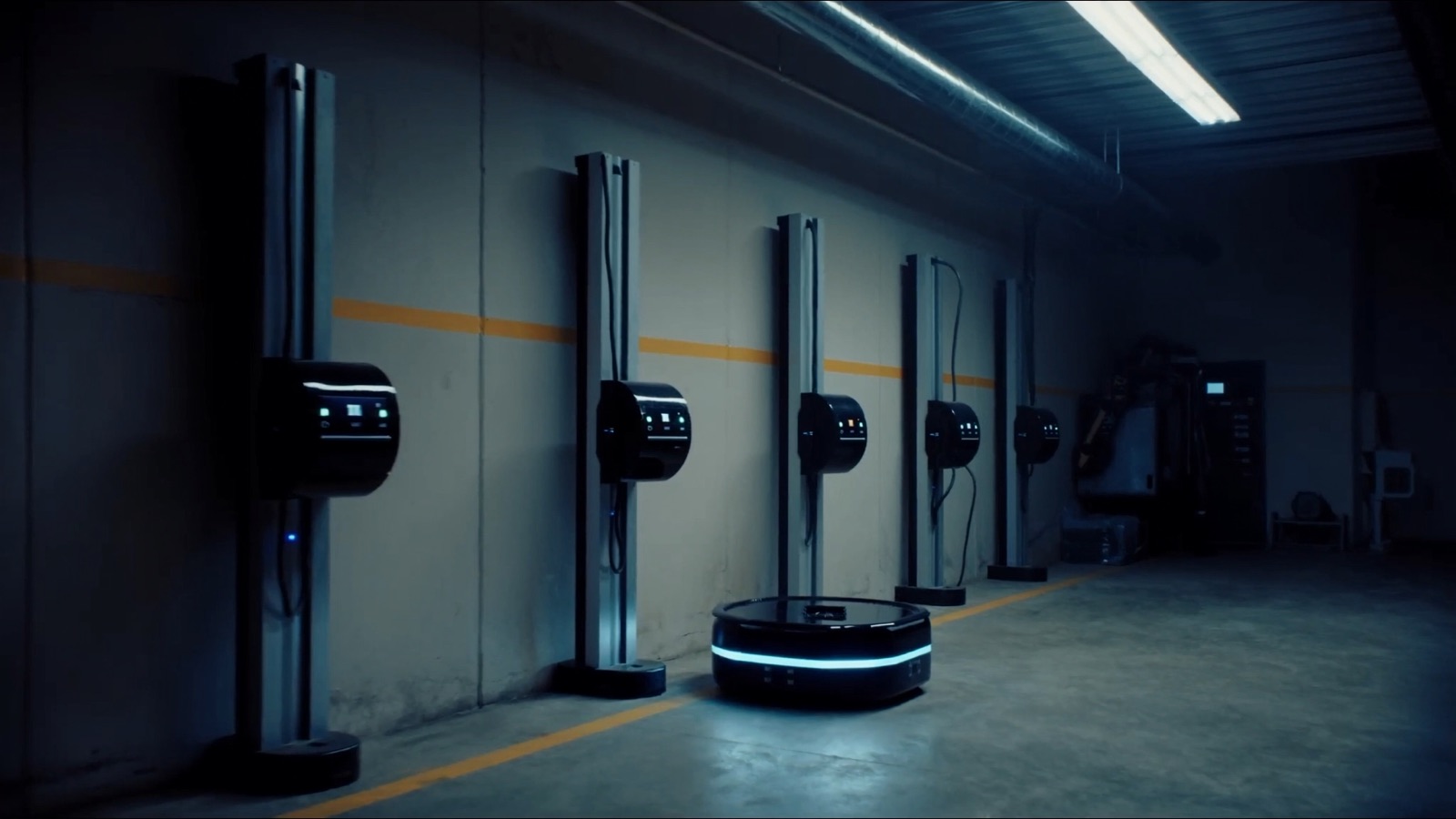
AGV charging stations require:
- Dedicated electrical circuit: typically 32A–63A three-phase per charger
- Physical floor space: 2–4 square meters per charging station (varies by form factor)
- Cable management for opportunity charging installed along guide paths
Charging infrastructure cost: $5,000–$15,000 per charging station (electrical installation + hardware), not including vehicle charging onboard hardware which is typically bundled with the vehicle.
Fleet sizing for continuous operation requires that chargers match the duty cycle. A fleet running 20-hour days will need charging stations for 20–30% of the fleet simultaneously; undersizing chargers is a common cause of throughput shortfalls that appear in year 2 as battery health degrades and charging time increases.
Category 3: systems integration
AGVs do not operate in isolation. They receive tasks from, and report status to, your existing systems — typically a WMS (Warehouse Management System), WCS (Warehouse Control System), or both, as well as MES and ERP in manufacturing environments.
Integration scope
The integration typically covers:
- Task dispatching: WMS sends pick/deposit missions to the AGV fleet management system
- Status reporting: AGV FMS sends cycle completion, exception alerts, and vehicle location back to WMS
- Traffic arbitration: AGV FMS coordinates vehicle routing internally to prevent deadlocks and manage priority
- E-stop and safety system integration: AGV safety circuit must connect to facility-level safety PLCs and emergency stop systems
Integration cost
Vendor estimates for "standard integration" packages typically cover API connectivity between their FMS and a WMS on their pre-certified integration list. If your WMS is on the list, standard integration runs $30,000–$80,000.
If your WMS requires custom middleware, add $50,000–$200,000 and 3–6 additional months of project timeline. This is the scenario that generates the most scope surprises: vendors quote standard integration, the site discovery reveals a custom WMS version or a vendor combination they haven't certified, and the project team is left either absorbing the middleware cost or finding a systems integrator to bridge the gap.
Traffic management system
Most vendors bundle a traffic management / fleet management system (FMS) with their AGVs. This software handles vehicle scheduling, intersection arbitration, task queuing, and real-time monitoring. Licensing structures vary:
- Included with vehicle purchase (most common for small fleets from single vendors)
- Annual SaaS licensing ($20,000–$80,000/year for larger fleet management platforms)
- One-time license + annual maintenance (older vendor models)
Where this creates risk: proprietary FMS software creates direct dependency on the vendor. If you expand the fleet with a different vendor's vehicles, the FMS may not support them. VDA 5050 compliance (increasingly specified for European automotive projects) allows a neutral FMS to manage multi-vendor fleets — ask specifically whether the FMS is VDA 5050-compliant if multi-vendor fleet expansion is on the 5-year plan.
Category 4: maintenance and consumables
Year 1 maintenance costs are often covered under the vendor's warranty and included support contract. Years 2–5 are where the cost structure becomes visible.
Battery systems
Most AGVs use one of three battery technologies:
| Technology | Cycle life | Replacement cost (per vehicle) | Typical calendar life |
|---|---|---|---|
| Lead-acid | 1,000–1,500 cycles | $3,000–$8,000 | 3–5 years |
| Li-ion (LFP) | 2,000–4,000 cycles | $8,000–$20,000 | 5–8 years |
| Lithium titanate (LTO) | 10,000+ cycles | $15,000–$35,000 | 10–15 years |
For a fleet running two-shift (16-hour) operations with opportunity charging, lead-acid batteries typically require replacement at years 3–4. For a 10-unit fleet, this is $30,000–$80,000 in a single budget cycle — an amount that should be provisioned from year 1 but frequently is not.
Li-ion (LFP specifically) has become the dominant specification for new AGV purchases since 2023. The higher upfront cost is offset by the extended replacement cycle and the reduced opportunity charging infrastructure required.
Mechanical maintenance
Budget 3–6% of vehicle purchase price annually for parts and labor in a planned maintenance program. This covers:
- Wheel replacement (most common wear item; 12–36 months depending on floor quality and load)
- Fork tine inspection and replacement (for fork AGVs)
- Sensor calibration: LiDAR and camera systems drift; annual recalibration is standard practice
- Drive train service: gearbox oil, bearing inspection
An uncontracted maintenance model (pay-as-you-fail) typically costs 40–60% more than a planned maintenance contract over a 5-year period because fault-response callout charges and downtime cost exceed the cost of scheduled maintenance.
Vendor support contracts
Typical structures:
- 8x5 response, 4-hour on-site SLA: $8,000–$15,000/unit/year for a Tier 1 vendor
- 24x7 remote support, 8-hour on-site SLA: $12,000–$22,000/unit/year
- On-site resident technician (fleets of 20+ units): $80,000–$150,000/year loaded cost
The on-site SLA metric is critical. If your nearest vendor service center is 4 hours away, an "8-hour on-site SLA" means the earliest you see a technician after a 3:00 AM failure is 11:00 AM the next morning — and that is only if the technician is immediately dispatched. Verify geographic coverage at the RFP stage, not after contract signature.
Category 5: financing, insurance, decommissioning
AGV projects are capital-intensive. Financing structure affects the decision:
- Capital purchase: full cost in Year 0, depreciation over 5–10 years, no ongoing financing cost
- Operating lease: typically 5-year term at 18–25% of asset value per year; transfers maintenance risk to lessor in some structures
- Pay-per-use / Robot-as-a-Service (RaaS): available from select vendors; typically 15–30% more expensive than purchase over a 5-year period but reduces capex exposure and allows fleet scaling without additional capex approval cycles
Insurance: AGVs are insurable as mobile equipment. Add 0.5–1.5% of vehicle replacement value per year for comprehensive coverage including third-party liability.
Decommissioning: AGVs have meaningful residual value at end-of-life (20–40% of original cost for well-maintained units). Budget this as a credit in your 10-year model. Floor infrastructure removal (wire guidance specifically) is a net cost: $30–$80 per linear meter for concrete cutting and restoration.
5-year TCO model: worked example
For a 10-unit laser-guided unit load AGV fleet in a 15,000 sqm food manufacturing facility:
| Cost element | Year 0 | Year 1 | Year 2 | Year 3 | Year 4 | Year 5 | Total |
|---|---|---|---|---|---|---|---|
| Vehicle purchase (10 × $110K) | $1,100,000 | — | — | — | — | — | $1,100,000 |
| Spare vehicle (1 × $110K) | $110,000 | — | — | — | — | — | $110,000 |
| Laser reflector infrastructure | $120,000 | — | — | — | — | — | $120,000 |
| Floor levelling (2,000 sqm × $5) | $10,000 | — | — | — | — | — | $10,000 |
| Charging stations (4 × $10K) | $40,000 | — | — | — | — | — | $40,000 |
| WMS integration (standard) | $60,000 | — | — | — | — | — | $60,000 |
| Commissioning and training | $30,000 | — | — | — | — | — | $30,000 |
| Maintenance contracts (10 × $12K/yr) | — | $120,000 | $120,000 | $120,000 | $120,000 | $120,000 | $600,000 |
| Battery replacement (Li-ion, yr 5–6) | — | — | — | — | — | $100,000 | $100,000 |
| Reflector repair (est. 5/year × $1K) | — | $5,000 | $5,000 | $5,000 | $5,000 | $5,000 | $25,000 |
| FMS software (included yr 0–2, then $30K/yr) | — | — | — | $30,000 | $30,000 | $30,000 | $90,000 |
| Total | $1,470,000 | $125,000 | $125,000 | $155,000 | $155,000 | $255,000 | $2,285,000 |
Vehicle purchase price: $1.1M. True 5-year TCO: $2.285M. Ratio: 2.08x.
This ratio is consistent with industry guidance from equipment consultants and integrators. A well-structured AGV project will produce a 5-year TCO of 1.8–2.5x the vehicle purchase price depending on site condition, integration complexity, and maintenance contract structure.
What to do with this before you go to RFP
Separate the infrastructure quote from the vehicle quote. Ask vendors to provide line-item pricing for vehicles, infrastructure, integration, and annual maintenance as separate elements. Bundled quotes hide the structure and make comparison across vendors impossible.
Commission an independent site survey. Your facility manager's opinion of floor condition is not the same as a surveyor's report. A $3,000–$8,000 professional floor survey before you issue the RFP saves six-figure surprises post-award.
Model battery replacement in year 3–5, not "TBD." Whichever battery technology is specified, get the rated cycle life, model your expected annual cycle count, and put the replacement cost in the 5-year plan.
Ask vendors for references at sites with comparable WMS. If your WMS is Oracle WMS Cloud or Blue Yonder or a custom ERP extension, ask each shortlisted vendor to name a site running that combination. If none exists, the integration is a custom project and should be quoted as such.
Read next: Floor preparation and infrastructure costs — the AGV line items buyers miss
Discussion
0 commentsNo comments yet. Sign in to be the first.