Overview
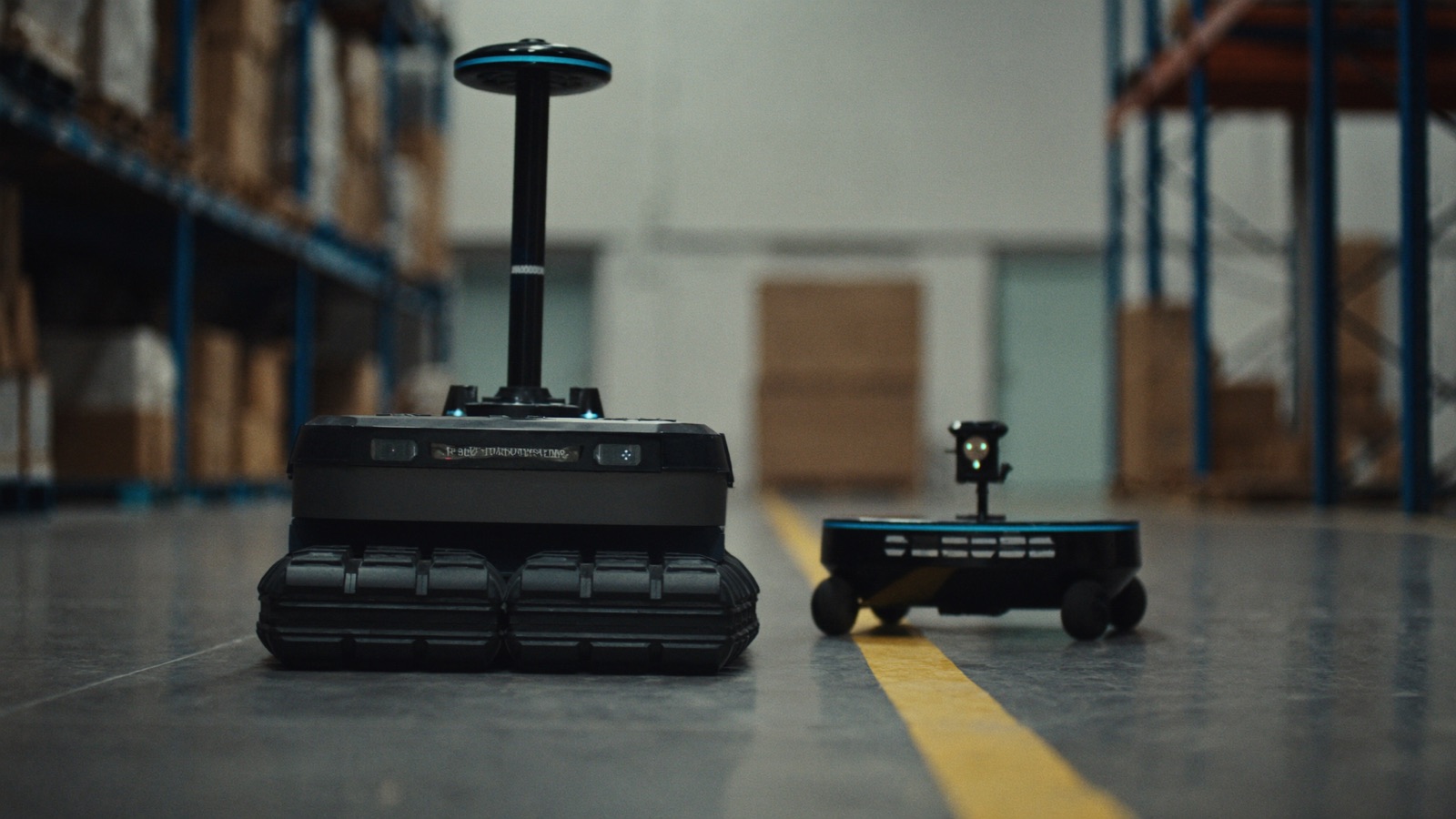
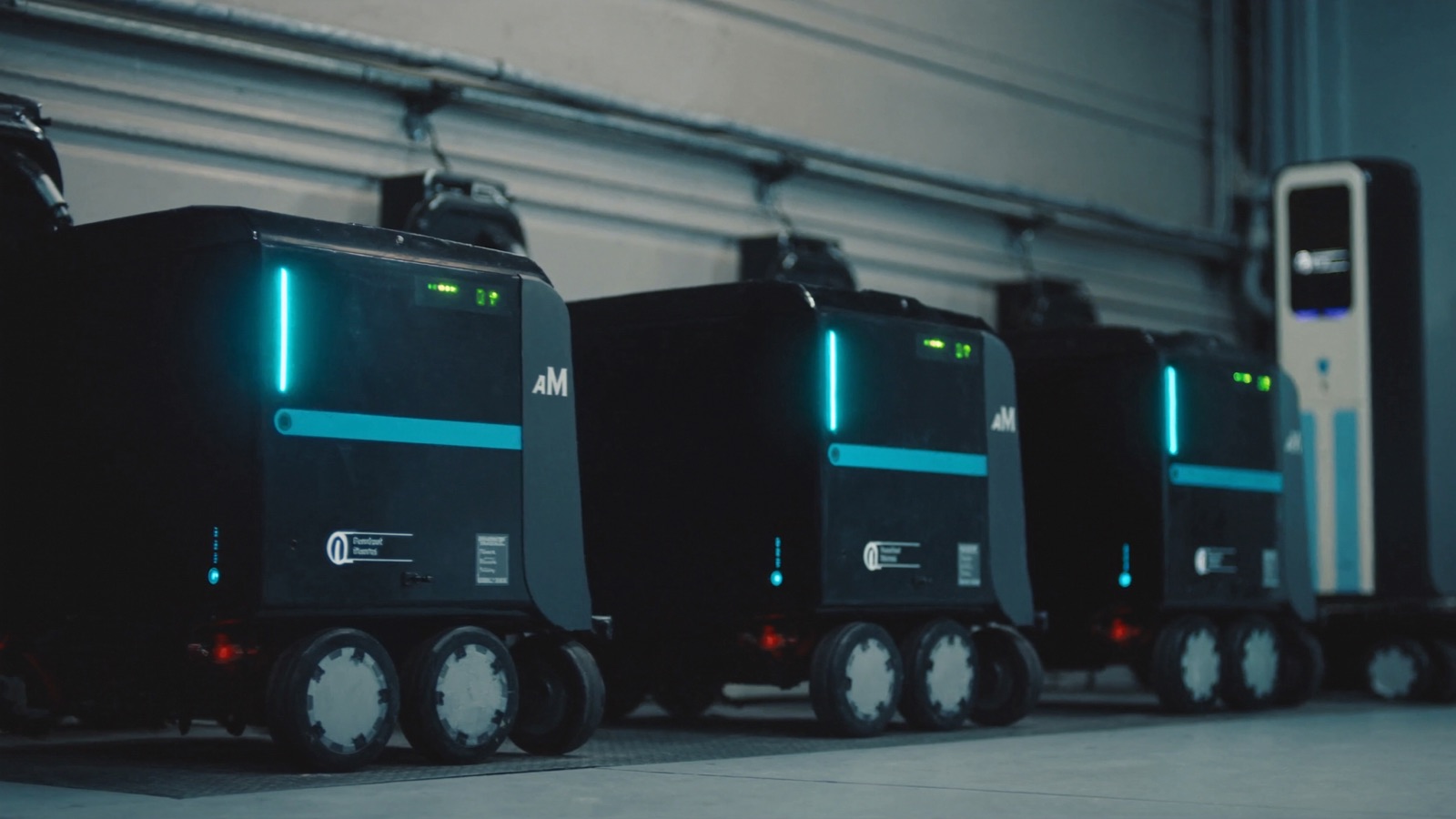
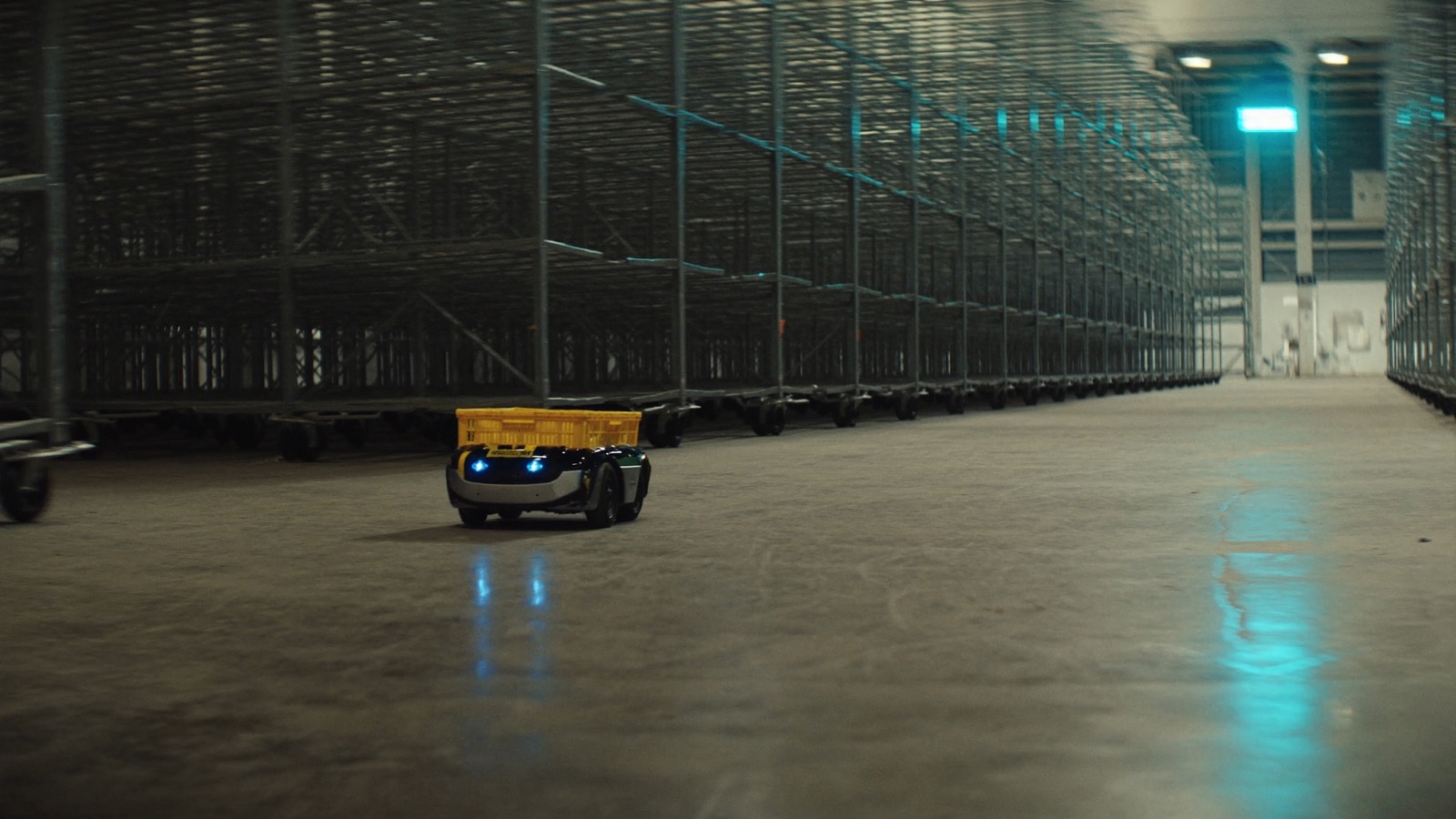
Warehouse Autonomous Mobile Robots (AMRs) are self-navigating mobile platforms that move goods, totes, pallets, or carts through fulfillment centers, distribution warehouses, manufacturing logistics zones, and 3PL operations. Unlike Automated Guided Vehicles (AGVs), AMRs use onboard sensors and dynamic pathfinding — they don't need floor magnets, QR tape, or rigid fixed routes.
They are deployed to attack the three biggest costs in modern warehousing: walking time (50–70% of picker labor), pallet movement bottlenecks, and the chronic shortage of warehouse staff in every developed economy.
Market Snapshot:
- Global warehouse AMR market valued at ~$3.5B in 2024, projected to reach ~$15B by 2030 (CAGR ~28%)
- Top brands: Locus Robotics, 6 River Systems (Ocado), Geek+, Hai Robotics, Quicktron, Exotec, AutoStore (different paradigm), Fetch Robotics (Zebra), Mobile Industrial Robots (MiR), Otto Motors (Rockwell), Seegrid, Vecna Robotics
- Purchase price range: $25,000–$120,000/unit (depending on payload class)
- RaaS subscription range: $1,500–$5,000/month per robot (most warehouse AMRs sell primarily on RaaS)
- Typical deployment scale: 20–500 robots per warehouse
AMR Sub-Categories
The "warehouse AMR" label spans several distinct robot types — buyers must match type to use case:
| Sub-Type |
What It Does |
Typical Payload |
Example Brands |
| Goods-to-Person (G2P) |
Brings shelves/totes to a stationary picker |
500–1500 kg (shelf) |
Geek+, Hai, Quicktron, Locus (some) |
| Person-to-Goods (P2G) Cart |
Follows pickers, carries totes |
50–200 kg |
Locus Origin, 6 River Chuck, Fetch |
| Pallet Mover |
Moves full pallets between dock, storage, line |
1000–2000 kg |
Otto 1500, MiR 1350/1500, Seegrid |
| Tote/Bin Shuttle |
Moves individual bins in mezzanine systems |
30–60 kg |
Exotec Skypod, AutoStore (rail-based) |
| Forklift AMR |
Autonomous reach truck or counterbalance |
1000–3000 kg |
Otto Lifter, Vecna, Seegrid Palion |
| Sortation AMR |
High-speed parcel sortation (bombay/tilt-tray) |
5–30 kg |
Geek+ S-series, Quicktron sorter, Libiao |
Buyer Personas
| Persona |
Primary Pain Point |
What They're Buying |
| 3PL / Fulfillment Operator |
Walking time, peak season scaling, 24/7 operations |
Throughput per robot, fast deployment, RaaS flexibility |
| Warehouse / DC Manager |
Labor shortage, retention costs, takt time |
Easy operator onboarding, WMS integration, uptime SLA |
| Director of Operations / VP Logistics |
Multi-site scaling, ROI justification |
Multi-site fleet management, total cost of ownership, vendor stability |
| IT / Systems Integrator |
WMS integration, network reliability, cybersecurity |
Open APIs, SAP/Manhattan/Blue Yonder connectors, IT security posture |
| Safety / EHS Manager |
Worker injuries, OSHA compliance |
Pedestrian detection, audit trails, emergency response |
| Maintenance / Reliability Manager |
Uptime, spare parts, technician availability |
MTBF, predictive maintenance, parts SLA |
Spec Reference
Payload & Form Factor — "What Can It Carry, and Where Does It Fit?"
| Spec |
Plain English |
Industry Range |
Sweet Spot |
Why It Matters to Buyer |
payload_kg |
Maximum weight the robot can carry |
30–3000 kg |
Application-specific |
Mismatched payload ruins economics: a 1500 kg pallet mover is overkill for tote work; a 200 kg cart can't move pallets. Pick the class that matches your dominant SKU weight. |
dimensions_mm (L×W×H) |
Robot footprint |
L: 600–2400mm, W: 500–1200mm, H: 200–2000mm |
Application-specific |
Footprint determines aisle width requirements. A 1200mm-wide AMR cannot use an existing 1400mm aisle if you also need pedestrian clearance. Always check turning radius too. |
turning_radius_mm |
Tightest turn the robot can make |
500–2000 mm |
< 1.0× robot length |
Zero-turn (pivot in place) is the gold standard for tight aisles. Long turning radius means you need to widen aisles — a $50k–$500k facility cost. |
min_aisle_width_mm |
Minimum aisle width for safe operation |
1000–2200 mm |
< 1500 mm (storage); < 2000 mm (pallet) |
Determines whether the robot fits your existing rack layout or forces a re-rack. Re-racking a 100k sqft facility costs $200k–$2M. |
lift_height_mm (if applicable) |
How high it can lift loads (G2P or forklift types) |
0–9000 mm |
Match your highest pick face |
Forklift AMRs and G2P shuttles must reach the top rack level. Underspeccing forces a separate manual operation for high storage. |
ground_clearance_mm |
Distance from robot bottom to floor |
15–80 mm |
25–40 mm |
Low clearance = stuck on floor cracks, expansion joints, and pallet stringers. Most US warehouses have 5–15mm uneven joints. |
robot_weight_kg |
Weight of the empty robot |
60–1500 kg |
Application-specific |
Heavy AMRs need rated floor loading checks. A 1200 kg pallet AMR with a 1500 kg load = 2700 kg point load on small wheels — exceeds many warehouse floor specs. |
Navigation & Sensing — "How Smart Is the Robot?"
| Spec |
Plain English |
Industry Range |
Sweet Spot |
Why It Matters to Buyer |
navigation_type |
Core localization technology |
QR/marker, magnetic tape, natural feature SLAM, LiDAR SLAM, Visual SLAM, Hybrid |
LiDAR SLAM (primary) + Visual SLAM (secondary) |
Marker-based systems are cheaper but require ongoing tape/QR maintenance and re-laying after layout changes. SLAM-based AMRs adapt automatically. |
lidar_sensors |
Number and type of LiDAR units |
1× 2D safety + 0–4× 3D mapping |
1× 2D safety + 1–2× 3D |
2D safety LiDAR is mandatory for ANSI/RIA R15.08 compliance. 3D LiDAR enables overhanging-obstacle detection (e.g., low-hanging shelves the AMR could clip). |
camera_count |
Number of vision cameras |
0–8 |
2–4 RGB-D |
Cameras enable shelf alignment, tote scanning, and human gesture detection. Pure-LiDAR AMRs miss visual cues like spilled liquid or dropped objects. |
localization_accuracy_mm |
How precisely the robot knows its location |
5–100 mm |
≤ 20 mm |
At ±100mm, an AMR can't dock under a precise shelf or align with a conveyor pickup point. ≤ 20mm enables tight handoffs. |
docking_repeatability_mm |
Precision when docking under shelves or at chargers |
3–25 mm |
≤ 10 mm |
Critical for shelf-to-person or workstation handoff. Loose docking causes damaged goods and missed picks. |
obstacle_detection_range_m |
How far ahead the robot sees obstacles |
3–30 m |
8–15 m |
Long range = smooth speed reduction. Short range forces the robot to stop suddenly when a person rounds a corner — frustrating workers and disrupting flow. |
min_object_detection_height_cm |
Smallest floor object it reliably detects |
2–15 cm |
≤ 5 cm |
Pallet stringers (~10cm), dropped boxes, and pallet jack forks are common floor obstacles. Below 5cm detection = will run over forks and tear up tires. |
pedestrian_detection |
Specific human-recognition capability |
None / Generic obstacle / Human-aware |
Human-aware (slows down, predicts paths) |
Generic obstacle detection treats humans like boxes. Human-aware navigation predicts walking direction and yields proactively — required for ISO 3691-4 compliance. |
Performance & Throughput — "What Does It Actually Achieve?"
| Spec |
Plain English |
Industry Range |
Sweet Spot |
Why It Matters to Buyer |
max_speed_loaded_ms |
Top speed when carrying full payload |
0.5–3.0 m/s |
1.5–2.0 m/s |
Speed = throughput per robot = fewer robots needed. But faster AMRs have larger safety zones, requiring wider effective aisle clearance. |
max_speed_unloaded_ms |
Top speed when empty |
0.8–4.0 m/s |
2.0–3.0 m/s |
Empty AMRs spend 30–50% of time deadheading back to staging. Faster unloaded speed directly improves cycle count. |
acceleration_ms2 |
How fast it gets to top speed |
0.3–2.0 m/s² |
0.5–1.0 m/s² |
High acceleration = better cycle time but risks tipping carts or shifting loads. Tune to your load type. |
max_incline_deg |
Steepest ramp it can handle |
0–10° |
≥ 5° (most warehouses); ≥ 8° if multi-level |
Multi-level facilities or dock-to-floor transitions need ≥ 5° capability. Underspeccing strands AMRs at the dock or ramp. |
floor_compatibility |
Surfaces it can drive on |
Smooth concrete, painted concrete, epoxy, sealed concrete, rough concrete |
Smooth/painted/epoxy concrete |
Outdoor concrete, gravel, or expanded-metal grating is generally not supported. Verify your floor type before pilot — expansion joints over 5mm cause issues. |
cycle_time_per_pick_sec |
Average seconds per pick task |
30–120 sec |
45–75 sec |
The KPI that matters for G2P and P2G systems. Includes travel, dwell, and wait time. Demand vendor data on your layout, not their demo. |
picks_per_hour_per_robot |
Sustained pick rate |
100–600 picks/hr |
250–400 picks/hr |
Used to size fleet count. A 200-pick/hr AMR doing 10,000 daily picks needs 50 robots running 8h. Always verify in pilot. |
Battery & Charging — "How Long Does It Run?"
| Spec |
Plain English |
Industry Range |
Sweet Spot |
Why It Matters to Buyer |
battery_chemistry |
Battery type |
Lead-acid, LiFePO4 (LFP), Li-ion (NMC) |
LiFePO4 (LFP) |
LFP dominates new deployments: longer cycle life (3000+ cycles vs 500 for lead-acid), faster charging, no off-gassing, no watering. Avoid lead-acid for new systems. |
battery_capacity_kwh |
Total energy storage |
1.0–20.0 kWh |
Application-specific |
Higher capacity = longer runtime but heavier and more expensive. Match to your shift pattern: 1-shift may need 6 kWh; 24/7 needs 12+ kWh or opportunity charging. |
runtime_loaded_hours |
Hours of continuous loaded operation |
4–16 hours |
≥ 8 hours |
Should cover a full shift without mid-shift charging. If runtime is < shift length, you need swap or opportunity charging strategy. |
charging_time_hours |
Empty-to-full charge time |
0.5–6 hours |
≤ 2 hours (fast charge) |
Slow charging forces battery swap or fleet oversizing. Fast charging (<2h) enables opportunity charging during natural dwell time. |
opportunity_charging |
Robot auto-charges during idle moments |
None / Available / Standard |
Standard |
Critical for 24/7 operations. AMRs with opportunity charging never need a "battery swap shift" — they top up between tasks. |
auto_docking |
Robot self-navigates to charger |
Manual / Auto-docking |
Auto-docking |
Manual docking requires a worker — defeats the autonomy. Always required for production deployment. |
battery_swap_supported |
Hot-swap fresh battery in seconds |
Not supported / Tool-required / Tool-less hot-swap |
Tool-less hot-swap (for high-throughput) |
Some 24/7 operations swap batteries instead of charging. Tool-less swap takes <60s vs 4h charge — but adds battery inventory cost. |
charge_cycles_rated |
Battery lifespan before degradation |
500–4000 cycles |
≥ 3000 cycles |
Determines battery replacement frequency. At 1 cycle/day, 3000 cycles = ~8 years. Lead-acid at 500 cycles = battery replacement every 18 months. |
Safety & Compliance — "Will It Hurt Someone?"
| Spec |
Plain English |
Industry Range |
Sweet Spot |
Why It Matters to Buyer |
safety_standards |
Certifications passed |
ANSI/RIA R15.08, ISO 3691-4, EN 1525, CE, UL |
ANSI/RIA R15.08 + ISO 3691-4 |
R15.08 is the US AMR safety standard (released 2022). ISO 3691-4 is the global equivalent. Without these, your insurance won't cover an AMR-related injury. |
safety_category |
Performance level of safety circuits |
Cat.3 PLd minimum required |
Cat.3 PLd |
Mobile robots in human-shared spaces require Cat.3 PLd minimum per ISO 13849. PLc has single-point failure risk. |
emergency_stop_count |
Number of physical E-stop buttons |
1–4 |
≥ 2 (front + rear) |
Workers in front of the AMR need a different E-stop than workers behind. Single-button designs leave dead zones. |
safety_lidar_coverage_deg |
Field of view of safety LiDAR |
180–360° |
270–360° |
Determines blind spots. 180° front-only LiDARs miss side-impact risks. 360° coverage handles all approaches. |
safety_zone_count |
Software-defined virtual safety zones |
4–32 |
≥ 8 |
Lets you define different speed/stop behavior in different warehouse areas (e.g., near aisles vs. open floor). |
audible_alert_db |
Volume of warning sound |
60–95 dB |
75–85 dB |
Too quiet (60dB) and noisy warehouses don't hear it; too loud (>90dB) and OSHA noise exposure limits are exceeded. |
visual_indicators |
Lights and signals for human awareness |
Status LED only / Direction lights / Projected path / Multi-mode |
Direction lights + projected path |
Projected path lights ("intent lights") show humans where the AMR is about to go — significantly reduces near-miss incidents. |
iso_3691_4_certified |
Officially certified to global mobile robot standard |
Yes / No |
Yes |
Increasingly required by 3PL clients and insurance carriers. Self-declaration is not the same as third-party certification. |
Connectivity & Software — "How Does It Fit Into Your Systems?"
| Spec |
Plain English |
Industry Range |
Sweet Spot |
Why It Matters to Buyer |
wms_integrations |
Native warehouse management system connectors |
None / Custom only / Native (SAP, Manhattan, Blue Yonder, Körber) |
Native to ≥ 3 major WMS |
Without native WMS integration, every order requires custom middleware development ($50k–$300k). Verify the integration is production-grade, not just "supported." |
wcs_integrations |
Native warehouse control system connectors |
None / Limited / Native (Honeywell, Dematic, Vanderlande) |
Native to dominant WCS |
Multi-vendor warehouses use a WCS to orchestrate AMRs alongside conveyors and sortation. Native integration cuts integration time by 60–80%. |
fleet_size_supported |
Max robots manageable from one fleet manager |
10–1000+ |
≥ 200 (for scale) |
Some fleet managers degrade past 50 robots. If you plan to scale to 100+ AMRs, demand a reference customer at that scale. |
multi_robot_traffic_management |
Coordinated routing for fleet |
Basic priority / Lane management / Dynamic flow optimization |
Dynamic flow optimization |
At 50+ robots, deadlocks and congestion become severe without dynamic optimization. Watch for 30+ minute simulations of 100-robot scenarios. |
network_connectivity |
Wireless protocols supported |
Wi-Fi 4/5/6, 4G/LTE, 5G, private cellular |
Wi-Fi 6 + 4G fallback |
Warehouses are RF-hostile (metal racks, dense Wi-Fi). Wi-Fi 6 handles density better. 5G/private cellular is emerging for very large facilities. |
api_type |
Integration interface |
Closed / Limited REST / Open REST + WebSocket / gRPC |
Open REST + WebSocket + Webhooks |
Closed APIs lock you to vendor's professional services for any custom logic. Open APIs let your IT team build dashboards, alerts, and BI integrations. |
ros_support |
Robot Operating System compatibility |
None / ROS1 community / ROS2 vendor |
ROS2 vendor-supported |
ROS2 enables academic R&D, advanced AI vision, and custom behaviors. Less critical for pure operations but valuable for innovation pipelines. |
digital_twin_support |
Real-time virtual model of fleet |
None / Static simulation / Real-time twin |
Real-time twin |
Lets you test fleet sizing, layout changes, and new SKU introductions without disrupting live operations. |
cybersecurity_certifications |
Industrial cyber resilience standards |
None / IEC 62443 SL1 / SL2 / SL3 |
IEC 62443 SL2 minimum |
Increasingly required by enterprise customers and 3PL clients. Logistics is a prime ransomware target. |
Reliability & Maintenance — "Will It Keep Running?"
| Spec |
Plain English |
Industry Range |
Sweet Spot |
Why It Matters to Buyer |
mtbf_hours |
Mean Time Between Failures |
1,500–10,000 hours |
≥ 5,000 hours |
At 16 hr/day operation, 5,000 MTBF = ~10 months between failures. Lower MTBF means high spare-fleet ratio (expensive). |
uptime_sla |
Vendor-guaranteed availability |
95.0–99.5% |
≥ 98.5% |
95% uptime = 36 hours downtime per month = unacceptable for 24/7 operations. ≥98.5% should be contractually guaranteed for production deployments. |
predictive_maintenance |
Software that predicts failures |
None / Threshold-based / ML-based |
ML-based |
Reduces unplanned downtime by 30–50%. Modern fleet managers stream telemetry to cloud and predict bearing wear, battery degradation, and motor failure. |
field_service_response_hours |
Vendor SLA for on-site response |
4–48 hours |
≤ 8 hours (production); ≤ 24 hours (general) |
When 1 robot in a 100-robot fleet fails, you can absorb it. When 10 fail, your throughput craters. Field response time becomes critical at scale. |
spare_parts_lead_time_days |
Days to get critical replacement parts |
1–30 days |
≤ 5 days |
Drive motors, sensors, and battery packs are common replacements. Lead times >2 weeks force you to keep expensive on-site spares. |
over_the_air_updates |
Remote software/firmware updates |
Manual only / OTA available / OTA standard |
OTA standard with rollback |
Manual updates require touching every robot. OTA with rollback (revert if issue) is now table-stakes for fleets >20 robots. |
TCO & Commercial — "Real Cost of Ownership"
| Spec |
Plain English |
Industry Range |
Sweet Spot |
Why It Matters to Buyer |
price_usd |
Robot purchase price (CapEx) |
$25,000–$120,000 |
Application-specific |
Sticker price excludes integration. Plan for 1.5–2.5x for WMS integration, racking modifications, charging infrastructure, training, and project management. |
raas_monthly_usd |
RaaS subscription per robot |
$1,500–$5,000/month |
$2,000–$3,500/month |
RaaS shifts CapEx to OpEx and includes maintenance + uptime SLA. Standard for warehouse AMRs — 70%+ of new deployments are RaaS not CapEx. |
raas_minimum_term_years |
Minimum RaaS contract length |
1–5 years |
3 years (typical) |
Shorter terms = higher monthly rates. 1-year terms are usually 30–50% premium over 3-year. |
pricing_model |
Sale structure |
CapEx / RaaS / Subscription / Hybrid / Pay-per-pick |
RaaS or Hybrid |
Pay-per-pick (e.g., Locus) aligns vendor and customer incentives but has volume risk. RaaS gives predictability. |
integration_cost_multiplier |
Total system cost vs robot cost |
1.5x–3.0x |
2.0x |
$50k AMR typically becomes $100k installed: WMS integration ($20k–$80k), Wi-Fi infrastructure ($5k–$30k), racking changes ($10k–$50k), training, project management. |
warranty_years |
Standard warranty period |
1–5 years |
2 years (CapEx) / SLA-based (RaaS) |
RaaS includes ongoing maintenance; CapEx warranty matters for parts/labor coverage post-deployment. |
service_network_density |
Field service availability |
Sparse / Regional / Global |
≥ 1 service center per major target metro |
A robot down 2 weeks awaiting overseas technicians costs more than the robot itself in lost throughput. |
expected_service_life_years |
Operational life expectancy |
5–10 years |
7+ years |
AMRs are amortized over shorter periods than industrial arms (5–7 years vs 15+). Battery replacement at year 3–4 is a significant TCO line item. |
typical_roi_months |
Reported payback period |
12–48 months |
18–30 months |
Most warehouse AMR deployments target sub-24-month payback driven by labor savings. Verify with case studies in your specific application (G2P vs pallet vs sortation differs significantly). |
Hidden Concerns
3.1 The Wi-Fi Reality Check
- Warehouses are extraordinarily RF-hostile: metal racks, metal goods, refrigeration units, and dense pallet stacks create dead zones every 30–50 feet
- Vendor demos are run on fresh Wi-Fi 6 deployments — your existing 2018 Wi-Fi 5 setup probably won't perform the same
- A robot losing connectivity in a dead zone freezes mid-aisle, blocks pickers, and may need manual recovery
- Ask vendor: "What is the recommended Wi-Fi heatmap density (APs per sqft) and minimum signal strength, and can the robot continue tasks during 30-second connectivity losses?"
3.2 The Battery Replacement Bombshell
- Lithium battery packs in warehouse AMRs typically degrade to 80% capacity at 2,000–3,000 cycles (3–5 years of daily use)
- Replacement battery packs cost $3,000–$15,000 per robot — rarely included in initial TCO calculations
- A 100-robot fleet at year 4 may face $500k–$1.5M in battery replacements simultaneously
- Ask vendor: "What is the documented battery degradation curve, expected battery replacement year, and cost per pack?"
3.3 WMS Integration is Not "Plug and Play"
- Vendors claim "native SAP integration" but the integration is typically a generic API that requires significant configuration
- Real-world WMS integration projects take 3–9 months and cost $50k–$300k (versus the "2 weeks" in the brochure)
- Custom workflows (specific lot tracking, expiration date logic, hazmat segregation) often require WMS-side modifications
- Ask vendor: "Can you provide 3 customer references using my WMS version with my custom workflows, and what was their actual integration timeline?"
3.4 The Floor Quality Trap
- AMRs require flatness specifications typically meeting ASTM E1155 FF35/FL25 or higher
- Many older warehouses (pre-2000) have FF15–FF25 floors with cracks, expansion joints >5mm, and unevenness from forklift wear
- Floor remediation can cost $5–$15 per sqft — easily $500k–$2M for a 100,000 sqft facility
- Ask vendor: "What is the minimum FF/FL floor flatness rating required, and can you assess my facility before contract signing?"
3.5 Pedestrian Conflict Reality
- Vendor specs claim "human-aware" navigation but in practice AMRs trigger pedestrian-detection slowdowns 50–200 times per shift in busy warehouses
- This compounds: 1 AMR is fine, 50 AMRs in pedestrian-shared aisles can lose 25–40% of theoretical throughput to safety stops
- Solutions (pedestrian-free zones, time-shifted operations, light curtains) add facility cost
- Ask vendor: "Can you provide measured throughput data from a deployment with my pedestrian density, and what mitigation strategies do customers use?"
3.6 The Multi-Robot Deadlock Problem
- Fleet managers handle 5–20 robots well; 100+ robots stress traffic management algorithms
- Aisle deadlocks (robots facing off in narrow aisles) require timeout-based recovery that wastes 30–60 seconds per occurrence
- Vendors rarely publish performance-vs-fleet-size curves
- Ask vendor: "Can you show me a video of 100+ robots operating in production at a customer site, and what is the average deadlock recovery time?"
3.7 Outdoor or Mixed-Environment Operations
- Most warehouse AMRs are indoor-only — they cannot handle dock-to-yard transitions, outdoor loading docks with rain, or sun glare on cameras
- Cross-docking operations require seamless indoor-outdoor flow that most AMRs don't support
- Outdoor-rated AMRs cost 30–60% more
- Ask vendor: "Can the robot transition through a roll-up door with sunlight glare on cameras, light rain, or temperature differential without recalibration?"
3.8 The Cybersecurity Liability
- Warehouse AMRs are connected to WMS, ERP, and corporate networks — making them prime ransomware vectors
- A 2023 Cybersecurity & Infrastructure Security Agency (CISA) advisory specifically called out AMR vulnerabilities
- Insurers are increasingly requiring IEC 62443 certification or equivalent for warehouse robot deployments
- Ask vendor: "What is your IEC 62443 security level rating, what is your CVE patch cadence, and do you support customer-managed certificates and network segmentation?"
3.9 Vendor Stability Risk
- The AMR market is consolidating rapidly: Fetch acquired by Zebra, 6 River acquired by Ocado then partially divested, Otto subsumed into Rockwell, Vecna restructured
- Vendor failure leaves you with hardware that has no software updates, no spare parts, and no support
- Smaller AMR startups (especially China-based) may not survive the next industry downturn
- Ask vendor: "What is your funding runway, profitability status, and what is your data/IP escrow arrangement if your company is acquired or shut down?"
3.10 The Charging Infrastructure Tax
- Each AMR needs a charging dock; large fleets need multiple charging zones
- Charging infrastructure cost: $2,000–$8,000 per dock + electrical service upgrades ($10k–$100k for large fleets)
- Some facilities lack 480V three-phase capacity for fast-charge stations and need transformer upgrades
- Ask vendor: "What is the charger count required for my fleet size, what is the total electrical load, and have you encountered facilities that needed transformer upgrades?"
How to Evaluate a Robot
A robot must meet all criteria below:
Safety Minimums
Performance Minimums
Connectivity Minimums
Battery & Operations Minimums
Commercial Minimums
Top Products Compared
| Feature |
Locus Origin |
6 River Chuck |
Geek+ P800 (G2P) |
MiR 1350 |
Otto Lifter |
Quicktron M-series |
| Type |
P2G Cart |
P2G Cart |
G2P (shelf carrier) |
Pallet Mover |
Forklift AMR |
G2P (shelf) |
| Payload |
30 kg |
35 kg |
800 kg (shelf) |
1350 kg |
1200 kg |
1000 kg |
| Footprint (L×W mm) |
700 × 500 |
760 × 580 |
950 × 700 |
1352 × 920 |
1900 × 1100 |
980 × 700 |
| Max Speed (loaded) |
1.8 m/s |
1.5 m/s |
1.5 m/s |
1.2 m/s |
2.0 m/s |
1.5 m/s |
| Navigation |
LiDAR SLAM + Vision |
LiDAR SLAM + Vision |
LiDAR SLAM + QR (hybrid) |
LiDAR SLAM |
LiDAR SLAM + Vision |
LiDAR + QR (hybrid) |
| Battery Runtime |
~12 hours |
~10 hours |
~8 hours |
~10 hours |
~8 hours |
~10 hours |
| Charging |
Auto opportunity |
Auto opportunity |
Auto-dock |
Auto opportunity |
Auto opportunity |
Auto-dock |
| Pricing Model |
Pay-per-pick / RaaS |
Subscription |
CapEx / RaaS |
CapEx |
CapEx / RaaS |
CapEx / RaaS |
| WMS Integrations |
Manhattan, Körber, SAP, Blue Yonder |
Manhattan, SAP, custom |
SAP, Manhattan, custom |
Strong via Mobile Industrial fleet |
Rockwell ecosystem |
Custom-heavy |
| R15.08 / ISO 3691-4 |
R15.08 + ISO 3691-4 |
R15.08 + ISO 3691-4 |
ISO 3691-4 |
ISO 3691-4 + R15.08 |
R15.08 + ISO 3691-4 |
ISO 3691-4 |
| Fleet Size Proven |
1000+ |
500+ |
5000+ (single site) |
200+ |
100+ |
1000+ |
| Est. Price (CapEx) |
RaaS only |
RaaS only |
~$45k |
~$60k |
~$110k |
~$30k |
| Key Differentiator |
Largest installed base in pay-per-pick model |
Vertical integration with WMS |
Largest G2P deployments globally |
Best multi-application platform |
Heavy-duty pallet specialization |
Aggressive pricing on G2P |
Regulations & Compliance
| Regulation |
Scope |
What It Means for Deployment |
| ANSI/RIA R15.08 |
US standard for industrial mobile robots (released 2022, multi-part) |
The defining US safety standard for warehouse AMRs. Required for OSHA defensibility. Part 1 (manufacturer), Part 2 (integrator), Part 3 (user). |
| ISO 3691-4 |
Global standard for driverless industrial trucks and their systems |
International equivalent to R15.08. Required for CE marking in EU. Vendor must provide third-party certification, not self-declaration. |
| EN 1525 |
Older European standard for driverless industrial trucks |
Being superseded by ISO 3691-4. Legacy deployments may reference this. |
| EN ISO 13849-1 (Cat.3 PLd) |
Functional safety performance levels |
Cat.3 PLd minimum required for safety circuits in mobile robots near humans. |
| OSHA 29 CFR 1910.178 |
US Powered Industrial Truck standard |
Applies to forklift-type AMRs. Operator training requirements still apply for certain configurations. Audit trail integration recommended. |
| EU Machinery Directive 2006/42/EC → Regulation 2023/1230 |
CE marking |
Mandatory for EU market. New Machinery Regulation (effective Jan 2027) adds AI and cybersecurity requirements specifically applicable to autonomous robots. |
| IEC 62443 |
Industrial cybersecurity standard |
SL2 minimum becoming standard for new deployments. Required for NIS2 compliance in EU. Logistics/warehousing increasingly classified as critical infrastructure. |
| NIS2 Directive (EU) |
Critical infrastructure cybersecurity |
As of late 2024, applies to large logistics operators and 3PLs. Requires documented cybersecurity posture for connected AMR fleets. |
| CIRCIA (US) |
Critical infrastructure incident reporting |
US analog to NIS2. Mandates 72-hour incident reporting for covered logistics operations. |
| GDPR / CCPA |
Vision system data privacy |
If AMR cameras capture identifiable worker imagery, data privacy law applies. Vendor must provide DPA and confirm vision data is processed locally. |
| NFPA 855 |
Energy storage systems (battery rooms) |
Applies to AMR battery charging zones. Lithium battery storage requires fire suppression, ventilation, and segregation requirements. |
| NFPA 70 (NEC) Article 625 |
Electric vehicle charging infrastructure |
Some AMR charging installations fall under EV charging code. Affects electrical permitting and inspection. |
| FDA 21 CFR Part 11 |
Pharma electronic records |
If AMR operates in regulated pharma warehouse, all motion logs must support audit trail compliance. Part 11 validation may be required. |
| HACCP / FSMA |
Food safety |
Food-grade warehouses require AMRs with cleanable surfaces, no contamination paths, and possibly IP rating for washdown. |
References
- ANSI/RIA R15.08-1:2020 — American National Standard for Industrial Mobile Robots: Safety Requirements
- ISO 3691-4:2020 — Industrial trucks: Safety requirements and verification — Driverless industrial trucks and their systems
- IFR World Robotics Service Robots Report 2024
- LogisticsIQ Warehouse Automation Market Report 2024
- IEC 62443-3-3:2013 — Industrial communication networks: System security requirements
- EU Machinery Regulation (EU) 2023/1230
- CISA Industrial Control Systems Advisory ICSA-23-103-12 (Mobile Robots)