Use Cases Where Cobots Fail: High-Payload, High-Speed, and Dirty Environments
The cobot's design advantages — force limiting, simplified programming, no safety cage — become liabilities in the wrong application.
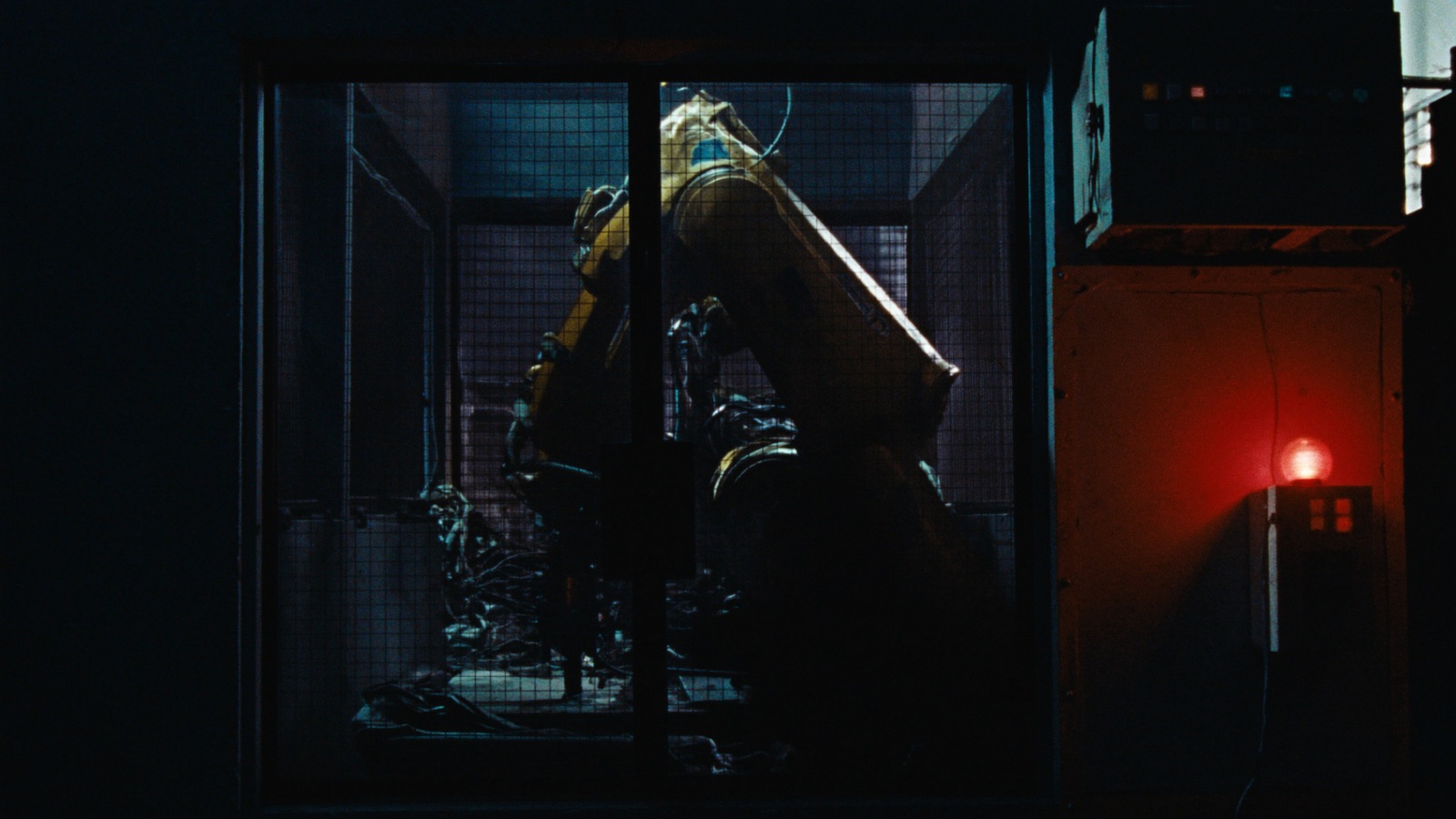
A cobot is not a universally applicable automation platform. The design choices that make it safe near humans — joint torque sensing, velocity limiting, force-limited operation — impose hard constraints on what the platform can do. When an application exceeds those constraints, the result isn't a suboptimal deployment. It's a robot running at 60% throughput while the line waits, or a unit that fails at the 18-month mark because the environment it's in was never compatible with its construction.
The failure modes are predictable and well-documented by integrators, but they are rarely discussed by vendors during the sales process. This article covers three categories of application where cobots consistently fail, and the signals that identify them before you sign a purchase order.
Failure mode 1: High-speed, high-cycle applications
The constraint
Power-and-force limiting (PFL) — the safety mode that allows cobots to operate without fixed guarding — works by limiting the kinetic energy the robot can deliver at contact. Kinetic energy is proportional to mass times velocity squared (½mv²). At a given payload mass, the only parameter the robot controller can govern to limit contact energy is velocity. So the robot runs slower.
For most cobots in PFL mode, maximum TCP speed is configured in the range of 250–1,000 mm/s depending on payload and EOAT geometry. Traditional industrial arms run 1,500–3,000 mm/s on comparable payload tasks. For a simple point-to-point pick-and-place across 600 mm, that speed delta translates directly to cycle time:
| Robot type | TCP speed | Estimated cycle (600 mm P2P) |
|---|---|---|
| Cobot (PFL mode) | 600 mm/s | ~1.2 s move + approach + grasp |
| Traditional arm | 2,000 mm/s | ~0.4 s move + approach + grasp |
In a high-volume application that requires a 0.8-second total cycle, the cobot cannot meet spec regardless of how it is programmed, tuned, or configured. The safety architecture precludes it.
The applications
- Injection molding extraction: Fast-cycling presses (20–60 second cycles) need the robot to extract, flip, place, and return within a 4–8 second gate time. Cobot TCP speeds regularly fail to complete the sequence in gate time at the required payload.
- High-speed stamping: Press tending at 30–120 strokes per minute requires sub-second part exchange. No current PFL cobot achieves this.
- Conveyor-synced pick-and-place: Consumer goods, food packaging, and pharmaceutical lines running at 60+ units per minute require robotic picks at 0.5–1 second intervals. Traditional delta robots and SCARA arms dominate this space for a reason.
- High-frequency welding seams: Continuous MIG or TIG welding at high travel speed requires consistent TCP velocity that PFL restrictions frequently prevent.
The signal
The application spec shows a required cycle time at any point in the process that falls below 1.5 seconds for a move greater than 400 mm. If a vendor quotes a cobot for this application without providing cycle-time validation data from a reference site with the same or comparable task, the quote is aspirational rather than engineered.
Failure mode 2: Payload requirements above 20 kg
The constraint
Current collaborative robot payload ceilings as of 2025–2026:
| Model | Max payload |
|---|---|
| UR20 (Universal Robots) | 20 kg |
| Doosan H2515 | 25 kg |
| FANUC CRX-35iA | 35 kg |
| AUBO i25 | 25 kg |
The FANUC CRX-35iA extends the cobot payload envelope to 35 kg — but at speeds that still reflect PFL constraints, and at a price point approaching traditional arm territory. For most practical purposes, above 20–25 kg at any meaningful cycle speed, the cobot market thins out significantly.
Traditional arms, by contrast, scale continuously: KUKA KR 150, FANUC M-710iC/50, ABB IRB 6700 handle 50–235 kg payloads. For 700 kg, the FANUC M-410 series exists. The cobot market does not have analogues above 35 kg.
The applications
- Engine block and transmission handling: Automotive powertrain assembly involves components at 30–80 kg. No collaborative robot serves this space.
- Palletizing at full layer weight: A standard Euro pallet layer of filled cans or bottles runs 30–50 kg. CNC loading of heavy castings: castings above 20 kg are common in aerospace and heavy equipment.
- Structural welding fixtures: Holding and positioning weldments above 20 kg.
- Sheet metal forming: Blanks for large stamping operations frequently exceed 25 kg.
The nuance
The UR20 and Doosan H2515 have extended the viable cobot payload range materially. Palletizing lighter goods (15–18 kg) is now within reach of cobots, and that's a legitimate market. But the 20–25 kg ceiling means that any application that deals in payloads from 25 kg upward requires a traditional arm, and no amount of collaborative design will change that until the physics of force-limiting at high inertia improves substantially.
The signal
The application requires handling a workpiece, fixture, or tool assembly above 18 kg. Budget to the payload ceiling with a 10–15% safety margin — a robot operating at 95% of its rated payload degrades repeatability and accelerates joint wear. If your workpiece is 22 kg, the UR20 at 20 kg payload is undersized and the Doosan H2515 at 25 kg is the minimum.
Failure mode 3: Contaminated and harsh environments
The constraint
Cobots are precision instruments. The force-torque sensing that enables PFL operation depends on joint sensors that can resolve small deviations in applied force — typically 0.5–2 N sensitivity. Those sensors, and the electrical systems that feed them, are vulnerable to contamination in ways that traditional arm designs with sealed joints are not.
The ingress protection (IP) ratings of mainstream cobots are instructive:
| Model | IP rating |
|---|---|
| UR3e / UR5e / UR10e / UR20 | IP54 (dust-protected, splash-resistant) |
| FANUC CRX-10iA | IP67 (full immersion to 1 m) |
| ABB GoFa CRB 15000 | IP67 |
| Techman TM5 | IP54 |
| Doosan H series | IP54 |
IP54 is appropriate for a clean assembly environment with occasional splashing. It is not appropriate for:
- CNC machine tending with flood coolant: Coolant saturation in a CNC cell can expose the robot to direct spray, mist immersion, and accumulation of metal-laden fluid. IP54 cobots in this environment report accelerated joint seal failure, coolant infiltration into wrist joints, and force-sensor drift from contamination-induced zero-offset. The FANUC CRX-10iA (IP67) was partly designed to address this market, but IP67 is still not splash-proofing against 2 hours of coolant exposure per shift.
- Welding cells: Weld spatter is electrically conductive and abrasive. A cobot deployed in a welding cell without full enclosure protection of the arm body will accumulate spatter on joint seals, connector housings, and the teach pendant. Spatter-induced joint contamination is a leading cause of premature failure in welding cobot deployments that lack proper arm cover protection.
- Foundry and casting environments: Airborne particulate, high temperatures, and occasional slag contact require IP65+ and temperature-rated designs that most cobots do not provide at standard configuration.
- Chemical exposure (acid wash, plating lines): Corrosive chemical vapor attacks electronics, cable insulation, and bearing seals. Standard cobot designs are not rated for chemical exposure environments.
- Food processing with washdown: High-pressure washdown at 60–80°C with sanitizing chemicals requires stainless-steel joint covers, full IP69K rating, and materials that resist chemical attack. Most cobots don't ship with washdown capability as standard — some vendors offer washdown-rated variants, but verify specifications carefully.
The applications
- Coolant-heavy CNC turning and machining centers
- MIG/TIG welding without arm covers
- Aluminum and iron casting machine tending
- Electroplating line tending
- Food processing with wet cleaning cycles
- Paint spray applications
The signal
Walk the prospective deployment environment and assess: Is there visible liquid accumulation on horizontal surfaces? Particulate visible in the air? Is there a cleaning cycle that uses spraying or immersion? If any of these are present, pull the cobot's IP rating data sheet and compare against the actual environment conditions. The discrepancy between IP54 and a coolant-flood CNC cell is not a minor mismatch — it's a $40,000 arm in the wrong environment.
The interaction effects
These failure modes compound. A high-payload press-tending application in a stamping facility is likely to have all three: cycle time requirements that exceed PFL speed limits, workpiece masses above 20 kg, and lubricant/coolant exposure on the press. That application is not a cobot opportunity regardless of how the vendor frames it.
The integrator's job is to identify interaction effects early — before the hardware is purchased. A vendor who doesn't ask about cycle time, payload mass, and environmental conditions in the first conversation is not giving you the information you need to make a good decision.
For the process of running a structured cobot pilot that surfaces these issues before they become capital commitments, see the next article in this series.
What cobots do handle well in manufacturing
To put the failure modes in proportion: cobots have genuine application depth in:
- Light assembly (under 5 kg workpiece, variable parts, human-adjacent tasks)
- Machine tending on equipment with moderate gate times (8+ seconds)
- Screw driving, torque-controlled fastening
- Quality inspection and measurement
- Packaging and kitting at moderate rates
- Palletizing light goods (under 15 kg at moderate cycle rates)
- Lab automation and sample handling
These applications represent a substantial and growing share of discrete manufacturing tasks. The failure modes above are real constraints, but they don't define the entire envelope — they define where the boundary is.
Knowing that boundary before you commit capital is the entire point.