Reading the Humanoid Spec Sheet: DOF, Payload, Runtime, Locomotion
The numbers vendors highlight are rarely the ones that determine whether a deployment succeeds.
The Apptronik Apollo spec sheet reads: payload 25 kg, runtime 4 hours (hot-swappable), height 5'8", weight 73 kg. The Agility Robotics Digit spec: payload 35 lbs (15.9 kg), runtime 4+ hours. Both are legitimate commercial humanoid platforms. Both are cited in vendor comparisons. Neither spec sheet tells you whether either robot can perform your specific task at your specific facility at the throughput your operation requires.
Humanoid spec sheets are written for press releases and investor decks. They highlight the numbers that make the platform look capable without providing the operational context that determines whether that capability translates to your use case. Reading a spec sheet correctly requires knowing which numbers are diagnostic, which are marketing emphasis, and which questions aren't answered on the sheet at all.
Degrees of Freedom (DOF): What It Tells You and What It Doesn't
DOF counts the number of independently actuated joints in the robot. A simple industrial arm has 6 DOF. A full humanoid body — head, torso, two arms, two hands, two legs — can reach 30 to 50+ DOF depending on how the hands are designed.
The number that matters is not total DOF. It's arm DOF and hand DOF for manipulation tasks, and leg DOF for locomotion.
Arm DOF: Most commercial humanoids have 6 or 7 DOF per arm, matching standard industrial arm configurations. 7 DOF arms (with an additional wrist roll or shoulder joint) have more flexibility for avoiding self-collision and reaching awkward orientations, which matters for tasks in confined spaces or irregular approaches. If your task requires working in tight spaces — machine tending where the robot must reach into an enclosure, for instance — confirm the arm DOF and reach envelope, not just the total DOF count.
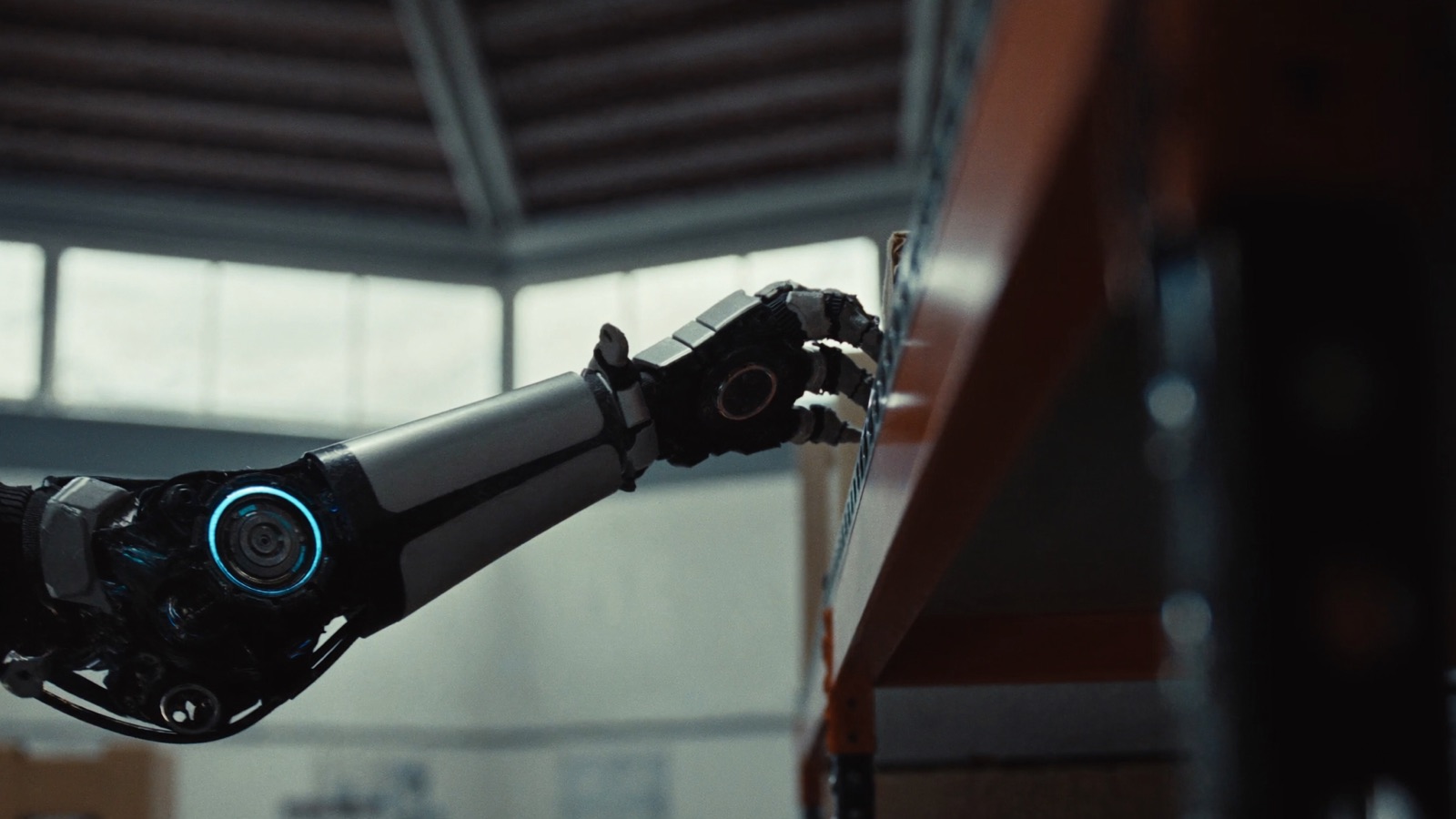
Hand DOF: This is where the spec sheet diverges most dramatically across platforms. Agility Digit uses task-specific grippers with no finger DOF at all — the end effector is optimized for tote handles. Apptronik Apollo has a multi-finger hand with higher DOF. The gap between 0-DOF grippers and dexterous multi-finger hands is enormous in terms of task capability and in terms of software complexity.
For 2026 industrial deployments, dexterous hands are primarily a research and demonstration feature. The tasks generating commercial revenue — tote handling, machine tending, case picking, trailer unloading — use constrained end effectors or simple two-finger grippers. If a vendor is emphasizing high hand DOF as a commercial selling point, ask for a reference deployment that is using those fingers in production, not in a lab demo.
Leg DOF: Bipedal locomotion typically requires 6 DOF per leg (hip pitch/yaw/roll, knee pitch, ankle pitch/roll) for 12 leg DOF total. Variations affect stability characteristics and the terrain the robot can handle. For flat factory floors and standard loading docks, the differences between bipedal locomotion implementations are less significant than they become on uneven terrain. If your facility has ramps, drainage grates, or uneven surfaces, ask the vendor specifically about terrain tolerance testing in comparable environments.
Payload: The Number That Needs a Context Stack
Every spec sheet lists a payload figure. It is almost always the maximum payload under optimal conditions — end effector at or near the robot's center of mass, slow movement speed, flat surface, conditioned environment. The operational payload in your deployment is lower.
The degradation factors:
Speed: Payload capacity degrades as movement speed increases. A robot carrying 25 kg at slow speed may only achieve 15–18 kg of stable payload at full operational speed on an active assembly line with dynamic obstacles. Ask vendors for payload figures at their operational duty cycle speed, not at the laboratory maximum.
Reach and posture: Payload capacity drops significantly as the arm extends away from the robot's center of mass. A 25 kg payload figure may apply when the robot is holding an object against its chest. At full arm extension (relevant for loading a shelf or reaching into a container), the effective payload may be 40–60% of the headline figure.
Wrist orientation: Payload varies with arm configuration. Side-by-side arm tests with different orientations can show 30% variation in sustainable payload for the same robot. Confirm the payload figure at the specific arm configuration your task requires.
Battery state: Payload capacity and stability may degrade as battery level drops. Ask vendors how the robot's performance profile changes in the last 20% of battery life.
Practical rule: Discount the headline payload figure by 25–30% to get a conservative operational planning number. If the task requires 20 kg at full arm extension, you need a robot with a headline payload of at least 25–27 kg.
Runtime: Battery Life in the Real World
Battery life figures on spec sheets are measured under controlled conditions — typically moderate speed, moderate payload, flat terrain, conditioned temperature. Real operational runtime differs.
The hot-swap advantage: Apptronik Apollo's 4-hour hot-swappable battery design is architecturally significant. It means the robot can operate continuously across a shift without a mandatory recharge window — batteries swap in the field like changing a drill battery. This is operationally very different from a robot that must dock and charge for 2–3 hours after every 4-hour run. For operations running full 8-hour shifts, hot-swap capability changes the math on how many robots you need.
Runtime under load: Heavy payload tasks consume significantly more power than idle locomotion. A robot rated for 4-hour runtime may deliver 2.5–3 hours of runtime when continuously carrying near-maximum payload. If your task involves carrying heavy loads for most of the robot's operational time, downrate the published runtime figure accordingly.
Temperature effects: Battery performance degrades in cold environments. Distribution centers operating below 10°C (50°F) — common in food logistics and pharmaceutical storage — should test battery performance explicitly in their operating temperature range. This is not a spec sheet figure and will not be disclosed voluntarily.
Charging infrastructure: Account for charging station cost ($500–$2,000 per station), charging floor space, and electrical load in your deployment planning. A fleet of three robots needs at least two charging stations running in rotation to maintain continuous operations.
Locomotion: Bipedal, Wheeled, and Hybrid
Locomotion type is the most significant architectural variable across commercial humanoid platforms, and it has direct implications for your use case.
Bipedal dynamic locomotion (Boston Dynamics Atlas, Figure, Agility Digit): The robot balances on two legs continuously using active control. Advantages: can climb stairs, handle uneven terrain, use standard-width aisles, and access any space a human worker can reach. Limitations: active stability requires constant power — if power cuts, the robot falls. Falls cause damage and potential injury. Balance recovery from external perturbations (a human walking into the robot, a heavy impact) is an area of active engineering development.
For factory and warehouse environments with smooth floors, bipedal locomotion is mature enough for production deployment as demonstrated by the GXO and Toyota deployments. For environments with significant floor irregularities, drainage features, or frequent near-human contact events, confirm the robot's recovery behavior from external perturbation with the vendor.
Wheeled base (1X NEO in wheeled config, some Apollo configurations): Mounting a humanoid torso on a wheeled base eliminates bipedal balance as a failure mode. The robot is inherently more stable, more energy-efficient for transport tasks, and can carry higher effective payloads because it doesn't need to allocate actuator capacity to balance. Limitations: stairs, steep ramps, and terrain changes that a biped could handle become barriers.
For facilities that are genuinely flat (most modern distribution centers qualify), a wheeled-base humanoid is worth serious evaluation. The bipedal form factor is more impressive but also more complex.
Modular platform (Apptronik Apollo's design philosophy): Apollo's architecture allows the upper body to mount on a wheeled base or bipedal legs using the same core hardware. This gives buyers flexibility to choose the locomotion mode appropriate for their environment without replacing the manipulation system. It's a meaningful architectural advantage for buyers who want to test in a wheeled configuration before committing to bipedal deployment.
The Specs Vendors Don't Publish
Several parameters that are highly diagnostic for production deployment are rarely disclosed in standard spec sheets:
MTBF (Mean Time Between Failures): How many hours of operation before a component failure requiring maintenance intervention? This is the primary reliability metric and it's almost never disclosed by humanoid vendors in 2026. Ask directly. Compare against published MTBF for industrial arms (typically 15,000–25,000 hours for high-quality cobots) to calibrate expectations.
Software autonomy percentage: What fraction of tasks can the robot execute without teleop intervention in the vendor's existing production deployments? This is the number that translates the autonomy story into operational reality. Vendors who are genuinely in production will have this number. Vendors who are still in pilot will not.
Thermal operating range: What are the minimum and maximum ambient temperatures for full operation? Relevant for outdoor delivery applications, cold storage, and high-temperature manufacturing environments.
IP rating: Water and dust ingress protection rating. IP54 is the minimum for factory environments (splash-proof, dust-resistant). IP65 or higher for washdown environments. Many humanoid robots in 2026 are not IP-rated for washdown — relevant for food processing, pharmaceutical manufacturing, and any environment with regular cleaning protocols.
Obstacle detection distance and recovery time: At what range does the robot detect an unexpected obstacle, what is the maximum speed at which it can stop without falling, and what is the recovery time from a stopped state? These numbers determine the safety zone requirements around the robot, which directly affects how it can be integrated into human-occupied work areas.
A Spec Sheet Checklist for Pre-Purchase Evaluation
Before committing to a pilot based on a vendor spec sheet, confirm the following through direct technical inquiry or reference site verification:
- Payload at operational speed and at maximum arm extension for your specific task geometry
- Runtime under full load at your operating temperature
- Battery charging or swap protocol and infrastructure requirements
- Software autonomy percentage in existing production deployments comparable to your use case
- MTBF data from any production deployment (not lab testing)
- Field support response time SLA and nearest service technician location
- IP rating and washdown compatibility if relevant to your environment
- Obstacle detection specifications and safety zone geometry
The spec sheet is the starting point. The answers to these questions, confirmed by reference site conversations rather than vendor responses, are what determine whether the platform fits your deployment.