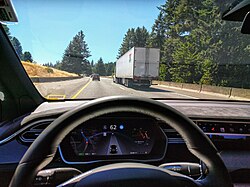
Overview
A self-driving car, also known as an autonomous car, is a car that is capable of operating with reduced or no human input. They use technologies such as GPS, neural networks, and artificial intelligence to navigate and drive without human intervention. Initially commercialized in 2020, self-driving cars provide significant convenience and safety improvements on public roads.
Key facts
- Payload
- —
- Reach
- —
- Speed
- —
- Weight
- 2,200 kg
- IP rating
- —
- Battery
- —
- Power
- —
- Autonomy
- fully autonomous
- Launch year
- 2020
- Price
- —
- Status
- active
Detailed specifications
Compute1
- Onboard Compute
- server-grade CPUs and GPUs[3]
Other11
- Applications
- goods_to_person
- Company Country
- US
- Navigation Type
- lidar_slam, vision
- Deployment Count
- 20000000
- Deployment Notes
- The Waymo Driver has been tested in over 1 state across the US and has gathered millions of miles of driving data.
- Compatible Vision
- lidar, radar, cameras (high-resolution, up to 17 megapixel), external audio receivers[1][2][3][4][5]
- Industries Served
- transportation
- Obstacle Detection
- true
- Availability Status
- available
- Countries Available
- US, Japan, UK
- Additional Information
- - Enhanced sensor suite with reduced costs. - Capable of operating under extreme weather conditions. - Built-in redundancies for improved safety. - Thousands of miles of real-world experience. - Key advancements in sensor technology and testing methodology.
Reviews for Self-Driving Car
Loading reviews…