Cobot vs Traditional Arm: When Each Wins, When Each Loses
Force-limiting design is not a universal upgrade. Knowing which architecture to deploy changes your ROI math before you buy anything.
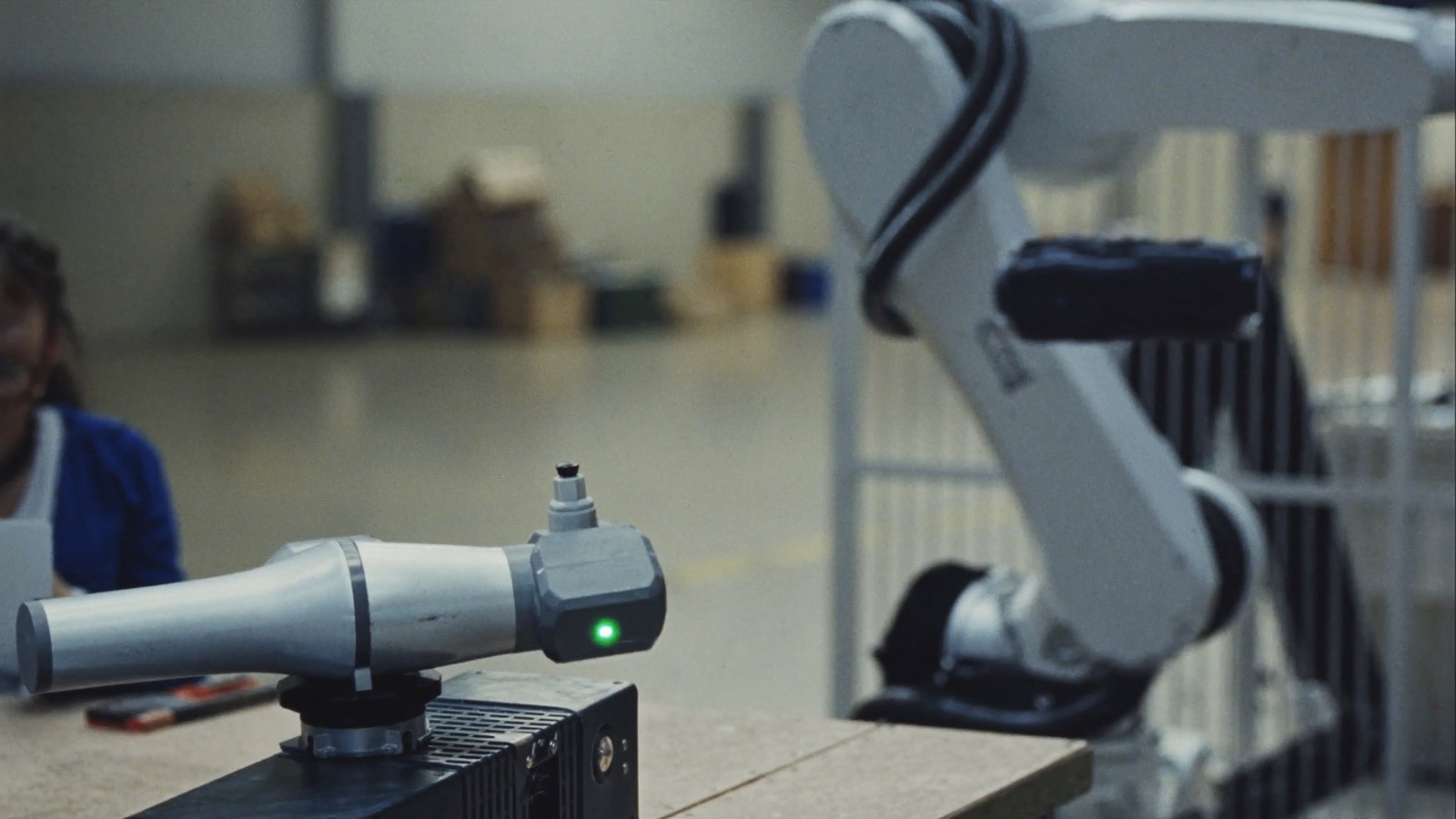
In 2019, a mid-size electronics contract manufacturer in the US midwest installed a UR10e collaborative robot on a circuit-board inspection task. The cell worked fine. The robot ran at roughly 400 mm/s, completed inspections reliably, and required no safety fencing. A year later, the same plant installed a traditional six-axis arm on a nearby soldering line. The new cell ran at 1,200 mm/s with a dedicated light-curtain enclosure and cycle-time performance roughly 3x what the cobot could achieve on that task.
Both decisions were correct. The tasks were fundamentally different, and each machine fit its application.
That story is uncommon. More often, manufacturers either over-engineer a simple pick-and-place with a $280,000 fenced arm, or install a cobot on a high-throughput press-tending task and spend six months discovering why cycle time is stuck at 60% of target. The architectural choice — cobot vs traditional arm — is one of the most consequential decisions in an automation project, and most buyers make it based on cost or familiarity rather than application fit.
This guide gives you a decision framework grounded in the technical trade-offs.
What the architectures actually solve
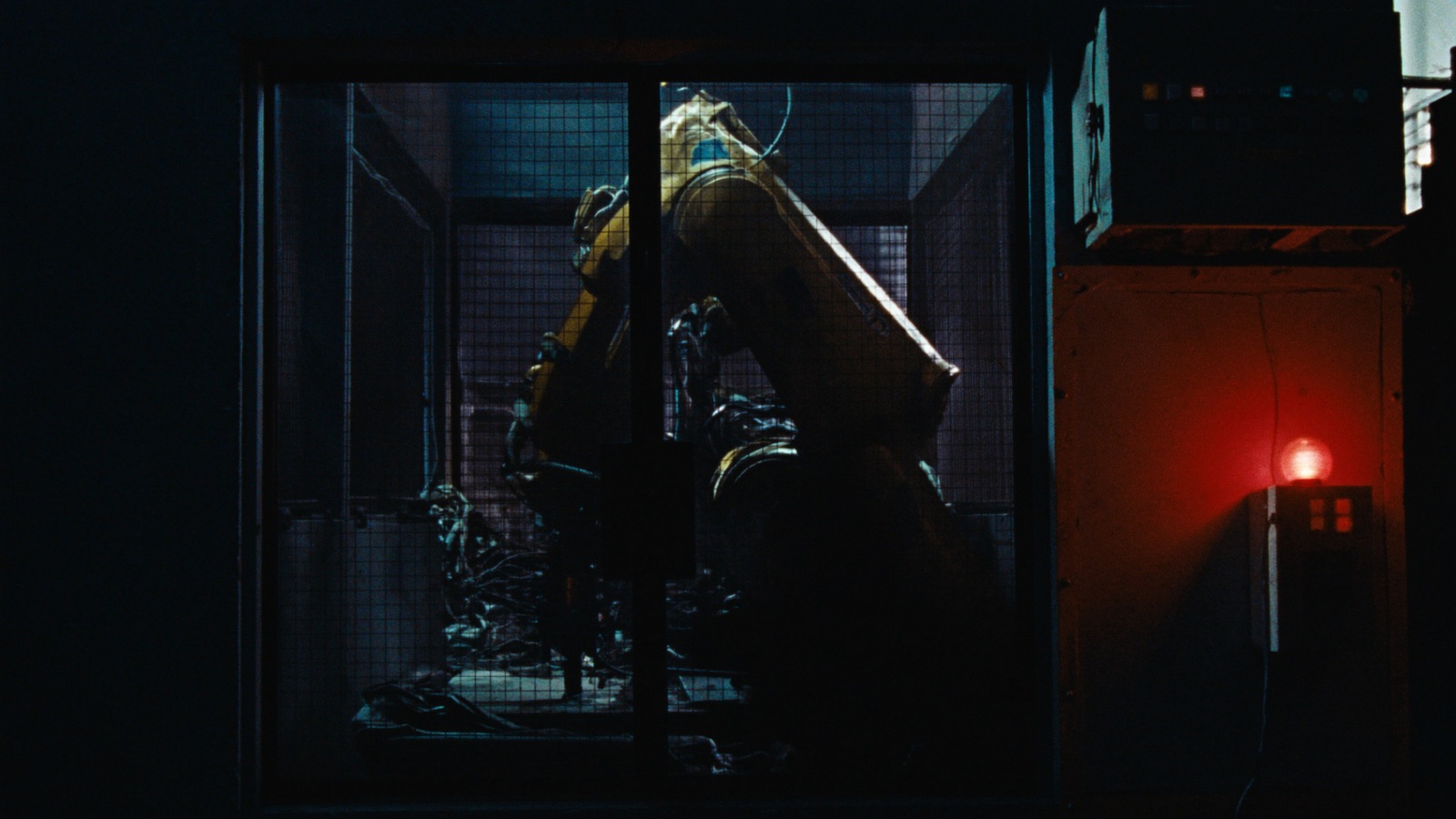
Traditional industrial arms — including FANUC M-series, KUKA KR, ABB IRB, and Yaskawa Motoman — are designed around one priority: maximum throughput at maximum repeatability. They run fast. They position accurately. They do not stop when they contact a person. Safety in these systems is achieved through physical separation: cages, light curtains, area scanners, and interlocked doors. The robot runs; humans stay out.
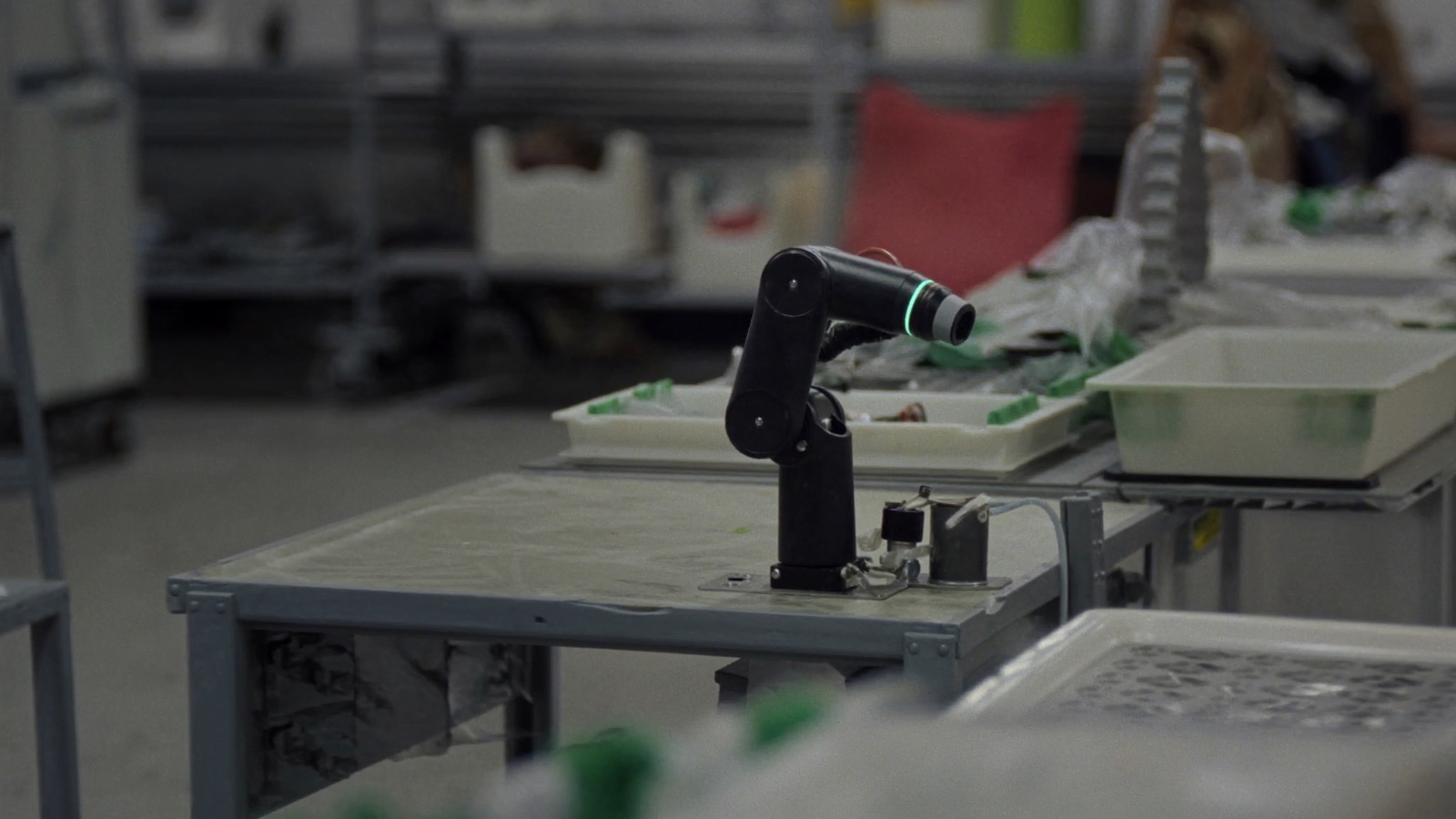
Collaborative robots — Universal Robots UR-series, FANUC CRX, ABB GoFa, Doosan H-series, Techman TM-series — are designed around a different priority: operation without fixed safety barriers. Power-and-force limiting (PFL) is the dominant safety mode. The robot's joint torque sensors detect unexpected contact and stop the arm before injury thresholds are reached. Speed is deliberately capped because kinetic energy at contact is a function of mass and velocity squared — slow the robot down and the contact force drops into ISO/TS 15066-compliant territory.
The trade-off is not subtle. A cobot that can safely share space with an operator runs at 250–1,000 mm/s under PFL constraints. The same joint configuration on a traditional arm runs at 1,500–3,000 mm/s. That gap is the fundamental reason cobots do not replace traditional arms at high-cycle tasks — they represent a different design point, not an upgrade.
Where cobots win decisively
Low-volume, high-mix production
Cobots excel in environments where programs change frequently. Traditional arm programming — teach pendants, TP code, PLC integration — requires skilled robot technicians. UR's Polyscope, FANUC CRX's drag-and-drop teach pendant, and Techman's flow-based programming let line supervisors with hours of training add waypoints and change sequences. For contract manufacturers running 20+ product variants, that reprogram cost compounds into a meaningful competitive advantage.
Human-adjacent tasks with variable inputs
Inspection, quality sampling, screwdriving, assembly with human operators present, and machine tending where operators need to intervene in the same cell without locking out the robot — these are natural cobot applications. Force-limiting design lets operators correct mis-feeds or remove jams without a lockout/tagout cycle.
Small-footprint deployments
UR3e footprint: 128mm mounting diameter. UR5e: 149mm. These units mount on benchtops, the sides of machines, and inside machine envelopes with no dedicated real estate. Traditional arms start at much larger base diameters and require floor mounting with bolt patterns. In a tight cell with 14 stations, footprint is often the constraint.
Sites without a robot engineering team
A plant with no robotics technician on staff cannot maintain a traditional arm safely. Cobots are designed for operator-maintainable deployments: clear fault codes, GUI-based path editing, community app ecosystems (UR+ has 300+ certified peripherals), and online training paths that lead to competent operators in days, not months.
Where traditional arms win decisively
Cycle-time-critical applications
Welding, stamping, die-casting extraction, palletizing at volume, and high-speed pick-and-place have cycle-time requirements that PFL-governed cobots cannot meet. A UR20's 20 kg payload at 500 mm/s cannot match a FANUC M-20iD running at 2,100 mm/s with the same payload. When your line OEE depends on a robot completing a pick-and-place in under 0.8 seconds, the compliance gap is a no-go.
Payloads above 25 kg at repeatability
Most cobots top out at 20–25 kg. The UR20 is the UR e-series ceiling at 20 kg payload. Doosan's H2515 reaches 25 kg. Above that, traditional arms are the only option: FANUC M-410 series handles up to 700 kg. For heavy stamping extraction, casting loading, engine block handling — there's no collaborative alternative.
Process isolation requirements
Welding cells, spray painting booths, and cleanrooms where the process itself is hazardous require physical enclosures anyway. Adding PFL capability to isolate a weld cell from human access makes no sense — the fencing is there for the arc flash, not the robot. In these cases, a traditional arm with higher speed and lower unit cost is appropriate.
High-accuracy, high-repeatability tasks
Traditional arms achieve repeatability of ±0.01–0.02 mm at their operating speeds. Most cobots specify ±0.03–0.05 mm. For precision machining, medical device assembly, or optical alignment, the repeatability spec may eliminate cobots outright.
Head-to-head comparison
| Dimension | Collaborative Robot | Traditional Arm |
|---|---|---|
| Typical speed (TCP) | 250–1,000 mm/s (PFL) | 1,500–3,000 mm/s |
| Max payload (current leaders) | 25 kg (Doosan H2515) | 700+ kg (FANUC M-410) |
| Repeatability | ±0.03–0.05 mm | ±0.01–0.02 mm |
| Safety fencing required? | Often no (risk assessment required) | Yes — hard perimeter |
| Programming complexity | Low to medium; GUI-first | High; TP/proprietary code |
| Time-to-first-program | Hours to days | Days to weeks |
| Floor space | Small; mountable anywhere | Medium to large; requires footprint planning |
| Typical price range (robot only) | $23,000–$85,000 | $40,000–$200,000+ |
| Integration cost | $5,000–$40,000 | $40,000–$200,000+ (includes cage, interlock, controls) |
| Target OEE | 60–85% | 85–95%+ |
The risk assessment clause that most buyers miss
Cobots are not unconditionally safe. ISO 10218-1:2025 and ISO/TS 15066 (now integrated into ISO 10218-2:2025) require a risk assessment for the specific application, tooling, and workpiece — not just the robot. A cobot carrying a 3 kg sharp-edged workpiece at 800 mm/s may exceed permissible contact force limits for the hand body region even though the robot is within its design spec. The workpiece, the EOAT geometry, and the speed all factor into the actual risk level.
The practical consequence: removing safety fencing requires completing a risk assessment and documenting that contact forces under realistic fault scenarios are below ISO/TS 15066 Annex A body-region limits. Many first deployments skip this and deploy informally. That works until it doesn't, and the liability exposure on an undocumented cobot deployment is substantial.
If you're deploying without a certified integrator, at minimum you need:
- A completed risk assessment per ISO 10218-2 / ISO/TS 15066
- Documented EOAT geometry and mass at contact
- Speed limits configured in the robot controller that reflect the PFL analysis, not just the robot's mechanical maximum
- Periodic re-assessment when tooling changes
Decision tree: which do you need?
Answer these four questions before you talk to a vendor:
1. Will an operator share the cell during robot operation? If yes → start with cobot. If no → either; evaluate on cycle time and payload.
2. Is your cycle time requirement under 2 seconds per pick? If yes → traditional arm is likely required. Benchmark with the target arm before committing.
3. Is your payload above 20 kg at the speed you need? If yes → traditional arm. Above 25 kg, cobots are not an option today.
4. Will programs change more than quarterly? If yes → cobot's lower reprogram cost compounds into real savings. Calculate over 3 years, not per change.
Most applications that fail after deployment violated one of these four conditions. Either a cobot was installed where a 0.8-second cycle time was required, or a traditional arm was fenced into a cell where operators need daily access. Map your application first, then match the architecture.
The total cost implication
The list price gap between cobots and traditional arms narrows once you account for integration. A UR10e at $50,000 list plus $15,000–25,000 for a basic integration plus $5,000–15,000 for EOAT runs $70,000–$90,000 all-in. A comparable FANUC M-20iD at $60,000 list plus $80,000–150,000 for fencing, safety integration, light curtains, and controls engineering runs $140,000–$210,000 all-in. At that comparison, the cobot is 40–60% cheaper on comparable payload applications.
But that calculation only holds if the cobot can actually run at the cycle time the application requires. If throughput is 30% below target because PFL speed limits don't allow the robot to keep pace with the line, the per-unit cost becomes irrelevant — the machine is a bottleneck, not an automation win.
For TCO and payback math by application type, see the companion article in this series on cobot total cost of ownership.