Front-of-House vs Back-of-House Automation: A Buyer's Decision Tree for Hotels
Most hotels make the wrong first investment. The 'wow' bot rarely pencils. The unglamorous bot often does.
The most common first purchase in hotel robotics is also among the least defensible: a humanoid or tablet-on-wheels concierge bot positioned in the lobby to greet guests and answer basic questions.
It generates social media content on day one. It captures attention at the front desk. Then, over the following 60–90 days, a predictable pattern plays out: the novelty wears off, guests stop engaging with it, staff stop routing interactions through it, and the GM begins avoiding the inevitable conversation about whether it justified the cost.
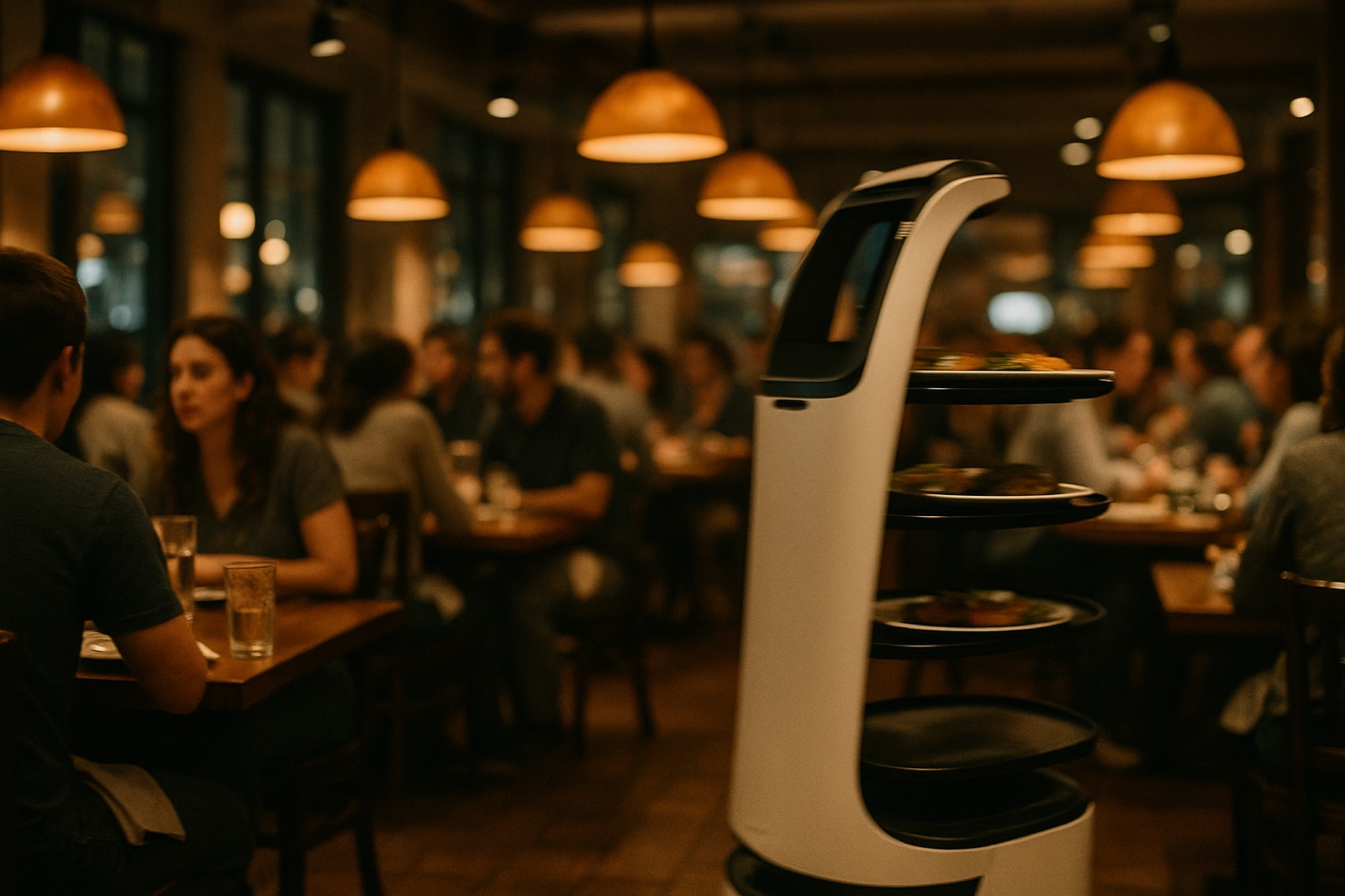
The robots with consistent ROI stories in hospitality are less photogenic. They run to rooms with extra towels at 2am. They clean 15,000 square feet of conference hall carpet while the night crew handles guestrooms. They sit in the service elevator holding a breakfast order rather than standing in the lobby being photographed.
This guide is a framework for sequencing automation investments at a hotel property — what to buy first, what to defer, and what to skip entirely until the technology matures.
Front-of-House: Category by Category
Concierge / Greeter Robots
Verdict: Skip for ROI. Consider only for specific marketing use cases.
SoftBank's Pepper robot was the dominant hospitality concierge bot of the 2016–2021 era. It was deployed in hotel lobbies across Asia and a handful of US properties. SoftBank discontinued Pepper sales in 2021 after sustained commercial losses, and the hospitality deployments largely wound down or went unmaintained.
The category's core problem: the concierge use case does not require robotics. It requires information availability. A digital display, a QR code linking to your app, or a well-designed kiosk handles 90% of the questions a lobby robot answers. The incremental value of a mobile, human-shaped device to deliver that same information is minimal — and the operational overhead (maintenance, software updates, guest interaction failures) is real.
There is one legitimate niche: flagship properties where the robot is a deliberate brand statement — a tech-forward convention hotel using the robot as a conference facility showpiece, or a brand that has made "innovation" a core identity. In those cases, the robot is a marketing asset, not an operational tool. Evaluate it like a marketing asset: what's the impression value, what's the press coverage, how long does the novelty hold? Don't expect it to generate a labor ROI.
Self-Check-In Kiosks
Verdict: Strong ROI. Buy this first if you don't have it.
Technically not "robotics," but kiosks are the automation investment with the most consistent payback data in hospitality. For a 150+ room property with a predictable business or extended-stay mix, kiosk check-in reduces front-desk labor requirements during predictable peak windows.
Guest adoption varies by segment — convention business travelers check themselves in readily; leisure guests and first-time visitors tend to prefer agent assistance. A hybrid configuration (2 kiosks + reduced front desk staffing at predictable off-peak windows) is typically where the ROI lands.
This is not the focus of this guide, but if you haven't solved kiosk check-in and you're evaluating delivery robots, reconsider your sequencing.
Guest-Facing Delivery Robots (Room Service, Amenity Delivery)
Verdict: Strong ROI at 150+ rooms, urban properties, adequate utilization. First robot buy for many properties.
Room delivery robots are the clearest ROI case in hotel robotics. The use case is well-defined: robot receives a pickup request, collects items from a staging station, navigates to the guest floor (via elevator), delivers to the door, returns to base.
The ROI case requires:
- Property size of at least 100–150 rooms (below this, daily delivery volume is too low for the math to close)
- Urban or resort location with premium labor costs — market wages above $18/hr fully loaded
- Multi-floor deployment capability (elevator integration is required; see the TCO guide)
- Daily delivery volume of 20+ requests across all shifts
For properties that meet these criteria, the robot typically replaces 0.5–1.0 FTE of runner/porter labor per shift, with a per-delivery cost that beats fully loaded human cost at full utilization.
First robot buy recommendation: If your labor cost is high and your delivery volume is there, delivery is where to start.
Greeter / Social Robots for Events
Verdict: Novelty only. Gimmick value at weddings and corporate events. Not a recurring ROI play.
These are occasionally rented for corporate conference openings or high-profile weddings. They cost money to deploy, impress for approximately one day, and generate no sustainable operational value. Fine as a one-time venue differentiator — not worth a capital purchase.
Back-of-House: Category by Category
Lobby and Conference Floor Cleaning Robots
Verdict: Strong ROI for properties with large floor area. Often the second robot buy after delivery.
Autonomous cleaning robots (primarily floor scrubbers and vacuums) are among the most mature use cases in commercial robotics. Companies like Avidbots, Brain Corp's BrainOS-powered fleet, and Softbank's Whiz have deployed at scale across airports, shopping centers, and convention hotels.
The ROI case is straightforward for large properties:
- Conference center with 20,000+ square feet of floor space: a cleaning robot running overnight can cover the area faster and more consistently than manual labor for the same shift duration
- Lobby and corridor cleaning: robot runs on recurring schedule, freeing cleaning staff for guestroom turnover and spot work
Purchase price range for commercial floor scrubbers and vacuums: roughly $25,000–$75,000 depending on footprint capacity and vendor (industry estimate). This category has more competition and longer track records than delivery robots — use that to negotiate.
The ROI case weakens for smaller properties (under 10,000 square feet of common area) where the floor is cleaned quickly anyway, and for carpeted guestroom corridors where wet scrubbers are inappropriate.
Linen and Laundry Handling
Verdict: Early-stage. Skip for now unless you're a large convention property.
Robotic laundry and linen logistics is a real category — autonomous carts, sorting systems, linen delivery robots — but it's not yet at the cost-performance point that makes sense for most hotels. The economics and the product maturity are both 3–5 years from being a confident first-buy recommendation for a standard hotel. Watch this space, particularly for convention hotels with on-property laundry operations.
Kitchen Automation (BOH Food Prep)
Verdict: Works for chain QSR, fails for full-service hotel F&B.
Miso Robotics' Flippy is deployed across 100+ White Castle locations for frying and grilling with precise timing control. That is a controlled, high-volume, narrow-task use case in a standardized kitchen.
A hotel F&B kitchen that produces eggs Benedict, custom omelets, and daily-changing menu items is not that kitchen. Full-service hotel kitchens have too much task variety, too many exceptions, and too much requirement for human judgment to make a compelling case for kitchen automation today.
The exception: banquet-scale plating and high-volume single-item production (portioning desserts, assembling identical appetizers for 400-person events). These are real niches but require specific vendor consultation.
Housekeeping Assist Robots
Verdict: Not yet. Early-stage and proprietary to a few major brand pilots.
Robotic guestroom turnover is the largest labor cost in hotel operations and the most aspirational automation use case. It's also nowhere near ready for general deployment. The unstructured environment of a guestroom — different configurations every checkout, towels on floors, furniture moved by guests — is still significantly harder for robots than structured warehouse or corridor environments.
Figure AI has demonstrated towel-folding and laundry stacking. Boston Dynamics Atlas is entering production in 2026 with initial deployments at Hyundai and Google — not hospitality. Tesla Optimus is targeting mass production in 2026 with no hospitality-specific deployment announced.
Realistic timeline for functional hotel housekeeping robots: 2028–2031, with high variance. Anyone trying to sell you a housekeeping robot today is selling you a pilot, not a product.
The Recommended "Buy Sequence" for a 150-Room Urban Hotel
Based on ROI profile, technology maturity, and operational disruption risk:
| Priority | Category | Why first |
|---|---|---|
| 1 | Guest delivery robot | Highest ROI per dollar in current market; clear use case; established vendors |
| 2 | Lobby / conference floor cleaning | Strong ROI for large floor area; mature category; supplements existing cleaning staff |
| 3 | Self-check-in kiosks | If not already deployed; consistent payback for business mix |
| 4 | Kitchen/laundry automation | Evaluate for specific high-volume production scenarios only |
| Skip (for now) | Concierge / greeter robots | Poor ROI; technology discontinued or on-hold; novelty depreciates fast |
| Wait (3–5 years) | Housekeeping robots | Technology not ready for general deployment |
What 2026–2028 Actually Looks Like
The humanoid hotel staff robot is coming. UniX AI, Figure, Optimus, and others are targeting hospitality and household applications. But "targeting" and "deployable at your property in 12 months" are very different claims.
Current humanoid robots operate well in structured, repetitive environments. A hotel hallway — with housekeeping carts, guest luggage, children, variable lighting, and daily layout changes — is not that environment. The navigation and dexterity requirements for unstructured hotel tasks are substantially harder than what's currently demonstrated in vendor videos.
Operators who are evaluating humanoid robots for 2025 deployment should ask the vendor for a continuous 30-day operational reference at a property comparable to theirs. Not a demo. Not a pilot with full vendor on-site support. A reference.
That question will tell you where the technology actually is.
The Decision in One Sentence
If you run a 150-room urban hotel with high labor costs and consistent delivery volume, your first robot should make deliveries to guestrooms, not answer questions in the lobby. Everything else comes after that ROI case is proven and the staff have adapted to working alongside automation.