Restaurant Robot Servers: Where They Pay Back in 6–14 Months vs Where They're a Gimmick
The Chili's case teaches the wrong lesson if you read it wrong. Here's what actually determines payback.
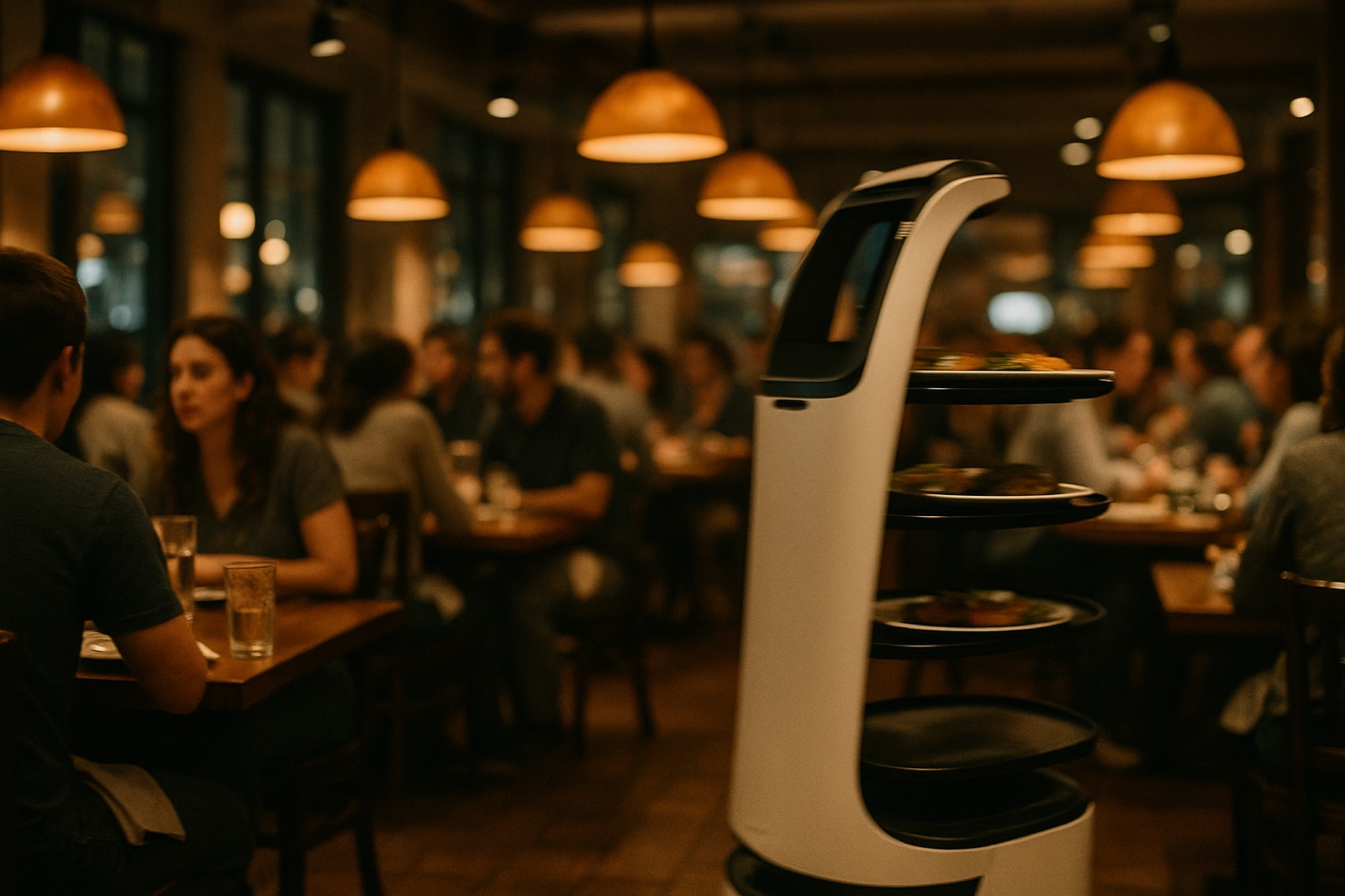
Chili's deployed Bear Robotics' Servi robot "Rita" across 61 locations. The pilot worked operationally. Eighty-two percent of guests reported a better experience. Staff were freed from food-running duties and redirected to higher-touch guest interactions. Then new CEO Kevin Hochman pulled back the rollout in 2022, citing the need to prioritize initiatives with direct sales and profit impact.
The robots worked. The business case didn't survive a change at the top.
If you read the Chili's story as "robot servers don't work," you will make a worse decision than the one Chili's made. The real lesson is more specific: Chili's average check of around $15–18 per person and its specific labor structure, combined with the lease cost of the program at scale, did not produce the margin improvement the incoming CEO required. That is a brand-and-economics problem, not a technology problem.
The same robots deployed at a 150-seat casual dining chain in a high-labor-cost market, with table turnover as a real constraint and a check average of $22–28, may pencil very differently.
Here is how to run the actual analysis for your concept.
The Variables That Determine Payback
Five factors drive whether a robot server returns its cost in under 14 months:
1. Check Average
Robot servers have a floor below which the math rarely works: roughly $15 average check per cover.
Below that threshold (quick-service, fast-casual counter service, takeaway-dominant concepts), food running is not a staffing problem. Servers aren't running plates across the dining room — they're handing bags across a counter. A robot has nothing to do.
Above $30–35, you're in polished casual or fine dining territory, where the service experience is a material part of the product. Guests paying $75+ per cover for a tasting menu are not going to be delighted by a robot that rolls to their table with bread service. The robot is optically inconsistent with what they're paying for.
The sweet spot is the $15–30 casual dining range where plate volume is high, food running is a genuine labor bottleneck, and guests have moderate but not extreme expectations for personalized service.
2. Floor Density and Layout
Robot servers navigate using lidar and obstacle avoidance. They need clear paths. "Clear paths" means:
- Table spacing of at least 36–42 inches between chair backs at full occupancy
- Hard floor or low-pile carpet (high-pile carpet degrades navigation significantly)
- Consistent table and chair placement (a dining room that gets rearranged for private events every week is a maintenance headache)
- No irregular pillars, tight corners, or raised platform sections that require ramp navigation
A rule of thumb: if your floor plan would comfortably seat more than 4 tables per 100 square feet, it's dense enough for a robot. Tighter than that and the robot becomes an obstacle.
3. Labor Cost
This is the most important variable for payback timing. At $18+ per hour fully loaded (wages + payroll taxes + benefits), the labor cost math favors automation for high-volume food-running. At $12/hr fully loaded, the payback period extends significantly — often beyond 24 months at typical utilization, which is too long for most operators to stomach as a first deployment.
In 2025–2026, the relevant labor cost thresholds vary significantly by market:
- California, New York City, Seattle: minimum wage above $17–$18/hr, with fully loaded cost typically $22–$28/hr. Robot payback is strong in these markets.
- Most of the Southeast, parts of the Midwest: minimum wage near federal floor ($7.25/hr, though tip credit applies). Fully loaded cost may be $12–$16/hr. Payback math is marginal.
If you're operating in a high-labor-cost market and experiencing regular turnover in your food-running position, you have the right conditions. If you're in a low-cost market with stable staff, the financial case is weak.
4. Turnover Rate in the Target Position
Robot servers are most effectively positioned as food runners and plate clearers — not as full-service replacements. The human tasks they redirect are typically the lowest-wage, highest-turnover positions in a restaurant: food runner, busser, to-go runner.
If you have a reliable food-running team and low turnover in that role, a robot solves a problem you don't have. If you're hiring and re-training food runners every 60–90 days, the robot replaces a recurring cost: job posting fees, HR time, training labor, the first few weeks of sub-optimal performance from a new hire.
This is a less obvious payback channel than "robot runs plates so I need fewer staff." Count it.
5. Operating Hours and Volume
A robot that runs during two lunch and dinner services — say 11am–2pm and 5pm–9pm, six days a week — has more hours of productive operation than one that only runs dinners. Utilization drives per-delivery cost, just as with hotel delivery robots.
A 50-seat casual restaurant running 80–100 covers per lunch and 120–150 per dinner, six days a week, generates enough food-running volume to justify the robot cost in a high-labor market. A similar-sized restaurant doing 40 covers at lunch and 80 at dinner probably doesn't.
The Payback Math for a 50-Seat Casual Restaurant
These are estimates based on publicly available pricing (BellaBot Pro, RobotLAB) and common industry labor cost ranges. They are illustrative, not projections.
Setup:
- 50-seat casual restaurant, $22 average check
- 280 covers/day average (mix of lunch and dinner)
- 2 food-runner shifts per day, 6 days/week
- Current food-running cost: 1 FTE at 1.5 shifts/day, at $16/hr loaded
Robot cost:
- BellaBot Pro RaaS: $800/month (mid-range estimate; use your actual quote)
- Or purchase at $16,000 + $2,000/yr service contract = ~$19,500 over 3 years
- Assume wifi and setup are $3,000 one-time
Labor displacement:
- Robot handles food-running during peak, freeing the food runner to clear tables and assist with service
- Conservative assumption: robot enables the restaurant to operate with 0.5 fewer FTE food runner on average across the week
- At $16/hr loaded, 25 hrs/week: ~$1,600/month in redirected labor cost
Result (RaaS at $800/mo):
- Monthly cost: $800
- Monthly benefit: $1,600 in redirected labor
- Net benefit: $800/month
- Payback on setup costs ($3,000): ~4 months
At $18/hr fully loaded:
- Monthly benefit rises to ~$1,800
- Net benefit: $1,000/month
- Payback: ~3 months
At $12/hr fully loaded:
- Monthly benefit: ~$1,200
- Net benefit: $400/month
- Payback on setup: ~8 months — workable, but only if the robot generates consistent volume
These numbers become negative if the robot only operates part-time, if staff absorb the food-running rather than reducing headcount, or if labor cost is low enough that the displacement savings are marginal.
The Denny's Japan Data Point
Bear Robotics and SoftBank deployed Servi robots across more than 200 Denny's Japan locations. This is an important data point — but it requires careful reading.
"Denny's Japan" is operated by ItoYokado and is a separate franchise entity from US Denny's. The brand, menu, and guest expectations differ significantly. More importantly, Japan's hospitality labor market has structural characteristics that make automation particularly compelling: chronic labor shortage, aging workforce, cultural acceptance of service robots among both customers and staff, and wage pressure from government policy.
The Japan case confirms that robot servers can scale to hundreds of locations with the right infrastructure and vendor relationship. It does not translate directly to an independent US casual dining operator's payback math.
What it does suggest: the technology is reliable enough to deploy at scale. The variables are business model, not technology.
Works vs Doesn't Work: A Decision Matrix
| Factor | Suggests "go" | Suggests "skip" |
|---|---|---|
| Average check | $15–$30 | Under $15 or over $50 |
| Floor density | Open, hard floor, 36+ inch lanes | High carpet, tight layout, frequent rearrangement |
| Labor cost (fully loaded) | $18+/hr | Under $14/hr |
| Service model | Full service, plate-running intensive | Counter service, QSR, takeaway-dominant |
| Turnover in food-runner role | Chronic, 90-day cycles | Stable, long-tenured staff |
| Daily cover volume | 150+ covers/day | Under 100 covers/day |
| Market | CA, NY, WA, IL urban | Low minimum wage markets |
| Guest demographics | Families, casual groups | Business dining, fine dining |
Three or more "suggest skip" factors and the payback math is unlikely to close within 18 months at typical utilization.
Vendor Comparison: BellaBot, Servi Plus, Lucki
These are the most commonly deployed restaurant robot servers in North America as of 2025–2026. Pricing for Servi Plus and Lucki/Orionstar requires direct vendor quote.
| Vendor / Robot | Best for | Payload capacity | Public pricing | Notes |
|---|---|---|---|---|
| Pudu / BellaBot Pro | Casual dining, table delivery | 40 lbs (4 trays) | $16k purchase or $335–$2,430/mo RaaS (RobotLAB) | Most transparent pricing; widely deployed in US and APAC |
| Bear Robotics / Servi Plus | Food running, bussing, multi-robot fleet | 65 lbs | Contact Bear Robotics | Deployed at Chili's US, Denny's Japan. NRA 2025 showcase. |
| Orionstar / Lucki | Casual dining, marketing screen option | ~33 lbs | Contact vendor | Less established US distribution network than Pudu/Bear |
| Richtech / Matradee X | Full-service table delivery | Multi-tray | Contact Richtech | Taller form factor; promotional display screen |
The operational differences between these platforms are modest in a matched use case. Vendor support, integration quality, and local service coverage matter more than feature differentiation at this level.
The Question Chili's Didn't Ask Early Enough
The right question for a robot server pilot is not "will guests like it?" — 82% of Chili's guests said yes. The right question is: "Does the specific financial model at our specific price point, labor structure, and lease cost close the ROI case to the satisfaction of the person who will be reviewing our P&L in 18 months?"
If that person is you, you can run the math above and make your own call. If that person is a CFO, a PE firm, or a brand standards committee, they will need to see the numbers — not the guest satisfaction score.
Run the numbers first. Guest delight is a useful secondary benefit. It is not a substitute for unit economics.