Choosing Among Pudu, Bear Robotics, Keenon, and the Long Tail
Four decision factors that separate these platforms — and when the long-tail vendors are actually the right answer.
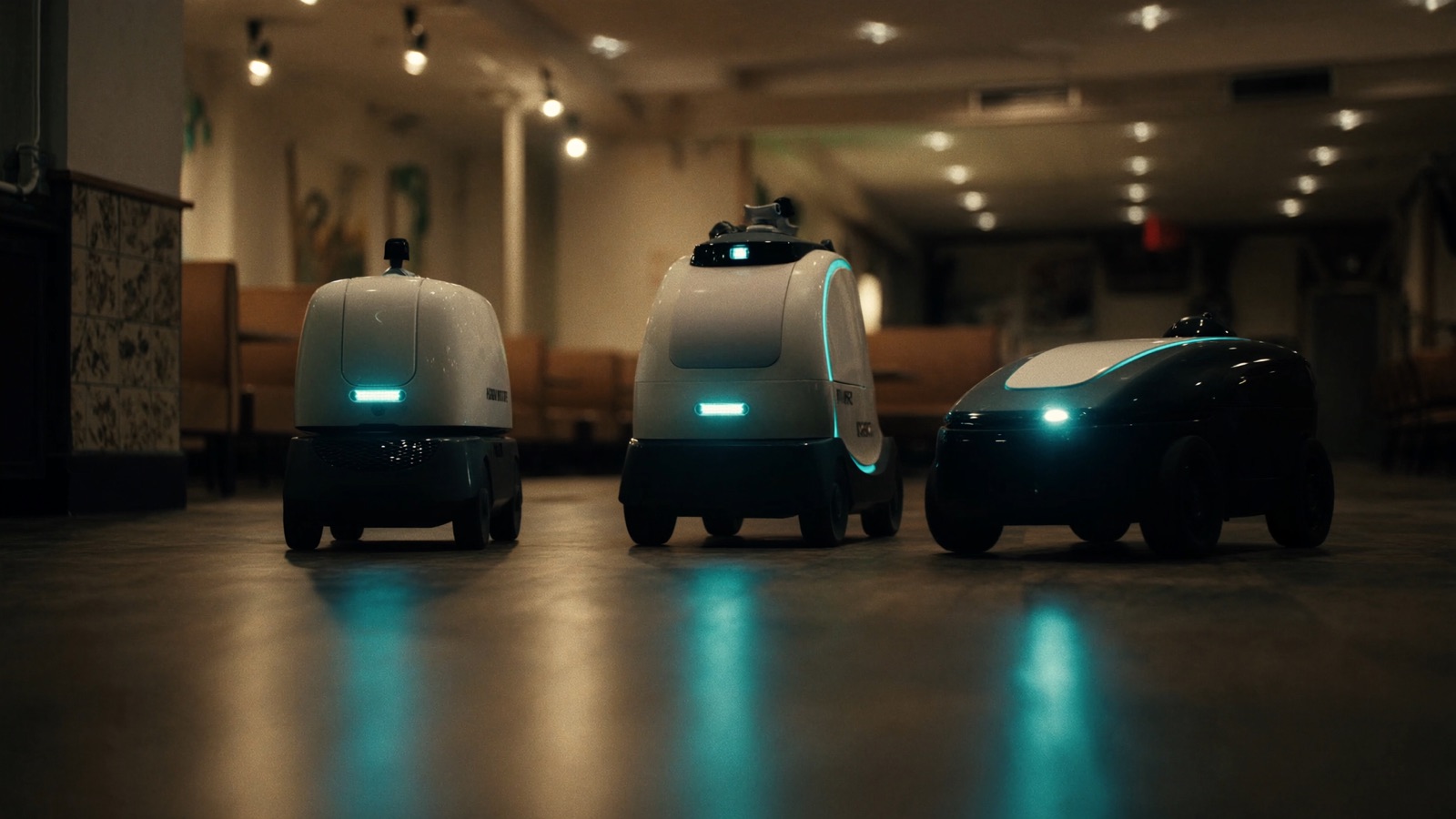
Four robots walk into your restaurant: BellaBot, Servi Plus, Keenon T10, and OrionStar Lucki. They all navigate the floor. They all carry plates. They all avoid obstacles.
Then what?
Most buyers who research service robots discover that the hardware-level differences between the major platforms are smaller than expected. Speed ratings, payload capacity, and obstacle avoidance performance are within 10–20% of each other across the competitive field. The decisions that determine whether a deployment succeeds — fleet software capability, support network density, form-factor fit for the specific sector, and contractual terms — are where these vendors actually diverge.
This guide maps those differences and identifies the scenarios where the long-tail vendors (Richtech Robotics, Savioke, Aethon, Agilox, and others) are worth evaluating even when a major brand is available.
The Four Vendors That Matter at Scale
Pudu Robotics
Origin: Shenzhen, China. Founded 2016. The largest installed base of food-and-beverage service robots globally.
Primary products: BellaBot (4-tray food delivery, cat-themed design with expressible ears), BellaBot Pro (food + retail, with advertising display panel), KettyBot (single-point order taker + delivery), PuduBot 2S (heavier payload, back-of-house logistics), FlashBot (hotel corridor delivery, integrated with elevator APIs).
Pricing (publicly listed): BellaBot standard: $15,900 purchase, $2,430/month RaaS. BellaBot Pro: ~$16,900 purchase, $335/month RaaS. Other models: contact distributor.
Strengths:
- Largest global installed base means the most real-world data on failure modes, software bugs, and edge cases has been worked through. Pudu's firmware is meaningfully more mature than most competitors.
- BellaBot's 4-tray configuration gives it the highest per-trip carrying capacity in the category — important in high-volume food service where trip efficiency determines throughput.
- BellaBot Pro's integrated advertising display has found genuine revenue-generating use in retail environments, making it a dual-function purchase.
- Haidilao (the global hot-pot chain with 1,200+ locations) is a major Pudu deployer. The operational patterns refined across that relationship have been pushed back into the product through firmware updates.
Weaknesses:
- U.S. and European support networks are thinner than the global installed base would suggest. Pudu operates through regional distributors (RobotLAB is the primary U.S. channel) rather than direct field technicians in most markets. Response times for on-site support can be slower than marketing materials suggest.
- The BellaBot's distinctive cat design — expressible ears, animated face screen — is a deliberate choice for restaurant environments where novelty engagement is a feature. In senior care or premium retail, the same design reads as juvenile. Pudu's back-of-house models (PuduBot 2S) don't carry this issue, but the flagship is polarizing outside F&B.
- RaaS pricing inconsistency between BellaBot standard ($2,430/month) and Pro ($335/month) confuses buyers comparing models. The rate difference reflects underlying contract structures, but the lack of transparency in how these are calculated makes it difficult to model costs without a quote.
Best fit: High-volume casual dining, fast-casual, food courts, and hotel F&B operations. Retail with advertising use case (BellaBot Pro). Back-of-house logistics in any sector (PuduBot 2S).
Bear Robotics
Origin: Redwood City, California. Founded 2017. The company with the highest-profile U.S. restaurant deployment history.
Primary products: Servi Plus (food running and bussing, dual loading position), Servi Draft (beverage delivery, designed to handle glasses), Carti 100 (100 kg payload, back-of-house logistics).
Pricing (published): Servi Plus: ~$16,000 purchase, from $293/month RaaS. Other models: contact vendor.
Strengths:
- The Chili's deployment — 61 locations of Bear Robotics Servi across multiple U.S. states from 2021–2022 — is the largest documented casual dining service robot deployment in the U.S. to date. Whatever the outcome at Chili's, the operational data and lessons from that deployment have been incorporated into the platform.
- Servi Plus's dual loading position (incoming tray on top, dirty plates on bottom) is the only major service robot designed specifically for the full food-running + bussing workflow. Competitors that handle only delivery require a separate solution for clearing.
- U.S.-based company with English-speaking direct support. For U.S. operators who are not comfortable managing vendor relationships across time zones and language barriers, this is a meaningful practical advantage.
- SoftBank Robotics partnership enabled deployment across 200+ Denny's Japan locations (the Japanese franchise chain, not the U.S. brand) — validating at scale for casual dining volume.
Weaknesses:
- Narrower product range than Pudu. Bear's lineup is specifically F&B-oriented; there's no retail-native or senior-care-optimized variant in the current portfolio. Carti 100 addresses back-of-house logistics but at a price point and payload category that isn't competitive for food delivery.
- Less international footprint outside North America and Japan. For operators with multi-region or multi-country portfolios, Bear Robotics' support coverage is more limited than Pudu's global distributor network.
- Pricing for units beyond the base Servi Plus (custom fleet configurations, enterprise agreements) requires a sales conversation. Some operators find the opaque pricing process time-consuming.
Best fit: U.S. casual dining chains evaluating food-running and bussing automation as a combined use case. Multi-location operators who want a U.S.-based vendor with local support.
Keenon Robotics
Origin: Shanghai, China. Founded 2010. One of the oldest players in the category.
Primary products: T-series (T5, T8, T10 — stackable plate configuration, differentiated by tray count and navigation sophistication), W3 (cleaning), DINERBOT T8 (international food service branding).
Pricing: Not publicly listed. Distributors quote; North America pricing through authorized resellers.
Strengths:
- Oldest product lineage in the category means the T-series has gone through more hardware and firmware revisions than most competitors. Keenon's obstacle avoidance system is well-regarded among operators who have run multiple brands.
- Modular tray design on the T-series allows operators to configure for different delivery sizes (smaller dessert/drink trays vs. full entree trays) without changing hardware.
- Deployed in one of the highest-density Asian F&B environments — Chinese chain restaurants, Japanese family dining — where floor density and traffic volume are among the highest in the service robot category. Performance in chaotic environments is generally competitive.
- In some markets, distributor networks offer localized support that matches or exceeds Pudu's regional coverage.
Weaknesses:
- Pricing opacity is the highest in the category. Without a public price list, operators cannot model TCO without entering a sales process, which creates friction for early-stage evaluation.
- Brand recognition in the U.S. is lower than Pudu and Bear. Enterprise operators evaluating a fleet purchase may require more vendor vetting time when the brand is less familiar to finance and procurement teams.
- English-language technical documentation and support resources are less complete than Pudu's or Bear's, which can create friction for non-technical operations staff managing deployments.
Best fit: Asian F&B chains with existing Keenon relationships, high-volume environments where the stacking configuration earns its complexity, operators who have evaluated Pudu and Bear and want a third competitive bid.
OrionStar Robotics
Origin: Beijing, China. Founded 2016. Backed by Cheetah Mobile. Strong in Asia, growing international presence.
Primary products: Lucki (food delivery, AI-powered face recognition for personalization), GreetingBot (lobby reception, multi-language NLP), CloudMinds AI platform (underlying AI stack).
Pricing: Not publicly listed.
Strengths:
- Lucki's AI personalization layer is the most advanced in the category for consumer-facing use cases. The system can recognize returning customers, recall previous orders, and deliver more genuinely interactive service than competitors that are essentially trays on wheels with a display screen.
- GreetingBot positions OrionStar for the lobby reception and customer assistance use case more seriously than competitors, with NLP capabilities in 15+ languages.
- Strong penetration in Chinese hospitality and retail environments, with a growing international distributor network.
Weaknesses:
- The AI personalization that differentiates Lucki requires data infrastructure (guest recognition system, PMS integration) that most U.S. operators don't have in place and may not want to invest in for a robot deployment.
- CloudMinds cloud dependency raises data residency and privacy questions for operators in regulated industries (healthcare, finance) or markets with strict data localization requirements.
- U.S. after-sale support network is thinner than Pudu's at this stage of expansion.
Best fit: Upscale hotel F&B or retail environments where personalization is a genuine differentiator and the operator has the data infrastructure to use it. Lobby greeting use cases in international hotels where multi-language capability matters.
The Long Tail: When the Major Vendors Aren't the Right Answer
The four platforms above cover the majority of food-and-beverage service robot deployments. But in specific sectors and use cases, smaller and specialized vendors offer meaningful advantages.
Senior Care — Savioke (Relay+): Savioke's Relay+ is purpose-built for hotel and senior care delivery. It has a smaller form factor than BellaBot or Servi, making it easier to navigate narrower corridors and smaller doorways. The product has a longer U.S. deployment track record in hotels than any other platform, with documented installations at major U.S. hotel chains. For a senior care operator evaluating first deployment, Savioke's sector-specific experience in navigating regulatory environments (HIPAA, facility safety protocols) is a practical differentiator.
Hospital and Healthcare — Aethon (TUG): Aethon's TUG is not a food service robot — it's a logistics robot designed specifically for hospital supply chain: pharmacy delivery, linen logistics, sterile processing. For senior care operators with an active clinical component (skilled nursing, memory care), TUG's integration with hospital systems (ADT feeds, nurse call, EHR) makes it relevant in a way that consumer-facing food service bots are not. TUG has FDA Class I clearance.
Back-of-House Logistics — Agilox: For large-format senior care, retail, or hotel back-of-house operations that need pallet-level logistics (moving laundry carts, supply pallets, large inventory) rather than tray-level delivery, pallet AMR vendors like Agilox or Locus Robotics are worth evaluating. These are warehouse-class robots at significantly higher price points, but the use case is different.
Retail Customer Assistance — Simbe Tally: Tally, Simbe Robotics' retail robot, is specifically designed for shelf scanning and inventory monitoring — an entirely different use case from delivery, but one that addresses a genuine retail operations pain point. For large-format grocery and drug retail operators, Tally and its competitors (Brain Corp, Badger Technologies) represent a different category of service robot worth evaluating alongside delivery platforms.
A Shortlisting Framework
Given the number of vendors in the category, a structured shortlist process prevents evaluation fatigue. Suggested criteria and weights:
| Criterion | Weight | What to evaluate |
|---|---|---|
| Sector deployment track record | 30% | Reference customers in your sector, years in production, publicly documented deployments |
| Support network coverage | 25% | Field technician locations, SLA commitments, time-to-site for your address |
| Fleet software capability | 20% | Map management, multi-unit coordination, analytics, API access for PMS/ERP integration |
| Form-factor fit | 15% | Tray configuration, corridor width requirements, noise level, design appropriateness |
| Pricing model alignment | 10% | Purchase vs RaaS availability, contract flexibility, upgrade path |
Run the 5 criteria for each shortlisted vendor before requesting a demo. The scoring focuses your demo questions on the criteria that actually differentiate the platforms rather than the navigation demos all vendors run well.
What to Ask for Beyond the Demo
Every service robot vendor runs a good demo. Here's what to ask for that isn't on the demo checklist:
1. An unedited 48-hour log of robot activity at a reference site — not a summary, but the raw event log including all pauses, wait states, interventions, errors, and timeouts. This shows you actual throughput at a real site.
2. The escalation path when first-line support can't resolve a software issue — who the third party is, what their response SLA is, and whether that SLA is reflected in a contract.
3. Contract terms on hardware failure — what happens if the robot requires a hardware replacement (motor failure, sensor damage) during the contract period. Is a loaner provided? What is the lead time for replacement parts to your market?
4. Data ownership clause — who owns the utilization, navigation, and operational data the robot generates? Can you export it? Does the vendor use it to train models? In a senior care environment, what PII (if any) the system processes and who is the data controller.
These questions separate vendors who have operated at scale from vendors whose answers come from a pre-sales playbook.
The next article applies these criteria to a structured 60-day evaluation framework — how to run a pilot that actually produces a vendor decision.