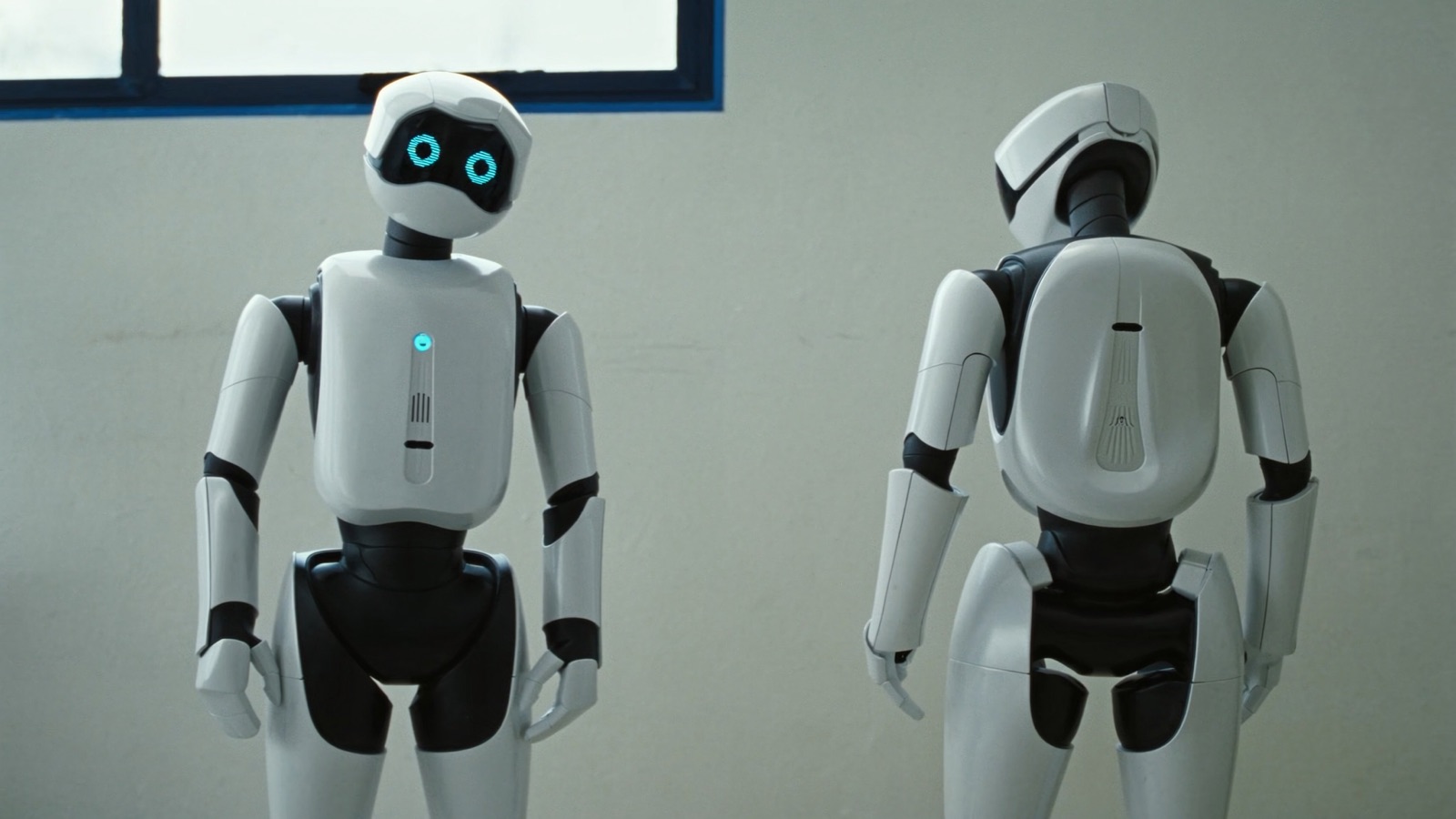
Humanoid TCO: Hardware, Cloud Subscriptions, and the Cost of Teleop Time
The sticker price is the smallest number on the spreadsheet. Here's how to build an honest three-year cost model.
When Agility Robotics signed its Robots-as-a-Service agreement with Toyota Motor Manufacturing Canada in February 2026, the deal structure signaled something important about how serious industrial buyers are approaching humanoid economics: not as a capital equipment purchase with a clean payback calculation, but as a service relationship with ongoing operational dependencies. The RaaS model exists because the true cost of running a humanoid robot in production is not well-captured by hardware price alone.
If your finance team is running a humanoid TCO model based on hardware purchase price plus a percentage for maintenance, the model is wrong. The structure of humanoid robot costs in 2026 has four major components — hardware acquisition, cloud and data services, teleop labor, and integration overhead — and the second and third of those are frequently excluded from buyer projections at the point of pilot approval.
The Four Cost Buckets
1. Hardware Acquisition (or RaaS Commitment)
Industrial humanoid platforms (Agility Digit, Apptronik Apollo, Figure 03) do not have published retail MSRPs. Pricing is negotiated based on volume, deployment complexity, and service terms. For planning purposes, enterprise buyers should model this segment against public data points from adjacent markets and disclosed RaaS rates.
The 1X NEO at $20,000 purchase or $499/month on subscription represents the accessible end of the commercial humanoid market — the platform targeted at smaller-scale deployments and R&D teams, not high-throughput industrial logistics.
For industrial humanoids, the operative comparison is RaaS against ownership. RaaS structures from major vendors typically bundle hardware, software updates, and baseline remote monitoring into a monthly fee. The break-even between RaaS and a purchase equivalent (including annualized maintenance) runs at approximately 19–20 months based on publicly reported market data. Beyond that window, ownership is cheaper — assuming the hardware doesn't require a major upgrade cycle, which in 2026 it likely will.
What to model: For a three-year window, run two scenarios — RaaS throughout, and year-one RaaS transitioning to a purchase decision at month 18. The RaaS scenario has lower capital commitment but higher total outlay. The purchase scenario has higher year-one capital but gives you asset control and avoids escalating subscription fees.
2. Cloud and Software Subscriptions
This is the most consistently underestimated cost category.
Humanoid robots in production are not standalone autonomous systems. They depend on cloud-hosted model inference for perception, grasping, and task planning — capabilities that are too computationally intensive to run entirely at the edge on current hardware. The cloud dependency creates an ongoing fee structure that persists for the lifetime of the deployment.
Cloud costs have two components: the vendor's own SaaS subscription (software updates, model improvements, fleet management, remote monitoring dashboards) and the underlying compute infrastructure those services run on. Some vendors pass compute costs through transparently; others bundle them into the SaaS fee at a markup.
For AI update and feature subscriptions, market data for comparable platforms in the $20,000–$30,000 hardware range runs at $499/month or higher. For industrial platforms at higher capability tiers, plan on cloud/SaaS costs that are material relative to the hardware amortization — not a rounding error.
What to model: Get the vendor's SaaS fee schedule in writing before signing. Confirm what's included (model updates, monitoring, remote support) and what triggers additional charges (additional deployment sites, usage above a throughput threshold, on-site support visits). Model a 15–20% annual increase in software costs over a three-year period; the market is still pricing in early-adopter rates that will likely escalate as vendors move toward profitability.
3. Teleop Labor
Teleop is the hidden labor line that does not appear in most vendor TCO presentations.
Humanoid robots in 2026 require human teleoperation for tasks outside their trained envelope — novel grasps, unexpected obstacles, exception handling when the autonomy stack fails to resolve a situation. This is not a failure of the technology; it is the current state of the art. The question is not whether your deployment will require teleop, but how much.
Early humanoid pilots (2023–2024) operated at close to a 1:1 ratio of teleop operator to robot for novel tasks. The improvement trajectory is significant: vendors are targeting 1:10 operator-to-robot ratios by 2027 as foundation model capabilities improve and the robots accumulate operational data in your specific environment. But the path from 1:1 to 1:10 runs through your deployment.
Teleop operators in the United States cost $25–40 per hour fully loaded (including benefits and management overhead). At a 1:3 ratio for a robot operating one shift per day (8 hours), teleop labor alone runs $65–105 per day, or roughly $20,000–$33,000 per year per robot. This number is larger than the annualized hardware cost for most RaaS deployment structures.
The teleop line drops substantially as the autonomy stack improves — but it does not drop to zero in the near term for any production deployment in 2026. Budget for it explicitly, then track it as a KPI. Teleop hours per productive robot-hour is one of the most meaningful metrics for evaluating whether a deployment is maturing.
What to model: Start with a conservative assumption of one teleop hour for every four robot-hours of productive work in the first 90 days. Expect this ratio to improve to 1:8 to 1:12 by month 12 if the vendor's autonomy improvement program is performing. Build a glidepath into your model rather than assuming day-one efficiency.
4. Integration Overhead
Integration costs are one-time but substantial, and they frequently arrive as surprises.
The major integration categories for a humanoid deployment:
WMS/MES integration: Connecting the robot's fleet management system to your warehouse management or manufacturing execution system is not plug-and-play. Data flows for task assignment, completion confirmation, and exception logging require custom API work. Market rates for this integration run $10,000–$50,000 depending on system complexity and the maturity of the vendor's integration SDK.
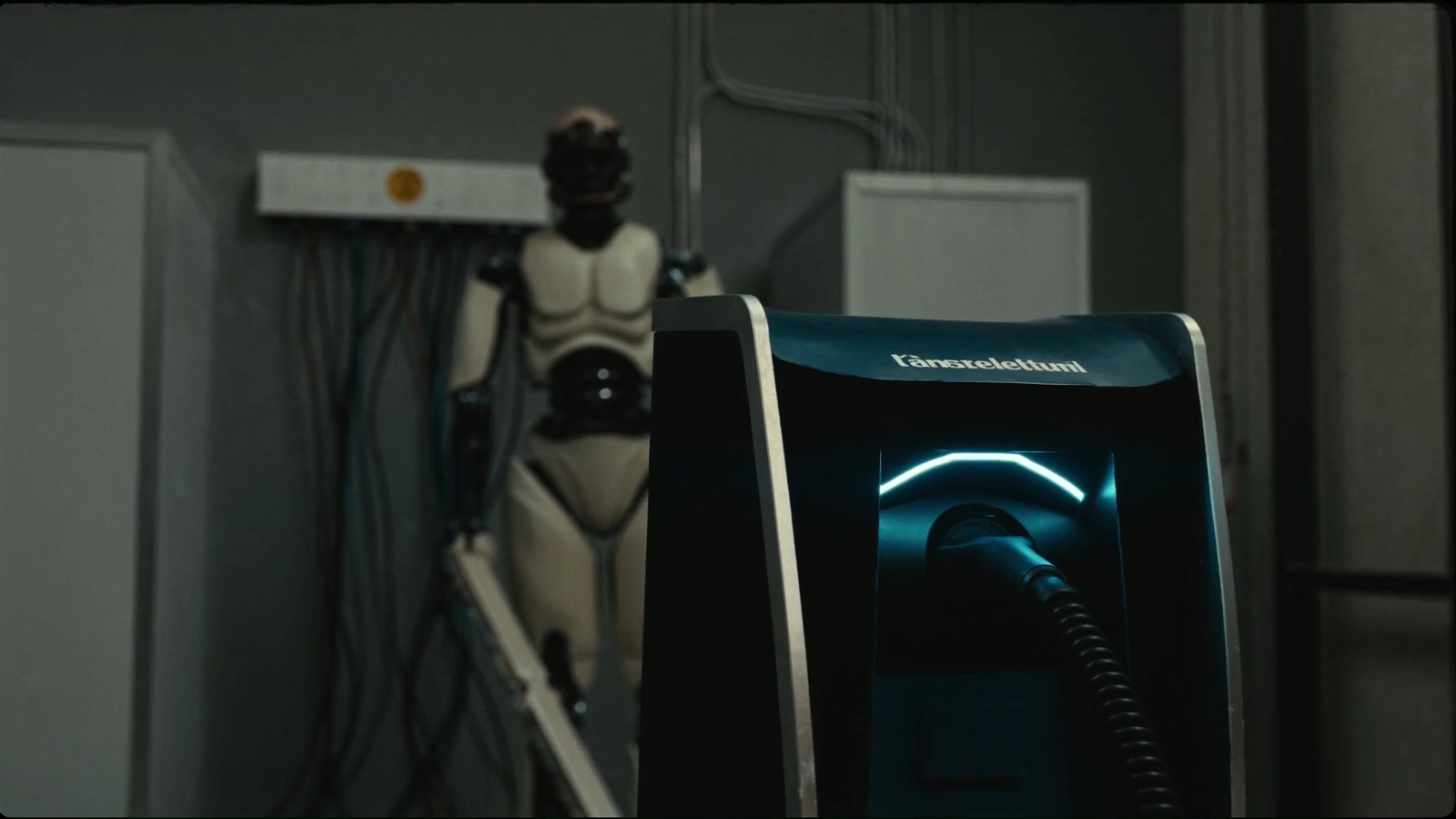
Physical infrastructure: Humanoids need charging stations ($500–$2,000 per unit), potentially upgraded wifi mesh networking ($2,000–$5,000 for a deployment zone), and designated staging areas. If your facility has elevator access requirements, the robot-elevator integration engineering is a non-trivial additional cost.
Safety certification: ANSI/RIA R15.06-2025 compliance for a humanoid robot operating near human workers requires an independent risk assessment and safety validation process. Budget $5,000–$15,000 per deployment site for this work. Some vendors will include a baseline safety package in their service offering; confirm what's covered versus what you are responsible for.
Operator training: Every person who will work alongside the robot needs safety certification training. Budget $1,000–$5,000 per person. For a shift with 20 workers in the deployment zone, this is a material line item.
A Three-Year TCO Model Structure
| Cost Category | Year 1 | Year 2 | Year 3 |
|---|---|---|---|
| Hardware / RaaS | Per vendor negotiation | Per vendor negotiation | Per vendor negotiation |
| Cloud/SaaS subscription | Per vendor, + 15% escalator | Year 1 × 1.15 | Year 2 × 1.15 |
| Teleop labor (1 shift/day) | Model at 1:4 ratio → 1:8 by Q4 | Model at 1:10 ratio | Model at 1:12 ratio |
| WMS/MES integration | One-time: $10k–$50k | Maintenance: $2k–$5k | Maintenance: $2k–$5k |
| Safety certification | $5k–$15k | Re-audit if scope changes | — |
| Infrastructure | $3k–$7k | — | — |
| Operator training | $1k–$5k per person | New staff only | New staff only |
| Maintenance/support | Per vendor SLA | Per vendor SLA | Per vendor SLA |
The model structure intentionally leaves the hardware line as a variable because industrial humanoid pricing is not public and varies significantly by volume, deployment complexity, and commercial relationship. The integrations, labor, and subscription lines are where most buyers underestimate.
RaaS vs. Purchase: The Strategic Question
The RaaS model has a real advantage for buyers in 2026 that goes beyond monthly cash flow: it shifts upgrade risk to the vendor. The Figure 02 retirement from BMW's Spartanburg plant is the instructive case. An organization that had purchased Figure 02 units outright would own hardware that is now a previous-generation platform with a depreciated commercial value and a vendor ecosystem moving on to Figure 03. An organization on a RaaS contract can negotiate a hardware refresh as part of the ongoing service relationship.
Given the iteration velocity in humanoid hardware (major platform generations roughly every 18–24 months for leading vendors), owning the hardware is a material risk that most buyers are not pricing correctly. The TCO advantage of ownership at month 20 needs to be discounted by the probability of a significant platform change before year three.
The correct decision depends on your facility's stability. If your deployment environment and task set are stable enough that a single robot generation can serve you for three or more years without requiring re-training on new hardware, purchase economics are better in the long run. If your environment is evolving (facility redesign, new product lines, changing throughput requirements), the RaaS model's built-in refresh flexibility is worth the premium.
The Productivity Credit
TCO only matters in context of what the robot produces. The productivity credit typically cited in logistics humanoid deployments is labor displacement for specific tasks — tote transport, trailer unloading, machine tending — at 70–80% of human throughput with near-zero absenteeism, zero turnover cost on that task, and no injury exposure for workers.
The labor displacement credit needs to be calculated carefully: it's not the full fully-loaded cost of a human worker. It's the cost of the specific task you're eliminating, after accounting for the fact that workers redirected from that task still need to be employed and deployed elsewhere. In tight labor markets where the alternative is unfilled headcount, the credit is real and material. In fully-staffed environments where labor is available, the credit is smaller than it appears.
A realistic productivity model for a 2026 humanoid deployment in a structured logistics use case (tote handling, machine tending) should show positive unit economics by month 18–24 if the teleop ratio improves as expected and the task volume is high enough to keep utilization above 60%. Below 60% utilization, the fixed costs of the deployment (hardware, subscriptions, integration amortization) spread too thinly across productive output to pencil.
What to Get in Writing Before Signing
Before committing to any humanoid deployment:
- Full SaaS fee schedule for years 1–3, including escalation terms
- Teleop support model: who provides teleop operators (vendor or customer), what is the expected ratio, and what happens when that ratio isn't met
- Hardware refresh terms: if a next-generation platform is released during the contract, what are the upgrade options and at what cost
- Uptime SLA: what constitutes a downtime event, what is the remediation SLA, and what financial remedy applies if the SLA is breached
- Safety certification scope: what the vendor covers and what requires independent assessment
The vendors who resist providing clear answers to these questions in writing are the ones most likely to produce surprises in year two.