What's Actually Shipping in 2026 — And What's Still a Demo
Figure 02 ran on BMW's line for 11 months. Digit moved 100,000 totes at GXO. Atlas is sold out. Here's the honest ledger.
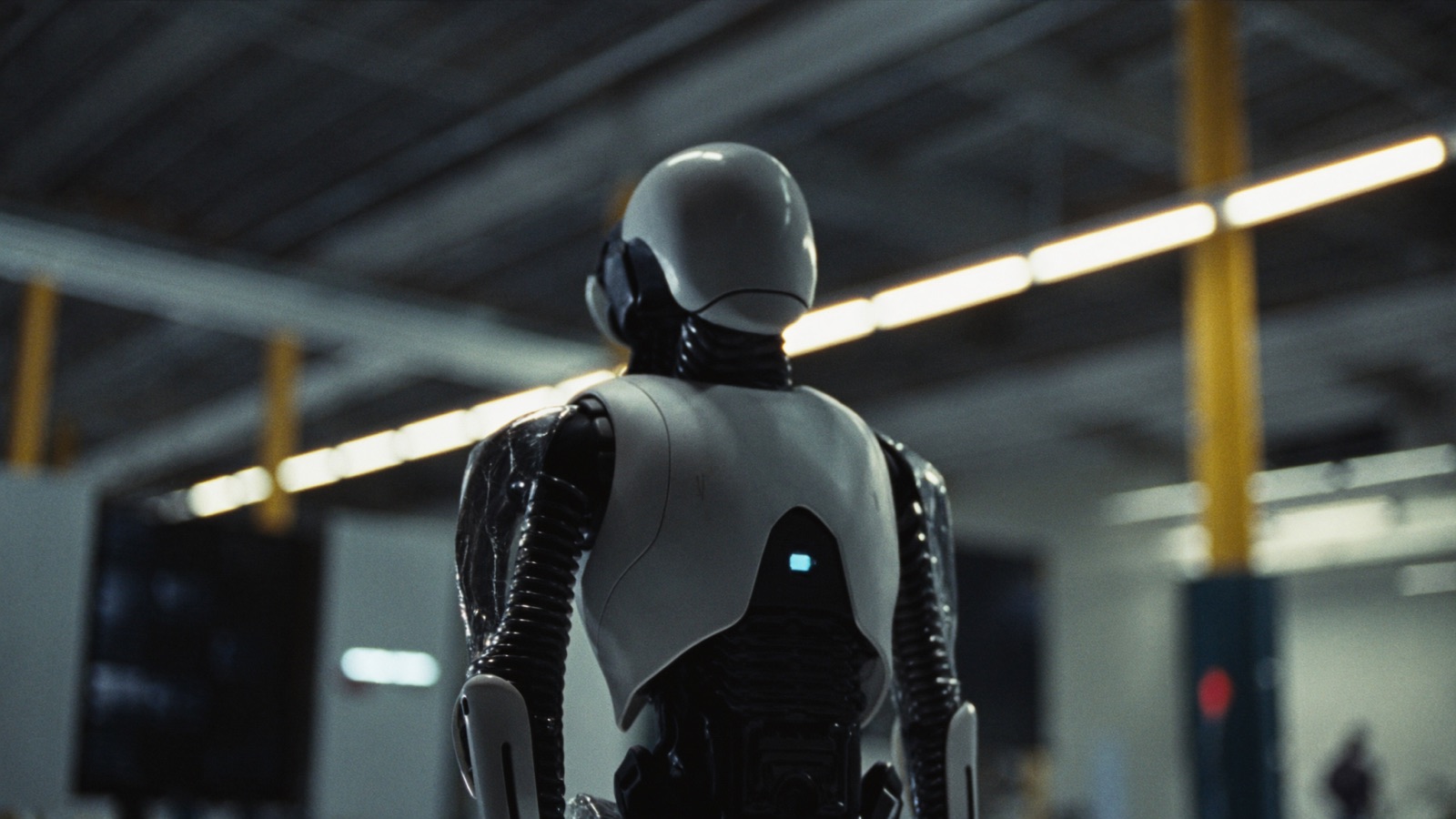
In April 2025, Figure AI's Figure 02 units quietly retired from BMW's Spartanburg, South Carolina assembly plant after 11 months of operation on an active production line. They had worked 10-hour shifts, five days a week, performing body shop tasks alongside human assemblers. Figure called it a completed trial. Skeptics called it a short run. The correct read is more interesting than either interpretation: it was the first time a humanoid robot had operated at production scale, in an uncontrolled industrial environment, for long enough to generate meaningful operational data — and the vendor iterated fast enough that the second-generation unit (Figure 03) is now the production platform.
That story contains everything a serious buyer needs to understand about the humanoid market in 2026: real deployments exist, they are generating real operational data, the hardware is iterating rapidly, and the gap between the platforms in actual commercial service versus those still running choreographed demos is large.
The Honest Ledger: Production vs. Demo
The humanoid space suffers from a consistent marketing problem. Every major vendor announces "commercial availability," "customer partnerships," and "deployments" — language that ranges from paid production contracts to unpaid proof-of-concept loans with friendly pilot customers. Before evaluating any platform, establish which category it falls into.
A production deployment has four characteristics: the customer is paying for the service or hardware, the robot is performing productive work (not a controlled demo circuit), it has been operating continuously for 90 days or more, and the vendor can provide reference site contacts who will speak on the record.
Against that standard, the 2026 field looks like this:
Agility Robotics — Digit: Revenue-generating, commercial scale
Digit is the only humanoid robot that meets all four criteria across multiple customer deployments as of mid-2026. GXO Logistics has Digit units handling tote transport in active warehouse environments. The robots moved over 100,000 totes at GXO facilities — not in a demo corridor, but in live operations alongside human pickers. Schaeffler is a paying customer. In February 2026, Agility signed a Robots-as-a-Service agreement with Toyota Motor Manufacturing Canada following a successful pilot; at least seven commercial units are now active supporting RAV4 logistics at the Woodstock, Ontario plant.
Digit's commercial success comes with an important asterisk: the robot is not a general-purpose humanoid. Its grippers are purpose-built for tote transport. It doesn't have dexterous hands. It operates on structured paths in environments mapped in advance. The "humanoid" form factor — bipedal locomotion, roughly human height and reach — is what lets it work in facilities built for humans without infrastructure changes. The task scope is deliberately narrow, and that narrowness is why it works.
Agility's RoboFab facility in Salem, Oregon is rated for 10,000 units per year. ISO functional safety certification is targeted for mid-to-late 2026, which will matter for customers in regulated manufacturing environments.
Figure AI — Figure 03: Post-pilot, scaling production
The BMW Spartanburg pilot with Figure 02 was the most publicly documented production-scale humanoid deployment in automotive manufacturing. Figure 02 is now retired; Figure 03 is the current platform. Figure's BotQ factory is targeting 12,000 units per year in production capacity.
The BMW pilot outcome is frequently misread. The robots weren't pulled because they failed — the trial ran its full course and BMW's relationship with Figure continued. What it demonstrated is the iteration velocity in this market: a robot that was "production-qualified" in 2024 is already a previous-generation platform by mid-2026. Buyers who sign long-term hardware contracts with humanoid vendors are accepting rapid obsolescence risk in a way that has no equivalent in traditional industrial automation.
Figure's current status: post-pilot, production ramp underway, customer base not publicly disclosed beyond BMW.
Boston Dynamics Atlas: Committed, not yet in customer hands
At CES 2026, Boston Dynamics unveiled the production-ready Atlas — the result of more than a decade of research leading to an industrially hardened platform. The 2026 production allocation is fully committed: units are going to Hyundai's Robotics Metaplant Application Center (RMAC) and Google DeepMind. If you are not Hyundai or Google, Atlas is not available to you in 2026.
The planned production scale — 30,000 units per year by 2028 through Hyundai's manufacturing capacity — is ambitious relative to the current market. Whether that ramp materializes depends on how the RMAC deployments perform and whether the Hyundai manufacturing relationship scales as planned.
Atlas is technically the most documented dynamic bipedal platform in existence, with a published research record going back to 2013. The production variant is architecturally different from the research platform. Buyers looking at Atlas for 2027 should track the RMAC deployments closely; those will be the first real-world data on the production robot's reliability and operational profile.
Apptronik Apollo: Pre-revenue pilot phase
Apptronik has run Apollo in warehouse tests with Google and in initial pilots with Mercedes-Benz at facilities in Germany and Hungary. These are not yet paying commercial deployments by the production criteria above — they are funded POCs in which customers are evaluating the platform. Apptronik has stated that Mercedes plans to expand testing beyond the pilot plants if KPIs hold.
Apollo's specs are among the strongest of the platforms currently in pilot: 25 kg (55 lb) payload, 4-hour hot-swappable battery packs, and a modular design that allows the upper body to be mounted on a wheeled base instead of bipedal legs — an important flexibility for customers who need upper-body manipulation without the complexity of bipedal locomotion.
Apollo is correctly characterized as a serious commercial candidate with meaningful pilot data, not yet a production system with paying customers and multi-site deployments.
1X NEO and Unitree: Different markets
1X NEO targets a different buyer profile — the $20,000 purchase or $499/month subscription positions it as accessible for smaller-scale commercial testing and research applications. 1X is the only vendor publishing noise specifications, which matters for near-human deployment environments.
Unitree's products (G1, H2, H1) are primarily shipping into research and education markets, with R&D and university labs as the primary customer base. Unitree shipped over 5,500 units in 2025 by reported figures. These are not industrial production deployments; they are development platforms. Unitree's commercial logistics ambitions are real but the production deployment track record in 2026 is thin.
What "Pilot Purgatory" Looks Like
Gartner's 2025 analysis of the humanoid market is sobering: through 2028, fewer than 100 companies will advance humanoid proofs-of-concept beyond initial experimentation, and under 20 will scale to production in supply chain and manufacturing operations. The rest will remain in "pilot purgatory" — extending, re-scoping, or quietly shelving programs that never produce a clear go/no-go decision.
The pattern is consistent. A vendor places units with a recognizable enterprise name. A press release announces a "deployment." Twelve months later, the "deployment" is still "in evaluation." The robots are operating — but in a restricted corridor, on a limited set of tasks, with a vendor engineer on site four days a week and a success definition that keeps shifting.
This is not always vendor bad faith. Humanoid robots are genuinely hard to deploy at production scale. The autonomy stack that works in a controlled pilot environment degrades when the facility layout changes, when a new product variant changes the tote dimensions, or when the operational tempo increases during peak season. The software investment required to stabilize a deployment is often underestimated by both vendor and buyer.
The question to ask every vendor: not "do you have deployments" but "how many of your current deployments have been operating continuously for more than 90 days with zero vendor personnel on site?" That number is currently very small across the entire market.
What's Still a Demo
Several funded and well-publicized platforms do not yet meet the production threshold:
- Sanctuary AI Phoenix: impressive dexterity demonstrations, but limited public deployment data
- Tesla Optimus: $20,000–$30,000 target price announced, no external customer deployments confirmed as of mid-2026
- Xiaomi CyberOne, Fourier GR-2, and most Chinese platforms: primarily shipping to research institutions and domestic pilot programs, no confirmed Western commercial deployments
This is not a critique of these companies' technology — several have impressive underlying capability. It's a statement about commercial readiness. A demo that runs well in a controlled environment and a deployment that runs reliably for 90 days in a production facility are different things.
The Production Reality: What It Means for a 2026 Buyer
If you are evaluating a humanoid pilot for 2026–2027, the honest market picture produces a short shortlist.
Immediate availability for paying commercial pilots: Agility Digit (warehouse/logistics, structured tote handling), Apptronik Apollo (logistics, automotive manufacturing pilot program).
2026 production but pre-committed: Boston Dynamics Atlas (Hyundai/Google only).
Post-pilot, production ramp: Figure 03 (automotive/industrial — contact for availability).
Research and development: Unitree G1/H2, 1X NEO, others.
The vendors in the first category can offer reference sites with 90+ days of operational data. For any pilot evaluation, that reference site conversation is the single most important due diligence step. Not the vendor demo. Not the spec sheet. A 30-minute call with the operations manager at a comparable facility that has been running the platform in production for at least three months.
The field will look different in 12 months. The iteration velocity in humanoid robotics is unlike anything in traditional industrial automation — what was production-qualified in 2024 is already previous-generation. Build that into your procurement timeline.
The Right Frame for 2026
The humanoid market in 2026 is not a binary choice between "revolutionary" and "all hype." It is a market in early commercial transition, with one platform (Digit) demonstrably generating revenue at scale, two platforms (Figure, Atlas) in post-pilot production ramp with credible industrial deployments behind them, and a broader field of pre-revenue candidates.
For an ops director evaluating a pilot: the question is whether your specific use case maps onto the narrow set of tasks where humanoids currently outperform alternatives — unstructured logistics, brownfield environments built for human workers, high task variability. That use case fit analysis comes before any platform selection. If the use case fits, the shortlist above is where to start.
The next article in this series covers TCO: the hardware costs, cloud and teleop subscriptions, integration overhead, and how to build a realistic three-year cost model before signing anything.