IP ratings explained: when IP54 isn't enough
IEC 60529 defines what IP codes actually test — and the gaps vendors count on you not knowing.
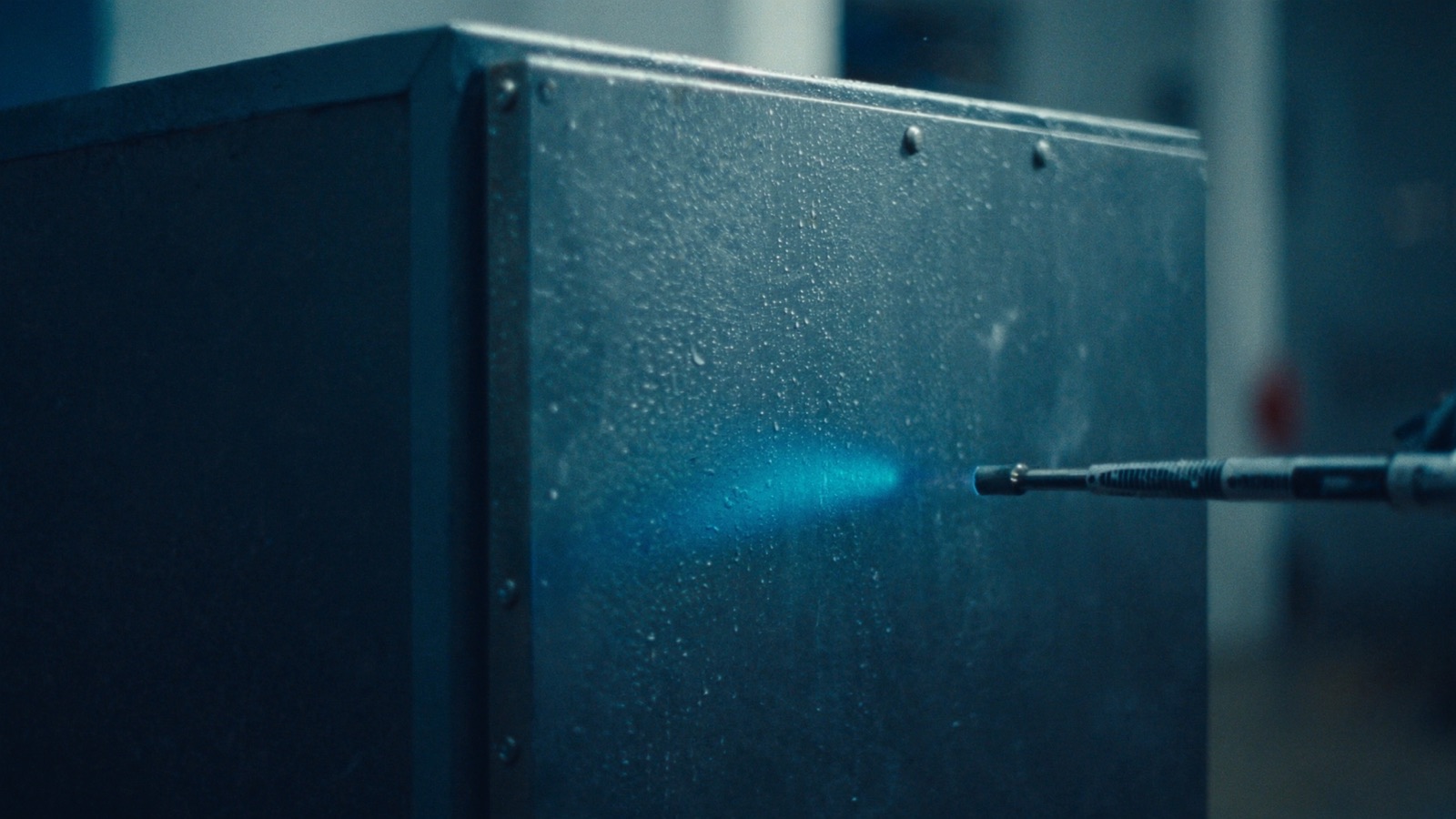
A food manufacturer bought three collaborative robots rated IP54 for a wet-processing line — a line that used regular hose-down sanitation. Six weeks in, two of the robots had moisture intrusion in the joint controllers. The vendor's position: IP54 covers splash protection, not directed water jets. The buyer's position: "splash" means cleaning. Both were technically correct. The mismatch cost three weeks of downtime and a retrofit negotiation that nobody wanted.
This is not an unusual story. IP ratings are one of the most frequently misread specifications on a robot datasheet, and the cost of misreading them scales directly with how hostile your environment is. Here is what IEC 60529 actually tests, where the gaps are, and how to match the right rating to your deployment.
What IEC 60529 measures
IEC 60529 (published in Europe as EN 60529, widely referenced as the IP Code) is the International Electrotechnical Commission standard that classifies the degree of protection provided by electrical enclosures against solid objects, dust, and liquids. The rating format is:
IP [first digit] [second digit]
The first digit runs from 0 to 6 and governs solid particle ingress. The second digit runs from 0 to 9K and governs liquid ingress. An "X" in either position means that protection was not tested, not that it is absent — a critical distinction.
First digit — solid particle protection
| Level | Protection |
|---|---|
| 0 | No protection |
| 1 | Objects > 50 mm (hand) |
| 2 | Objects > 12.5 mm (finger) |
| 3 | Objects > 2.5 mm (tools) |
| 4 | Objects > 1 mm (wires) |
| 5 | Dust-protected: dust entry not fully prevented but cannot interfere with operation |
| 6 | Dust-tight: no ingress under vacuum test |
Level 5 (dust-protected) versus level 6 (dust-tight) is a meaningful gap in abrasive environments. A grinding or shot-blasting operation produces fine metallic or ceramic particles that a level-5 enclosure will accumulate slowly over time. Level 6 is the correct specification for any environment with airborne abrasives.
Second digit — liquid ingress protection
| Level | Test method | Flow rate |
|---|---|---|
| 0 | No protection | — |
| 1 | Vertical drip | 1 mm/min rainfall equivalent |
| 2 | Drip at 15° tilt | 3 mm/min rainfall equivalent |
| 3 | Spraying water | Oscillating tube, 0.7 L/min |
| 4 | Splashing water | Rotating spray nozzle, 10 L/min |
| 5 | Water jets | 12.5 mm nozzle, 12.5 L/min at 3 m distance |
| 6 | Powerful water jets | 12.5 mm nozzle, 100 L/min at 3 m distance |
| 7 | Temporary immersion | 1 m depth, 30 minutes |
| 8 | Continuous immersion | Manufacturer-specified depth, typically > 1 m |
| 9K | High-pressure, high-temperature jets | 80°C water at 8–10 MPa (80–100 bar) |
Why IP54 is the floor, not the target
IP54 means: dust-protected (level 5) and splash-protected (level 4). The level-4 test uses a rotating spray nozzle delivering 10 L/min from any direction. This represents reasonably aggressive spray — equivalent to moderately heavy rain hitting the enclosure from multiple angles simultaneously.
What it does not represent: a directed pressure wash. The gap between level 4 (splash) and level 5 (jet) is enormous. Level-5 testing uses a 12.5 mm nozzle at 12.5 L/min at three meters distance — a standard garden hose nozzle at low-to-medium pressure. Any cleaning protocol that uses a hose exceeds IP54's second digit.
This is the exact failure mode in the food plant example above. IP54 is appropriate for:
- Indoor industrial environments with incidental moisture (condensation, small drip leaks)
- Light outdoor use in rain
- Applications near, but not in, wash-down zones
It is not appropriate for:
- Daily hose-down or pressure-wash sanitation
- High-humidity environments with regular condensation cycles
- Any application within range of CIP (clean-in-place) spray nozzles
The environments that expose IP rating gaps
Food and beverage processing
USDA and FDA sanitation requirements typically demand daily or per-shift cleaning of surfaces that contact food or are within splash distance of contact zones. The relevant industry standards — NSF/ANSI 4, 3-A Sanitary Standards, and EHEDG guidelines — specify cleaning methods that routinely exceed IP54.
For direct-contact zones (robots that handle food directly), IP69K is the minimum that survives typical food-plant cleaning:
- Level-6 dust-tight
- 9K: high-pressure hot water, 80°C at 8–10 MPa, from multiple angles
For indirect-contact or nearby robots in a wet-processing environment, IP65 or IP66 is the practical minimum:
- IP65: completely dust-tight, survives a 12.5 mm water jet at 12.5 L/min
- IP66: completely dust-tight, survives 100 L/min powerful jet
Most cobots sold into food and beverage at the 2020–2024 vintage are rated IP54 as the base configuration, with IP67 or higher available as optional stainless-steel variants at a significant price premium. If your application is food-adjacent, the food-grade variant is not optional.
Pharmaceutical and cleanroom
The cleanroom challenge is the inverse of food processing. The concern is not water — it is particulate shedding from the robot's joints and cables. IP ratings say nothing about what comes out of the enclosure; they only govern what gets in.
Pharmaceutical applications require cleanroom-classified robots that generate minimal particles and can be wiped down with IPA (isopropyl alcohol) or stronger. The cleanroom rating is a separate classification — ISO 14644-1 cleanliness classes — not an IP code. Specifying IP67 for a cleanroom application addresses the wrong variable entirely.
A robot designed for cleanroom use will typically list its ISO 14644-1 compatibility and use sealed cable management systems, stainless or electropolished surfaces, and lubricants that do not off-gas at operating temperature. Look for those specifications separately from the IP code.
Outdoor and construction
True outdoor exposure involves UV degradation of seals and cable jackets, thermal cycling between night cold and midday heat, and accumulation of water in low-drain areas. An IP65 rating (dust-tight, jet-resistant) is appropriate for outdoor but not immersed applications; IP67 covers temporary immersion to 1 m for 30 minutes, which handles puddles and spray from heavy rain.
Thermal cycling is the hidden problem. Seals that pass the 20°C bench test expand and contract differently in outdoor service. A robot rated IP65 that sits outdoors through freeze-thaw cycles in a northern climate may allow moisture ingress at seal joints within two seasons. Ask vendors specifically for thermal cycling test data if outdoor, all-weather deployment is your use case.
What the IP code does not cover
IEC 60529 has defined exclusions that matter:
Steam cleaning is not covered. Steam can penetrate seals that liquid water cannot because water vapor molecules are far smaller and carry more energy. IP69K's hot-water test is the closest proxy, but it does not validate performance under sustained steam exposure.
Chemical resistance is not covered. IP ratings describe physical ingress of water. Whether a cleaning chemical (bleach, quaternary ammonium, caustic soda) degrades the enclosure seals, cable jacket materials, or surface coatings is entirely outside the standard. Ask vendors explicitly for chemical compatibility data if your cleaning protocol uses anything other than neutral-pH water.
Vibration and shock are not covered. An enclosure that achieves IP67 in a static bench test may allow ingress when operating in a high-vibration environment because seals flex and fatigue under repeated mechanical stress.
Condensation from temperature cycling is not covered. A robot moved from a cold storage dock to a warm production floor repeatedly will generate internal condensation as warm, humid air is drawn in during temperature rise. This can be more damaging than surface splash.
How to read an IP-rated robot spec sheet
When you see an IP rating on a datasheet, ask these follow-up questions:
"Which components carry that rating?" Many robots rate the controller cabinet separately from the arm. An IP54 robot with an IP20 controller cabinet tells you very little about what you can actually expose to moisture. The arm's rating may be irrelevant if the cabinet has to stay in a dry enclosure.
"What are the sealing materials, and what is their service interval?" IP seals are wear items. O-rings, lip seals, and cable glands degrade over time, especially under repeated thermal cycling and chemical cleaning. Ask for the seal inspection interval and whether seal replacement is a field-serviceable task.
"Has this robot been validated in an environment similar to mine?" Request a reference site in the same application class — food processing, pharmaceutical, outdoor. A lab IP test is not equivalent to three years of daily wash-down shifts.
"What voids the IP rating?" Custom cable pass-throughs, non-standard EOAT mounting, and field modifications frequently compromise the factory sealing. Know this before you start integration.
A quick reference for common deployment environments
| Environment | Minimum IP for arm | Minimum IP for controller | Additional requirements |
|---|---|---|---|
| Dry indoor factory | IP40 | IP20 | — |
| Indoor with condensation | IP54 | IP54 | — |
| Wash-down with hose | IP65 | IP65 or sealed enclosure | Chemical compat check |
| Food contact zone | IP69K | IP65 in separate enclosure | NSF/3-A cert, cleanroom seals |
| Outdoor, no immersion | IP65 | IP54 in protected housing | UV-rated cable jackets |
| Outdoor, potential immersion | IP67 | IP67 | Thermal cycling data |
| Pharmaceutical cleanroom | Not addressed by IP | Not addressed by IP | ISO 14644 class certification |
The principle behind the specification
IP ratings communicate something real and useful: the enclosure was physically tested to a defined standard under controlled conditions. The problem is that "defined conditions" rarely match your production conditions exactly.
Treat the IP rating as a floor — the minimum you should consider — and then verify through reference sites, seal material data, and chemical compatibility that the rating will hold in your specific environment over a realistic service life.
A robot with IP54 in a daily wash-down zone will fail. Not because the specification was wrong, but because the specification was misapplied.
Next in this series: Cycle time vs real-world throughput: why brochure claims are misleading
Discussion
0 commentsNo comments yet. Sign in to be the first.