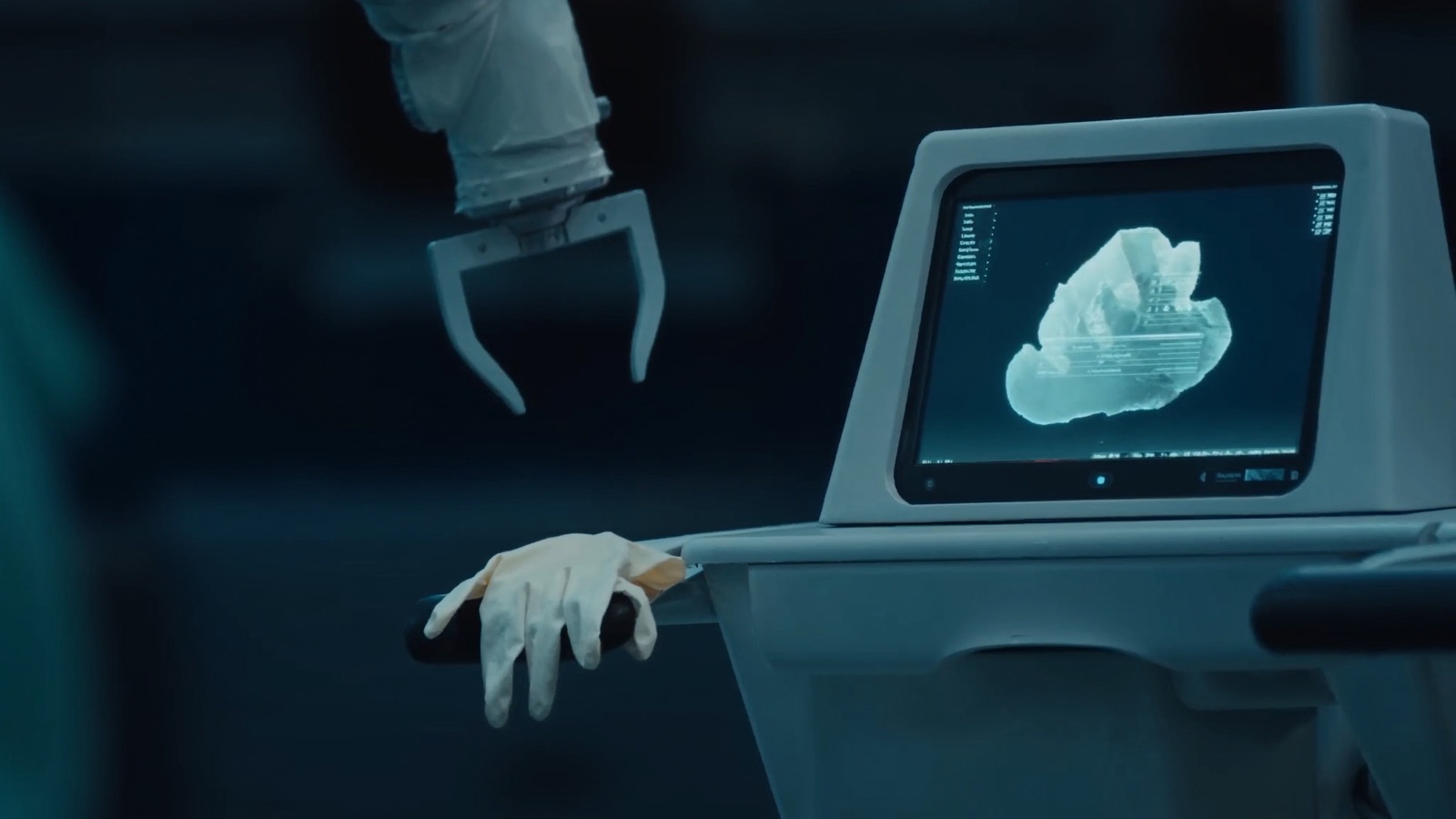
What Are Surgical and Medical Robots?
Surgical and medical robots are systems designed to assist, augment, or automate procedures in clinical settings. They span a wide range of applications — from systems that help surgeons perform minimally invasive procedures with greater precision, to robots that deliver medications through hospital corridors, to rehabilitation exoskeletons that help patients recover motor function.
The problem surgical robots solve is the inherent limitation of human hands in complex medical procedures. Even the most skilled surgeon's hands tremble slightly, tire over long procedures, and cannot scale fine movements. A teleoperated surgical robot can filter tremor, scale movements (translating a 1 cm hand motion into a 1 mm instrument movement inside the patient's body), and provide 3D magnified visualization of the surgical field. In minimally invasive surgery — where instruments enter the body through small incisions — these capabilities translate into measurable clinical outcomes: reduced blood loss, shorter hospital stays, faster recovery, and fewer complications in appropriately selected procedures.
This category also includes diagnostic robots (automated pathology, laboratory automation), rehabilitation robots (exoskeletons for stroke and spinal cord injury recovery), and hospital logistics robots (medication delivery, specimen transport), though the surgical robot market dominates in terms of economic value.
Key Technical Specifications
Degrees of freedom (DOF) and instrument reach — surgical robot instruments must navigate the confined space inside the human body. Wrist DOF (the number of articulated joints in the instrument tip) determines the range of motion available to the surgeon. The da Vinci system's EndoWrist instruments have 7 DOF, exceeding the capability of the human wrist in a confined space.
Motion scaling — the ratio between surgeon hand movement and instrument movement. Adjustable scaling allows precise work in different anatomical contexts.
Tremor filtering — the system's ability to filter involuntary hand movements from the surgeon's input. Quantified as the minimum amplitude of motion reliably translated to the instrument.
Force feedback (haptics) — some systems provide tactile feedback to the surgeon; others do not. The clinical significance of haptic feedback in robotic surgery remains an active area of research.
Setup time — the time required to position, dock, and drape the robot system before a procedure. Longer setup times reduce the economic efficiency of the system.
Instrument reuse and sterilization — robotic instruments are expensive, and most current-generation instruments have a limited number of uses before mandatory replacement (the da Vinci system, for example, limits instrument uses). This is a significant ongoing cost factor.
Imaging integration — the ability to integrate pre-operative CT/MRI data and intraoperative imaging (fluoroscopy, ultrasound) with robot control for navigated procedures.
Regulatory clearance — FDA 510(k) clearance or PMA (premarket approval) in the US; CE marking in Europe; and equivalent certifications in other markets. The specific cleared or approved indications determine what procedures the system can legally be used for.
Major Players and Notable Robots
Intuitive Surgical da Vinci — Intuitive Surgical da Vinci is the dominant surgical robot platform globally by a wide margin. The da Vinci system (currently in its fifth generation with the da Vinci 5) has performed millions of procedures across urology, gynecology, general surgery, thoracic surgery, and other specialties. Intuitive's installed base, clinical evidence base, training infrastructure, and razor-and-blade business model (robot + disposable instruments + service contracts) create a substantial competitive moat.
Medtronic Hugo — Medtronic Hugo is Medtronic's entry into the surgical robot market, designed as a modular system with independent arms rather than da Vinci's patient cart architecture. Receiving regulatory approvals across multiple markets; aims to compete on cost and training efficiency.
CMR Surgical Versius — CMR Surgical Versius is a UK-developed modular surgical robot designed to be more compact and easier to set up than da Vinci. Has received CE marking and is deployed in a growing number of European hospitals.
Stryker Mako — Stryker Mako is a robotic surgical system specialized for orthopedic procedures — specifically knee and hip replacement. Uses CT-based pre-operative planning and real-time tracking to guide bone preparation within precise, surgeon-defined boundaries. Stryker has published evidence showing improved implant positioning consistency versus conventional surgery.
Zimmer Biomet ROSA — Zimmer Biomet ROSA covers orthopedic applications (knee replacement) and neurosurgery (ROSA Brain, used for electrode placement in deep brain stimulation).
Ekso Bionics EksoGT — Ekso Bionics EksoGT is an FDA-cleared exoskeleton for rehabilitation of patients with stroke, traumatic brain injury, and spinal cord injury. The robot supports the patient's legs through programmed gait patterns during physical therapy.
See the surgical-medical category leaderboard for current scores and rankings.
Market Trends and Adoption
Da Vinci's dominance challenged — Intuitive Surgical faced limited competition for years but now faces growing competitive pressure from Medtronic Hugo, CMR Versius, and others. Price competition for the robot itself (though not for instruments and service) is beginning to emerge.
Orthopedic robotics growth — robotic assistance in joint replacement surgery is growing rapidly. Evidence suggests robotic systems improve implant positioning accuracy, which may translate into longer implant survival and reduced revision rates — a compelling economic argument.
Single-port systems — da Vinci SP and similar single-incision systems are gaining traction for urological and gynecological procedures where a single small incision is clinically preferable.
AI integration in surgical robotics — machine learning for intraoperative guidance, automated tissue identification, and procedure documentation is an active R&D area across all major vendors. Regulatory pathways for AI-assisted surgical guidance are still evolving.
Global market expansion — China and other Asian markets are seeing rapid adoption of surgical robots, partly driven by favorable reimbursement policies and domestic manufacturers (MicroPort Touchstone, Tianshu Medical) competing on price.
Cost pressure and reimbursement — in cost-sensitive healthcare systems, the economics of surgical robotics are closely scrutinized. Demonstrating clinical outcome improvements that translate into measurable cost savings (shorter hospital stays, fewer complications) is essential for hospital procurement decisions.
How the Robolist Score Applies
Surgical robots are evaluated with additional weighting on regulatory and clinical factors:
- Regulatory clearance breadth — the range of cleared/approved indications and markets. Broader clearance reflects clinical evidence and regulatory investment.
- Clinical evidence base — the volume and quality of published clinical evidence for the system's procedures.
- Installed base and procedure volume — the number of installed systems and cumulative procedures performed reflects real-world adoption and the learning curve investment by hospitals.
- Training infrastructure — the depth of the surgical training program, simulation capabilities, and credentialing process.
Buyer Considerations
Clinical evidence is mandatory — surgical robot procurement decisions must be grounded in clinical evidence for the specific procedures and specialties you plan to use the system for. Do not rely on vendor claims alone; review independent peer-reviewed literature.
Program volume requirements — surgical robots require a program volume commitment to be economically viable. A hospital performing fewer than the threshold number of relevant procedures annually may not generate sufficient utilization to justify the capital and ongoing instrument costs. Work with the vendor to calculate your required procedure volume.
Surgeon training commitment — surgeons require formal training and proctoring before independently using a new surgical robot system. Estimate the time and travel cost for the training program and the impact on the surgeon's schedule during the learning curve period.
Total cost of ownership — robot capital cost is only one component. Instrument costs per case, annual service contracts (often 8–12% of purchase price annually), and the cost of dedicated OR time for setup add substantially to TCO. Model all components over a 5–7 year horizon.
OR infrastructure — surgical robots require sufficient OR space, compatible tables, and power supply. Evaluate physical and electrical infrastructure requirements before procurement.
Staff training — beyond surgeons, OR nurses and scrub technicians need dedicated training for each robot system. Factor this into the implementation timeline.
Reimbursement landscape — confirm payer coverage for robotic-assisted procedures in your market and patient population before committing to a system.