The Week in Robotics
The three biggest cheques we could verify this week went to defense manufacturing and military logistics — not to robots. Sourced, verified, and put in context against our index of 3,721 active robots.
New Iron
TECH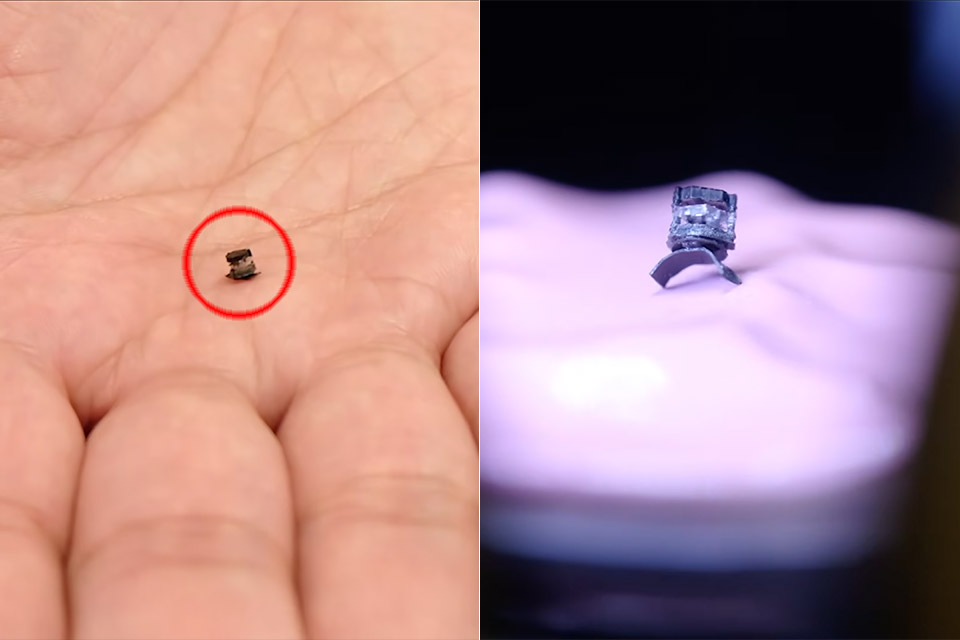 Left: the robot at actual size, circled, on a palm. Right: the same robot magnified, one arm extended. Credit: NTU Singapore.
A 4.4 mm robot that does five surgical jobs and switches between them in under a second
Researchers at Nanyang Technological University, Singapore built a seed-sized robot that can move across soft tissue, cut it, release drugs, grip and store a sample, or generate heat — five functions in one 4.4 mm body, switching between them in under a second. The work, led by Associate Professor Lum Guo Zhan, was published in the journal Advanced Materials.
The mechanism is a magnetic module at the centre that can be magnetised, demagnetised and remagnetised in different directions; each orientation activates a different tool. The body is PDMS and Ecoflex silicone embedded with 5-micrometre magnetic particles, with different regions engineered to answer different fields — so one part of the robot moves while the rest holds still.
It is driven by weak magnetic fields from coils outside the body. The team demonstrated cutting and gripping on chicken liver and gelatin tissue models, and reported that more than 99% of human skin cells remained viable after exposure to the robot’s materials.
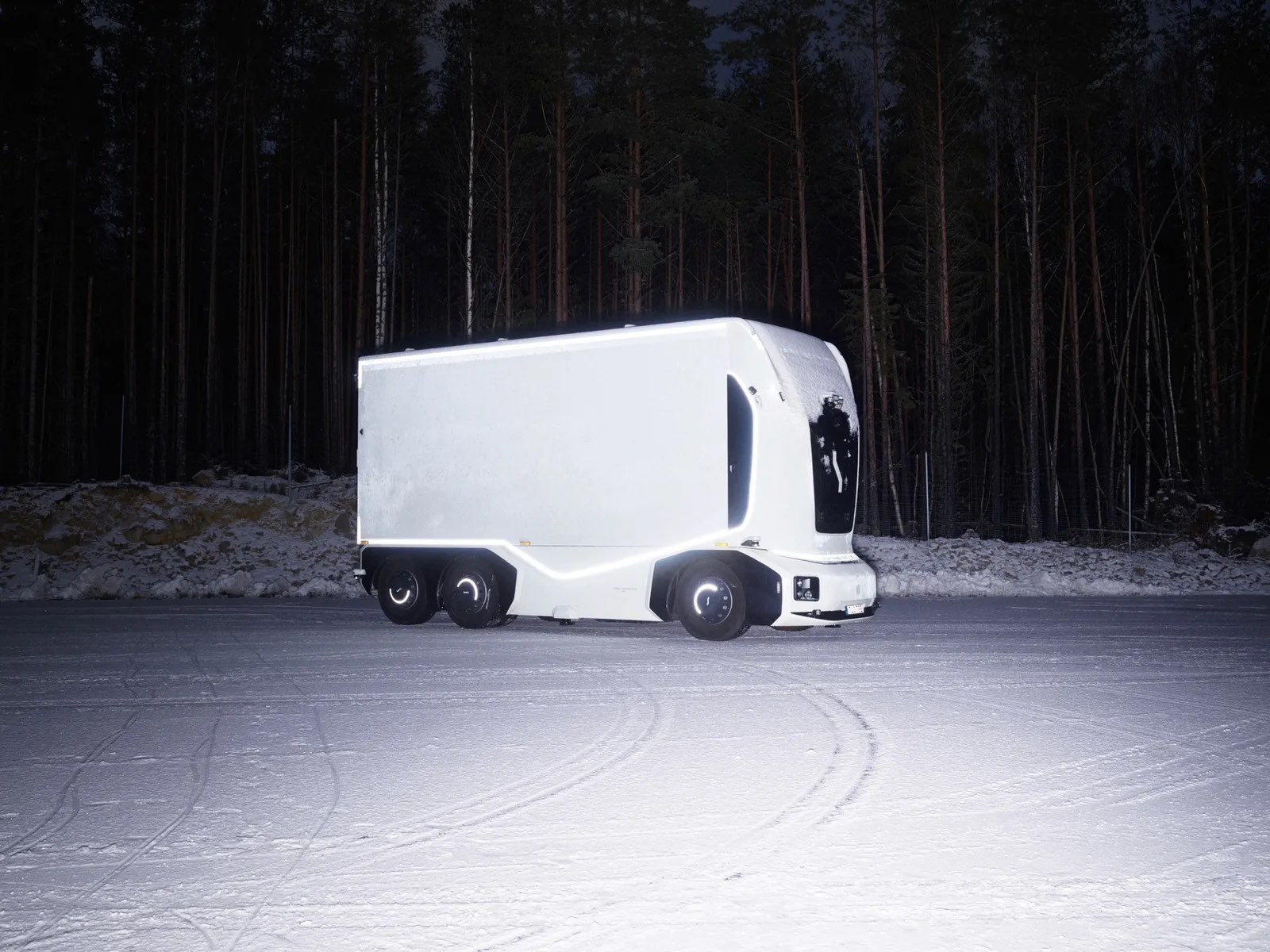
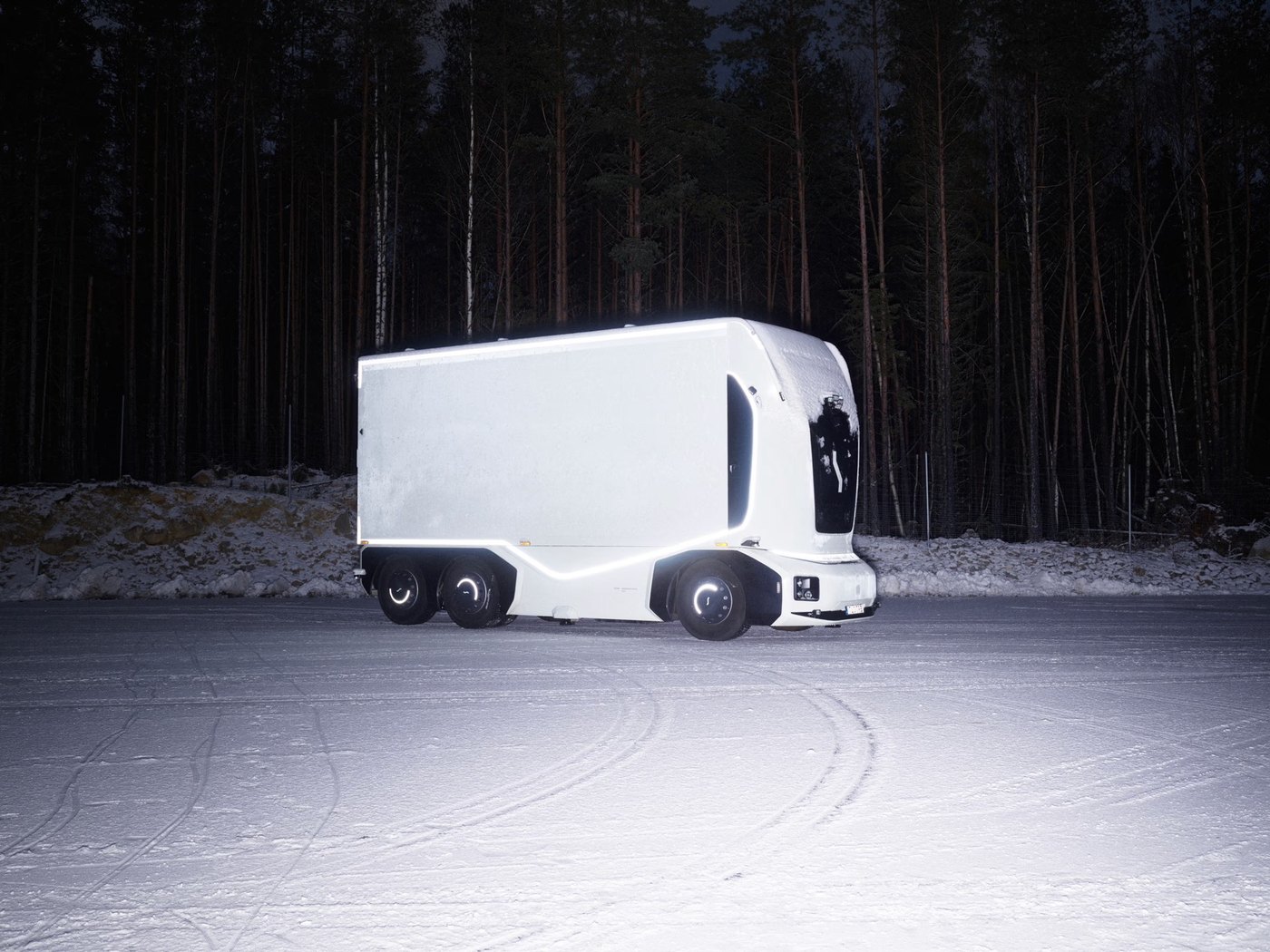 Einride's own cab-less Pod. The DAF deal points the other way — the driver moves into a conventional truck. Credit: Einride.
DAF is putting Einride’s driver inside its own truck platform
Einride and DAF Trucks — a PACCAR subsidiary and one of Europe’s largest truck makers — will integrate Einride Driver, Einride’s autonomous driving system, into DAF’s premium truck platform, aimed at SAE Level 4 autonomous electric freight.
The sequence is more interesting than the announcement. Interfaces get defined and tested on a DAF truck this year, with the Dutch applied-research institute TNO, and Einride’s software is scheduled to be integrated and commissioned in 2027. All three say they are working with authorities on compliance for later expansion onto public roads.
PACCAR said the work builds on its North American Autonomous Vehicle Platform program and its earlier collaborations with Aurora and Kodiak.
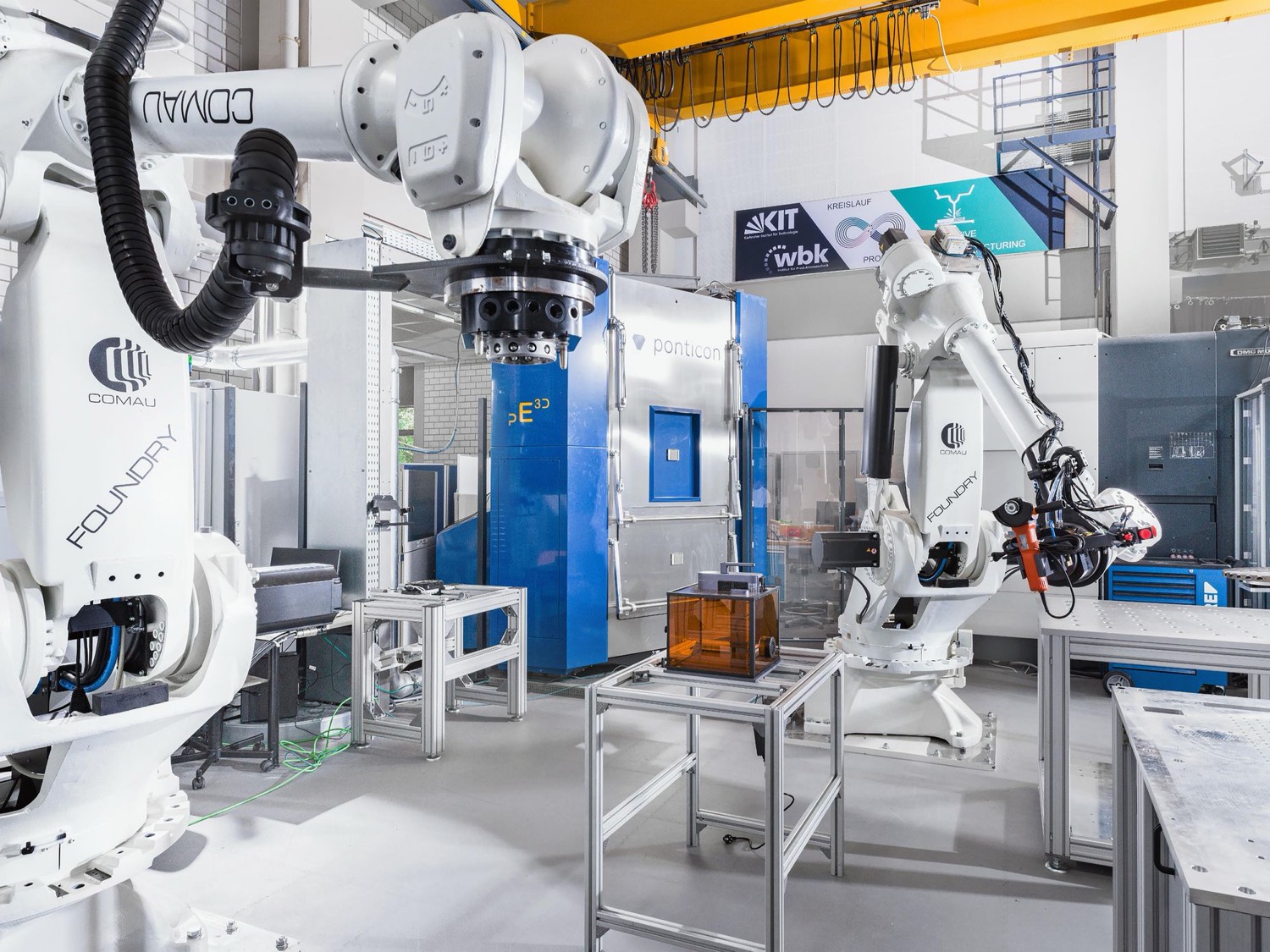 The disassembly cell at KIT’s wbk institute. Credit: Amadeus Bramsiepe / KIT, via IEEE Spectrum.
A robot that takes broken machines apart without wrecking the parts worth keeping
At ICRA 2026 in Vienna, researchers from the Karlsruhe Institute of Technology showed a disassembly system that first predicts how a device is broken, then takes it apart while protecting the components still worth salvaging.
It works from a CAD model. The system nudges each part to see whether it moves the way the model says it should, and reads the fault from the difference — a corroded part moves less than expected, a loose screw moves more. In the demonstration, a screw it expected to unscrew had been swapped for a stuck one; it noticed the part had not moved and switched to milling the material away instead.
Boots on the Ground
DEPLOYMENT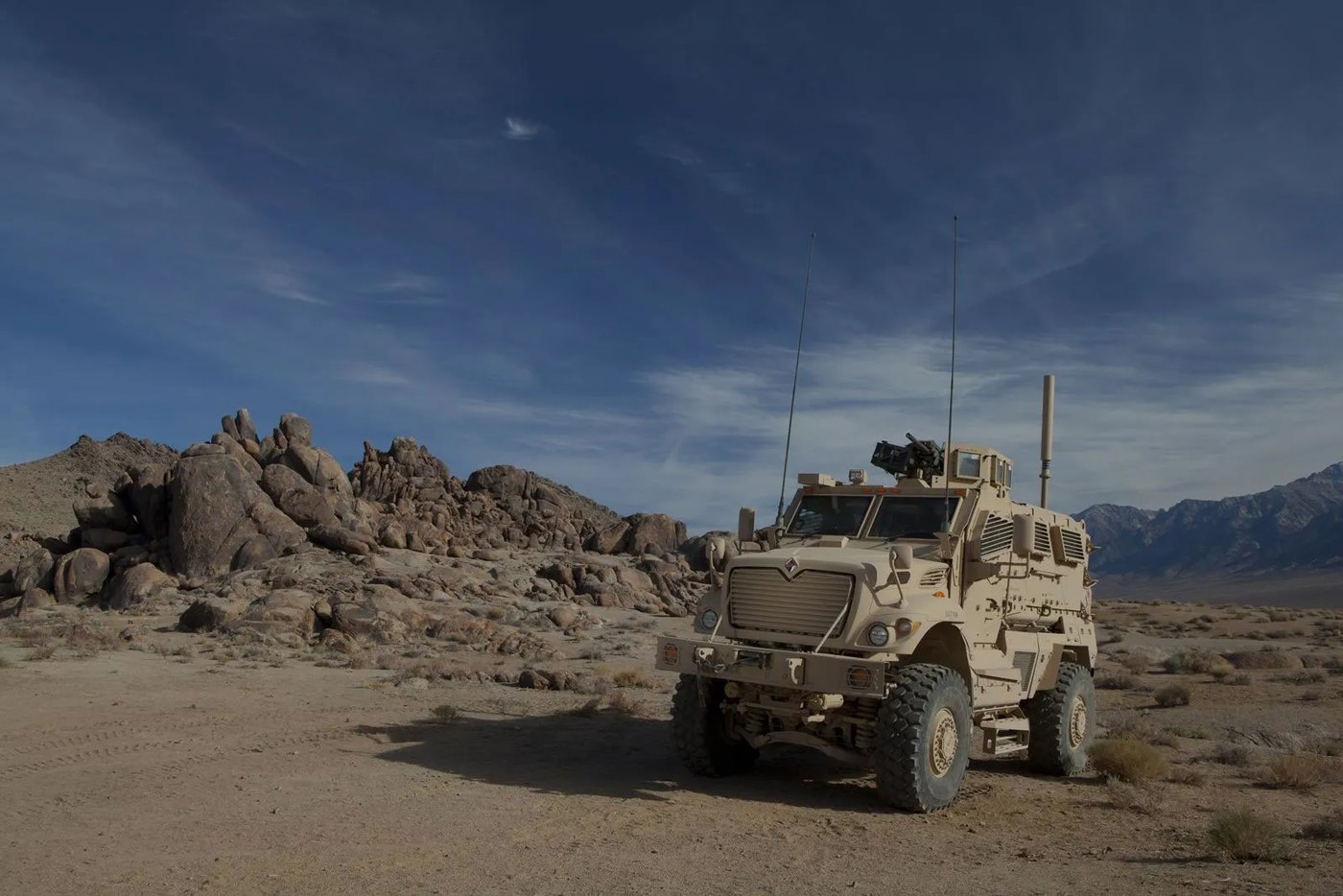 ND Defense supplies the militarised vehicle platforms on the TALUS team. No TALUS hardware has been shown publicly — the programme was named this week. Credit: ND Defense.
The Army names TALUS — and hands it to five companies you will not find on a robot leaderboard
The U.S. Army has awarded a Project Sustainment contract to an industry team led by Stratom Inc. to develop the Tactical Autonomous Logistics Utility System, or TALUS: a modular autonomous distribution system for resupplying dispersed forces in contested environments. Stratom president and CEO Mark Gordon told The Robot Report this is TALUS’s first public introduction.
It is an 18-month prototype effort with a total anticipated project value of $15.9 million, according to Gordon, ending with the system in soldiers’ hands for operational evaluation — including a planned Transformation in Contact unit Combat Training Center rotation. The Army will use those evaluations to decide whether it goes further.
Stratom leads integration. ND Defense brings militarised vehicle platforms and production, Forterra its government-validated AutoDrive autonomy stack, GS Engineering model-based systems engineering and test, and Waltonen Engineering hardware design and fabrication.
China State Grid is buying 8,500 robots, and electricity is becoming the constraint
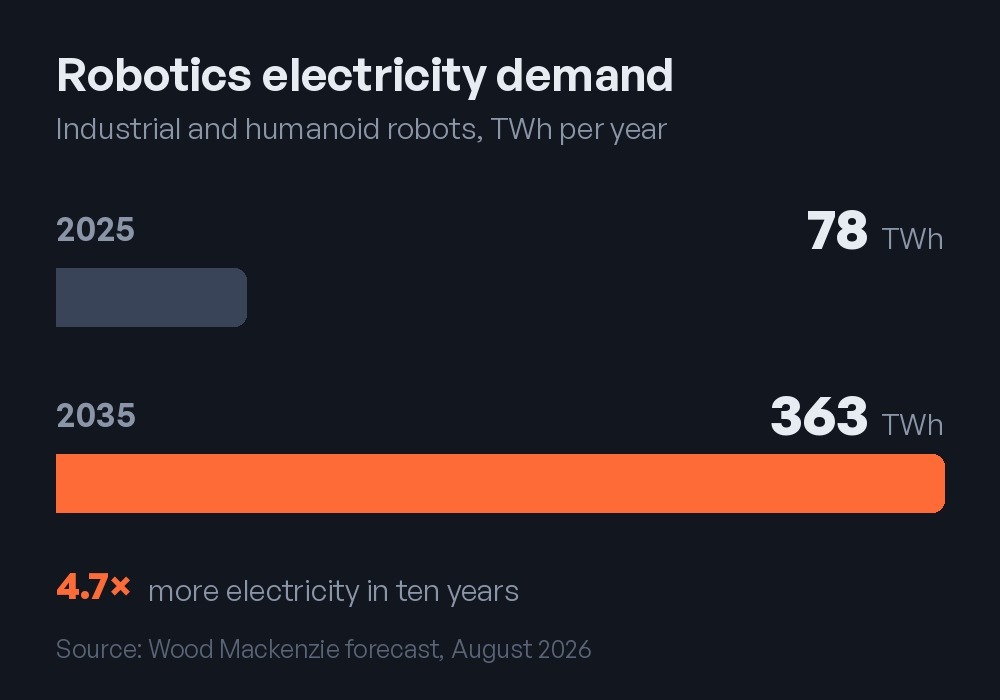
New Wood Mackenzie research puts robotics electricity demand at 363 TWh a year by 2035 — about what 35 million average US households consume, and close to France’s 373 TWh of nuclear generation in 2025. Industrial robots account for 357 TWh of it; humanoids add 6 TWh.
The 5 million industrial robots running today already draw 78 TWh a year, almost twice London’s consumption. Wood Mackenzie expects the fleet to reach 16 million units by 2035 if 12% annual growth holds. China accounts for over 70% of annual global industrial robot installations, and Chinese companies for nearly 90% of humanoid units currently deployed.
Underneath the forecast sits a concrete order: China State Grid is spending $1 billion in 2026 on 8,500 AI-enabled autonomous robots covering more than 600 specialised tasks, from routine grid maintenance to live-line work on ultra-high-voltage lines.
Follow the Money
INVESTMENT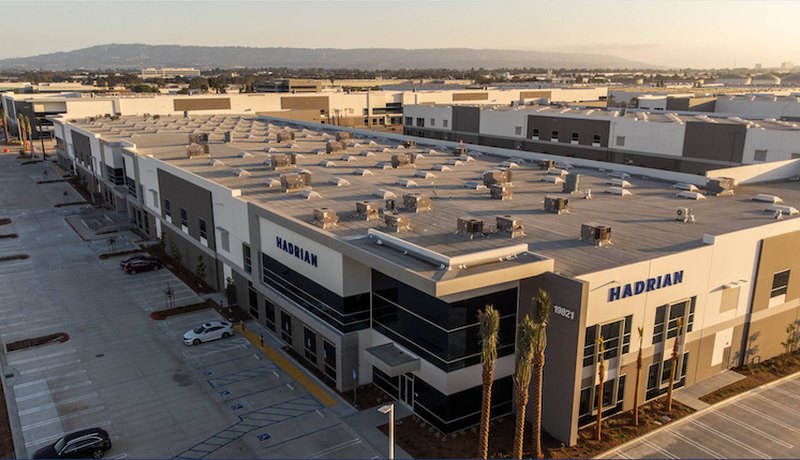 Hadrian's Factory 2, the second of the automated machining plants the raise is meant to multiply. Credit: Hadrian.
Hadrian raises $1.37B, valuation hits $7.87B, for U.S. defense manufacturing
Hadrian announced it has raised $1.37 billion in new equity financing to accelerate the buildout of domestic manufacturing capacity for U.S. military, aerospace, and industrial systems.
The round, Hadrian's second this year, brought the company's valuation to $7.87 billion, up from $1.6 billion after its January round. WCM Investment Management, Washington Harbour Partners, Valor Equity Partners, 137 Ventures, and Baillie Gifford co-led the round, with JPMorganChase's Strategic Investment Group joining as anchor co-lead.
Hadrian operates a 100,000-sq.-ft. factory in Torrance, Calif., and has expanded to nearly 3 million sq. ft. of capacity across four sites, including new factories in Mesa, Ariz., and Muscle Shoals, Ala.

Cambridge Aerospace raises $300M Series C at $3.4B valuation
Cambridge Aerospace Ltd. raised $300 million in Series C funding, bringing its valuation to $3.4 billion. The defense drone developer said it plans to expand manufacturing capabilities to deliver on existing and new contracts.
The round follows a $200 million Series B in April, after which the company said it received several contracts from the U.K. Ministry of Defence, including one for low-cost interceptors for the British Armed Forces. DFJ Growth led the round, with support from Lux, Accel, Lakestar, Never Lift, Ora Global and Elad Gil & Co.
The company's first product, Skyhammer, has a range of over 30 km and a top speed of 700 km/h, and is designed to intercept drones and low-speed missiles.