The Week in Robotics
This week in robotics — sourced, verified, and put in context against our index of 4,188 robots.
New Iron
TECH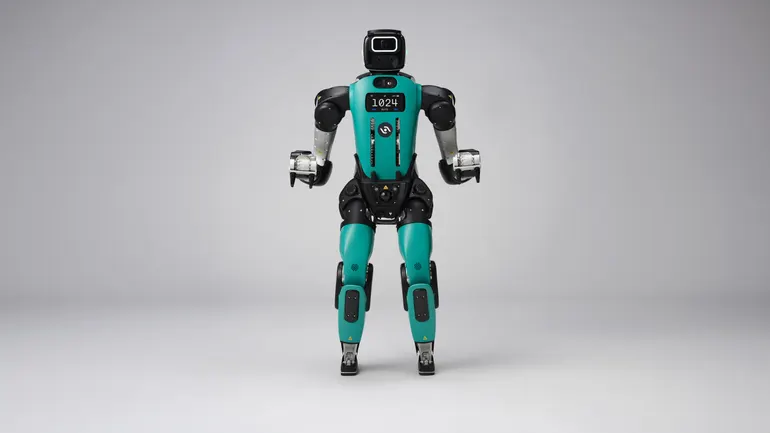 Via Manufacturing Dive
Agility Robotics unveils Digit 5 humanoid built for 'cooperative safety'
Agility Robotics introduced Digit 5, a humanoid designed to work near people in industrial settings without safety cages, which the company calls 'the first cooperatively safe humanoid.' The robot is designed to stop and crouch when a human approaches.
Agility says Digit 5 can work 20 hours out of a 24-hour shift, has a seven-foot reach, can carry up to 50 pounds, and has a 10-to-1 run-to-charge ratio. It is aimed at tasks like tote handling, machine tending, palletizing, kitting and sequencing.
The company disclosed in a securities filing that one customer plans to spend $300 million on Digit 5 over multiple years, and it has a pipeline of more than 30 prospective customers. Agility is also pursuing a $2.5 billion merger with Churchill Capital Corp. to go public and scale Digit 5 production.
 Via koreatimes.co.kr
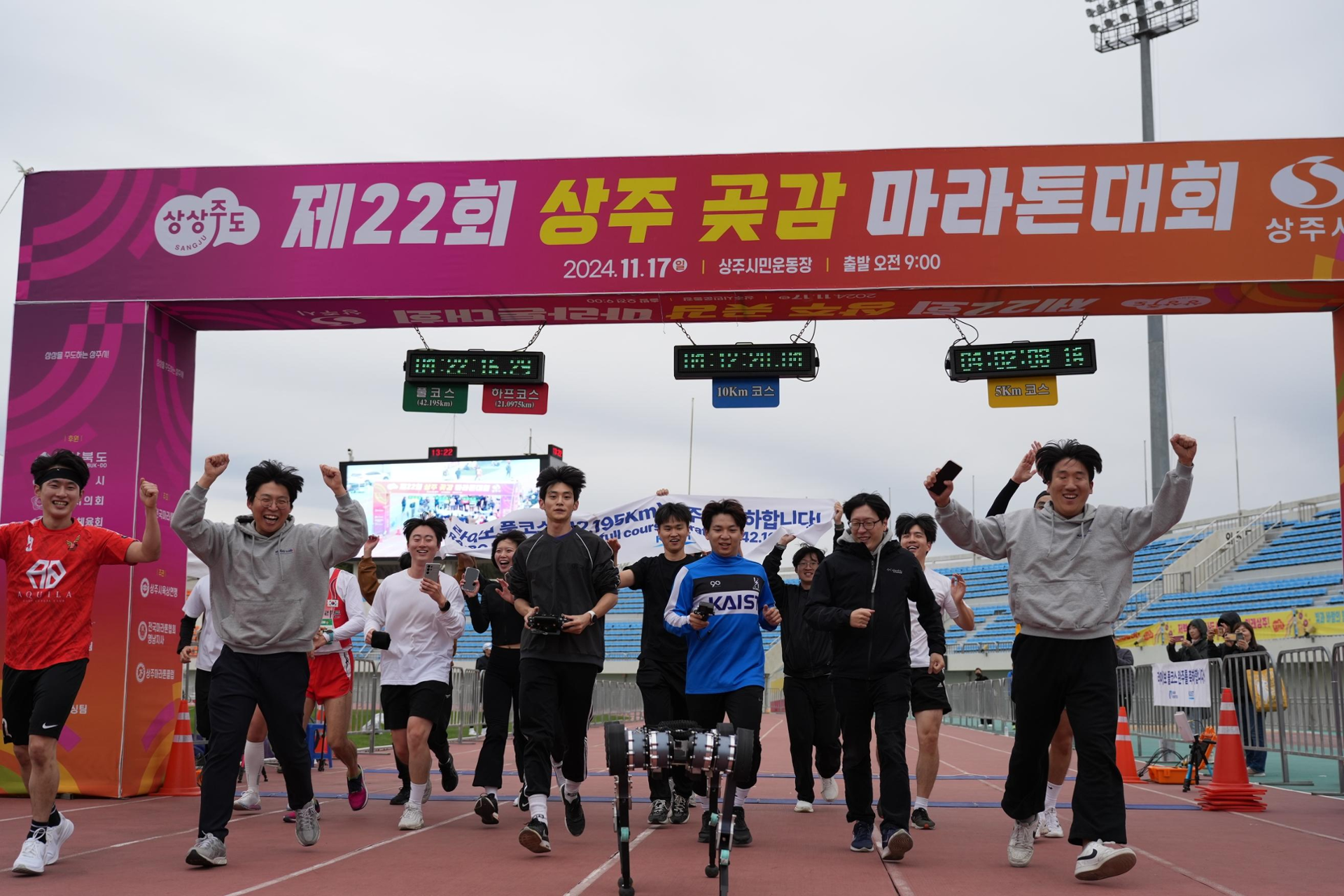
KAIST's RAIBO2 quadruped completes marathon on single battery charge
Engineers at KAIST developed RAIBO2, a quadrupedal robot that completed a full 42-kilometer marathon course during the Sangju Dried Persimmon Marathon without recharging or swapping its battery, finishing in 4 hours, 19 minutes and 52 seconds.
The team, led by Professor Hwangbo Je-min, achieved the endurance by co-designing the robot's limbs, power distribution and gait-control algorithms together rather than simply adding bigger batteries. The robot consumed roughly 1,280 watt-hours during the race, leaving reserve power that could theoretically extend its range to 65 kilometers.
The research was published in Nature. A university spin-off, Raion Robotics, is working to mass-produce the platform for disaster recovery, perimeter security and hazardous industrial inspection applications.
 Via The Robot Report
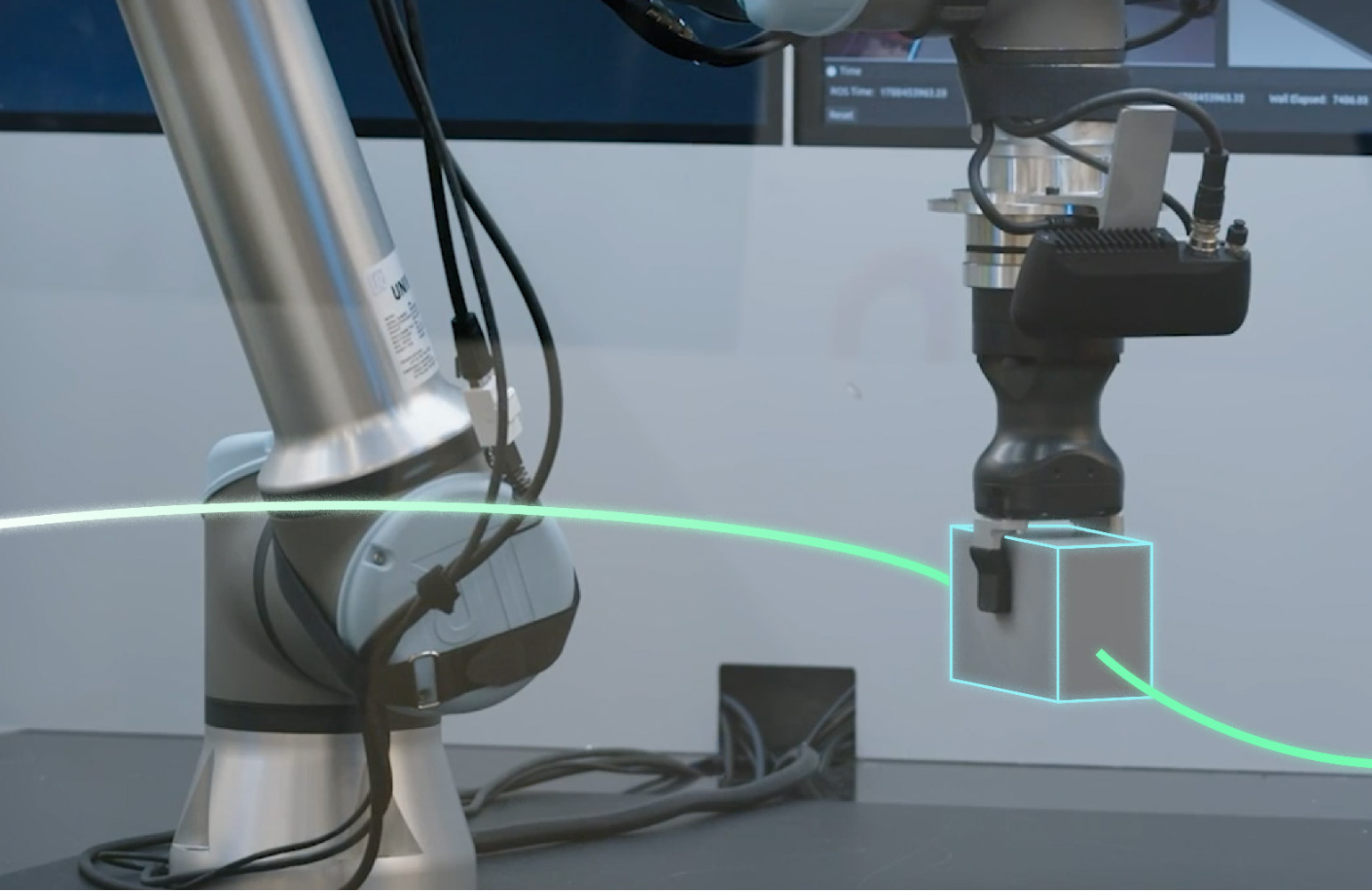
Intrinsic open-sources ROS-compatible robotics platform Intrinsic Core
Intrinsic, an AI robotics group that joined Google this year, released Intrinsic Core, an open-source set of ROS-compatible capabilities for building robotic applications, under a permissive Apache 2.0 license.
The company said it took capabilities developed for real manufacturing deployments and turned them into a pre-configured software environment that runs on local hardware. At the center of Intrinsic Core is Intrinsic Control, a hardware-agnostic, real-time control framework that lets users swap robot arms, grippers, and sensors without rewriting drivers.
Intrinsic also released the Open Machine Tending Solution (OMTS), a ready-made reference design for CNC machine tending that runs on Intrinsic Core and the ROS Suite, supporting assets from FANUC and Universal Robots. The announcement was made at ROSCon 2026 in Toronto, and Intrinsic Core is aimed at manipulation-based commercial deployments, not mobile robots or humanoids.
 Via New Atlas
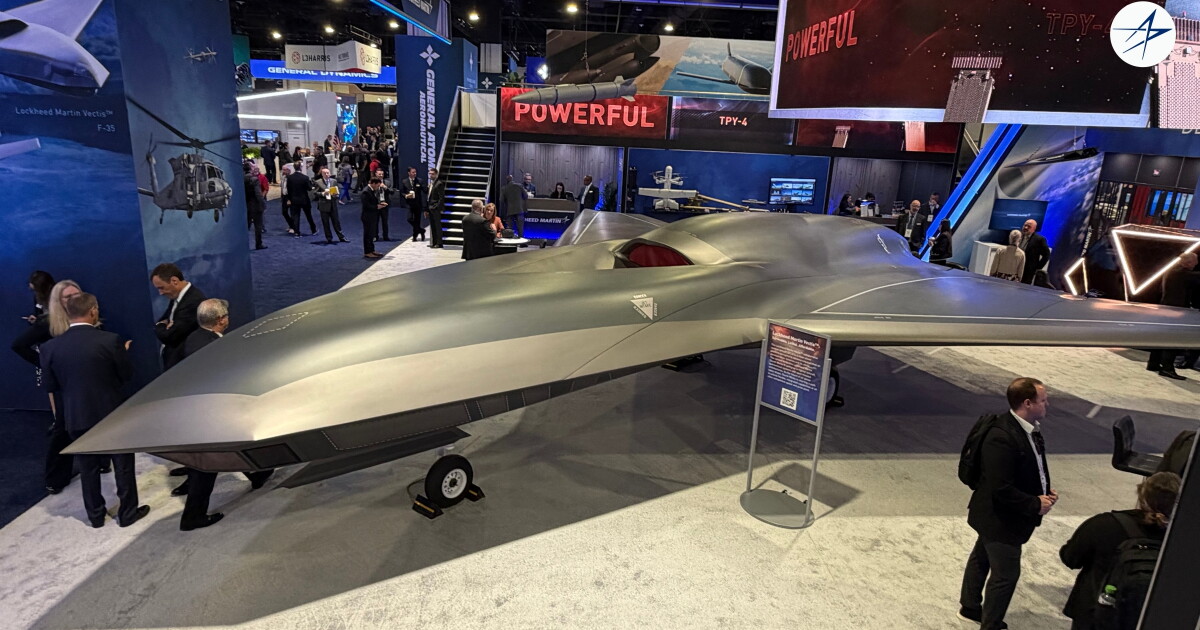
Lockheed Martin unveils Vectis stealth drone mock-up, expands prototype fleet
Lockheed Martin revealed a full-scale mock-up of its Vectis Collaborative Combat Aircraft, an autonomous stealth drone, and said it is expanding the number of development prototypes.
The in-house funded program aims to speed up flight testing and demonstrate scaling, with a maiden flight targeted for the end of 2027. The mock-up disclosed the aircraft's length and wingspan for the first time.
Lockheed Martin previously lost the US Air Force's CCA contract to General Atomics and Anduril Industries in 2024, and the company appears to be positioning Vectis for future acquisition programs, Navy carrier-based drone contracts, or overseas sales.
Boots on the Ground
DEPLOYMENT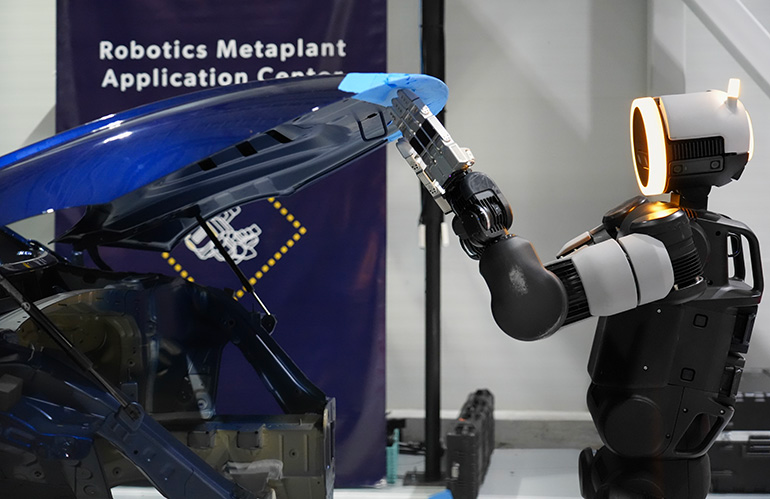 Via The Robot Report
Boston Dynamics opens Georgia training center to scale Atlas at Hyundai plants
Boston Dynamics opened its Robotics Metaplant Application Center (RMAC) at Hyundai Motor Group Metaplant America in Georgia, a permanent facility for training and testing Atlas humanoids on real automotive parts, fixtures and workcells before deployment to the plant floor.
The center follows the CES 2026 robotics strategy announced by Boston Dynamics and parent Hyundai, under which Hyundai plans to deploy Atlas across its global network, starting with a large initial rollout at Hyundai Motor and Kia plants.
Boston Dynamics said the RMAC building will expand roughly tenfold next year, and the company plans to move Atlas into component assembly work by 2030, while Hyundai builds a U.S. factory to manufacture robots at scale by 2028.
 Via Interesting Engineering
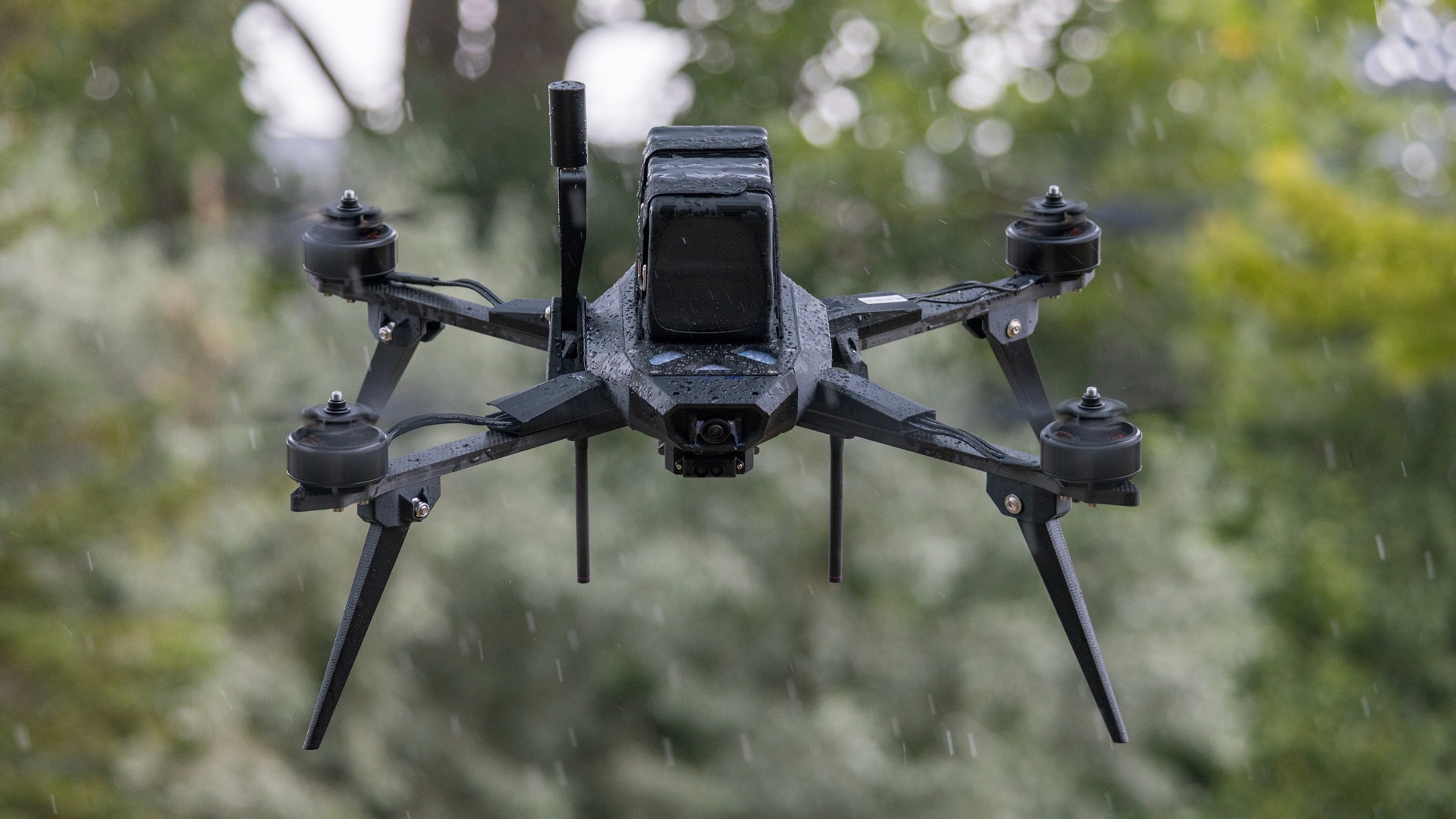
US Dept. of War orders 4,000 Swarm Defense attack drones with swarm-control software
Swarm Defense Technologies has received an order from the US Department of War for 4,000 Kiwi one-way attack drones, with a minimum value of $25 million including munitions, placed under the Drone Dominance Program following the second Gauntlet competition at Fort Carson, Colorado.
The Michigan-based company will build the quadcopters at its 40,000-square-foot Auburn Hills facility, pairing them with its Strike Deck ground control software, which is designed to let a single operator coordinate dozens of aircraft at once via automated waypoint navigation and terminal guidance, while target selection and engagement authorization remain with human operators.
Swarm Defense grew out of Firefly Drone Shows, which has built more than 20,000 swarming drones since 2017, and is separately working on a containerized drone deployment concept through a Phase I prototype agreement with the Defense Innovation Unit.
Follow the Money
INVESTMENTVia siliconangle.comCognex to acquire RealSense, Intel's robotics vision spinoff, for $600M
Cognex Corp. said it intends to buy RealSense Inc., the depth-camera and robotics vision startup spun out of Intel 14 months earlier, in a deal valued at around $600 million.
Cognex will pay around $500 million in cash, plus a three-year cash retention program worth $56.5 million and restricted stock units valued at about $50 million for RealSense's roughly 180 employees.
The deal excludes RealSense's Facial Authentication business, which will be spun off separately before closing, and is expected to close in the fourth quarter subject to regulatory clearance.
 Via TradingView
Cognex to acquire RealSense's robotic vision unit for $500M
Cognex has entered a definitive agreement to acquire RealSense, a depth-sensing camera and vision technology provider used in robotic perception, for $500 million in cash.
RealSense's technology is used in vision-guided fixed-arm robots, autonomous mobile robots, quadrupeds and humanoids. Cognex said the deal will expand its machine-vision portfolio into 3D depth perception and autonomous robotic navigation.
The transaction is expected to close in the fourth quarter of 2026 and will be funded entirely from Cognex's cash on hand, which totaled $755 million at the end of the second quarter.
On the Calendar
AHEADRobotics shows, conferences and competitions opening in the next eight weeks. Dates confirmed against each organiser’s own page.
- Sep 27 – Oct 1IROS 2026 — IEEE/RSJ Intelligent Robots and Systems
- Oct 6–8Motek 2026
- Oct 12–16CIIF 2026 — China International Industry Fair
- Oct 20–21RoboBusiness 2026
- Nov 3–6CeMAT ASIA 2026
- Nov 9–12CoRL 2026 — Conference on Robot Learning
The Number
DATAHalf the month’s rounds were under $15M; its three largest took 60% of the capital. Biggest: Hadrian at $1.37B.
Full capital index →This is funding we have recorded, not all robotics funding — we find more rounds partly because we read more news than we used to. Amounts are the disclosed round size, not a valuation. Months run to the last complete one.
39 percent of the robots we track will tell you what they cost. 1,642 of 4,188 active robots publish a price. The rest quote on request. Counted from the live index on the day this issue was assembled.