Apollo vs KUAVO 3.0
Side-by-side comparison of Apollo (Apptronik, Inc.) and KUAVO 3.0 (Leju (Shenzhen) Robotics Co., Ltd.) — specs, pricing, Robolist Trust Score, and verified deployments. Updated daily.
 ApollohumanoidApptronik, Inc. ApollohumanoidApptronik, Inc.10.0Trust Score | 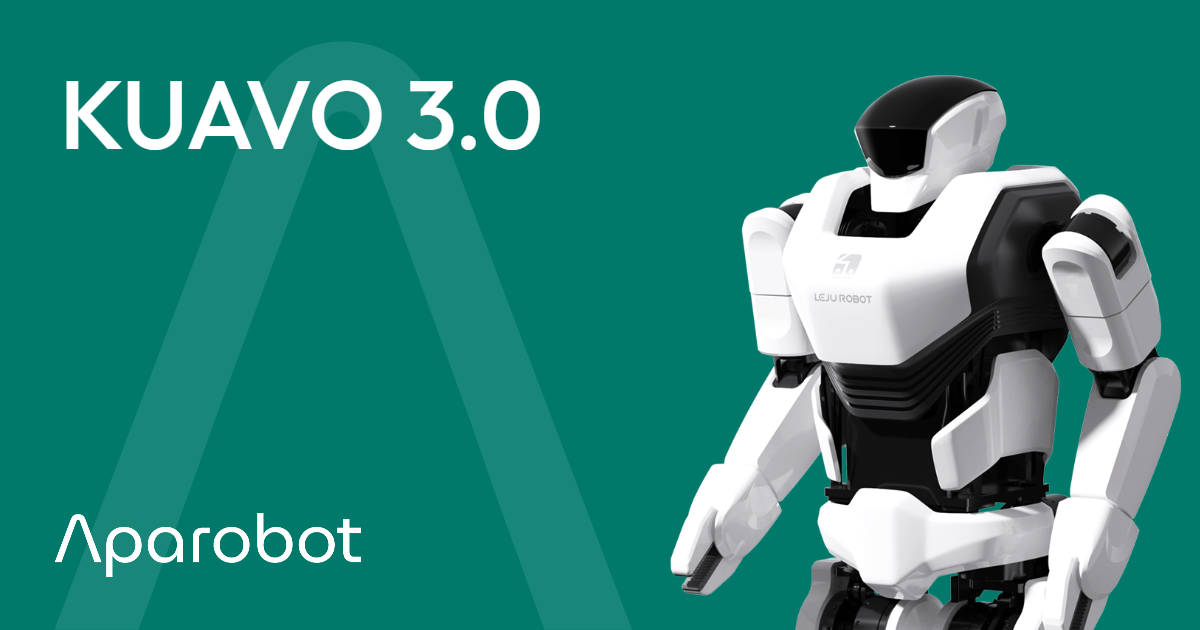 KUAVO 3.0humanoidLeju (Shenzhen) Robotics Co., Ltd. KUAVO 3.0humanoidLeju (Shenzhen) Robotics Co., Ltd.—Trust Score | |
|---|---|---|
| Layer 1: Identity & Trust | ||
| Manufacturer Country (values differ) | US | China |
| Year First Available (values differ) | 2023 | — |
| Verified Deployments | 0 Deployments | 0 Deployments |
| Layer 2: Operational | ||
| Price Range (USD) | US$30,000 | US$30,000 |
| Battery / Shift Runtime (values differ) | 4 hrs | 7 hrs |
| Availability Status | ACTIVE | ACTIVE |
| Layer 3: Category Specific | ||
| Physical Form Factor | ||
| Height (values differ) | 173 mm | 1750 mm |
| Weight (values differ) | 73 kg | 60 kg |
| Mobility Type (values differ) | bipedal | — |
| Humanoid Subtype (values differ) | full bipedal | — |
| Walking Speed (values differ) | 2.5 m/s | 4.6 m/s |
| Terrain (values differ) | indoor | both |
| Payload & Dexterity | ||
| Payload (values differ) | 25 kg | 10 kg |
| Total DOF (values differ) | 30 | 26 |
| Arm DOF (values differ) | — | 14 |
| Hand DOF (values differ) | — | 10 |
| Compute & AI | ||
| Onboard Compute (values differ) | — | Embedded platform with KaihongOS |
| Programming (values differ) | — | code_ros, proprietary_app |
| Battery & Power | ||
| Runtime (values differ) | 4 hrs | 7 hrs |
| Battery Swap (values differ) | Yes | — |
| Software | ||
| SDK Languages (values differ) | — | code_ros, proprietary_app |
| Reliability | ||
| Deployment Maturity (values differ) | alpha pilot | — |
| Commercial | ||
| Price (USD) | $30,000 | $30,000 |
| Price Tier (values differ) | 20-40K | 30-40K |
| Pricing Model (values differ) | raas | purchase |
| Applications (values differ) | warehouse_transport, assembly, inspection, hospitality | smart_home, industrial_manufacturing, public/commercial_service, smart_healthcare |
Insufficient data for full comparison
The following fields had no data for any of the selected robots: Running Capable, Stair Climbing, Payload (Peak), Arm Reach, Grip Strength, Manipulation Repeatability, Bimanual Coordination, Tool Use, Compute Platform, VLM Capable, Foundation Models, Imitation Learning, Teleoperation, Battery Capacity, Charging Time, Charging Method, Avg Power Consumption, Force-Limited Arms, Fall Recovery, Fall Detection Response, Emergency Stops, Human Detection Method, Safe Speed Near Humans, ROS Support, Simulation Platforms, Open API, Air-Gap Capable, MTBF, Task Success Rate, IP Rating, Noise Level, RaaS / Month, Developer Unit Price, Delivery Lead Time, Warranty, Production Pilots
About this comparison
Apollo vs KUAVO 3.0 compares two robots in the humanoid category. All data is sourced from manufacturer spec sheets, verified deployments, and third-party filings; see our methodology for how the Robolist Trust Score is calculated.