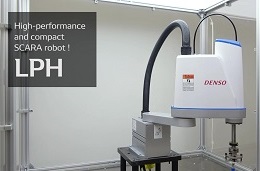
LPH-040 vs WEX-1800-30
Side-by-side comparison of LPH-040 (DENSO) and WEX-1800-30 (Guangdong Wanerxin Intelligent Technology Co., Ltd.) — specs, pricing, Robolist Product Score, and verified deployments. Updated daily.
Optimize comparison for buyer
Optimized for Last-Mile Delivery buyers. Priority specs lifted to the top and marked with a target.
Layer 1: Identity & Trust
Manufacturer Country
- LPH-040Japan
- WEX-1800-30—

Year First Available
- LPH-0402019
- WEX-1800-30—
Verified Deployments
- LPH-0400 Deployments
- WEX-1800-300 Deployments
Layer 2: Operational
Price Range (USD)
- LPH-040$5,392
- WEX-1800-30$16,500–$18,800
Availability Status
- LPH-040ACTIVE
- WEX-1800-30ACTIVE
Arm Mechanics
Payload
- LPH-0403 kg
- WEX-1800-3030 kg
Reach
- LPH-040400 mm
- WEX-1800-30—
Degrees of Freedom
- LPH-0404
- WEX-1800-304
Repeatability
- LPH-040±0.02 mm
- WEX-1800-30—
Max TCP Speed
- LPH-0404.7 m/s
- WEX-1800-30—
Robot Weight
- LPH-04016 kg
- WEX-1800-30—
Performance
Duty Cycle
- LPH-040multi shift
- WEX-1800-30continuous 24 7
Safety
Safety Category
- LPH-040—
- WEX-1800-30Cat.3 PLd
E-Stop Response
- LPH-040—
- WEX-1800-30200 ms
Controller & Programming
Controller Model
- LPH-040RC8
- WEX-1800-30—
Teach Pendant Type
- LPH-040no pendant (browser UI)
- WEX-1800-30wired button
Offline Programming
- LPH-040WINCAPS III Offline Software
- WEX-1800-30—
End-Effector
Pneumatic Lines
- LPH-0403
- WEX-1800-30—
Electrical Lines
- LPH-04015
- WEX-1800-30—
Commercial
Price (USD)
- LPH-040$5,392
- WEX-1800-30$16,500–$18,800
Service Network
- LPH-040global
- WEX-1800-30regional
Expected Service Life
- LPH-0405 yrs
- WEX-1800-30—
| ||
|---|---|---|
| Layer 1: Identity & Trust | ||
| Manufacturer Country (values differ) | Japan | — |
| Year First Available (values differ) | 2019 | — |
| Verified Deployments | 0 Deployments | 0 Deployments |
| Layer 2: Operational | ||
| Price Range (USD) (values differ) | $5,392 | $16,500–$18,800 |
| Availability Status | ACTIVE | ACTIVE |
| Layer 3: Category Specific | ||
| Arm Mechanics | ||
| Payload (priority for Last-Mile Delivery buyers) (values differ) | 3 kg | 30 kg |
| Reach (values differ) | 400 mm | — |
| Degrees of Freedom | 4 | 4 |
| Repeatability (values differ) | ±0.02 mm | — |
| Max TCP Speed (values differ) | 4.7 m/s | — |
| Robot Weight (values differ) | 16 kg | — |
| Performance | ||
| Duty Cycle (values differ) | multi shift | continuous 24 7 |
| Safety | ||
| Safety Category (values differ) | — | Cat.3 PLd |
| E-Stop Response (values differ) | — | 200 ms |
| Controller & Programming | ||
| Controller Model (values differ) | RC8 | — |
| Teach Pendant Type (values differ) | no pendant (browser UI) | wired button |
| Offline Programming (values differ) | WINCAPS III Offline Software | — |
| End-Effector | ||
| Pneumatic Lines (values differ) | 3 | — |
| Electrical Lines (values differ) | 15 | — |
| Commercial | ||
| Price (USD) (values differ) | $5,392 | $16,500–$18,800 |
| Service Network (values differ) | global | regional |
| Expected Service Life (values differ) | 5 yrs | — |
Insufficient data for full comparison
The following fields had no data for any of the selected robots: Battery / Shift Runtime, Path Accuracy, IP Rating (Arm), IP Rating (Wrist), Cycle Time (25/305/25), MTBF, Vibration Damping, Dual Check Safety, Safety I/O Pairs, Safe Zone Count, Programming Languages, Digital Twin Support, Communication Protocols, ROS-Industrial Support, IoT / Cloud Platform, Cybersecurity Certs, Predictive Maintenance, Tool Flange Standard, Tool Changer (ISO), Internal Cable Routing, Warranty, Spare Parts Lead Time
best in categoryweakest in categoryvalues differ
Trade-offs at a glance
Frequently asked
Who makes LPH-040 and WEX-1800-30?
LPH-040 is made by DENSO, based in JP. WEX-1800-30 is made by Guangdong Wanerxin Intelligent Technology Co., Ltd..
How do LPH-040 and WEX-1800-30 compare on the Robolist Product Score?
LPH-040 scores 63/100. WEX-1800-30 scores 28/100. The Product Score blends specs, pricing transparency, verified deployments, and independent media coverage — see methodology for the full breakdown.
Are LPH-040 and WEX-1800-30 in the same category?
Both robots are classified as Industrial Arm on Robolist. Filters and ranking treat them as direct alternatives.
What is the realistic total cost of ownership for Industrial Arm robots?
Hardware cost is one input. Industrial Arm TCO also includes integration, training, downtime, and end-of-life. Our breakdown: TCO of a 6-Axis Arm Cell: Hardware, EOAT, Integration, Programming.
What should a buyer ask vendors when choosing between LPH-040 and WEX-1800-30?
Spec sheets only show part of the story. Useful vendor questions cover support, lifecycle, integration cost, and references. We have a buyer-focused checklist: Industrial Arm Vendor Selection: Capability Matrices and Proof Points.
Going deeper — picking the right robot
TCO of a 6-Axis Arm Cell: Hardware, EOAT, Integration, Programming
7 min readIndustrial Arms
Industrial Arm Vendor Selection: Capability Matrices and Proof Points
9 min readIndustrial Arms
Programming Approaches: Teach Pendant, Offline, AI-Assisted — What Each Costs You
8 min readIndustrial Arms
Build vs buy vs lease: which model fits a first deployment
8 min readChoosing Your First Robot
The hidden specs vendors hope you'll miss
10 min readReading the Spec Sheet
About this comparison
LPH-040 vs WEX-1800-30 compares two robots in the industrial-arm category. All data is sourced from manufacturer spec sheets, verified deployments, and third-party filings; see our methodology for how the Robolist Product Score is calculated.