Ag Robot Vendor Selection: Pilot Data, Financing Options, and Exit Terms
The vendor who gives you the best demo is not necessarily the vendor you want to be locked into for five years.
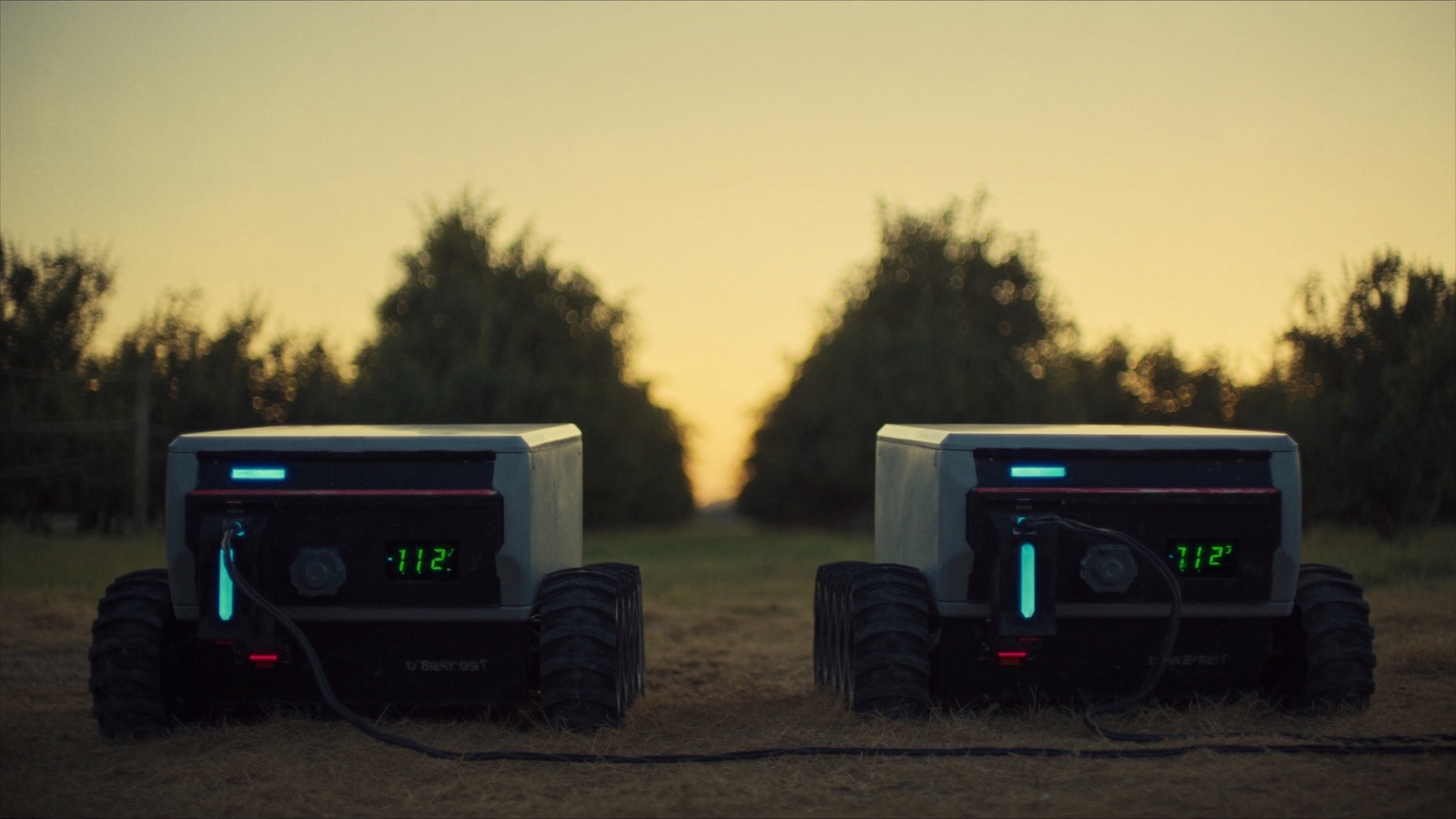
In 2024, autonomous weeding robots attracted more precision agriculture investment than any other single robotics category. The number of vendors actively selling or piloting systems in the U.S. and Europe has grown substantially over the past three years. For farm operators, this is simultaneously good news — competition is producing rapid technical improvement — and dangerous news. Not all vendors will survive. Not all business models are sustainable. And the contract terms that govern your relationship with a vendor matter enormously when the vendor raises prices, gets acquired, or stops supporting your system.
This article covers how to evaluate agricultural robot vendors beyond the demo: what pilot performance data to demand and how to interpret it, how to structure financing to preserve optionality, and which contract terms require negotiation before you sign.
Evaluating Pilot Performance Data
The Reference Site Standard
Before any purchase or formal pilot agreement, request reference contacts at two or three farms that have been operating the vendor's system on the same crop and configuration you're considering — for at least two full growing seasons.
The reference farms must be:
- Independent: Not the vendor's own demonstration farm. Not a farm where the vendor has a non-commercial partnership. An independent paying customer.
- Comparable: Similar crop type, similar row configuration, similar region (because weather and field conditions vary significantly by region).
- Mature: At least two seasons of operation. First-season performance is always better than long-run performance due to intensive vendor support during early deployment.
Contact the operations manager or grower directly. Not the vendor's account manager. Ask:
- What is your actual all-in cost per acre, including operator time and any infrastructure investment?
- What was the hardest operational challenge in year one? Year two?
- Would you buy this system again at the same price? Would you buy a second unit?
- What does the vendor's support response look like when something breaks during your operating window?
That last question is the most diagnostic. Vendors are responsive during the sales process. Support responsiveness during a machine failure in the middle of a 3-week weeding window, when the hand-crew alternative has already been dismissed, tells you who you're actually dealing with.
Performance Data to Request in Writing
Ask the vendor for the following, in writing, before the contract is signed:
Detection accuracy by crop and condition:
- True positive rate (correctly detected weeds, or correctly identified crop plants) by crop variety and condition
- False positive rate (crop plants misidentified as weeds) by crop variety and condition
- Performance degradation under fog, dust, low light — not just clear-condition lab numbers
Coverage rate by field condition:
- Acres per hour on flat terrain vs. rated slope
- Coverage rate in early-season (small plant, high soil visibility) vs. late-season (large plant, canopy interference) conditions
- Downtime rate for the reference fleet, not just the demo unit
Chemical/labor offset data:
- Herbicide reduction percentage, from independent field data (not just vendor-measured)
- Labor hours replaced per acre, from reference sites (not the vendor's model)
If the vendor will not provide this data, or provides it only as internal studies without independent verification, that is information. A vendor who cannot substantiate their core performance claims with verifiable data from multiple independent sites is a vendor whose numbers should be treated as marketing.
Interpreting Uptime Data
Vendors commonly report uptime percentages for their systems. The metric varies in how it's defined — uptime relative to planned hours, uptime relative to total field hours, uptime relative to operational hours excluding scheduled maintenance.
Ask: "How do you define uptime, and what is the uptime rate for your fleet in production, not demo units?"
An uptime rate below 85% in mature production deployments is a yellow flag. Below 75% is a red flag. Below 65% means the machine is spending more than one-third of planned operating time unavailable — which makes the per-acre economics substantially worse than the model assumes.
Also ask about warranty coverage for downtime: does the vendor credit per-acre fees or service contract fees if the machine is down for an extended period? A vendor confident in their uptime numbers will agree to a downtime credit clause. A vendor who resists it is protecting against a number they know is worse than they're representing.
Financing Structures
Outright Purchase
The economics of outright purchase favor operations with:
- High utilization potential (large acreage, long operating season)
- Access to cash or low-cost financing
- High confidence in the technology's fit for their specific operation
- USDA loan eligibility for equipment purchase
For operations that meet these criteria, outright purchase typically produces the lowest long-run per-acre cost after year three.
Tax considerations: agricultural equipment may be eligible for Section 179 expensing or bonus depreciation under current U.S. tax code. Confirm with your CPA. The timing of the purchase within the tax year can significantly affect the tax treatment.
Lease and Subscription Models
Several vendors offer lease or subscription alternatives:
Operating leases: The vendor retains ownership; the operation pays a monthly or annual fee. Advantage: off-balance-sheet, predictable annual cost, often includes software and support. Disadvantage: long-run cost typically exceeds purchase, and lease terms often include volume commitments and early termination fees that limit flexibility.
Monarch Tractor's reported lease structure — which bundles the MK-V tractor with software, telematics, and maintenance — is a version of this approach. Get the total three-year cost in writing and compare it to the purchase price plus financing plus estimated support cost over the same period.
Per-acre service models: The vendor owns and operates the machine; the farm pays a fee per acre covered. FarmWise's model in some California markets has operated this way. This eliminates capital cost entirely and transfers machine-performance risk to the vendor. Advantage: no capital exposure; if the machine underperforms, the cost is bounded by the per-acre fee. Disadvantage: typically more expensive per acre than ownership at high utilization, and the farm has less control over scheduling.
Per-acre models often include minimum-acre commitments. Read the minimum carefully — if you commit to 2,000 acres/year and a crop failure reduces your plantings, you may still owe the minimum.
Government financing:
USDA Farm Service Agency (FSA) Operating Loans can finance agricultural equipment including robots, at rates typically below commercial agriculture lending rates. The application process is longer than commercial financing but the rate differential can be significant on high-value equipment.
USDA Business & Industry Guaranteed Loans (B&I) are available through approved lenders for rural business operations and may apply to cooperative purchases of automation equipment. Check with your USDA Service Center for current program availability and rate tables.
Some states have agricultural technology incentive programs or grant opportunities for precision agriculture adoption. Your state's Department of Agriculture or land-grant university extension service can identify what's currently active.
Contract Terms That Require Negotiation
Data Portability
The machine generates valuable data: field maps, weed detection records, application histories, machine performance logs. This data has value independently of the machine — for crop insurance documentation, agronomic decision-making, and integration with other precision ag systems.
Non-negotiable requirement: Your contract must specify that you own all data the machine collects on your fields, that you can export it in open formats (CSV, GeoJSON, shapefile) at any time, and that the vendor cannot use your farm's data for any purpose without explicit consent.
If the vendor's standard contract does not include a data portability clause, add one. If the vendor refuses to agree to data ownership by the farm, this is a structural red flag.
Software Dependency and Continuity
Many autonomous ag robots require an active vendor software subscription to maintain full functionality. The question is: what happens to the machine if the vendor's software service is discontinued?
Ask: "If your company is acquired or your subscription service is discontinued, what happens to the operational capability of my machine?"
Look for contract language that:
- Defines the machine's functionality in the event of subscription discontinuation
- Commits to an escrow arrangement for software needed to operate the machine in a degraded (non-cloud-dependent) mode
- Provides a defined notice period before subscription cancellation (minimum 12 months for a machine with a 5-year depreciation schedule)
This is not an abstract concern. Multiple agricultural technology companies have been acquired, pivoted, or wound down over the past five years. The farm that signed a 5-year support agreement with a vendor that was acquired two years later has sometimes found support substantially degraded under the new owner.
Performance Guarantees and Kill Clauses
The pilot agreement should include:
- A defined performance baseline the vendor commits to maintaining (coverage rate, uptime rate, detection accuracy)
- A defined process for what happens if performance falls below baseline (remediation plan, timeline, and escalation)
- A kill clause that allows the farm to exit the agreement if performance remains below baseline after a defined remediation period
The kill clause is the most important provision and the one vendors most resist. A vendor who refuses any kill clause is confident you won't be satisfied — or is confident that contract enforcement will protect them from the consequences of underperformance.
Accept a kill clause with a reasonable cure period (60–90 days) and a defined performance threshold. Do not accept a kill clause that only applies if the machine is physically broken — it should apply to performance metrics as well.
Exit Terms: End-of-Lease and End-of-Life
For leased equipment: what are the conditions and costs for returning the equipment? Is there a buyout option at the end of the lease term, and at what price? Some lease structures include a buyout option at pre-agreed residual value — worth confirming before signing if you think you may want to own the machine eventually.
For purchased equipment: is there a buyback program? The resale market for used agricultural robots is currently thin and vendor-specific. Some vendors are developing certified pre-owned programs as their installed base matures. If resale matters to your exit plan, ask about the vendor's current buyback or trade-in program before purchase.
Red Flags in Vendor Proposals
Performance claims without independent data: "Our machine cuts herbicide use by 80%" is a claim. The same claim with citations to an Iowa State University study, a UC Davis field trial, or published data from named independent reference farms is evidence. If you cannot trace the performance claim to an independently verifiable source, discount it.
Hardware-for-software bundling: Some vendors price hardware below cost and make margin on mandatory software subscriptions. If the machine is non-functional without a subscription that can be changed in price at any time, you don't own a machine — you rent access to it. Model the 5-year total cost including the subscription at current rate and at a 20% rate increase.
Local support that isn't local: A "regional support team" that covers 8 states and cannot commit to a same-day on-site response in your county is not local support. For machines with 10-hour operating windows during a 3-week weeding season, a 48-hour support response time is operationally unacceptable. Get the support SLA in the contract, not in the sales presentation.
Short pilot periods: A vendor who wants to pilot for 2 weeks does not want you to see how the machine performs across a full operating season. A credible pilot is at minimum one full operating window for your primary use case — typically 8–12 weeks.
Resistance to agronomist involvement: Any vendor who discourages your agronomist's participation in the evaluation process is protecting their performance data from expert review. This is not a partnership vendor — it's a sales-optimized organization.
The Vendor Scorecard
Use this rubric across vendor evaluations:
| Criterion | Weight | Scoring (1–5) |
|---|---|---|
| Independent reference data available | High | 1 = none; 5 = two or more verified independent references |
| Support proximity — nearest field tech | High | 1 = >4hr flight; 5 = same-day on-site guaranteed |
| Data portability — export format & ownership | High | 1 = proprietary only; 5 = open format, farm owns all data |
| Performance guarantee with kill clause | High | 1 = none; 5 = contractual kill clause with defined metrics |
| Crop/variety compatibility confirmed | Medium | 1 = "should work"; 5 = field data on exact crop and variety |
| Financial stability indicators | Medium | 1 = pre-revenue; 5 = profitable or multi-year runway confirmed |
| Financing flexibility | Medium | 1 = purchase only; 5 = purchase, lease, or per-acre options |
| Software continuity commitment | Medium | 1 = no clause; 5 = escrow or offline-mode guarantee |
Score each vendor on each criterion. Any vendor scoring 1 on a High-weight criterion should be explained before being included in the finalist set. A pattern of 1s and 2s on High-weight criteria is not addressable through negotiation — it reflects the vendor's business model, not a paperwork gap.
This is the final article in the Robolist agricultural robotics series. Return to the series overview to explore the full collection: pilot failure modes, per-acre economics, localization stacks, field constraints, and the two-season scale playbook.