Why Ag Robots Get Stuck in Pilots — and the Few That Scale
The problem is rarely the robot. It's integration depth, crop fit, and who owns the program after demo day.
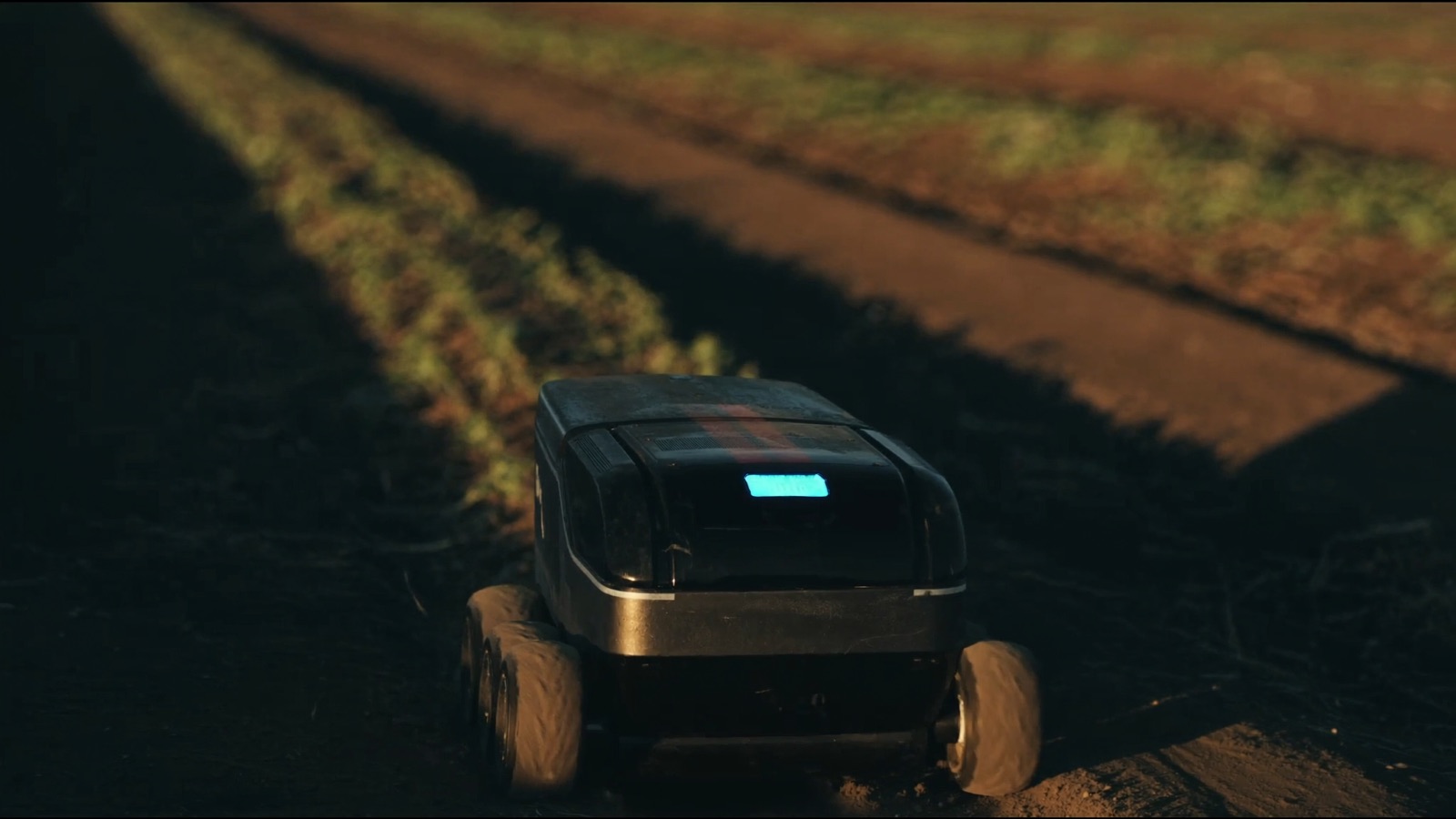
A 500-acre organic vegetable operation in the Salinas Valley spends $40,000 in the first season running a contract weeding robot. Results look promising: the machine covers ground, the operator team learns the system, and weed pressure drops in the trial blocks. Then the vendor raises per-acre pricing, the farm's second-season planting rotation changes the row spacing by four inches, and the integration between the robot's fleet software and the farm's ERP requires custom middleware the vendor charges extra for. By season three, the pilot is quietly retired.
This pattern — real field performance, stalled commercial adoption — is the defining story of agricultural robotics right now. The machines have gotten dramatically better. The operational scaffolding to run them at commercial scale has not kept pace.
If you're evaluating ag robots for weeding, spraying, harvest assist, or field scouting, the technical question is easier than it's ever been. The hard questions are: What happens when your crop rotation changes? Who owns the data the machine generates? What does the per-acre cost look like in year three, not year one?
Here are seven reasons pilots stall — and seven disciplines the farms that successfully scale consistently apply.
The Seven Failure Modes
1. Crop-Spacing Lock-In
Most ag robots are designed around a standard row configuration. The LaserWeeder from Carbon Robotics covers beds up to 80 inches wide with fixed camera spacing. FarmWise's Titan FT-35 is tuned for Salinas Valley lettuce and broccoli configurations. Naïo's Oz is optimized for vineyards and market gardens with consistent inter-row spacing.
This works fine until the farm's rotation changes. A grower who pilots a robot in 30-inch corn rows and then shifts to 20-inch specialty pepper rows has bought a machine that no longer fits the operation. Vendors will often say the system is "configurable" — and it may be, at a cost, with a lead time, and sometimes only for certain crop types.
Before signing, get written confirmation of exactly which crops, row widths, bed configurations, and plant spacings the machine supports — tested, not theoretical. Ask the vendor for reference sites where that configuration has run continuously for at least one full season.
2. The Agronomist Gap
Most robot pilots are owned by the farm's technology team or its general manager. Almost none are owned by the agronomist.
This creates a systematic blind spot. The robot may perform well on a mechanically measured metric — passes per acre, coverage rate, false-positive rate — while the agronomist is watching the plant canopy and seeing issues the machine's sensors aren't optimized to catch. Root disturbance from mechanical weeding attachments. Herbicide drift from spray nozzles set at the wrong boom height. Camera-triggered over-application in high-density stand areas.
Farms that scale past pilot have the agronomist in the room from day one, defining success criteria for crop health alongside the operational KPIs. The robot vendor rarely initiates this conversation. The farm has to.
3. No Baseline Measurement
This is identical to the failure mode in hospitality and manufacturing pilots: operators start the robot without measuring what they're replacing.
Weed pressure before and after. Hand-weeding hours per acre in the prior season. Herbicide spend per acre. Crop loss rates attributable to weed competition. Without a pre-robot baseline on all of these, the post-season comparison is faith-based, not evidence-based.
Two weeks of systematic pre-deployment measurement — running the operation the normal way and logging the numbers — is the minimum. Some row-crop operations have historical spray records going back years that can serve as baseline. Pull those first.
4. Infrastructure That Doesn't Exist on the Farm
Ag robots have real infrastructure requirements that vendor demos rarely surface. Reliable cellular or private LTE coverage across the entire operating area — not just the headlands where the sales call happened. Charging infrastructure with sufficient amperage for overnight recharge of multiple units. A flat staging area near the field that can handle a machine that may weigh several thousand pounds.
For RTK-dependent systems, a correction signal source within usable range. Some vendors bundle RTK correction subscriptions; others assume the farm has its own base station.
The most common hidden cost: farms that run large robot fleets need someone who understands both the machine software and the field operations. That person doesn't exist at most operations today. Building or hiring that capability — even a single trained technician shared across multiple farms — is a prerequisite for scaling, not an afterthought.
5. Per-Acre Economics That Only Work at Scale
The unit economics of most ag robots require high utilization to reach competitive per-acre cost. A robot operating 8 hours a day during a 12-week weeding window covers far fewer acres than the same machine running 18 hours a day across an extended season.
Carbon Robotics has published per-acre cost data for its LaserWeeder at high utilization. At the utilization rates achievable on a single 200-acre farm, the numbers are less attractive than at the utilization rates achievable across a 2,000-acre multi-farm cooperative deployment. Vendors selling to individual farms rarely surface this clearly.
Ask the vendor: what is the per-acre cost at the actual acreage I'm planning to run? Not the reference case. My acreage. And get the assumptions — hours per day, operating season length, downtime rate — in writing.
6. Vendor Dependence That Becomes Visible in Year Two
Year-one pricing often includes software, support, and updates at an introductory rate. Year-two pricing frequently does not.
The proprietary data formats that most ag robots use — obstacle maps, field boundary files, historical spray records — are often not exportable in a form that works with a competitor's system. This is not accidental. Once a farm has two seasons of field data in a vendor's format, switching vendors means starting from scratch.
Read the contract's data portability clause before signing. If there isn't one, that is the answer. A pilot that generates 18 months of field history should produce data the farm owns and can use regardless of which machine runs the field next year.
7. Treating the Demo as the Baseline
Vendor demonstrations are controlled environments. The field is pre-mapped, the obstacles are predictable, the soil conditions are optimal, and the demo happens during the part of the season when the machine performs best.
Real-world agricultural deployment involves frost-heaved soil that changed the field surface since last mapping. Irrigation laterals left by the crew at 2 a.m. Coyote holes. Residue from the previous crop that the machine's vision model wasn't trained on. Unexpected plant morphology in a variety the machine hasn't seen.
Ask the vendor for a reference farm you can call directly — operations manager, not account manager — that has been running the same machine on the same crop for at least two full seasons. Ask about the worst week they had, and what it took to recover.
The Seven Disciplines of Pilots That Scale
1. A Single Accountable Owner
Not the tech committee. Not the farm manager and the agronomist together. One named person whose job it is to run the weekly stand-up, review the KPI dashboard, log incidents, and make the kill-or-scale recommendation at the end of season one.
Without this, the unglamorous mid-season maintenance work doesn't happen. Nobody updates the obstacle map after the irrigation crew moved laterals. The machine's false-positive rate creeps up because the cover crop emerged two weeks early and nobody recalibrated. At the end of the season, there's no data and no decision.
2. Three Crop-Health KPIs Alongside Three Operational KPIs
The robot's KPIs and the agronomist's KPIs need to be in the same document. Operational metrics (coverage acres per day, uptime rate, cost per acre vs. hand crew) don't tell you whether the machine is actually helping the crop.
Sample KPI pairings by use case:
| Use Case | Operational KPI | Crop-Health KPI |
|---|---|---|
| Mechanical weeding | Acres weeded per day | Weed density at 30 days post-pass |
| Laser weeding | Herbicide spend per acre | Weed escapes per 100m row |
| Precision spray | Product applied per acre | Application uniformity (CV%) |
| Harvest assist | Tons transported per shift | Bruising/loss rate vs. manual transport |
Define the crop-health KPIs before the machine arrives. Measure both at baseline. Compare both at season end.
3. Pre-Deployment Field Survey
Run a complete field survey before the robot arrives: soil compaction, slope gradient map, drainage problem areas, irrigation lateral locations, known obstacle positions. Most vendors will map the field on day one, but they're mapping the field as it is that day, not as it will be mid-season.
Flag any areas where slope exceeds the machine's rated grade. Most wheeled robots are rated for slopes of 15–20 degrees; some specialty terrain is steeper. Get the slope data from a field survey or drone LiDAR pass before deployment, not after the machine rolls over in a drainage ditch.
4. Season-One Scope Discipline
Pick one crop, one field, one use case. Not because the robot can't do more, but because clean data requires controlled conditions. A machine weeding five different crops across three different fields in one season cannot generate interpretable per-crop economics. You'll have averages with too much variance to support a scale decision.
Also check that the chosen use case generates enough volume to be statistically meaningful. A 40-acre trial is the floor for row-crop weeding economics; smaller than that and normal field variation swamps the signal.
5. Infrastructure Audit Before the Deposit
Before the pilot deposit is signed, conduct a written infrastructure readiness check:
- Cellular or private LTE coverage mapped across the entire operating area (not just headlands)
- RTK correction source confirmed — vendor subscription or farm-owned base station
- Power infrastructure confirmed — amperage, outlet locations, charging time per unit
- Staging area confirmed — flat, accessible, within practical distance of operating fields
- Technician plan confirmed — who handles daily startup, incident response, recalibration
Any gap on this list is a negotiating point before the contract is signed, not a problem to solve after the machine is on property.
6. Staff Integration, Not Staff Replacement
The farms that scale ag robot pilots tend to describe their crews not as replaced but as redeployed. The harvest crew that was pulling weeds by hand is now scouting for machine failures, managing the charging rotation, and doing the high-precision hand work the robot can't match — transplanting, thinning, canopy management in dense plantings.
This redeployment doesn't happen automatically. It requires explicit conversations before the robot arrives about which tasks transfer to the machine, which stay with the crew, and what the crew needs to know to work alongside the robot safely. Workers who haven't been briefed will find the machine an obstacle rather than a partner — and some will route around it in ways that corrupt the pilot data.
7. Written Kill Criteria With a Hard Date
Define in writing — in the same document as your KPIs — what outcomes at the end of season one trigger a no-scale decision. Not a request for an extension. Not a renegotiation. A clear, agreed-upon line: "If cost per acre weeded exceeds $X after accounting for all labor, infrastructure, and software costs, we do not proceed to season two."
Vendors are sophisticated at arguing for extensions. New software update just shipped. This season was an anomaly. Next year the utilization will be higher. Kill criteria that were agreed in advance before anyone had an emotional investment in the program are the only reliable defense against these arguments.
What the Pilots That Scale Have in Common
Look across the agricultural robot deployments that have moved from pilot to commercial — John Deere's See & Spray at 5 million acres across the U.S. corn belt, Carbon Robotics' LaserWeeder across organic specialty vegetable operations in California and Arizona, Naïo's Oz across European market gardens — and several patterns are consistent.
First, the use case was already being done at scale before the robot arrived, so the economic comparison was clear. Second, the crops involved have relatively consistent row geometry season to season. Third, the buyer had agronomic expertise in-house, not just operational expertise.
The hardest thing to build is not the robot. It's the operational readiness that makes a robot commercially useful at the scale required to justify the investment. Build that first.
Next in this series: the per-acre cost math for agricultural robots — how to model amortization, fuel, operator time, and support contracts against your current hand-crew costs.