Cleaning robot vendor evaluation: SLAs, fleet management, and reporting
Most vendor demos look similar. The differences that matter show up in the contract and the support model.
A well-scripted cleaning robot demo is nearly impossible to evaluate as a buyer. Every major vendor — Avidbots, Brain Corp, Tennant, Gausium, ICE Cobotics — can put a machine on a clean, pre-mapped floor and make it look effortless. The robot navigates obstacles, returns to dock, completes the route. The presentation is polished.
The differences that determine whether a deployment succeeds show up in the contract language, the support response when something goes wrong, the quality of the data the fleet management platform produces, and the total cost picture that only becomes visible 90 days in.
Here is an evaluation framework built around the questions that separate vendors who have actually supported enterprise deployments from those who have sold demos and then disappeared.
Category 1: SLA specificity
The single biggest differentiator between cleaning robot vendors at a contract level is whether their SLA contains numbers.
A vague SLA says: "We will respond to service requests promptly" or "Support is available during business hours." This is not an SLA. It is a statement of intent with no accountability.
A real SLA says: "Critical issues (machine will not power on or cannot execute any autonomous cleaning function) — on-site response within 4 business hours. High issues (machine executes cleaning but with >30% deviation from mapped route) — on-site response within 8 business hours. Standard issues (software, reporting) — resolution within 48 hours."
Push vendors to provide a tiered response matrix with specific time commitments before you sign. If they resist — "we're very responsive, you can call us anytime" — that is a meaningful signal about the priority they place on post-sale support.
Questions to ask:
- What is your specific on-site response time commitment for a machine that will not execute its cleaning route?
- Where is your nearest field service technician relative to my facility?
- Is on-site support included in the service contract, or billed separately per visit?
- What is your uptime guarantee, and what is the remediation if you miss it?
- If the machine is down for more than 5 business days, do you provide a loaner unit?
The loaner unit question is particularly telling. Vendors who have real enterprise operations — Brain Corp's platform runs across tens of thousands of machines in retail chains — have logistical infrastructure to support extended downtime events. Vendors who don't have that scale will give you a longer answer that doesn't commit to anything.
Category 2: Fleet management platform
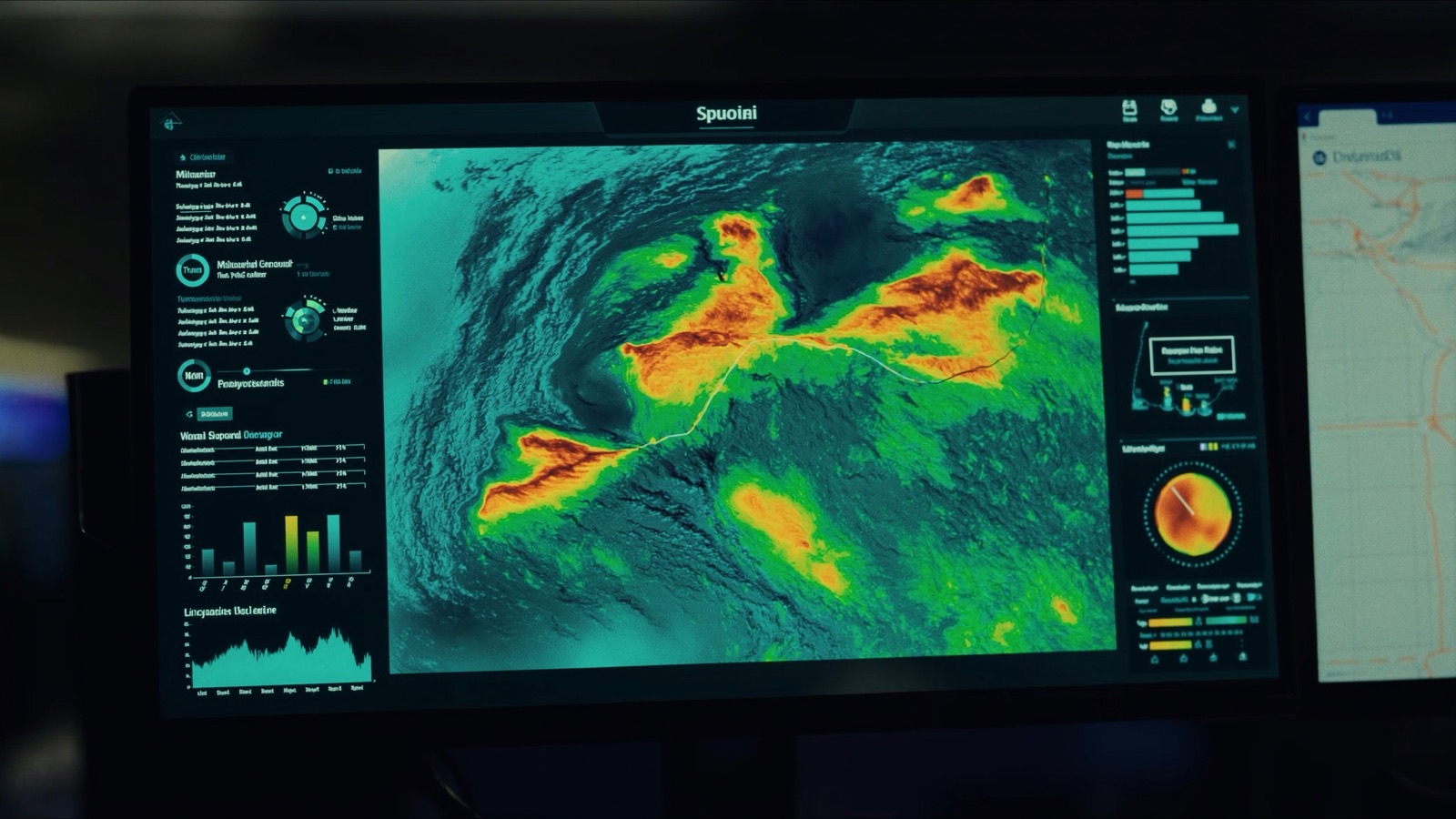
The fleet management dashboard is where the operational value of the machine lives. A robot that cleans but produces no data is a machine that looks like automation but requires the same manual reporting as a human-operated program. The data is the difference between "the robot cleaned last night" and "the robot achieved 91% coverage of Zone A and stopped four times in Zone B, which indicates the layout change near the loading dock on Tuesday affected the cleaning path."
Evaluate the fleet platform before you commit to the hardware.
What a good fleet platform provides:
Coverage reporting — square footage cleaned per zone per run, with comparison to the target coverage area. Not just "run completed" — actual area vs. target area.
Obstacle stop log — time, location, and duration of every stop event. This data is what tells you whether a zone is becoming problematic and whether stop frequency is trending up over time (a signal of either changing obstacle patterns or sensor degradation).
Solution consumption per run — lets you predict consumable costs and identify runs where the machine used significantly more or less solution than expected (indicating a possible delivery system issue).
Battery discharge tracking — discharge curves over time identify battery degradation before it causes mid-run failures.
Route map version history — when you rebuild a cleaning route, the history should show what changed and when. This matters when a coverage gap appears and you need to determine whether it's a new issue or the result of a route change three months ago.
Red flags in fleet platform demos:
Aggregated-only data — if the platform only shows weekly totals and not per-run data, you cannot diagnose specific issues. "This week the fleet cleaned 2.4 million square feet" tells you nothing actionable.
No API or integration option — a fleet platform that cannot export data to your existing operations management system (work order systems, cleaning verification apps, client reporting portals) will become a siloed tool that someone checks occasionally and then stops checking. Ask specifically: "Can this platform export coverage data via API or CSV, and on what schedule?"
Coverage percentage without denominator transparency — "98% coverage" sounds impressive. "98% coverage of what the system defined as the target area" is different from "98% of your actual cleanable floor area." Ask to see how the target area is calculated and whether it matches your facility's actual layout.
Category 3: Consumables sourcing and parts availability
This is the cost category that creates the most friction in year two and three of a cleaning robot contract, and it is almost never discussed in the sales process.
Most autonomous floor scrubbers use vendor-specific brushes, squeegees, and filter elements. Some vendors enforce this through proprietary parts with non-standard dimensions. Others allow compatible third-party parts. The difference matters because:
First, proprietary parts lock you into vendor pricing for items that are commodity consumables in the broader cleaning equipment market. A standard commercial scrubber brush set from a third-party supplier might cost $150. The equivalent from a vendor who has locked the part specification might cost $400 or more, with a 3-week lead time.
Second, proprietary parts require vendor supply chain stability. A smaller vendor that faces supply chain issues, exits a market, or is acquired may create parts availability problems for deployed machines mid-contract.
Questions to ask:
- Are consumable parts (brushes, squeegees, filter elements) available from third-party suppliers, or only from you?
- What is your current lead time for replacement brushes and squeegees?
- If I need to replace a brush set, can I order directly, or does it go through a service call?
- What is your policy on sourcing equivalent parts from non-OEM suppliers?
Vendors who are confident in their parts supply and pricing will answer these questions directly. Vendors who want to maintain lock-in will qualify, redirect, or tell you "that hasn't been an issue for our customers" — which is not an answer to the question.
Category 4: Software lock-in and contract terms
Autonomous floor scrubbers are hardware-software combinations. The hardware is durable — most commercial-grade machines are designed for 7 to 10 year physical lifespans. The software subscription, in most current vendor models, is what enables autonomous operation. No subscription, no autonomous function.
Understand the software dependency before you sign a hardware purchase agreement.
Key contract questions:
- If my software subscription lapses or is terminated, does the machine retain any autonomous functionality?
- What happens to my cleaning route maps if I terminate the contract — are they stored on-device or only in the cloud?
- What is your upgrade path for major software version changes — are upgrades included in the service contract, or do they require a separate fee?
- Is there any path to legacy autonomous operation that doesn't require an ongoing cloud subscription?
Some vendors are moving toward more open software architectures, particularly where the underlying navigation platform (Brain Corp's BrainOS, for instance) also supports machines from multiple hardware partners. In these cases, the software subscription is platform-level, not machine-specific, and the negotiating position on pricing improves as you scale your fleet.
For facilities managers evaluating a purchase (vs. RaaS) model, the 5-year software subscription cost should be calculated and included in the total cost before making a purchase vs. lease decision. A machine purchased for $50,000 with a $6,000/year mandatory software subscription has a 5-year total cost of $80,000 in hardware and software alone — before consumables, before service calls, before human-in-the-loop time.
Category 5: The reference customer test
This is the most reliable signal in any cleaning robot vendor evaluation, and the most underused.
Ask every vendor you are seriously evaluating for two reference customers who meet all of these criteria:
- Similar facility type (not just "commercial cleaning" — similar size, similar layout, similar operations model)
- Operational for at least 18 continuous months
- Willing to speak directly with you — not through the vendor's account manager
When you speak with those references, ask specifically:
- What was your biggest implementation challenge in the first 90 days?
- What did you actually spend in total in year one, including service calls, consumables, and human time?
- If you were starting over, what would you do differently?
- What does your renewal conversation look like — are you expanding the fleet or reconsidering?
- Is there anything the vendor told you in the sales process that turned out to be wrong or materially different in practice?
A vendor who cannot provide two references meeting those criteria — or who provides references that will only speak in generalities and redirect you to the vendor's case study — has not built a base of satisfied long-term customers. That is important information.
A vendor whose references give you specific, honest answers — including things that didn't go well initially — is demonstrating that their customers are actually getting value and feel confident enough to speak candidly.
The RFP scorecard
If you are running a competitive evaluation across multiple vendors, score each vendor on these five categories on a 1–5 scale:
| Category | Weight | Vendor A | Vendor B | Vendor C |
|---|---|---|---|---|
| SLA specificity (response time, uptime commitment, loaner policy) | 25% | |||
| Fleet platform (coverage granularity, obstacle logs, API access) | 25% | |||
| Consumables sourcing freedom and parts availability | 15% | |||
| Software contract terms (what happens at subscription end) | 20% | |||
| Reference customer quality and candor | 15% |
Weight the SLA and fleet platform highest because they govern what you get after the contract is signed. Demo performance and hardware specification differences among major vendors are smaller than they appear during the sales process. The support model is where the operational reality diverges most sharply.
Red flags that should stop a negotiation
The vendor is unwilling to provide a facility-specific pilot before a full fleet commitment. No serious buyer of cleaning robots at meaningful scale should be purchasing a fleet without a single-machine pilot at your facility first, with pre-defined success metrics and a go/no-go decision at the end. A vendor who resists this is protecting a sales process, not confident in the outcome.
SLA language contains "commercially reasonable efforts" or "best efforts." These phrases are legal constructions that mean "we'll try." They are not commitments and are effectively unenforceable. Insist on specific time-based commitments.
No named escalation path for chronic issues. If the machine misses its coverage target five nights in a row, who do you call, and what is the process for escalation if the first-level support doesn't resolve it? If the vendor cannot describe this escalation path specifically, the support model is not designed for persistent issues — it is designed for one-off breaks.
Fleet data is stored only in the vendor's cloud with no export path. If your data is in a system you cannot export from, you cannot take it to a competitor and it cannot survive a vendor business disruption. Coverage data is an operational record. You should own it.
The demo environment is materially different from your facility. A demo on a 50,000-square-foot pre-mapped showroom floor is not evidence of performance on your 25,000-square-foot office complex with irregular column spacing. Ask to see a demo at a reference site that resembles your facility. If that's not possible, ask to run the machine on your floor during a site visit before signing.
A note on newer entrants vs. established platforms
The cleaning robot market has attracted a significant number of entrants in the past five years, many of which are commercially compelling on paper but have thin enterprise support infrastructure. A vendor with 50 deployed machines and a 15-person company is a very different operational proposition from a vendor with tens of thousands of machines deployed across enterprise retail chains.
This is not an argument against newer vendors — some have built genuinely differentiated technology. It is an argument for adjusting your SLA expectations and your evaluation rigor accordingly. A smaller vendor deserves more detailed questions about their service team capacity, their parts supply chain, and their financial stability. A five-year contract with a vendor that might not be operating in year three is not a conservative choice, regardless of how competitive the initial pricing is.
This concludes the cleaning robot series. Return to the series overview for the full set of articles, from deployment economics to the full vendor RFP process.