Service Robot TCO Across Hotels, Restaurants, Retail, and Senior Care
The sticker price is the smallest number in the model. Here's what a full 3-year cost picture looks like across four sectors.
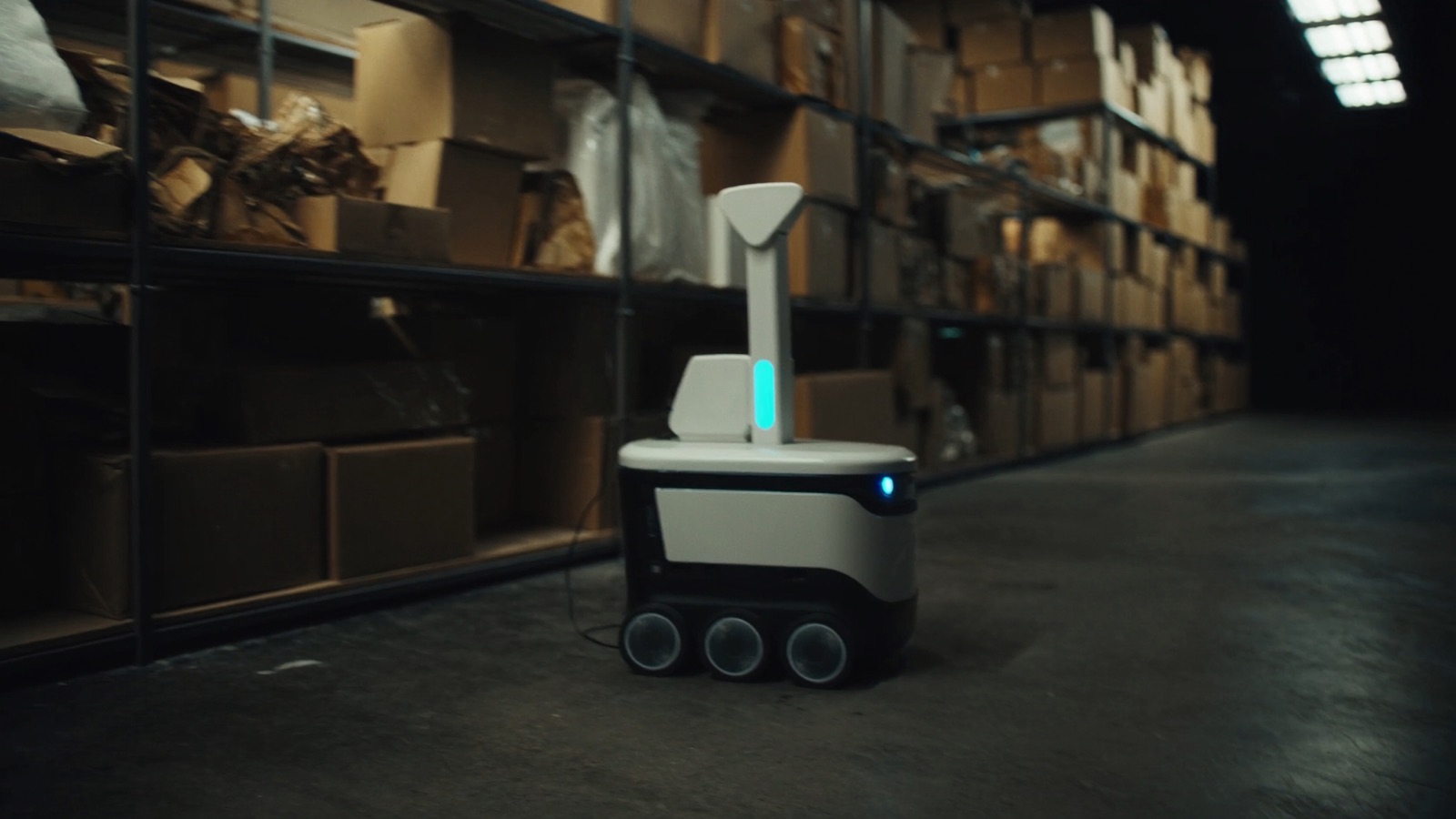
A vendor hands you a price sheet. BellaBot: $15,900. Servi Plus: $16,000 (purchase) or $293/month (RaaS). Keenon T10: quote on request.
The price sheet is not a cost model.
A realistic 3-year total cost of ownership for a service robot includes hardware acquisition, software and connectivity, support and maintenance contracts, infrastructure modifications, staff training, and productivity loss during the deployment learning curve. Depending on sector and site conditions, the gap between the price sheet and the real number is often 150–400%.
This guide builds the model line by line.
The Cost Categories
Every service robot deployment — regardless of vendor, sector, or site — draws from six cost buckets. The weights shift by sector, but none of the buckets disappear.
1. Hardware Acquisition
Purchase: The vendor price. Publicly listed for BellaBot ($15,900 for standard, $16,900 for Pro), Bear Robotics Servi+ ($16,000), and a small number of other vendors. Keenon, OrionStar, Richtech, and most of the long-tail require a quote.
RaaS (Robot-as-a-Service): Monthly fee covering hardware, software, and typically basic support. Published rates: Servi+ from $293/month (RobotLAB), BellaBot from $335/month (Pro via RobotLAB, though the standard model is listed at $2,430/month — the rate difference reflects contract length and configuration). Over 36 months at $335/month, you've paid $12,060. Over 36 months at $2,430/month, you've paid $87,480 — more than purchasing outright.
The economics of RaaS vs. purchase depend almost entirely on the contract terms, what "RaaS" includes (software updates, support calls, replacement hardware on failure?), and whether the vendor's support SLA is realistic for your operating environment.
Useful guidance: For a single-unit pilot with uncertain long-term viability, RaaS at the lower end of the market ($300–$500/month) limits downside exposure. For a fleet of 3+ units at a site you're committed to for 3+ years, purchase pencils better — assuming the support contract is negotiated separately at realistic terms.
2. Software and Connectivity
Fleet management software is not always included in the hardware price. The functions it covers:
- Remote monitoring and dispatch across multiple units
- Map management (uploading new floor plans after layout changes)
- Analytics and utilization reporting
- Software updates and firmware maintenance
When software is bundled into a RaaS fee, the all-in rate is often higher than it appears per-line because the software component has margin. When software is a separate SaaS subscription, it runs $50–$200/month per unit in the mid-market. For enterprise fleet deployments (10+ units across multiple sites), custom enterprise agreements are standard.
Connectivity infrastructure — wifi access points, signal boosters, mesh network nodes for dead-zone remediation — is a site-specific cost that buyers consistently underestimate. In a 300-room hotel with concrete floors and older AP placement, a wifi audit and remediation for a single robot deployment can run $5,000–$15,000 before the first delivery is made.
3. Support and Maintenance
Vendors typically offer tiered support packages:
- Basic/included: Email support, business-hours response, software updates included.
- Standard: Phone support, next-business-day on-site response SLA.
- Premium: 24/7 phone, same-day or 4-hour on-site response, dedicated account manager.
Pricing for support contracts is rarely published. Budget 10–20% of hardware cost annually for mid-tier support at a single-unit deployment; fleet discounts apply above ~5 units.
The support question that matters most is not the tier — it's the geographic coverage. A vendor with excellent 24-hour response SLAs and the nearest field technician a 4-hour flight away is not a 24-hour response vendor for your deployment. Ask the vendor directly: "Where is your closest field engineer? What is the actual travel time to my site?"
Mechanical maintenance adds a variable cost: wheel replacements, sensor cleaning, battery replacement (typically at 2–3 years), tray liner replacement in food service. Budget $800–$1,500/year for a single-unit food service robot at high utilization.
4. Infrastructure Modifications
This is the category that most frequently blows up a TCO model.
| Sector | Common infrastructure costs |
|---|---|
| Restaurants | Wifi AP repositioning, floor marking for robot lanes, kitchen pass height adjustment |
| Hotels | Elevator API integration ($20k–$50k+ for custom integration), wifi remediation, doorway width assessment |
| Retail | Wifi coverage in warehouse/stockroom zones, aisle width modification (some store layouts are too narrow for current-gen service robots), charging station placement |
| Senior care | Doorframe sensors for automatic door opening, wifi remediation in older facilities, nurse call system integration |
Elevator integration deserves specific attention for multi-floor hotel and senior care deployments. KONE offers a developer-accessible API for its DX-class elevators at no cost, and Otis and Schindler have similar offerings — but the integration engineering between the robot's fleet management system and a specific elevator controller at your property is custom work. Costs for a complete integration at a single property, including testing and certification, are typically $20,000–$50,000 from a qualified system integrator. This cost is often not visible until the pilot is already signed.
5. Staff Training and Change Management
Most vendors include onsite training in the deployment package — typically 2–3 days of installation and staff orientation. What they do not include, and what frequently accounts for 30–60% of first-year productivity loss, is the time required for staff to adapt their workflows to the robot.
In a restaurant, food runners and servers need to understand: what the robot picks up, what it doesn't, how to stage loading correctly, what to do when it signals for help, and how to handle situations where the robot blocks a path during a rush. That learning curve typically takes 4–6 weeks to normalize at a new deployment.
Budget 40–80 hours of management time in month 1 for a single-unit deployment: robot champion oversight, staff feedback collection, workflow adjustment, vendor troubleshooting calls.
Turnover in hospitality and retail means training is not a one-time cost. If your front-of-house staff turns over 30–50% annually (industry average for full-service restaurants), robot training is a recurring operational cost embedded in new-hire onboarding.
6. Productivity Impact During Ramp-Up
Expect a 4–8 week period where the robot actively reduces throughput relative to the baseline. Staff are learning the workflow. The robot requires more assists than it will at steady state. Managers are troubleshooting more than usual. This is normal and expected — budget for it rather than being surprised by it.
Sector-by-Sector TCO: A 3-Year Model
The following models assume a single-unit deployment, purchased (not RaaS), with a mid-tier support contract. Adjust for fleet scale and contract terms.
Restaurant (High-Volume Casual Dining, 200+ covers/night)
| Cost item | Year 1 | Year 2 | Year 3 |
|---|---|---|---|
| Hardware (amortized) | $5,300 | $5,300 | $5,300 |
| Software (fleet mgmt) | $1,800 | $1,800 | $1,800 |
| Support contract | $2,400 | $2,400 | $2,400 |
| Wifi / infrastructure | $3,000 | $0 | $0 |
| Training / ramp-up | $2,500 | $500 | $500 |
| Maintenance / parts | $1,000 | $1,200 | $1,500 |
| Year total | $16,000 | $11,200 | $11,500 |
| Cumulative | $16,000 | $27,200 | $38,700 |
At 120 deliveries/day × 300 days = 36,000 annual deliveries, the 3-year per-delivery cost is $1.08.
A food runner at $18/hour making 20 deliveries/hour costs $0.90/delivery — but only if that employee is 100% utilized on deliveries. In practice, food runners split their time between delivery, bussing, restocking, and other tasks. Fully-loaded, the robot often wins on a per-delivery basis in high-volume casual dining.
Hotel (200-Room Urban Property)
| Cost item | Year 1 | Year 2 | Year 3 |
|---|---|---|---|
| Hardware (amortized) | $5,300 | $5,300 | $5,300 |
| Software (fleet mgmt) | $2,400 | $2,400 | $2,400 |
| Support contract | $3,000 | $3,000 | $3,000 |
| Wifi remediation | $8,000 | $0 | $0 |
| Elevator integration | $0 | $0 | $0 |
| Training / ramp-up | $3,000 | $500 | $500 |
| Maintenance / parts | $800 | $1,000 | $1,200 |
| Year total | $22,500 | $12,200 | $12,400 |
| Cumulative | $22,500 | $34,700 | $47,100 |
This model assumes single-floor deployment (no elevator integration). Adding elevator integration adds $20,000–$50,000 to Year 1, pushing the 3-year total to $67,100–$97,100.
At 25 deliveries/day × 330 days = 8,250 deliveries, the 3-year per-delivery cost is $5.71 (single-floor) or up to $11.77 (with elevator integration).
Hotel delivery labor context: a front desk agent making an off-hours delivery costs roughly $15–$22 in fully-loaded labor per incident including the interruption to their primary role. The robot's $5.71 per-delivery cost beats this — but only if the 25-delivery/day estimate is accurate. Most hotels overestimate overnight delivery volume in their initial modeling.
Retail (Large-Format, 50,000+ sq ft)
| Cost item | Year 1 | Year 2 | Year 3 |
|---|---|---|---|
| Hardware (amortized) | $5,300 | $5,300 | $5,300 |
| Software (fleet mgmt) | $2,400 | $2,400 | $2,400 |
| Support contract | $2,400 | $2,400 | $2,400 |
| Wifi / infrastructure | $5,000 | $0 | $0 |
| Floor marking / layout | $1,500 | $0 | $0 |
| Training / ramp-up | $2,000 | $500 | $500 |
| Maintenance / parts | $800 | $1,000 | $1,200 |
| Remap labor (frequent resets) | $2,000 | $2,000 | $2,000 |
| Year total | $21,400 | $13,600 | $13,800 |
| Cumulative | $21,400 | $35,000 | $48,800 |
The remap labor line is retail-specific and often overlooked. In a grocery or home improvement context, weekly or biweekly promotional resets move products and sometimes physical displays. Each significant change requires updating the robot's obstacle map — vendor-provided tooling makes this easier than it was three years ago, but at a 30,000-SKU grocery store it's not free. Budget 4–8 hours of a tech-savvy staff member's time per remap.
Senior Care (100-Bed Skilled Nursing Facility)
| Cost item | Year 1 | Year 2 | Year 3 |
|---|---|---|---|
| Hardware (amortized) | $5,300 | $5,300 | $5,300 |
| Software (fleet mgmt) | $2,400 | $2,400 | $2,400 |
| Support contract | $3,000 | $3,000 | $3,000 |
| Wifi / infrastructure | $6,000 | $0 | $0 |
| Door sensor installation | $2,000 | $0 | $0 |
| Training / ramp-up | $3,500 | $1,000 | $1,000 |
| Maintenance / parts | $1,000 | $1,200 | $1,500 |
| Year total | $23,200 | $12,900 | $13,200 |
| Cumulative | $23,200 | $36,100 | $49,300 |
Training is higher in senior care because the staff mix includes CNAs, nurses, and dietary aides who interact with the robot differently, and because regulatory compliance (infection control protocols, documentation requirements) adds procedural complexity to how the robot integrates into workflows.
Purchase vs. RaaS: When Each Model Makes Sense
| Condition | Prefer purchase | Prefer RaaS |
|---|---|---|
| Commitment horizon | 3+ years at same site | <2 years, or uncertain |
| Fleet size | 3+ units | 1–2 units |
| Support capability | In-house tech staff or strong local IT | Fully outsourced support preferred |
| Capital availability | Capital budget available | OpEx-only constraint |
| Vendor track record | Vendor has 2+ years of documented deployments | New vendor or new product generation |
One important consideration that rarely appears in vendor RaaS pitches: end-of-contract terms. What happens to the robot at contract end? Who owns performance degradation risk if the hardware ages mid-contract? What are the penalties for early termination if your deployment volumes don't materialize? These terms are negotiable and vary significantly between vendors.
The Three Numbers That Drive the Model
If you build no other analysis, build these three:
- Annual delivery volume: What is the realistic, pessimistic estimate of deliveries per year at your site? (Not peak capacity — typical weekday volume × 300 days.)
- Labor alternative cost: What does each delivery cost you today in fully-loaded labor, including opportunity cost of the task interruption?
- 3-year robot cost per delivery: Total 3-year TCO from the model above, divided by (volume estimate × 3).
If number 3 is lower than number 2, continue to vendor comparison. If it isn't, no choice of vendor fixes the model.
The next article in this series examines the operating envelope in detail — battery life, cycle time, traffic density, and the conditions that push a deployment outside the robot's reliable performance range.