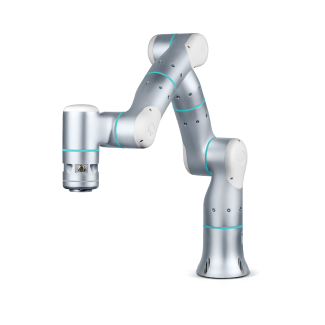
Overview
The main feature of adaptive robots is that they have self-adjustment functions and can adapt to changes in themselves or the environment. Compared with traditional robots, this key progress is that the designed robots can adjust themselves without any control assistance. With the rapid development of artificial intelligence, adaptive robots have begun to receive a lot of attention in China. From the perspective of social needs, the lack of sufficient labor to care for the elderly will become an increasingly serious problem. Personal service robots based on adaptive robots can greatly alleviate this problem. The adaptive ability of robots refers to the ability of robots to complete work tasks in unstructured working conditions by using force-position collaborative control. That is, through the identification and analysis of the operating object, environment and task, adaptive adjustment and control are carried out to complete complex operations. The robot needs to meet the standard requirements in terms of posture perception components, force perception components, posture control components, force control components, etc. At the same time, the standard proposes that the adaptive ability of robots needs to meet the standards in three aspects, namely, posture deviation compensation ability, anti-interference ability, and task generalization ability. Among them, the posture deviation compensation ability is for the adaptation of the operating object, that is, when there is a deviation between the actual posture of the robot end effector and the expected posture of the task, the maximum allowable deviation value for the robot to complete the expected task. The anti-interference capability corresponds to environmental adaptation, which means that even in the presence of external interference, the robot can offset or adapt to interference and complete the expected task. The task generalization capability corresponds to operational task adaptation, which means that the robot can quickly deploy in other similar scenarios and autonomously complete similar tasks on the premise of being able to complete a certain task.
Key facts
- Payload
- 4 kg
- Reach
- 919 mm
- DOF
- 7
- Repeatability
- ±0.05 mm
- TCP speed
- 1.5 m/s
Detailed specifications
Motion & kinematics2
- Dof
- 7
- Repeatability Mm
- 0.05
Power & battery1
- Power Consumption W
- 200
Compute1
- Ros Compatible
- true
Safety & certifications1
- Safety Certification
- CE, ETL
Other24
- Price Tier
- 40-80K
- Applications
- pick_and_place, precision_insertion
- Api Available
- true
- Max Speed M S
- 1.5
- Pricing Model
- purchase
- Force Limiting
- true
- Operating Temp
- 0°C to 50°C
- Warranty Years
- 2
- Company Country
- US
- Lead Time Weeks
- 4
- Deployment Count
- 500
- Deployment Notes
- Rizon 4s is designed for tasks such as precision insertion and micro-component placement, demonstrated in sectors requiring high automation precision.
- Mounting Options
- any angle, AMR, AGV
- Setup Time Hours
- 2
- Compatible Vision
- VisionTech AI, SmartEye 2.0
- Industries Served
- automotive, logistics, electronics
- Software Platform
- Flexiv Elements, Robot Development Kit
- Training Required
- basic_<1day
- Fieldbus Protocols
- EtherCAT, Modbus TCP
- Availability Status
- available
- Compatible Grippers
- GripperX Pro, EasyGrip 3000
- Countries Available
- US, CA, EU
- Programming Interface
- drag_and_drop, proprietary_app
- Additional Information
- - Enhanced multi-contact force control for delicate operations. - Seamless adaptation to varied tasks, maximizing uptime and productivity. - Proprietary technology ensures improved accuracy and cost-efficiency in automation tasks. - Built with dual-channel redundancy for safety in unpredictable environments. - Features hierarchical intelligence for real-time adaptability in varying contexts.
Reviews for 7 Aixes 4kg Rizon 4 Adaptive Robot for FPC Assembly
Loading reviews…