RoboScore
37.6
Out of 100. Its robots, plus proof from customers and the press.
4 of 6 measures have data
News bonus
0.0
From the last 90 days, up to 15
RoboIndex
37.6
No prior week
Rank change
Not yet on file
Not on a board yet
Applied R&D for defense, space, and advanced robotics
Watch Johns Hopkins University Applied Physics Laboratory robots at work
1 video
Is this your company? Claim it, free. Fix your record, add videos, see who looks.
Claim Johns Hopkins University Applied Physics LaboratoryMoney and customers
Raised
Not yet on file
No recorded round
Customers
2
2 customers cited in public sources
What the score is made of
How it worksThe score is 65% robots, 30% proof from customers and the press, 5% range of robots. Activity and readiness are shown for context.
FUNDING ROUNDS AND CUSTOMERS BY ROBOT
Customers
2customers cited
named in public sources · no deployment on file
A deployment is recorded when a public source names both the customer and the robot, or the maker confirms it. Nothing here counts against Johns Hopkins University Applied Physics Laboratory.
In Surgical / Medical, CMR Surgical, BD Rowa and Catalia Health have deployment evidence on file.
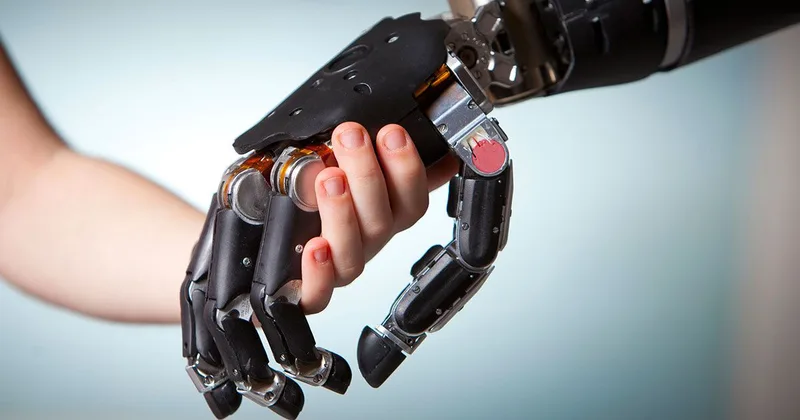
Add a deployment →Johns Hopkins University Applied Physics Laboratory (APL) develops advanced robotics and human-machine systems for defense and research programs, including the DARPA-funded Modular Prosthetic Limb. APL is a U.S.-based research laboratory in Laurel, Maryland, serving government customers rather than commercial prosthetics buyers.
Active products
1
Company facts
- Legal name
- Johns Hopkins University Applied Physics Laboratory (APL)
- HQ
- Laurel, United States
- Founded
- 1942 · 84 yrs
- Website
- www.jhuapl.edu
Active robots by Johns Hopkins University Applied Physics Laboratory
1 shown- 1
| # | Category | Key specs | ||||
|---|---|---|---|---|---|---|
| 1 | | Modular Prosthetic Limb | Surgical / Medical | Moving joints 26 | 2010 | 39.4 |
Safety reports
We checked the US FDA, NHTSA and OSHA registers. No reports found.
Press coverage
- Revolutionizing Prosthetics
DARPA
- Amputee makes music with Modular Prosthetic Limb
JHU Hub · Mar 2021
Milestones
JHU Hub reported that Johnny Matheny became the first person to take home the Modular Prosthetic Limb developed by APL.
- 2010launch
Launched Modular Prosthetic Limb
DARPA’s Revolutionizing Prosthetics program launched to create a neurally controlled artificial limb.
Johns Hopkins Applied Physics Laboratory developed the Modular Prosthetic Limb for DARPA as part of Revolutionizing Prosthetics.
Surgical / Medical buying guides
Industry Knowledge →
Surgical Robot Vendor Selection: Support Coverage, Software Upgrades, and Lifecycle
A surgical robot purchased today will be in your OR for 10–15 years. The support SLA, software upgrade path, end-of-life timeline, and field service model deter…

Pilot to Scale: Case Volume Thresholds for Surgical Robot ROI
Most surgical robot programs break even somewhere between 150 and 400 cases per year depending on platform, procedure mix, and reimbursement. The math is knowab…

Surgeon Training Curve and Proctoring: The 18-Month Onboarding Window
A surgeon's robotic learning curve runs 20–150 cases depending on procedure and prior experience. The proctoring structure, credentialing ladder, and OR efficie…