Where commercial cleaning robots pay back — and where they're a distraction
The ROI case is real, but only in the right facilities. Here's the decision framework.
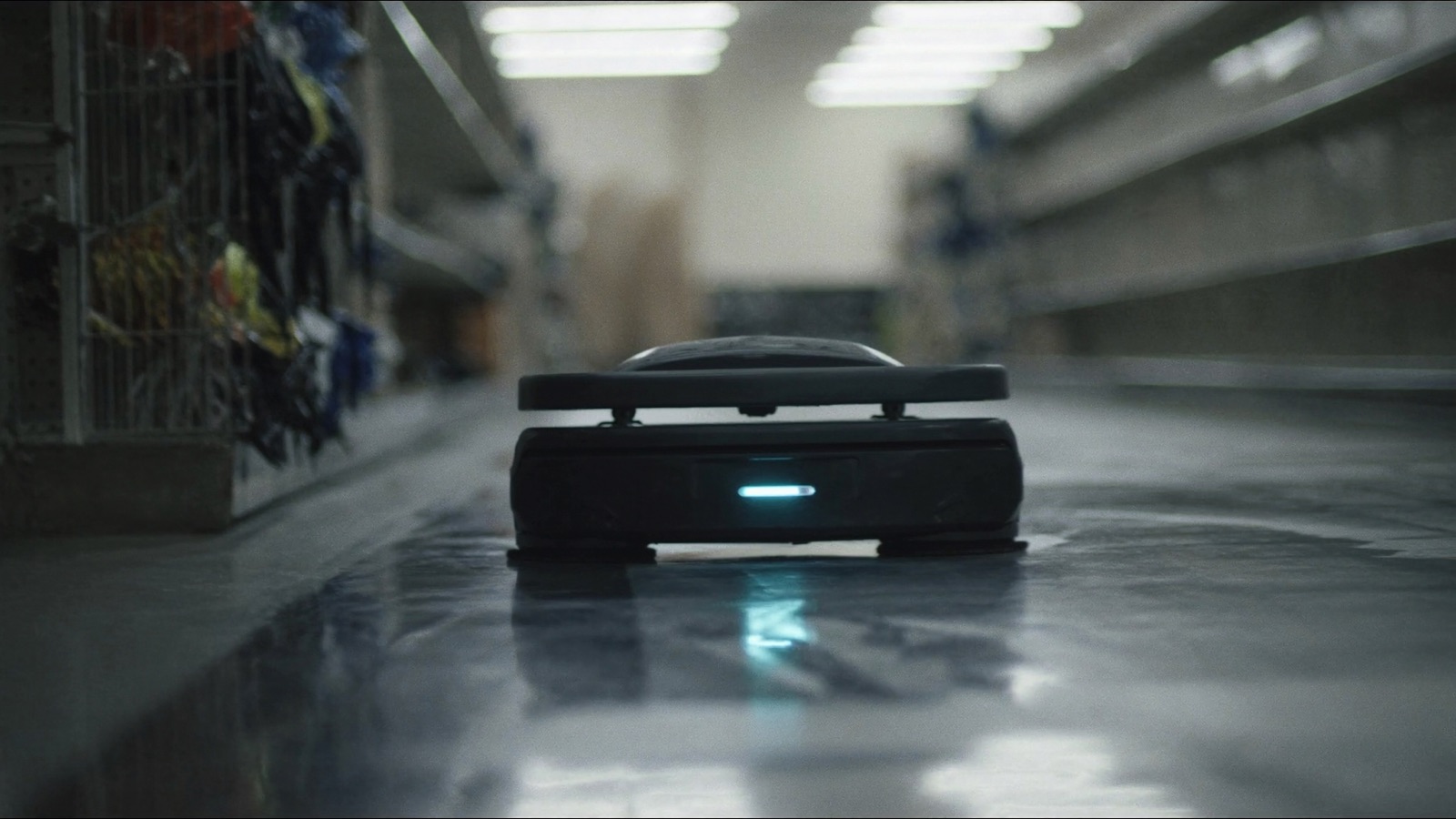
In 2017, Walmart began a quiet test of autonomous floor scrubbers running Brain Corp's BrainOS software. Within a few years, the program had expanded to a nationwide rollout across every Walmart store in the U.S. By 2023, Brain Corp's fleet collectively covered 38 billion square feet annually — an area roughly the size of Luxembourg.
Walmart is not a technology company. It deployed robots at scale because the math worked: each autonomous scrubber saved approximately 2.5 labor hours per day in a typical retail store, in an environment where labor is the dominant cost of cleaning operations.
That is the best version of the cleaning robot story. But it is not universal, and the gap between Walmart's outcome and the outcome at a mid-sized office complex or a hospital wing is large enough to matter.
If you are evaluating autonomous floor scrubbers for a commercial facility, the right first question is not "which robot?" It is "does the economics of robotic cleaning actually apply to my facility?" The answer is not always yes.
Why the ROI case is structurally strong — in the right environments
Labor accounts for 50 to 90 percent of commercial cleaning costs, depending on the scope of the contract and the frequency of service. That is a remarkably high share compared to most capital-intensive industries. It means that any technology that reduces labor hours has a large denominator to work against.
Autonomous floor scrubbers operate in this numerator-denominator gap. A machine that cleans autonomously for three hours during a low-traffic overnight window, freeing a technician to do other work, is not eliminating a job — it is reallocating four hours of that person's shift toward tasks that require human judgment. The cleaning cost per square foot drops because the machine operates without direct supervision.
The productivity math is straightforward in principle. A skilled operator with a manual ride-on scrubber can cover 8,000 to 12,000 square feet per hour under ideal conditions, but in real-world facilities with obstacles, hallway transitions, and scheduled breaks, effective throughput is typically 6,000 to 9,000 square feet per hour. An autonomous scrubber running on a pre-mapped route operates at the lower end of that range, but it does so unattended — and in a second or third daily cleaning cycle that a human operator would not be scheduled for.
Add in measurable resource savings — autonomous machines typically consume up to 70 percent less water than conventional scrubbers and roughly 67 percent less energy per cycle — and the total cost picture improves even before accounting for labor.
Industry-reported payback windows for commercial floor scrubbers fall in the 12-to-18 month range in well-matched deployments. That is a credible figure in facilities with sufficient square footage, consistent layouts, and predictable traffic patterns. The operative phrase is "well-matched."
The six variables that determine fit
These are not soft preference factors. They are the structural variables that determine whether robotic floor scrubbing can generate a return in your specific facility.
1. Square footage and contiguous layout
Autonomous scrubbers are optimized for large, open floor sections. The Tennant T7AMR, a mid-market benchmark, is rated for 70,000 to 180,000 square feet of facility coverage and performs best in wide, straight aisles. A 30,000-square-foot office with glass partitions, narrow corridors, and elevator lobbies is a different environment from a 150,000-square-foot distribution center. The robot that works in the latter will spend a significant fraction of its operating time navigating transitions and maneuvering in the former — time that does not produce cleaned floor.
The rule of thumb: facilities below 50,000 square feet of contiguous cleanable floor rarely generate the daily cleaning volume that makes the unit economics close. Below that threshold, a human operator with a traditional machine is often faster, more adaptable, and significantly cheaper.
2. Layout consistency
Autonomous scrubbers build their operational maps during a training run — a human operator drives the machine through the intended cleaning path, and the machine records the route and the environmental reference points it will use to navigate independently. That map is only as good as the layout it was trained on.
In a distribution center where pallet positions change every night, the machine stops repeatedly on new obstacles and requires a human to restart it. In a grocery store with consistent aisle configurations but heavy foot traffic during business hours, the robot runs efficiently on the overnight shift but cannot operate during the day. In a school hallway that is predictably empty from 8 PM to 6 AM, the machine works without interruption.
Consistent layout is worth more than large square footage. A 200,000-square-foot warehouse that rearranges its floor plan weekly will underperform a 60,000-square-foot airport terminal with stable configurations.
3. Shift structure and human supervision requirements
Most current commercial cleaning robots require a human supervisor within call distance — not to clean alongside the machine, but to handle exceptions: a stopped machine, a debris type the robot cannot manage, a wet spill requiring immediate manual response. The economics depend on one supervisor overseeing multiple robots simultaneously, not one person per robot.
If your operations model requires one dedicated operator per machine, you have not automated cleaning. You have added hardware cost to the same labor structure.
The question to ask vendors is explicit: "At what ratio of robots to supervisors do your reference customers actually operate?" If the answer is 1:1, the business case evaporates. If the answer is 3:1 or 4:1, the labor math works.
4. Cleaning frequency requirements
The productivity case depends on deploying the machine for multiple cleaning cycles per day. A robot that runs one two-hour cleaning cycle and then sits idle for 22 hours has a utilization rate that makes its capital cost punishing.
Facilities with high cleaning frequency requirements — airports, large retail, healthcare support areas, arenas, convention centers — provide the utilization rate that closes the economics. A small office that needs one cleaning pass five nights a week is not the right environment.
5. Surface type and floor complexity
Autonomous scrubbers are designed for hard floors: concrete, sealed tile, polished stone, vinyl composite. They do not vacuum carpeted areas and cannot handle flooring transitions between surface types without stopping or slowing significantly.
Mixed-surface facilities — partial carpet, partial hard floor — split the robot's effective working area and often require a second cleaning team to cover carpet zones. The capital cost of the robot must be amortized only against the hard-floor square footage, which changes the payback math materially.
6. Obstacle density and predictability
The most common deployment failure mode — more common than any technical fault — is an environment that generates too many unexpected obstacle stops. Retail with shoppers, healthcare facilities during operating hours, warehouses with active forklift traffic: these are environments where the robot frequently encounters situations its map did not anticipate.
An autonomous scrubber that stops every 10 minutes waiting for a human restart is not cleaning autonomously. It is running a very expensive semi-automated machine. The practical test is this: can you schedule a four-hour autonomous cleaning window where the floor is predictably clear of moving obstacles? If yes, you have a robot-compatible shift. If no, the deployment will underperform.
Where the economics clearly do not work
No vendor will tell you this directly, so here is a list of facility types where the cleaning robot ROI case is structurally weak:
Small and mid-sized offices below 50,000 sq ft. Daily cleaning volume is too low to recover capital cost in a defensible payback window.
Facilities with predominantly carpet flooring. Current commercial scrubbers are hard-floor specific. Carpet-dominant environments need a different solution set.
Healthcare patient care areas. Compliance requirements for terminal cleaning, splash-zone management near patient beds, and the unpredictability of patient care activities make autonomous scrubbers unsuitable for most direct patient care zones. Environmental Services robots in healthcare are deployed in corridors, waiting areas, and service areas — not clinical rooms.
Spaces with highly variable obstacle patterns. Active manufacturing floors, open-plan restaurants during service, retail during business hours. The machine is not well-matched to environments where obstacles appear and disappear at rates faster than the mapping system can absorb.
Facilities without WiFi coverage in the cleaning zone. Fleet management, obstacle logging, and remote monitoring all run over WiFi. A robot that cannot reach its cloud infrastructure is a machine running blind, with no visibility into coverage gaps or stop events.
The Walmart test
The Walmart deployment is the most publicly documented large-scale cleaning robot program in retail. It tells you what the upside looks like. It is also a useful frame for stress-testing your own facility:
- Open-format retail floor with consistent aisle layouts: yes.
- Overnight cleaning windows with minimal obstacle variability: yes.
- High cleaning frequency requirement (daily, across large square footage): yes.
- Centralized fleet management across many locations: yes.
- Sufficient scale to justify vendor support infrastructure: yes.
Run that checklist against your facility. The facilities that pass it are the ones where cleaning robots generate returns. The facilities that fail it are the ones where the same hardware generates compelling vendor demos and disappointing annual reviews.
The technology is not the limiting factor. The matching problem is.
What to do next
If your facility clears the six-variable checklist, the next question is unit economics — the full cost picture including consumables, maintenance, and the human-in-the-loop time that vendors understate. That is the subject of the TCO article in this series.
If your facility doesn't clear the checklist, the right answer is not a different vendor. It is a different investment: better chemicals, better scheduling software, or a structured operator training program that improves consistency with the equipment you already have.
The cleaning robot market is growing at over 20 percent annually. The machines are improving. The fit threshold is moving. But the decision that matters today is whether your facility is already inside that threshold — not whether it might be in three years.