Programming Approaches: Teach Pendant, Offline, AI-Assisted — What Each Costs You
Program development accounts for 20–35% of integration cost. The approach you choose determines both the initial spend and the ongoing change cost.
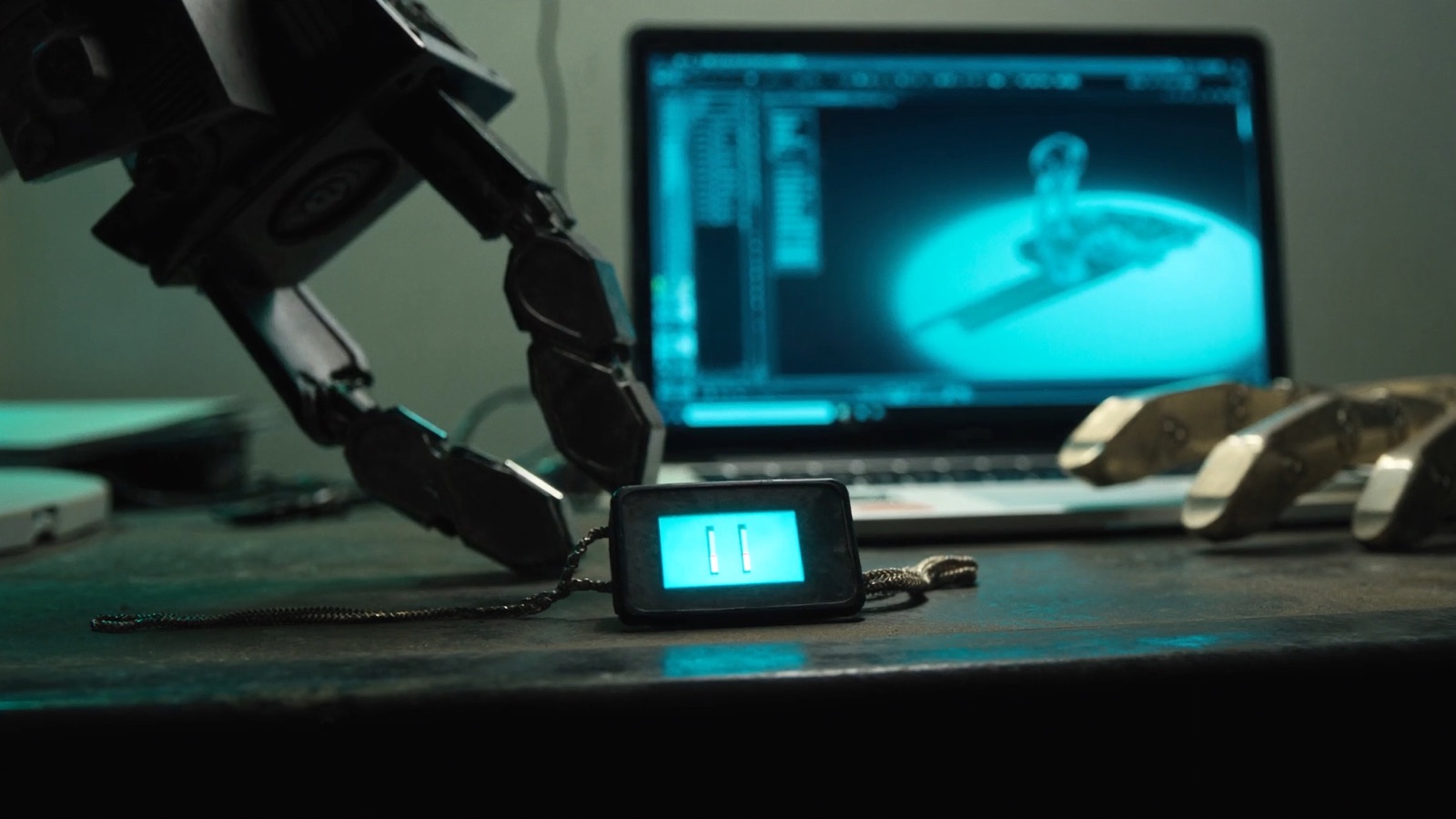
A Midwest contract manufacturer commissioned a FANUC R-2000iC for stamped metal transfer between two presses. The integrator programmed it on the teach pendant — the standard approach for that integrator's team. Initial programming took 9 days of production downtime. Three months later, the customer changed the part geometry. Reprogramming on the pendant took 4 additional days of downtime at $28,000/day in lost press production. The next part change was handled by an offline programming package; the new program was loaded in 6 hours of cell time.
The insight isn't that teach pendant programming is wrong. It's that the right programming approach depends on the cell's change frequency as much as its initial complexity.
The Three Approaches and What Each Buys
Teach Pendant Programming
The teach pendant is the handheld controller that ships with every industrial arm. The programmer physically moves the arm to each target point, records the position, and writes the motion sequence in the OEM's proprietary language — FANUC's TP/Karel, ABB's RAPID, KUKA's KRL, Yaskawa's INFORM.
This approach requires:
- The physical robot to be present and energized
- The cell to be offline from production during programming
- A programmer with specific familiarity with the OEM's language and pendant interface
Cost structure:
- No additional software license required — every OEM arm ships with the capability
- Direct labor at $80–$150/hour (programmer skill level; OEM-specific experience commands a premium)
- Production downtime cost: the largest hidden cost item
Where teach pendant works well:
- Simple point-to-point applications with few programmed positions (10–30 points)
- Stable processes with infrequent changes
- Small shops without the capital or volume to justify offline programming infrastructure
- Touchup and fine-tuning of programs initially developed offline
Where teach pendant fails:
- Complex paths — welding seams, continuous dispensing, multi-variant part handling
- High-mix environments where programming changes are frequent
- Large part families where programming from scratch for each variant is the only option
- Any situation where production downtime is expensive enough that offline programming ROI is obvious
The teach pendant is the cheapest entry point and the highest ongoing cost in high-change environments.
Offline Programming (OLP)
Offline programming develops robot programs in simulation, without the physical robot present or production halted. The programmer builds a CAD model of the cell, imports part geometry, defines the work path in simulation, generates the robot program, and transfers it to the physical robot via file or network connection. Commissioning — physical touchup and validation — then takes 10–20% of the time it would take for full pendant programming.
The tools:
| Platform | OEM affiliation | License cost | Best for |
|---|---|---|---|
| FANUC Roboguide | FANUC only | $8,000–$25,000 | FANUC-only shops, very high simulation accuracy |
| ABB RobotStudio | ABB only | $5,000–$15,000 | ABB-only shops; virtual controller is industry-accurate |
| KUKA.Sim | KUKA only | $8,000–$20,000 | KUKA-only shops |
| Yaskawa MotoSim | Yaskawa only | $6,000–$18,000 | Yaskawa-only shops |
| RoboDK | Multi-OEM (500+ robot models) | $3,500–$8,000/yr | Multi-brand shops; slightly lower accuracy (5–10% vs. OEM) |
| Delfoi Robotics | Multi-OEM, welding focus | $10,000–$20,000/yr | Welding, cutting; seam-tracking integration |
OEM-native tools use a virtual controller — the exact same software as the physical robot controller — so programs transfer with very high fidelity. RobotStudio transfers programs to ABB robots with sub-millimeter deviation when the cell model is properly calibrated. RoboDK's accuracy varies more (5–10% cycle time deviation is typical) because it models kinematics mathematically rather than running the actual controller software.
Cost structure — OLP:
- Software license: $3,500–$25,000 (one-time or annual subscription)
- CAD cell model preparation: 20–60 hours of engineering time per new cell type
- Program development: offline, without production downtime
- Physical commissioning: 10–20% of touchup vs. full pendant programming time
Documented ROI case: An integrator handling 14 part variants for a machining center originally quoted 8 weeks of on-site pendant programming at $185,000 total cost. Using Roboguide with a calibrated cell model, all 14 variants were programmed offline in 3 weeks with total programming cost of $72,000, and changeover downtime for each variant was 5 days' worth of pendant work, reduced to less than 1 day of commissioning. The client attributed $340,000 in saved lost production to the offline approach over the program's first year. [Source: reported by RoboDK blog, attributed to an integrator using Roboguide]
Where OLP is the right choice:
- Cells running multiple part variants with frequent changeovers
- Welding and dispensing applications with continuous-path programming requirements
- Any cell where production downtime costs more than $15,000/day (the OLP investment pays back in weeks)
- Integration projects where the cell must be operational before the robot hardware is available on-site
Where OLP adds less value:
- Very simple point-to-point cells with 10–20 positions and one part family
- One-time installs with no expected part changes
- Shops without a programmer skilled in CAD and OLP software — the skill gap negates the tool benefit
AI-Assisted and No-Code Programming
The newest category covers tools that aim to reduce the programming skill requirement: lead-through programming (physically guiding the robot to record positions), vision-AI-guided path planning, and natural language interfaces.
Lead-through / direct teaching: available on all major cobots (UR, FANUC CRX, ABB GoFa, KUKA LBR iisy). The operator holds the robot arm and moves it to each position, then confirms the point. Faster than pendant programming for simple tasks; still requires cell downtime.
AI-guided path planning: vendors including Vention, Ready Robotics, Rethink (now acquired), and several university spinoffs have shipped systems that can generate or adapt robot paths from CAD + process requirements without manual pendant teaching. These tools work well for structured pick-and-place applications in known environments.
Natural language interfaces: FANUC, ABB, and several startups have demonstrated conversational interfaces where an operator describes a task and the system generates a motion program. As of 2025-2026, these are production-capable for simple tasks in well-structured cells; they are not replacing OLP for complex multi-step or continuous-path applications.
Cost structure — AI-assisted:
- Lead-through: hardware included with cobot, no additional software cost
- AI path planning platforms: typically $500–$2,000/month SaaS; some are cell-hardware-bundled
- Natural language interfaces: mostly proprietary, bundled with specific OEM ecosystems; pricing varies widely
The honest assessment is that AI-assisted tools are meaningfully reducing the skill threshold for simple, structured applications. They are not yet competitive with skilled OLP for complex welding, vision-guided bin-picking, or multi-robot coordination. The skill gap is narrowing faster than most OLP vendors would prefer.
What Programming Approach Costs Over the Cell's Life
Initial programming is a one-time event. Ongoing programming — changes for new part variants, process updates, product launches, tooling changes — is a recurring cost that compounds over the cell's 7–10 year life.
| Approach | Initial programming cost | Typical annual change cost | Downtime per change |
|---|---|---|---|
| Teach pendant | Low (no software license) | High (full reprogramming on cell) | 2–5 days |
| OLP (OEM tool) | Medium (license + learning curve) | Low (changes done offline) | 4–16 hours |
| OLP (RoboDK, multi-OEM) | Low-medium (lower license cost) | Low | 4–16 hours |
| AI-assisted (SaaS platform) | Low | Low-medium (subscription) | Hours |
For a cell with more than two product changes per year, OLP almost always produces lower 7-year total programming cost than teach pendant, even accounting for the license cost and learning curve. The crossover point depends on downtime cost and change frequency, but a $20,000/day production downtime cost makes the math obvious even for annual change frequencies.
The Skill Gap Problem
The principal reason more plants don't adopt OLP isn't cost — it's skill availability. Teach pendant programming is a specialist skill; offline programming is a more complex specialist skill that adds CAD proficiency, simulation software expertise, and coordinate system management on top of robot programming fundamentals.
FANUC and ABB certify programmers through training programs. Certified Roboguide programmers and certified RobotStudio specialists are more expensive to hire and retain than pendant-only programmers, and the pool is smaller.
The talent gap has two practical consequences:
- Shops that lack OLP-capable staff will use pendant programming regardless of the TCO case for OLP — because they can't execute OLP without the skill.
- Integration proposals from shops without OLP staff will not include OLP even when it's economically correct, because the integrator can't deliver it.
When evaluating integration proposals, ask directly: "Is this program being developed in simulation before on-site commissioning, or will programming begin on-site?" The answer tells you whether the downtime model in the proposal is realistic.
Choosing the Right Approach for Your Cell
| Situation | Recommended approach |
|---|---|
| Single part family, no expected changes, simple paths | Teach pendant — no software overhead justified |
| 2–5 part families, annual changes, moderate path complexity | OEM OLP (Roboguide / RobotStudio / KUKA.Sim) — downtime savings justify license |
| Multi-brand robot fleet, multi-part families | RoboDK — cross-brand support outweighs slight accuracy penalty |
| Welding/seam-tracking, complex continuous paths | OEM OLP or Delfoi — path accuracy requires OEM virtual controller fidelity |
| Cobot, simple pick-and-place, frequent operator interaction | Lead-through + AI platform — lower skill requirement matches the use case |
| High-volume, high-change, professional integration team | OEM OLP as standard; AI-assisted for routine change adaptation |
The Contractual Question
When an integrator delivers a commissioned cell, who owns the programming knowledge?
In many installations, the answer is "the integrator" — because the program is documented only on the teach pendant in the integrator's proprietary coding style, and the plant's own engineers can't read or modify it without the integrator's help. Every change is a billable service call.
The alternative is to require, in the integration contract:
- All programs delivered in the OEM's standard structured format with comments
- Full CAD cell model and OLP project files delivered at handover
- Two days of on-site programming training for the plant's maintenance or engineering team
- Documentation of all I/O signal addresses and program structure
This converts a captive support relationship into an informed ownership relationship. It doesn't eliminate the need for integrator support — complex changes still require expert intervention — but it reduces dependency and gives the plant team the ability to make minor modifications without a service call.
Next: Industrial arm vendor selection: capability matrices and proof points →
Discussion
0 commentsNo comments yet. Sign in to be the first.