Square footage, surface mix, and obstacles: the deployment math
How to calculate whether your facility is actually robot-compatible before you sign anything.
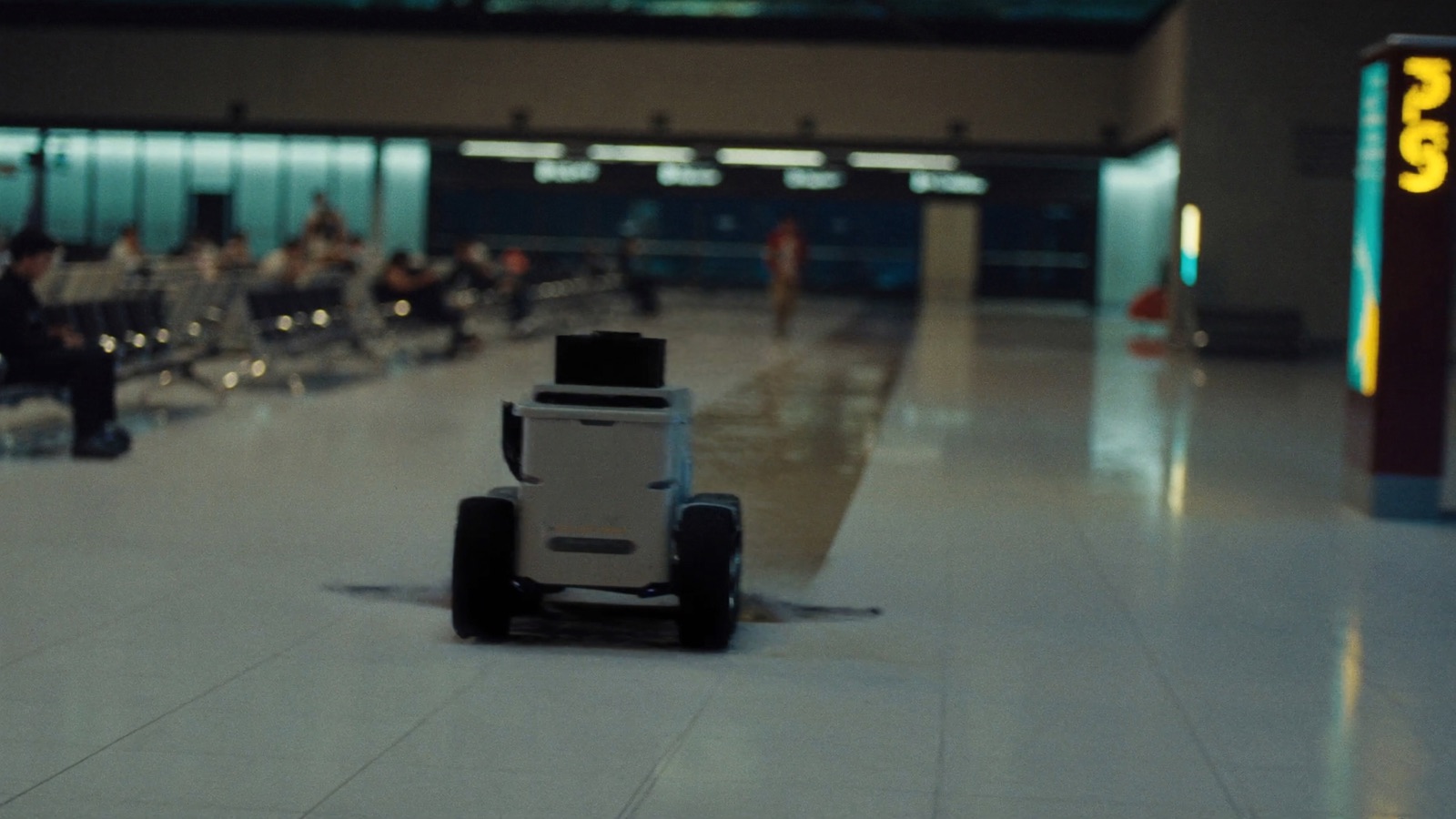
A 200,000-square-foot facility sounds like an obvious candidate for autonomous floor scrubbing. Run that figure through the deployment math, and you might find 60,000 square feet of compatible hard floor, split across three non-contiguous zones, with a viable autonomous cleaning window of only 3 hours per night. That is a very different purchase than the headline number suggests.
The deployment math is not complicated, but it requires honesty about what your floor plan actually contains — not what the building spec sheet says.
Step 1: Determine contiguous cleanable hard floor area
Start with the building's total square footage and subtract everything that cannot be cleaned by an autonomous floor scrubber during a standard operational window:
- Carpeted areas
- Areas inaccessible to a rider-size machine (narrow corridors under 4 feet wide, stairwells, escalator surrounds)
- Areas occupied by fixed equipment with less than 24 inches of clearance on all sides
- Restrooms (typically cleaned manually for compliance reasons)
- Loading dock areas and freight elevator lobbies with heavy debris
- Areas used as storage overflow that regularly block floor access
What remains is your gross cleanable area. Now apply a contiguity test: identify which sections are physically connected by doorways and corridors wide enough for the machine to navigate. Sections separated by stairs, freight areas, or exterior passages are separate zones.
For each zone, estimate the percentage of that zone's floor that the machine can actually reach given furniture, column spacing, and equipment footprint. In an open retail floor, that accessibility percentage might be 85 to 90 percent. In an office with dense workstation clusters, it might be 50 to 60 percent.
Your net cleanable area per zone = zone gross area × accessibility percentage.
Sum across zones. That is the number that belongs in your economic model, not the building square footage.
Step 2: Map your surface mix
Current commercial autonomous floor scrubbers are hard-floor machines. They clean concrete, sealed tile, polished stone, and vinyl composite flooring. They do not vacuum carpet. They cannot handle significant flooring transitions — a one-inch height difference at a threshold can cause the machine to stop or become unable to continue the route.
For your net cleanable area, classify the surface types:
| Surface type | Robot compatible? | Notes |
|---|---|---|
| Polished concrete | Yes — best performance | Low pad wear, high coverage efficiency |
| Sealed tile (commercial grade) | Yes | Grout lines above 3mm depth may require specific pad type |
| Vinyl composite tile (VCT) | Yes | Very common in retail, healthcare corridors |
| Epoxy-coated concrete | Yes | High-traffic warehouses, manufacturing |
| Unsealed or rough concrete | Marginal | High pad wear, may require frequent brush replacement |
| Natural stone (marble, granite) | Yes — with correct pad | Requires soft pad to prevent scratching; confirm with vendor |
| Rubber flooring | Marginal | Common in gyms, healthcare — check manufacturer guidance |
| Carpet (any type) | No | Autonomous scrubbers are not carpet-capable |
| Mixed hard/soft flooring | Partial | Robot covers hard zones only; manual team covers carpet |
For mixed-surface facilities, recalculate your net cleanable area to include only hard-floor sections. If 40 percent of your facility is carpet, the robot's effective working area — and the denominator for your economics calculation — is 60 percent of net cleanable area.
Step 3: Calculate effective throughput for your specific floor
Vendor specifications quote coverage rates in ideal conditions. Real-world throughput is lower. The gap depends on your facility's obstacle profile.
Baseline throughput for autonomous scrubbers (real-world range):
| Environment type | Effective throughput |
|---|---|
| Large retail, wide aisles, low furniture | 18,000–25,000 sq ft/hr |
| Distribution center, open floor, consistent layout | 20,000–30,000 sq ft/hr |
| Airport terminal, mixed zones, moderate obstacles | 12,000–18,000 sq ft/hr |
| Office complex, mixed furniture density | 8,000–14,000 sq ft/hr |
| Hospital corridor, compliance requirements, some equipment | 6,000–10,000 sq ft/hr |
To estimate your facility's effective throughput, start with the range for your environment type, then apply a downward adjustment for each of the following:
- High furniture density (workstations, chairs, tables that require the machine to navigate around): −15 to −25%
- Column spacing under 12 feet in any direction: −10 to −15%
- Doorway transitions (machine must slow to navigate): −5 to −10% for every 4+ door transitions per zone
- Dynamic obstacles during the cleaning window (foot traffic, active forklifts, carts): −20 to −40%
A hospital corridor that starts at 8,000 sq ft/hr and has frequent night-staff foot traffic and equipment in hallways might land at 5,000 to 6,000 sq ft/hr actual throughput.
Step 4: Define your viable cleaning window
The autonomous cleaning window is the contiguous time block during which your facility can sustain conditions compatible with autonomous operation:
- Floor largely clear of moving obstacles (people, carts, forklifts)
- Adequate lighting for the machine's sensor suite (check your vendor's minimum lux requirement)
- WiFi coverage across the cleaning zone
- No scheduled operations that will create obstacle conflicts
For most commercial facilities, this window is overnight or early morning, typically 10 PM to 6 AM. For 24-hour operations — hospitals, airports, distribution centers — you need to identify shift-gap windows or zones that are consistently low-traffic at predictable times.
Window duration matters because it governs how many cleaning passes the machine can complete before the operational day resumes. Most mid-market autonomous scrubbers have a runtime of 3 to 6 hours on a single charge (the Tennant T7AMR is rated at up to 6.5 hours, with opportunity charging extending to 13 hours over a 24-hour period). Factor in the dock time at the start and end of each run.
Step 5: Run the coverage equation
With your facility-specific figures, calculate whether the machine covers your target area in the available window:
Required cleaning time = Net cleanable area ÷ Effective throughput
Available window = Shift length − Tank refill time − Machine dock/launch time
Tank refill is a real constraint. Mid-market autonomous scrubbers have solution tanks of 20 to 40 gallons, and recovery tanks of similar size. At typical solution delivery rates, a full tank supports 45 to 90 minutes of continuous operation before the machine needs to return to the service station, dump the recovery tank, refill the solution tank, and restart.
For a facility with 80,000 sq ft of net cleanable hard floor, an effective throughput of 15,000 sq ft/hr, and a 6-hour cleaning window:
Required cleaning time = 80,000 ÷ 15,000 = 5.3 hours
Tank cycles required = 5.3 ÷ 1.0 (assuming 1 hr avg tank life) = ~5 refills
Refill time = 5 × 10 min = 50 minutes
Effective cleaning time available = 6 hr − 0.83 hr (refills) − 0.25 hr (dock/launch) = ~4.9 hours

Coverage = 4.9 × 15,000 = 73,500 sq ft
In this scenario, the machine covers 92 percent of your target area per shift — acceptable for most facilities. If your window were 4 hours instead of 6, coverage would drop to 47,000 sq ft — 59 percent — leaving meaningful gaps that require manual follow-up.
This gap math is why facilities that look viable on paper (sufficient square footage, hard floors, overnight window) can still fail to achieve clean results: the cleaning window isn't long enough to complete the route, and no one modeled it before deployment.
Step 6: Identify your no-go zones explicitly
Every deployment has areas the autonomous scrubber will not cover. These are not failures — they are structural limits of the technology. What matters is whether your manual cleaning team has explicit assignments for those zones, and whether the combined robot + manual model covers the full facility at required frequency.
No-go zones to document before deployment:
- All carpet areas
- Restrooms and wet areas
- Zones with ceiling heights under 7.5 feet (sensor clearance varies by machine)
- Loading dock aprons and heavy debris areas
- Any zone that requires chemical-specific cleaning protocols incompatible with the machine's solution system
The deployment plan should show: robot coverage map + manual team coverage map = 100% of facility at required cleaning frequency. If that equation doesn't close, the deployment plan is incomplete.
The honest pre-deployment checklist
Before signing a robot contract, answer these questions with your own measurements — not vendor estimates:
| Question | Your figure |
|---|---|
| Total building sq ft | |
| Net hard-floor cleanable area (after carpet, restrooms, inaccessible zones) | |
| Contiguous cleanable area per zone (largest contiguous zone) | |
| Effective throughput estimate for your environment type | |
| Viable autonomous cleaning window (hours per day) | |
| Estimated coverage per shift at your throughput and window | |
| Gap between coverage and total cleanable area | |
| Manual team capacity to cover the gap |
If the gap in line 7 is greater than 20 percent of your net cleanable area, your manual team must reliably cover significant floor sections every shift. That is not a disqualifying condition, but it means your labor savings calculation should account only for the area the robot actually covers — not the full facility.
Next in this series: cleaning robot vs. supervisor-led human team — a side-by-side comparison for the scenarios where the choice is closest.
Discussion
0 commentsNo comments yet. Sign in to be the first.