Overview
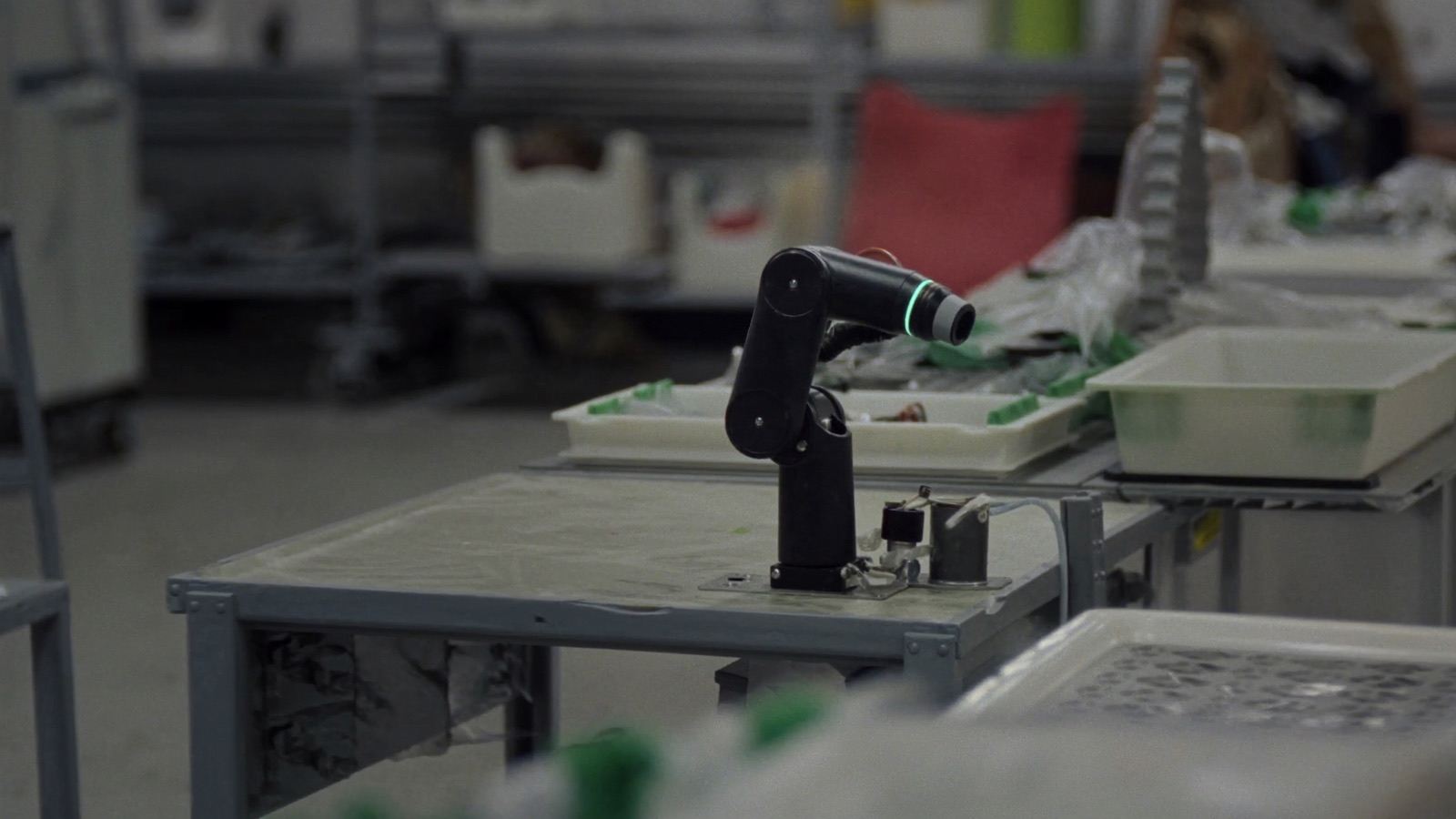
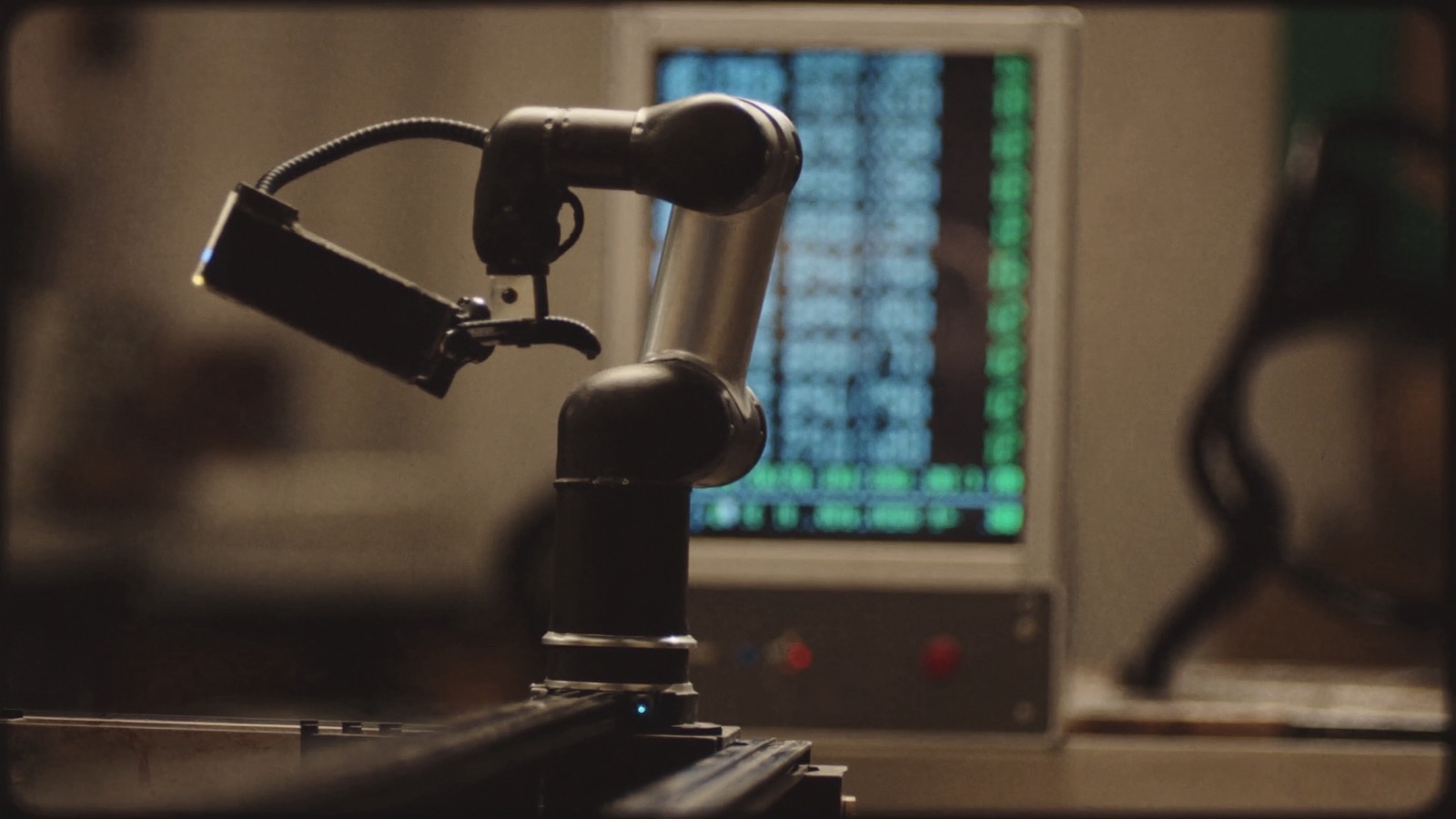
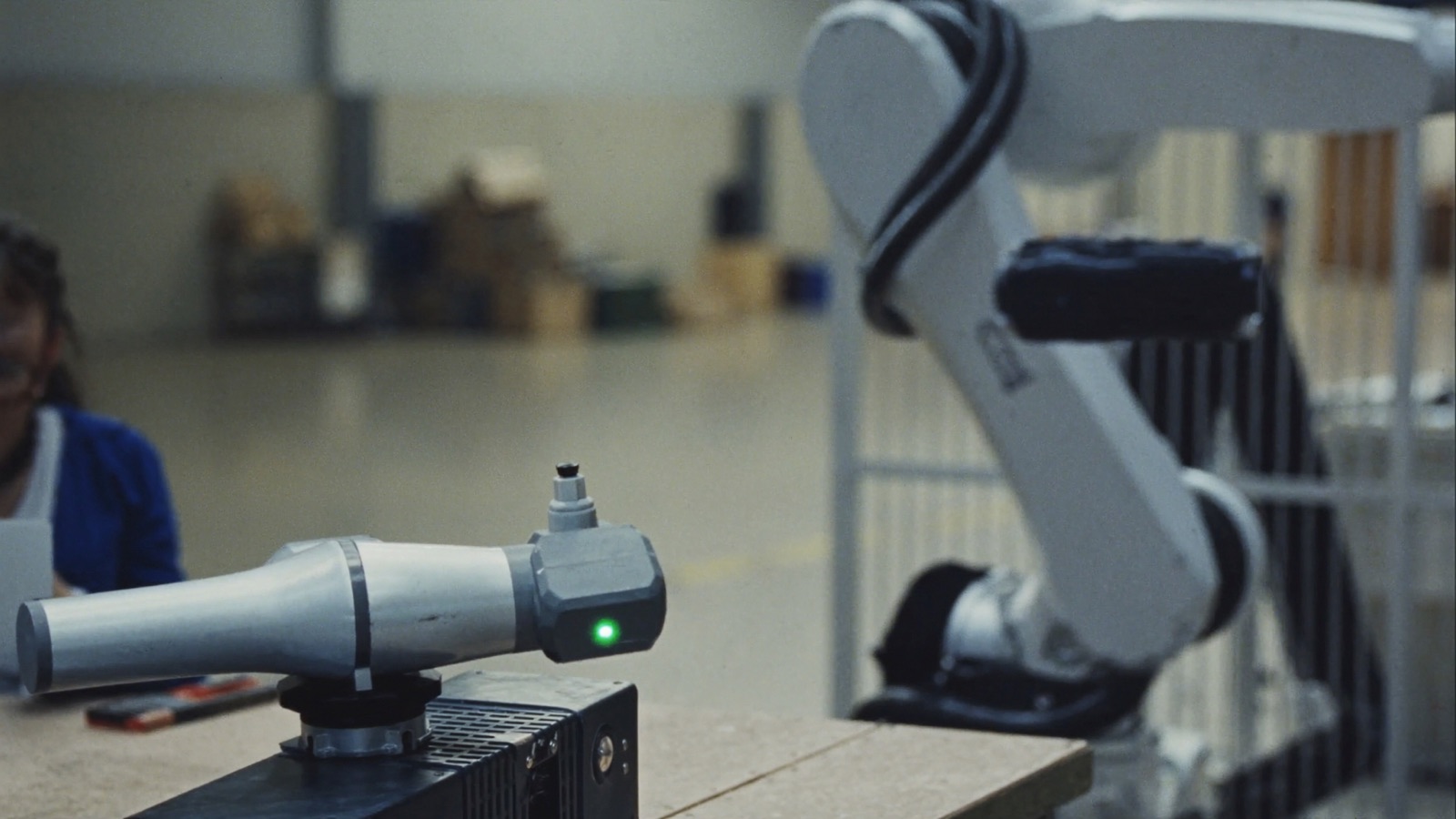
Collaborative robots (cobots) are robot arms designed to work directly alongside humans on a shared workspace without safety caging. Unlike traditional industrial robots that operate behind fences, cobots use force-torque sensing, vision, and compliant motion to detect and react to human presence — stopping or slowing before causing injury.
They are the entry point for automation in small-to-medium factories, assembly lines, labs, and warehouses that lack the space, budget, or volume for traditional industrial robots.
Market Snapshot:
- Global cobot market valued at ~$1.5B in 2024, projected to reach ~$10B by 2030 (CAGR ~30%)
- Top brands: Universal Robots (UR), FANUC CRX, ABB GoFa/SWIFTI, KUKA LBR iisy, Techman Robot, Doosan, Elephant Robotics, Franka Emika
- Purchase price range: $15,000–$80,000/unit (arm only); $25,000–$150,000 fully integrated
- Cobot-as-a-Service (CaaS): $1,500–$4,000/month
Buyer Personas
| Persona |
Primary Pain Point |
What They're Buying |
| SME Factory Owner / Operations Manager |
Labor shortages, rising wages, repetitive injury claims |
A machine that works the night shift without complaining |
| Manufacturing Engineer / Automation Lead |
Need to justify ROI, prove cycle time improvement |
Reliable specs, integration docs, proven uptime |
| Quality / Lab Manager (pharma, electronics) |
Precision, repeatability, audit trail |
Sub-millimeter accuracy, ISO/cleanroom compliance |
| Systems Integrator / VAR |
Fast deployment, broad end-effector ecosystem |
Open APIs, ROS support, strong local distribution |
| Procurement / CFO |
Total cost of ownership, not sticker price |
Leasing options, maintenance SLA, payback period |
Spec Reference
Arm Mechanics — "What Can It Physically Do?"
| Spec |
Plain English |
Industry Range |
Sweet Spot |
Why It Matters to Buyer |
payload_kg |
Maximum weight it can hold at the tip of the arm |
3–35 kg |
5–16 kg |
The single most important number. A 5 kg cobot cannot pick up a car door panel. Always size up — payload drops as reach extends. |
reach_mm |
How far the arm can stretch from its base |
500–1800 mm |
900–1300 mm |
Determines how large a work cell it can serve. A short reach means moving the robot or the workpiece more often. |
degrees_of_freedom |
How many joints it has (= how flexibly it can move) |
4–7 DOF |
6 DOF |
6 DOF mimics a human arm. 7 DOF adds a "wrist twist" for tight spaces. 4 DOF is cheaper but limited to flat pick-and-place only. |
repeatability_mm |
How precisely it returns to the same point, every time |
±0.01–±0.10 mm |
±0.03–±0.05 mm |
At ±0.1 mm, it cannot reliably insert a USB connector. At ±0.02 mm, it can. Critical for assembly, dispensing, and electronics. |
max_speed_deg_s |
How fast the joints can rotate |
90–360°/s |
180–225°/s |
Faster = shorter cycle time = more parts per hour. But faster cobots near humans require more safety validation. |
robot_weight_kg |
How heavy the arm itself is |
9–78 kg |
18–33 kg |
Lighter arms are easier to re-deploy to a new station. Heavy arms need a structural mount — you can't bolt them to a folding table. |
mounting_options |
What orientations it can be installed in |
Floor, ceiling, wall, tilted |
Any-angle (universal) |
Ceiling-mounted cobots free up floor space. Not all models support inverted mounting — check before designing the cell. |
ip_rating |
Dust and water resistance |
IP40–IP67 |
IP54 (standard); IP67 (food/pharma) |
In food production or wet environments, water ingress will destroy unrated electronics within weeks. |
Safety — "Will It Hurt Someone?"
| Spec |
Plain English |
Industry Range |
Sweet Spot |
Why It Matters to Buyer |
safety_standard |
Official certifications it has passed |
ISO 10218, ISO/TS 15066, EN ISO 13849 |
ISO/TS 15066 (the cobot-specific standard) |
Without ISO/TS 15066 compliance, your insurance won't cover a workplace injury involving this robot. |
force_torque_sensing |
Can it feel if it pushes against a human? |
Joint-level vs. External sensor vs. None |
Joint-level (built-in, every joint) |
A cobot without force sensing is just a fast robot with no cage — dangerously misleading. Joint-level sensing catches collisions anywhere on the arm. |
collision_detection_sensitivity |
How gentle a "bump" triggers a stop |
Adjustable 0–100% |
Adjustable (10 sensitivity levels) |
In delicate assembly, you want it to stop at the slightest resistance. In heavy grinding, false stops kill productivity. You need to tune this. |
power_force_limiting (PFL) |
Maximum push force before it stops |
50–150 N |
100–150 N at full stop |
ISO/TS 15066 defines maximum contact forces for different body parts. Vendor must prove their robot meets these limits at your intended speed. |
tcp_speed_at_reduced_mode_ms |
How fast it moves when a human is nearby |
0.1–0.5 m/s |
0.25 m/s (SSM trigger) |
Speed and Separation Monitoring (SSM) slows the robot as you approach. Too slow = workers hate it and defeat the safety sensor. |
safety_io_ports |
Dedicated safety signal inputs/outputs |
2–8 safety I/O pairs |
≥ 4 safety I/O pairs |
Needed to connect safety scanners, light curtains, and emergency stops that meet SIL2/PLd requirements. |
safety_category_rating |
How fail-safe the safety system is |
Cat.2 / PLc — Cat.3 / PLd |
Cat.3 PLd (minimum for human collaboration) |
PLd means 2 independent hardware faults must occur simultaneously before a dangerous failure. PLc has single-point failure risk. |
Ease of Use — "Can My Team Actually Run This?"
| Spec |
Plain English |
Industry Range |
Sweet Spot |
Why It Matters to Buyer |
programming_method |
How you tell it what to do |
Teach pendant, graphical (drag-and-drop), hand-guiding, code (URScript, Python) |
Hand-guiding + graphical UI |
Hand-guiding = grab the arm and physically move it through the path. No coding required. Critical for SMEs without automation engineers. |
setup_time_hours |
Hours from box to first cycle |
2–40 hours |
< 8 hours |
A cobot that takes 3 weeks to set up is not agile. The best cobots run a pick-and-place demo in an afternoon. |
no_code_capable |
Can a non-programmer deploy it? |
Yes / No / Partial |
Yes (for standard tasks) |
If your only programmer leaves, can your line supervisor keep the robot running? This is a business continuity question. |
teach_pendant_display |
Screen size and type on the handheld controller |
7"–12" touchscreen |
10"+ HD touchscreen |
Small, low-resolution screens slow down every setup and troubleshooting session. |
offline_programming_support |
Can you simulate and program it in software before it arrives? |
None / Proprietary / ROS/RoboDK |
RoboDK or proprietary simulator included |
Offline programming means zero production downtime for changeovers. Essential for high-mix, low-volume manufacturing. |
time_to_redeploy_min |
How long to move it to a different task |
15–480 min |
< 60 min |
The entire cobot value proposition for SMEs is flexibility. If redeployment takes a full day, it's not flexible. |
End-Effector & Tooling — "What Can I Attach to It?"
| Spec |
Plain English |
Industry Range |
Sweet Spot |
Why It Matters to Buyer |
tool_flange_standard |
The mechanical connector at the tip of the arm |
ISO 9283 (various sizes), proprietary |
ISO 9283 compliant |
Non-standard flanges lock you into the vendor's own grippers. ISO-compliant flanges let you use Robotiq, Schunk, OnRobot, and 200+ others. |
tool_changer_support |
Can it automatically swap end-effectors mid-task? |
None / Manual / Automatic |
Automatic (for multi-task cells) |
Without a tool changer, a cobot that needs to pick then weld requires a full stop and manual swap. Automatic changers keep the line moving. |
end_effector_power_supply |
Electrical and pneumatic connections at the wrist |
12V/24V DC, pneumatic (6 bar) |
24V DC + pneumatic passthrough |
If the wrist has no power passthrough, you're zip-tying cables down the arm. Messy, breaks fast, catches on things. |
integrated_force_torque_sensor |
A wrist-mounted sensor for delicate insertion tasks |
None / Optional / Built-in |
Built-in or available as option |
Without F/T sensing at the wrist, tasks like inserting a peg into a hole require ±0.01 mm precision in positioning. With F/T, you can feel your way in. |
Connectivity & Software — "Does It Fit Into My Systems?"
| Spec |
Plain English |
Industry Range |
Sweet Spot |
Why It Matters to Buyer |
communication_protocols |
Industrial languages it speaks |
Modbus TCP, Profinet, EtherNet/IP, EtherCAT, OPC-UA |
OPC-UA + EtherNet/IP minimum |
If your PLC speaks Profinet and the cobot only speaks Modbus, you need an expensive gateway. Check your existing infrastructure first. |
ros_support |
Compatible with the Robot Operating System |
None / ROS1 / ROS2 |
ROS2 supported |
ROS2 is the open-source standard for robotics research and custom integration. Without it, advanced vision and AI tasks require vendor-proprietary solutions. |
sdk_language_support |
What coding languages you can use to control it |
URScript, Python, C++, .NET |
Python + C++ SDK |
Python support means your data science team can write robot programs. Vendor-only scripting languages create dependency and hiring risk. |
open_api |
Can third parties build on top of it? |
Closed / Partially open / Fully open |
Open REST or gRPC API |
Closed platforms mean every custom integration is a negotiation with the vendor. Open APIs let you plug in vision systems, MES, ERP. |
plc_integration |
Works with standard factory controllers |
None / Via gateway / Native |
Native EtherNet/IP or Profinet |
Most factories already have Siemens or Allen-Bradley PLCs. The cobot must speak their language natively or you add weeks of integration work. |
digital_twin_support |
A virtual copy of the robot for simulation |
None / Proprietary / Universal (RoboDK, Isaac Sim) |
RoboDK + vendor simulator |
Digital twins let you test a new program on a virtual robot while the real one keeps running production. Avoids costly downtime for program testing. |
Performance & Reliability — "Will It Keep Running?"
| Spec |
Plain English |
Industry Range |
Sweet Spot |
Why It Matters to Buyer |
mtbf_hours |
Mean Time Between Failures — expected uptime before a breakdown |
20,000–60,000 hours |
≥ 35,000 hours |
At 8h/day, 35,000 hours = ~12 years before expected maintenance. Lower MTBF = more downtime = ROI blown. |
duty_cycle |
Can it run 24/7 or does it need rest? |
8h/day rated — 24/7 continuous |
24/7 continuous |
If it's only rated for 1 shift, you cannot use it for overnight unmanned production. Always verify with the vendor. |
path_accuracy_mm |
How closely it follows a programmed curved path |
±0.1–±1.0 mm |
±0.2 mm |
Critical for welding, dispensing, and painting. Poor path accuracy = bad welds, uneven glue beads, wasted material. |
max_tcp_speed_ms |
Maximum speed at the tool tip |
1.0–3.5 m/s |
2.0–3.0 m/s |
Directly determines cycle time. At 1.0 m/s, a long-reach move takes twice as long as at 2.0 m/s. Multiplied across millions of cycles, this is your ROI. |
joint_position_resolution_deg |
Smallest joint movement it can make |
0.01°–0.1° |
≤ 0.02° |
Fine resolution = smooth curved paths and precise positioning. Coarse resolution produces jerky motion that stresses mechanical joints. |
temperature_range_c |
Operating temperature range |
0°C–45°C (standard); -10°C–55°C (extended) |
0°C–45°C (standard environments) |
Cold storage or foundry environments need extended ratings. Standard cobots will fault out below 0°C or above 45°C. |
TCO & Commercial — "What Does It Really Cost?"
| Spec |
Plain English |
Industry Range |
Sweet Spot |
Why It Matters to Buyer |
price_usd |
Arm-only purchase price |
$15,000–$80,000 |
$25,000–$45,000 |
Arm-only price is misleading. Budget 2–3x for gripper, vision, integration, safety assessment, and commissioning. |
caas_monthly_usd |
Cobot-as-a-Service monthly rate |
$1,500–$4,000/mo |
~$2,500/mo (includes maintenance) |
CaaS shifts CapEx to OpEx and typically includes software updates, preventive maintenance, and replacement units. Better for cash-constrained SMEs. |
warranty_years |
Standard repair/replace guarantee |
1–3 years |
2 years + optional extension |
Cobots have gearboxes that wear. A 1-year warranty on a machine you plan to run for 10 years is inadequate. Ask for extended warranty pricing upfront. |
local_service_network |
Number of certified service technicians in your region |
Varies widely |
≥ 5 certified partners within 200 km |
A cobot down for 2 weeks waiting for a technician from overseas can cost more in lost production than the robot is worth. |
spare_parts_lead_time_days |
How long to get replacement joint modules |
1–30 days |
< 7 days |
Joint failures are the most common repair. If a replacement gearbox takes 3 weeks to arrive from Asia, your line is dead. |
typical_roi_months |
Community-reported payback period |
12–36 months |
18–24 months |
Rule of thumb: a cobot replacing 1.5 human shifts at $25/hr pays back in ~18 months. Verify with vendor case studies in your specific application. |
Hidden Concerns
3.1 The Payload-at-Reach Trap
- Rated payload (e.g., 10 kg) is measured at minimum reach
- At full arm extension, effective payload can drop 30–50%
- Ask vendor: "What is the actual payload capacity at 80% of maximum reach for my specific task geometry?"
3.2 The Risk Assessment Obligation
- ISO/TS 15066 mandates a site-specific risk assessment before deployment — the cobot certification alone is not sufficient
- This assessment must be performed or validated by a certified safety engineer
- Skipping it voids the cobot's collaborative rating and your liability insurance
- Ask vendor: "Do you provide a risk assessment template or a certified partner to conduct the initial risk assessment at my site?"
3.3 Repeatability vs. Accuracy Confusion
- Repeatability = returns to the same point consistently (what the spec sheet shows)
- Accuracy = actually reaches the correct absolute position in space
- Cobots have excellent repeatability but poor absolute accuracy; if you program offline and transfer to the physical arm, positions will drift by millimeters
- Ask vendor: "What is the absolute positioning accuracy (not just repeatability) and do you support hand-eye calibration for vision-guided programs?"
3.4 Gearbox Backlash and Wear
- Cobot joints use harmonic drive gearboxes that develop backlash (slop) over time
- At 20,000+ hours, repeatability degrades from ±0.03 mm to ±0.15 mm — often without any error alert
- Ask vendor: "What is the joint backlash specification at end-of-recommended-service-life, and how does the robot notify the operator when recalibration is required?"
3.5 Force-Limiting vs. Truly Safe
- "Force-limiting" cobot ≠ automatically safe at all speeds
- A 10 kg arm moving at 2 m/s carries significant momentum — it can break a finger even when force-limited, if the pinch geometry is wrong
- Safety validation must be done at the actual deployed speed and task geometry
- Ask vendor: "Can you provide the biomechanical risk calculation (per ISO/TS 15066 Annex A) for my specific application speed and payload?"
3.6 The End-Effector Ecosystem Lock-In
- Some vendors use proprietary tool flanges or communication protocols that restrict which grippers work
- Switching a task from suction to fingers can cost $8,000+ in adapters if the ecosystem is closed
- Ask vendor: "Is the tool flange ISO 9283 compliant, and is the tool I/O wiring documented publicly so I can integrate third-party end-effectors without your involvement?"
3.7 Software Subscription Creep
- Many cobots now have core features (vision, force control, advanced motion) locked behind annual software subscriptions of $2,000–$8,000/year
- A $30,000 robot with $5,000/year mandatory software fees costs $80,000 over 10 years
- Ask vendor: "Which features require ongoing software subscriptions, what are the annual costs, and what happens to the robot's capability if we stop paying?"
3.8 The Redeployment Myth
- Vendors sell cobots as "easily redeployable" but in practice, every new task requires a new risk assessment, new program, potentially new end-effector, and retraining
- True redeployment time for a non-trivial task change is typically 2–5 days, not the "30 minutes" in the brochure
- Ask vendor: "Can you show me a video of your team redeploying this cobot to a completely different task from scratch — from 0 to running production?"
3.9 Collaborative Speed Limits Kill Productivity
- In true collaborative mode (human in cell), ISO/TS 15066 typically limits TCP speed to 0.25–0.5 m/s
- This may be 5–10x slower than the robot's rated maximum speed
- Many "collaborative" deployments end up behind a light curtain running at full speed because collaborative speed is too slow for the production rate
- Ask vendor: "What is the achievable cycle time for my task in full collaborative mode (no fence), and what is it with a light curtain?"
3.10 Integration Cost is Usually Larger Than Robot Cost
- The arm is typically 30–40% of total system cost
- Remaining cost: gripper ($3k–$15k), vision system ($5k–$20k), safety assessment ($2k–$8k), programming ($5k–$20k), fixture design ($5k–$15k), commissioning ($3k–$10k)
- Ask vendor: "Can you provide a turnkey system quote, not just the arm price, for my specific application?"
How to Evaluate a Robot
A cobot must meet all criteria below:
Safety Minimums
Performance Minimums
Usability Minimums
Integration Minimums
Commercial Minimums
Top Products Compared
| Feature |
UR10e |
FANUC CRX-10iA |
ABB GoFa CRB 15000 |
KUKA LBR iisy 11 |
Techman TM12 |
Doosan M1013 |
| Payload |
12.5 kg |
10 kg |
5 kg |
11 kg |
12 kg |
13 kg |
| Reach |
1300 mm |
1418 mm |
950 mm |
1150 mm |
1300 mm |
1300 mm |
| Repeatability |
±0.05 mm |
±0.02 mm |
±0.02 mm |
±0.05 mm |
±0.05 mm |
±0.05 mm |
| Max TCP Speed |
1.0 m/s |
2.0 m/s |
2.2 m/s |
1.5 m/s |
1.8 m/s |
1.5 m/s |
| DOF |
6 |
6 |
6 |
7 |
6 |
6 |
| Built-in F/T Sensing |
All joints |
All joints |
All joints |
All joints |
All joints |
All joints |
| Safety Rating |
Cat.3 PLd |
Cat.3 PLd |
Cat.3 PLd |
Cat.3 PLd |
Cat.3 PLd |
Cat.3 PLd |
| Programming |
Polyscope (graphical + UR Script) |
iPendant + no-code tablet |
Wizard Easy Programming |
KUKA smartPAD |
TMflow (graphical) |
DART Platform |
| Built-in Vision |
Optional |
Optional |
Optional |
Optional |
Yes (integrated) |
Optional |
| ROS2 Support |
Yes |
Yes |
Yes |
Yes |
Yes |
Yes |
| IP Rating |
IP54 |
IP67 |
IP54 |
IP54 |
IP54 |
IP54 |
| Weight |
33.5 kg |
26 kg |
24 kg |
26.3 kg |
33 kg |
33.7 kg |
| Est. Price (arm only) |
~$35k |
~$40k |
~$32k |
~$45k |
~$28k |
~$30k |
| Key Differentiator |
Largest installed base + ecosystem |
Highest MTBF (100k hrs) |
Highest speed at payload |
7-DOF for tight spaces |
Integrated vision camera |
Best price/payload ratio |
Regulations & Compliance
| Regulation |
Scope |
What It Means for Deployment |
| ISO 10218-1 / -2 |
Robot manufacturer + integrator requirements |
-1 is the robot itself; -2 is the installation. Both must be complied with. |
| ISO/TS 15066 |
Human-robot collaboration specifically |
Defines maximum contact forces by body region. The mandatory standard for truly cageless operation. |
| EN ISO 13849-1 (PLd/Cat.3) |
Safety control system design |
Safety I/O and emergency stop circuits must achieve PLd minimum for cobot applications. |
| IEC 62061 (SIL 2) |
Alternative safety integrity standard |
Equivalent to PLd; some vendors certify to this instead. Both are acceptable. |
| OSHA 29 CFR 1910.217 |
US machine guarding regulations |
OSHA defers to ANSI/RIA R15.06 which harmonizes with ISO 10218. Required in US workplaces. |
| EU Machinery Directive 2006/42/EC |
CE marking requirement for EU market |
CE mark mandatory. Requires a Technical Construction File and Declaration of Conformity. Transitioning to EU Machinery Regulation 2023/1230. |
| GDPR / CCPA |
Vision system data privacy |
If the cobot's vision system captures identifiable worker footage for quality control, GDPR/CCPA obligations apply. |
| ISO 9283 |
Tool flange dimensions |
Standardizes mechanical interface. Compliance enables third-party end-effector use. |
| FDA 21 CFR Part 11 |
Pharma/medtech electronic records |
If cobot operates in regulated pharma environment, all motion logs and process records must be audit-trail compliant. |
References
- ISO/TS 15066:2016 — Robots and robotic devices: Collaborative robots
- IFR World Robotics 2024 Report
- Universal Robots UR10e Technical Specification Sheet
- FANUC CRX-10iA Product Datasheet
- ABB GoFa CRB 15000 Technical Reference