Robotics news & company updates
Robotics news & what's new on Robolist
Curated industry headlines from tier-1 robotics outlets and announcements straight from manufacturers.
XPeng Humanoid Robot Production Line Activated; Target Monthly Output of 1,000 Units
This month
- PEDaily (Chinese)
How far are robots from caring for us in old age?
- Unite.AI
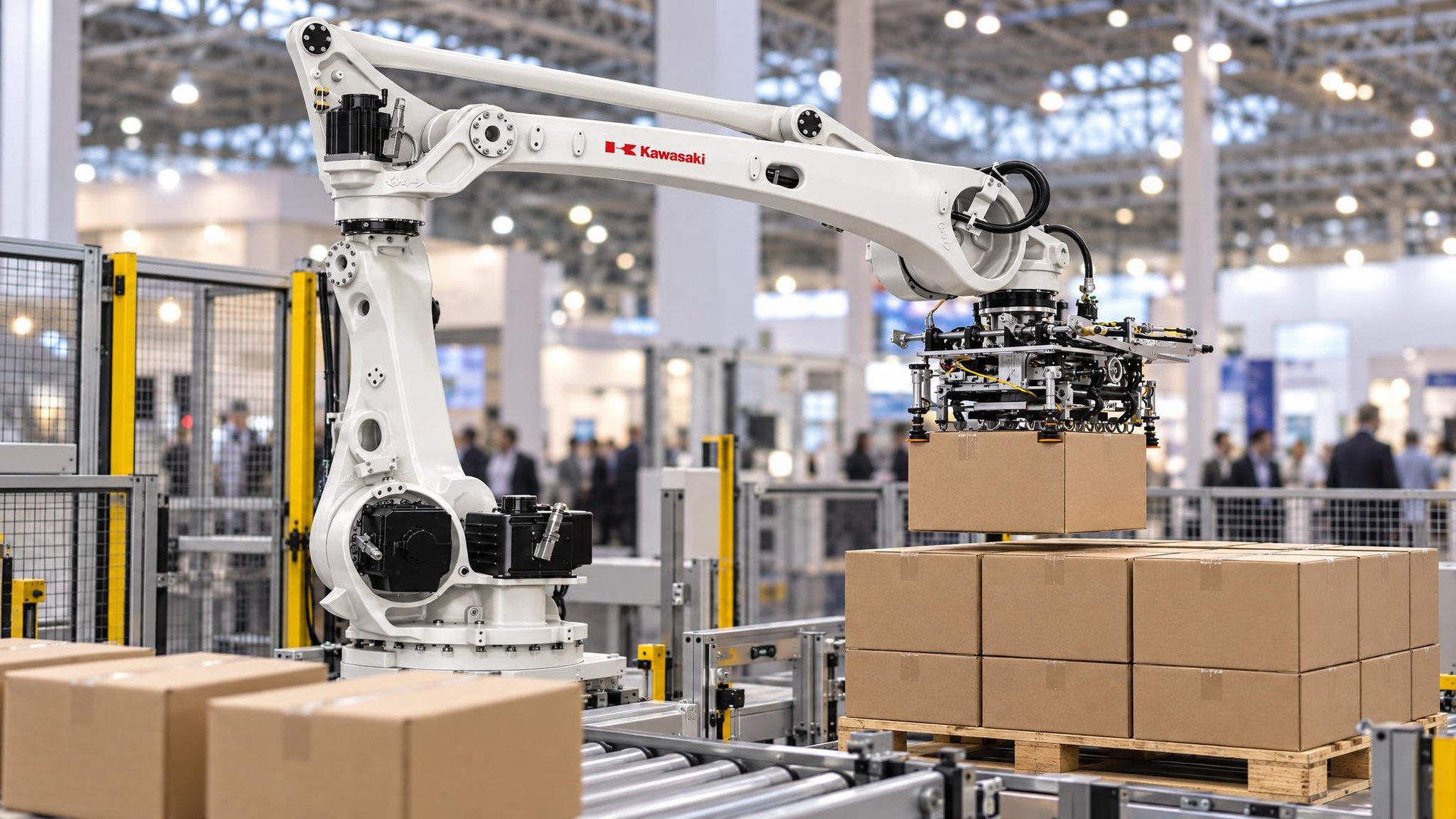
Kawasaki Robotics Brings CP110L Palletizing Robot to North America
Kawasaki Robotics (USA), Inc. announced on October 8, 2026, that it will launch the CP110L high-speed palletizing robot in North America at PACK EXPO International 2026, which runs October 18–21, 2026, at McCormick Place in Chicago. The 110-kg-payload robot targets packaging, consumer packaged goods and end-of-line automation applications. The company said it designed the CP110L around the practical constraints manufacturers weigh when adding palletizing automation: floor space, ceiling height…
- The Next Web
Uber and Pony.ai will test Chinese robotaxis in London within weeks
- TechCrunch
Waymo locks in $5B loan from Blackstone, PIMCO to fuel robotaxi expansion
- The Robot Report
AWS launches open-source Physical AI Toolchain for robotics
- Reuters
Meet Iris: England’s new two-legged delivery robot
- Unite.AI
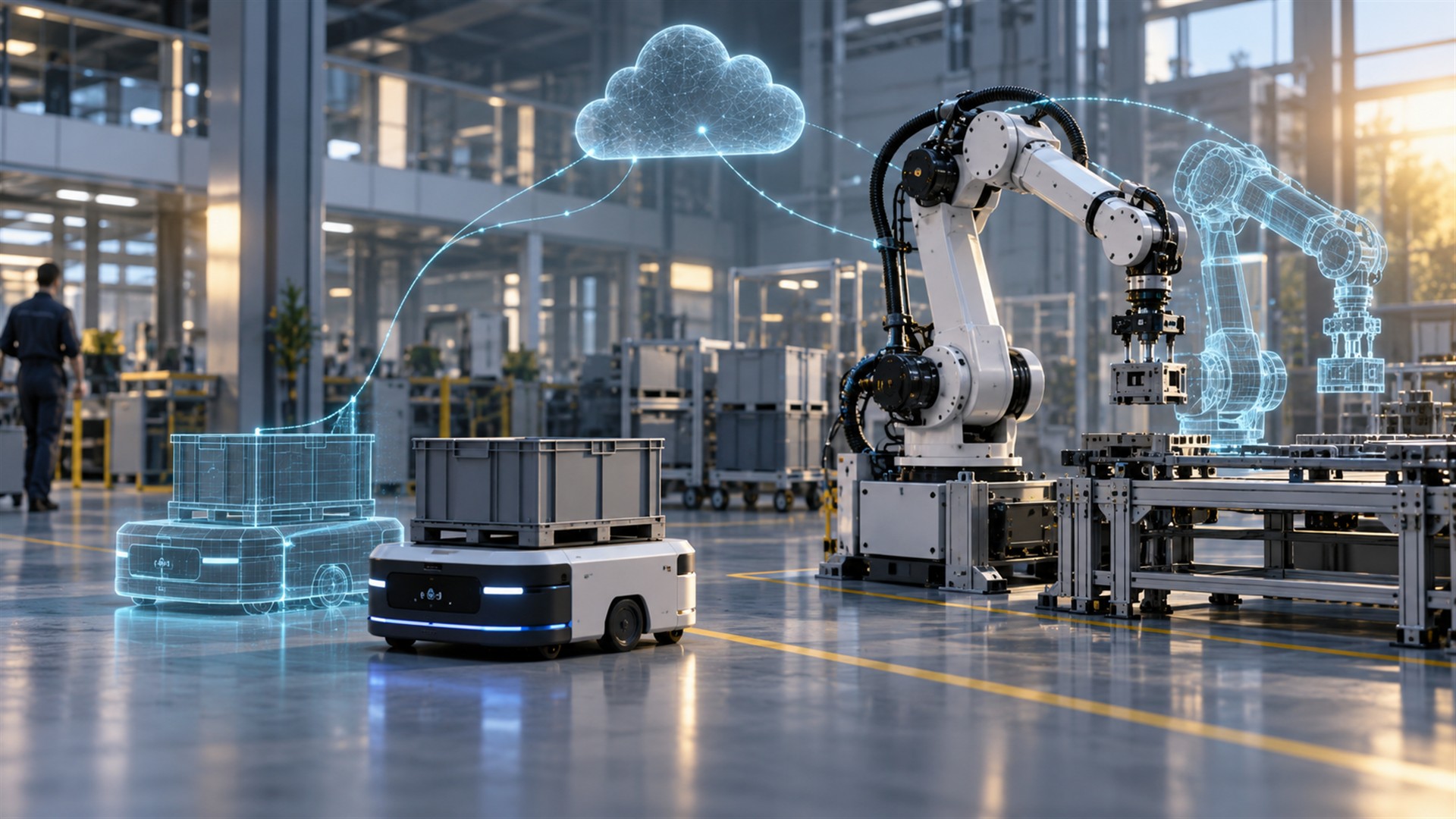
Upstream Expands Live Digital Twins From Connected Vehicles to Robots and Physical AI
A warehouse robot running hotter than usual could be developing a mechanical fault—or simply working harder in a warmer building. A drone deviating from its normal pattern could be responding to its mission, a software problem, or a cyberattack. As autonomous machines spread into more industries, knowing what a machine is doing becomes inseparable from understanding why. Upstream is bringing its experience monitoring connected vehicles to that problem. The company has announced an expansion…
- TechCrunch
Amazon unveils new Alexa tablets with Alexa+ and Google Play Store access
The lineup includes three models: Amazon Alexa Tablet 12 Pro, Amazon Alexa Tablet 11, and Amazon Alexa Tablet 8.
- TechCrunch
Uber and China’s Pony.ai plan to launch robotaxis in London
- IEEE Spectrum
This Disembodied Hand Is All the Robot You Need
A hand attached to the end of an arm is a given for most humans, but what if robots didn’t have to play by the same rules as we do? Researchers from ETH Zurich have turned an off-the-shelf robotic hand into a completely self-contained robot that walks on its fingertips while using those same fingers to manipulate its environment. Besides making the perfect Halloween accessory for anyone planning to dress up as a member of The Addams Family – who were famously accompanied by a disembodied walk…

- Ars Technica
Nvidia’s big bet on physical AI aims for safer robotaxis, humanoid robots
- MIT Technology Review
AI breakthroughs in robotics won’t change your life any time soon
- LeiPhone (Chinese)
'Carbon-Silicon Doctrine: Cross-Domain Transfer Governance Codex' Seven-Layer System Directory
000 | [Global Unique Pre-calibration Standard] Negative Transfer NT1–NT4 Four Prototype Classes · Official Final Definition (Benchmark Set, not counted in 188 standard set). Final annotation: Zero Benchmark, independent of the seven-layer main sequence, not counted as standard set; NT four prototype classes are the sole legal standard cited throughout this canon, permanently locked, not subject to iterative revision. Layer One: Transfer Accident Anatomy Layer (001–021, total 21 sets | Phenomenon layer, listing transfer accidents and causal phenomena, without bottom-layer mechanistic proof). 001 | Medical AI Rules Cross-domain Transfer Finance Risk Control: Full-chain structural failure invisible to humans. 002 | Autonomous Driving Perception Transfer Industrial Robots: Mechanism mismatch causing fatal decision drift. 003 | Security Facial Recognition Transfer Finance Identity Verification: Covert power smuggling formation record. 004 | Education Recommendation Weight Transfer Judicial Sentencing: Cross-domain amplified discrimination structure and algorithmic violence. 005 | Agricultural Detection Logic Transfer Medical Diagnosis: Low-entropy feature mismatch causing diagnostic chain failure. 006 | Cross-domain transfer accident seven-level classification, harm levels and risk spectrum standardisation. 007 | Transfer "Surface Success Trap": Accuracy metrics normal but underlying mechanism completely failed. 008 | Most covert fatal fault: Transfer introduces unknown variables, target domain default values silently auto-fill. 009 | Transfer accident rollback failure three root causes: Lineage rupture, premise boundary violation, permission ossification. 010 | Target domain veto power bypassed: Transfer governance core failure scenario anatomy. 011 | Chain transfer A→B→C→D: Multi-round semantic drift accumulation forming systemic collapse. 012 | Cross-domain accident liability paradox: Source domain truth ≠ target domain decision responsibility. 013 | Transfer overconfidence: Under distribution shift, confidence rises instead of falling—fatal deviation. 014 | Transfer accident sixteen-dimensional deep anatomy framework ossification. 015 | Accident lineage traceability: Transfer pathway rupture, tampering...
- LeiPhone (Chinese)
Li Yuan from Beihang: giving machines eyes, and eleven years of 'self-inflicted hardship' | Physical AI 50
As a student of Academician Xu Xurang, founder of China's luminescence optics, Li Yuan has spent eleven years doing one thing: giving machines a pair of "eyes." These "eyes" have taken to the sky, gone underwater, and onto roads, installed in drones, trains, cars, and various robots. Today, as everyone begins discussing physical AI, he is rethinking: can these eyes not only help machines see, but also help them understand the world? From undergraduate through postdoctoral studies, Li Yuan had wanted to become a scholar. In 2015, he chose to return to China and start a business, founding Benewake. A man who most wanted to be a scholar has been CEO for eleven years. In the first half of this year, Benewake delivered 250,000 lidar units for robots, with robot business revenue exceeding half the company's total revenue—a doubling of this business in 2025 compared to 2024. Beyond these numbers, he continues to think about what lidar can bring to machines. "Eyes are not merely tools for the brain, but also sources of knowledge," he says. In his view, the distance and position information measured by lidar should not only help robots avoid obstacles, but also serve as material for models to learn from. How to improve models' understanding of the physical world through these measurements is the direction he is now researching. Every year, Li Yuan deliberately takes on something he dislikes. This sounds like self-torture. His explanation: many so-called "dislikes" stem from fear or insufficient understanding. When something is too distant, you only see a long black shadow. Once you truly engage with it, things often become interesting. Li Yuan calls this tearing down the cognitive "walls." In studying light, he has come to understand that light's boundaries are far greater than imagined, and the things he doesn't understand keep multiplying. "The process of truly understanding something makes me very happy." This sentence perhaps explains why Li Yuan and Benewake have bet on this path over the past decade.
- Gasgoo
UBTECH, FAW-Volkswagen partner on humanoid robots for logistics and smart manufacturing
- SESeoul Economic Daily
Angel Robotics Named First "Innovation Procurement Top Tier" Company
- LeiPhone (Chinese)
From 'Tool' to 'Agent': CARES 4.0 Launches in Hong Kong, Liu Hongbin Discusses How Medical AI Enters Clinical Practice
Recently, the Fourth Hong Kong Clinical-driven Robotics and Embodied AI Technology Symposium (CREATE Symposium), hosted by the Center for Artificial Intelligence and Robotics Innovation (CAIR) of the Chinese Academy of Sciences Hong Kong Innovation Institute and co-organized by the Hong Kong Science and Technology Parks Corporation, was held with great ceremony at the Charles K. Kao Conference Center in Hong Kong Science Park. As an important international exchange platform bridging clinical medicine and cutting-edge technology, this symposium, themed 'The Commercialization Path of Medical AI,' brought together nearly 300 experts, scholars, hospital administrators, authoritative clinicians, and industry capital representatives. The event focused on clinical pain points in specialist fields such as respiratory intervention, otolaryngology, ultrasound imaging, and sleep medicine, featuring diverse sessions including frontier technology sharing, hospital director roundtable dialogues, venture capital pitching, thematic group discussions, technology achievement exhibitions, and embodied intelligence operating room scenario exploration, accelerating multi-stakeholder collaboration among medical, research, industrial, and investment sectors and injecting strong momentum for translating scientific research outcomes into medical practice. At the opening ceremony, CAIR Director Researcher Liu Hongbin, CEO of Hong Kong Science and Technology Parks Corporation Huang Bingxiu, General Manager of China Resources Health and President of China Resources Medical Zhang Chuang, Executive Dean of the Chinese Academy of Sciences Hong Kong Innovation Institute Hao Yinxing, Deputy Director of the Institute of Automation, Chinese Academy of Sciences Researcher Lü Pin, and CEO of Shenzhen BGI Genomics Technology Co., Ltd. Liu Jian

- LeiPhone (Chinese)
IROS 2026 Awards Announced: Long-Term Memory Wins Best Paper, Humanoid Robots Win for Playing Tennis and Tray-Carrying
In the field of robotics, a larger model does not automatically solve all problems. Author | Ma Xiaoning Editor | Cen Feng On September 30th local time, IROS 2026 concluded its main conference in Pittsburgh, with major awards announced on the final day. AI Technology Review learned on-site that this year's Best Paper Award went to research on robot "long-term memory." Yumin Lee, Hyoseok Ju, and Giseop Kim won Best Paper with "LT-Mem: Volatility-Aware Spatio-Temporal Memory for Lifelong Scene Understanding." The Best Student Paper Award went to Pei-An Hsieh, Fengjun Yang, Nikolai Matni, and M. Ani Hsieh. Their research addresses how multiple quadrotor drones can manage complex airflow interference when flying in tight formation at extremely close distances. Two other eye-catching awards went to humanoid robotics. One project enabled a humanoid robot to learn real human tennis motions, while another allowed a humanoid robot to carry a tray while maintaining balance of objects on the tray during bipedal walking. If we review this year's award-winning papers and Best…

- New Atlas
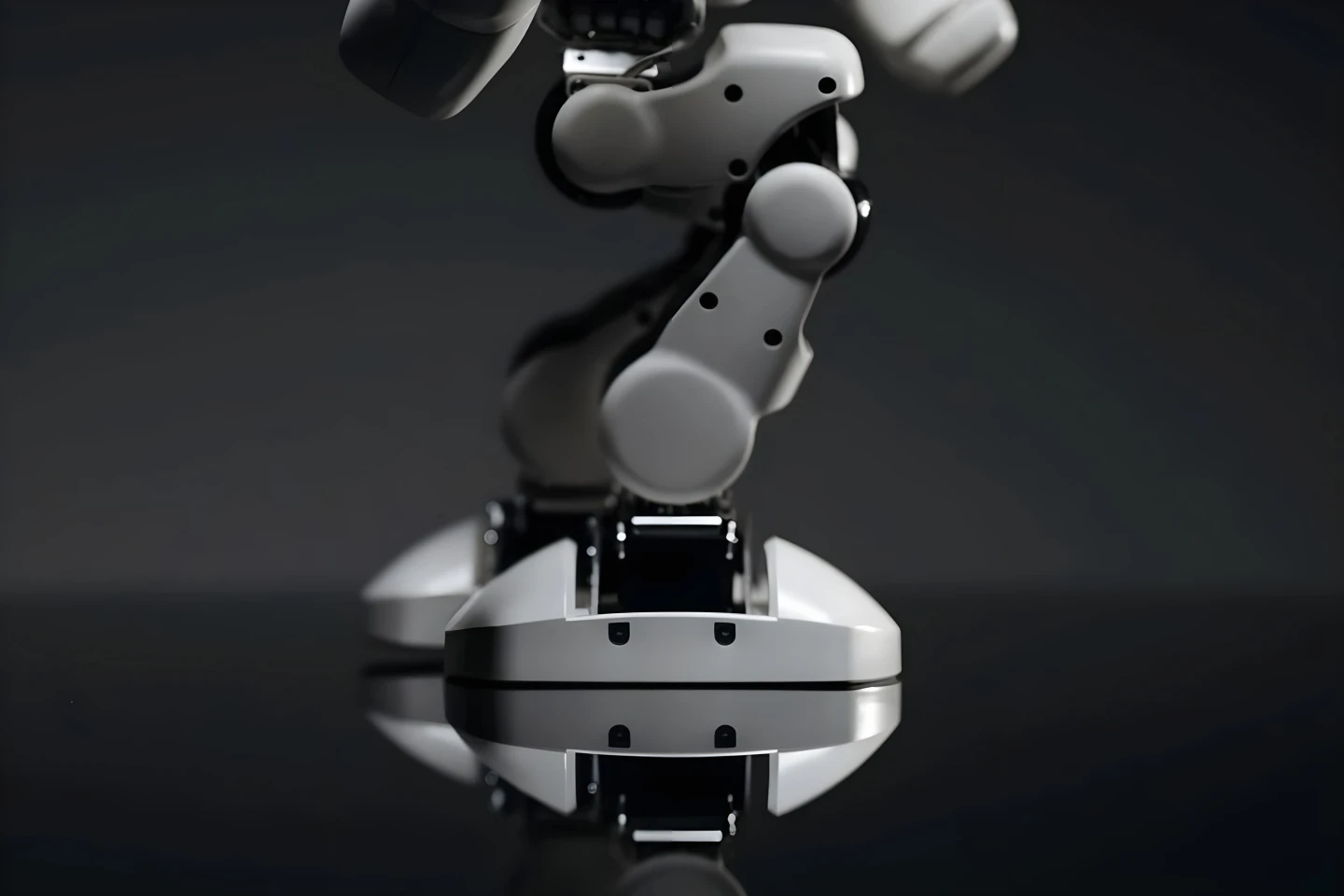
Tiny robot harvests battery power via skin on its feet
Researchers have developed a paper-thin foot membrane that lets crawling microrobots harvest electricity directly from the ground beneath them, ditching heavy onboard batteries by turning metal and silicon surfaces into an active power source. Continue Reading Category: Robotics , Engineering Tags: Robotics , Skin , Energy , Batteries
- LeiPhone (Chinese)
After Analyzing 1,933 IROS Papers, We Identified Six New Developments in Robotics
Large language models have not 'consumed' robotics. Author | Ma Xiaoning Editor | Cen Feng On September 27, IROS 2026 will open in Pittsburgh. After an interval of 31 years, IROS returns to the Steel City. As one of the world's largest robotics academic conferences, this year's formally scheduled programme includes 1,933 papers. Laying out these nearly two thousand papers, it resembles a cross-section of 2026 robotics research: from reinforcement learning and imitation learning to path planning, visual perception, motion control, dexterous manipulation, humanoid robots, tactile sensing and large models—nearly all significant technical approaches in robotics over recent years appear simultaneously on this map. Yet what truly deserves attention is not keywords like Humanoid, VLA or World Model that more easily attract industry and media focus. After multi-label categorisation of the 1,933 papers, we can see approximately 809 papers related to Robot Learning / Embodied AI, 564 on Navigation / Planning, 556 on Perception / Vision, 546 on Control / Dynamics, 520 on Manipulation, and approximately 213 on Humanoid / Legged. Since one paper can…

- LeiPhone (Chinese)
Wu Jiajun IROS 2026 talk: Structured representation is not the answer, it is the scaffold for robots learning to reason | IROS 2026
From structured representation to the path of learning without demonstrations. Author | Wu Simeng Editor | Cen Feng A plate, a water tap, a small blob of blue dish soap. Wu Jiajun opened his IROS 2026 presentation with such a kitchen scene that had almost no technical sophistication. A student squeezed out some dish soap, turned on the tap, washed halfway, and then left temporarily. Now it's the robot's turn. At first glance, the task is straightforward: wash the plate clean and put it back. But what the robot actually needs to handle is not just 'wash the plate'—those three words. It first needs to know which object in front of it is the plate. It needs to know whether the plate is actually dirty. It needs to notice whether there is that little blob of blue dish soap on the plate. It also needs to know whether the tap is already turned on, whether the plate has already been washed, and whether, after it picks up the plate, some new problem is exposed on the table surface. The same task, with a different initial state, can have a completely different answer. If the plate has already been washed, there's no need to wash it again. If there's no dish soap, some needs to be squeezed out first. If there's something dirty underneath the plate, 'wash the plate clean' no longer means just putting the plate on the rack. When people face these variations, they often don't feel as though they're doing complex reasoning. We just take a look and carry on. But for a robot, every instance of 'take a look and carry on' conceals a question: what exactly has it understood the world in front of it to be? On September 27, on the day IROS 2026 opened, Spe…

- LeiPhone (Chinese)
In Conversation with Ruoqi Chuxing COO Han Feng: The Stronger the World Model, the More Real Data is the True Barrier
Over the past year, "physical AI" has become almost the next ticket both autonomous driving and automakers are competing to secure. World models, embodied large models, robot data—numerous companies have entered physical AI from different angles, attempting to become protagonists under the new trend. By comparison, Ruqi Mobility has chosen a less conspicuous path: not training its own large models, but attempting to become the data infrastructure behind the models. In fact, Ruqi Mobility began thinking in 2023 about what role an mobility platform could play in the AI industry beyond providing ride services like Robotaxi. Over the following two years, Ruqi Mobility gradually completed its data loop, with one end connecting drivers, Robotaxi and city roads, and the other serving autonomous driving model training and iteration. The rise of embodied AI has given this capability new uses. In the view of Ruqi Mobility's COO Han Feng, autonomous driving and intelligent robots do not require completely identical data, because the former primarily performs perception, decision-making and motion in two-dimensional road space, while robots must enter three-dimensional space and handle grasping, transportation and fine manipulation. However, the data processing workflows behind them are highly similar, from collection and preprocessing to annotation, quality checking and export, and the underlying tool chain can be reused. Nevertheless, because real data collection is extremely costly and time-consuming, increasingly more autonomous driving and embodied AI companies generate synthetic data via world models and simulation platforms to supplement the shortage of real data and improve model training efficiency. However, in Han Feng's view, the stronger the world model capability, [text cuts off]
- LeiPhone (Chinese)
'Cabin-Free' Heavy Trucks Hit the Road: Kaer Power Bets on Autonomous Cargo Transport Scale-Up
Heading west from the city of Ordos to the remote town of Qipanqing, the dense commercial residential buildings outside the car windows gradually give way to plains and mountain ridges. Passenger vehicles on the road grow fewer and farther between, while heavy trucks pulling long trailers become increasingly common. Between coal mines, power plants, and industrial parks, heavy trucks transport cargo in flows along fixed routes. This is also one of the main scenarios where CARL-Tech verifies autonomous freight transport. CARL-Tech came to Inner Mongolia five years ago to experiment with autonomous convoy driving. Today, it already operates a fleet of over one hundred autonomous transport vehicles, with business extending from Inner Mongolia to Xinjiang, Gansu, Shaanxi, and Shanxi in energy transport regions, and has begun testing transport robots without driver cabins. On September 22, CARL-Tech announced in Qipanqing the launch of a scaled AI transport network, integrating human-driven vehicles, autonomous trucks with driver cabins preserved, and driverless transport robots into a single transport system. The commercialization of autonomous trucks has thus entered a new phase of scaled expansion. Having commercial viability established, beginning scaled expansion CARL-Tech dares to set the target of building a scaled AI transport network because this business has already begun to prove economically viable. Starting last year, CARL-Tech worked with the Ordos Group to connect coal mines, factories, and loading/unloading operations, achieving unit economics turnaround at the route level in real transport tasks. With driverless transport robots entering operation, CARL-Tech announced that single-vehicle economic efficiency is expected to improve from 20% to over 30%. Why does this math work out? First, one must look at the cost structure of traditional freight. CARL-Tech CEO Wei Junqing summarizes it as [text cuts off]

- Jiemian (Chinese)
Two departments: accelerate deployment of frontier technologies including brain-computer interface, embodied intelligence, and bionic actuators
- CHChosunbiz
LG Electronics backs Korea-hosted youth robotics challenge, showcases Clroid - CHOSUNBIZ
- Unite.AI
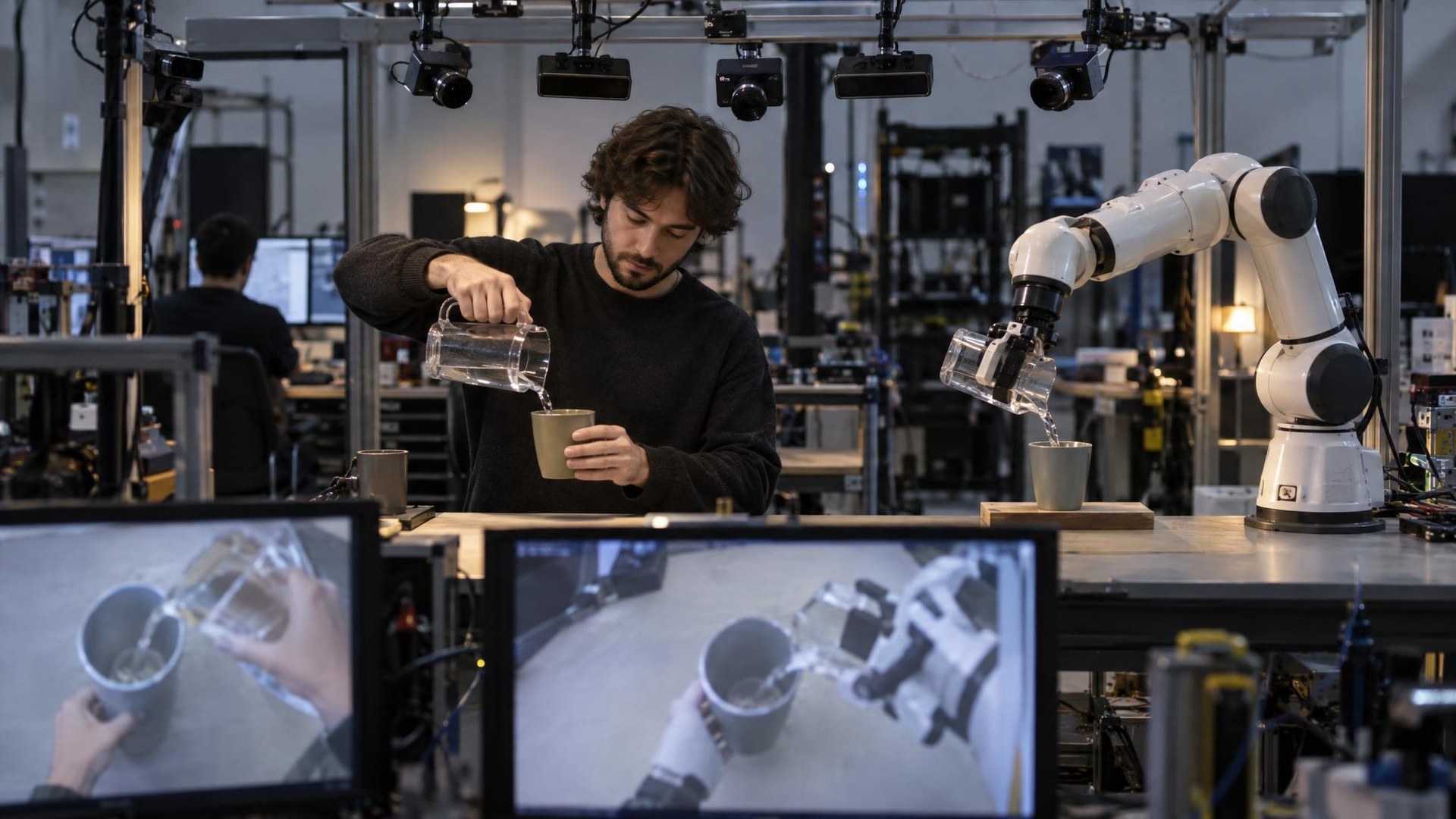
Mecka Raises $60M Series B to Scale Robot Data and Deployment
Mecka, a company building data infrastructure for robot learning, announced on October 7, 2026, that it has raised a $60 million Series B led by Sequoia Capital. New investors in the round include NVIDIA, Qualcomm Ventures, Samsung and M12, Microsoft's venture fund, the company said, with continued support from Kindred, Framework Ventures and Neo. Angel investors participating include DoorDash founder and CEO Tony Xu, former ServiceNow and Snowflake CEO Frank Slootman, and former Tesla Optimus…
- Jiemian (Chinese)
Israeli military strikes multiple locations in Gaza, killing 3 Palestinians
Local time, October 7: According to Palestinian sources, Israeli forces launched gunfire and airstrikes against multiple locations in the Gaza Strip from the early morning of October 7, resulting in at least 3 Palestinian deaths, including 1 Palestinian killed in an Israeli drone strike on Khan Younis in the southern Gaza Strip that day. (CCTV News)
- Interesting Engineering
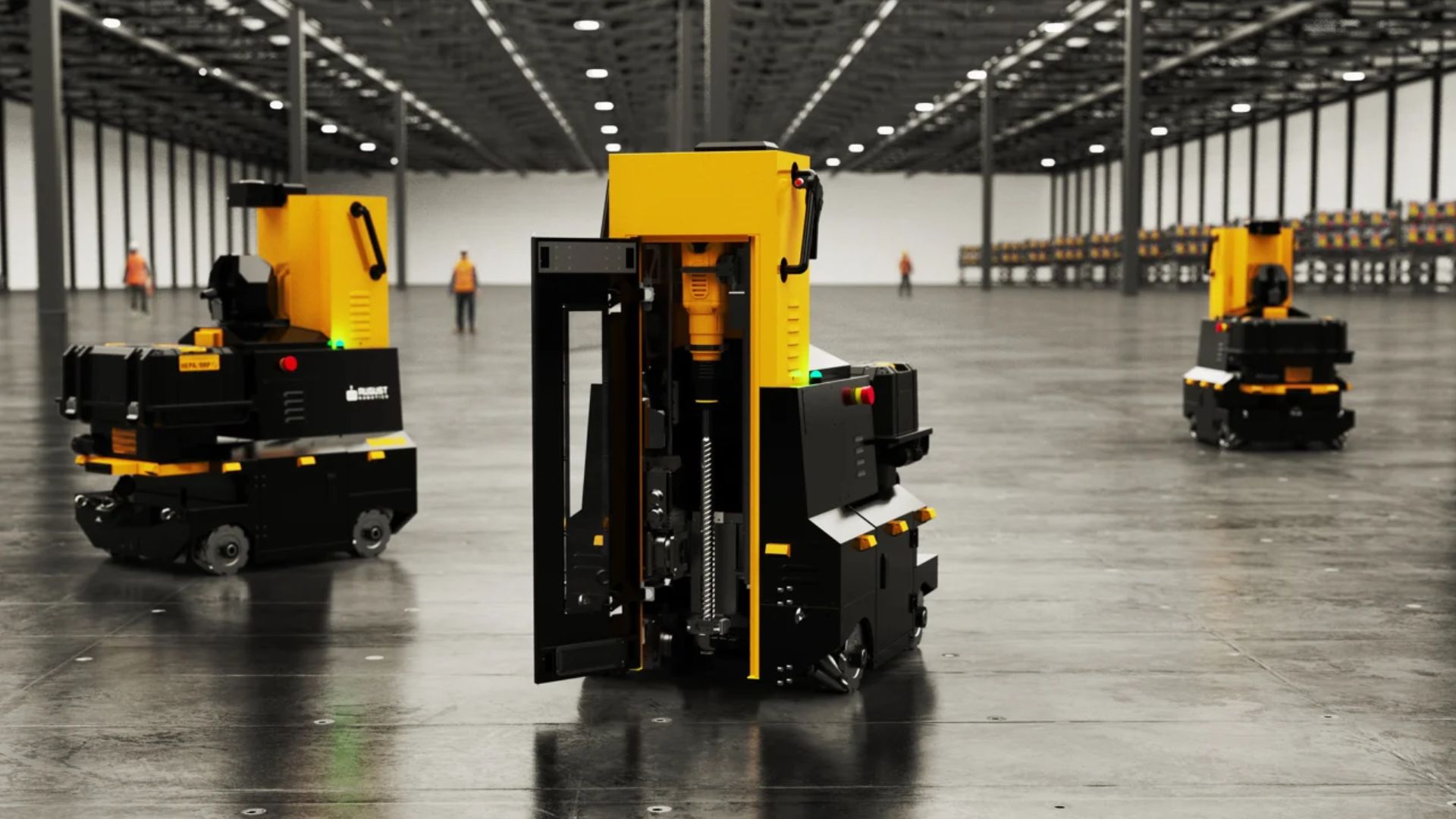
World’s first fleet-capable drilling robot hits 10x speed with 99% accuracy
A drilling robot built for data center construction has already punched more than 385,000 holes...
- TechCrunch
Robot data startup Mecka AI nabs $60M from Sequoia
- Interesting Engineering
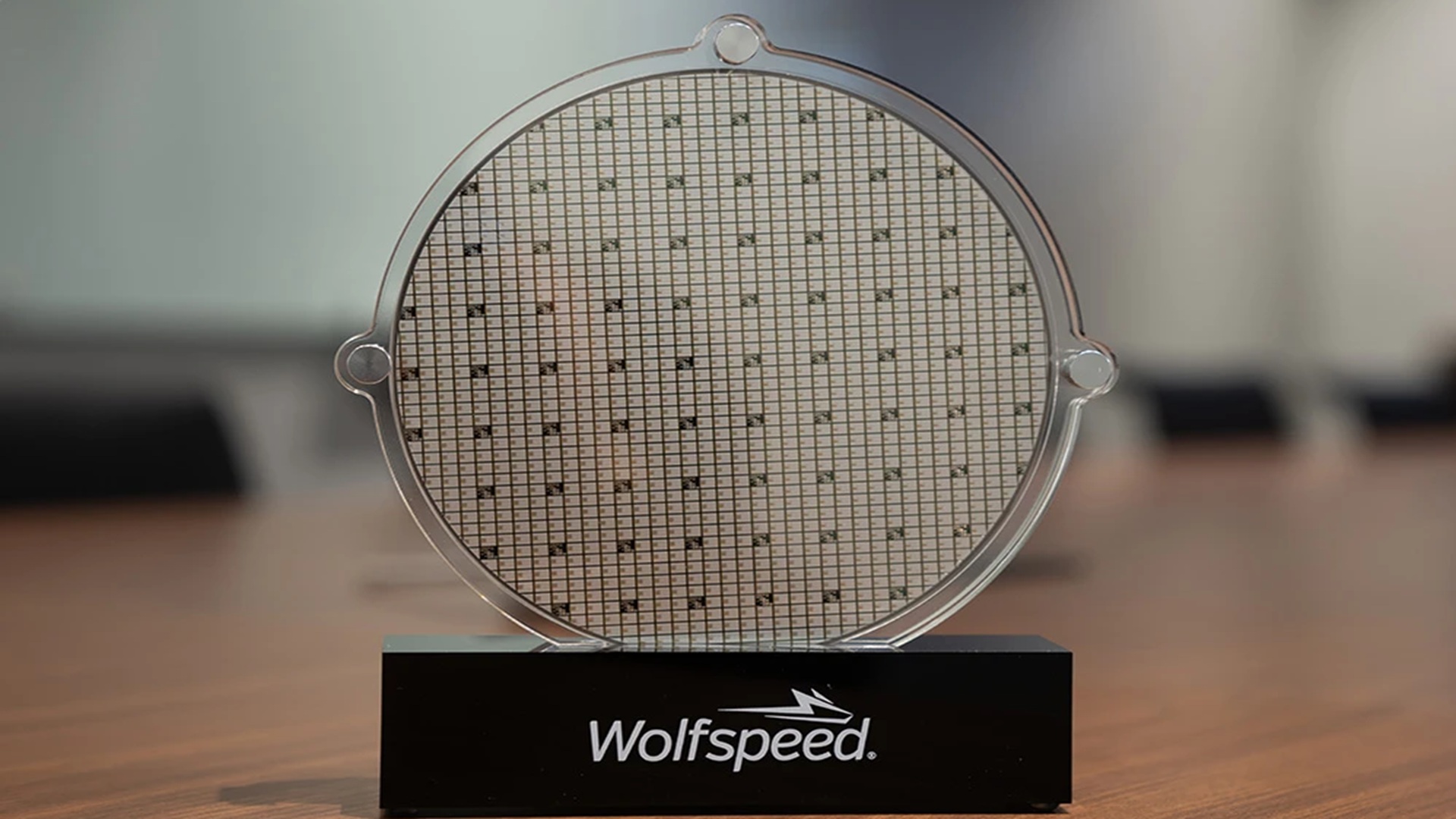
US backs $1.5B conditional loan for chips used in drones, radar, missile defense
The US Department of War has offered semiconductor manufacturer Wolfspeed up to $1.5 billion in...
- New Atlas
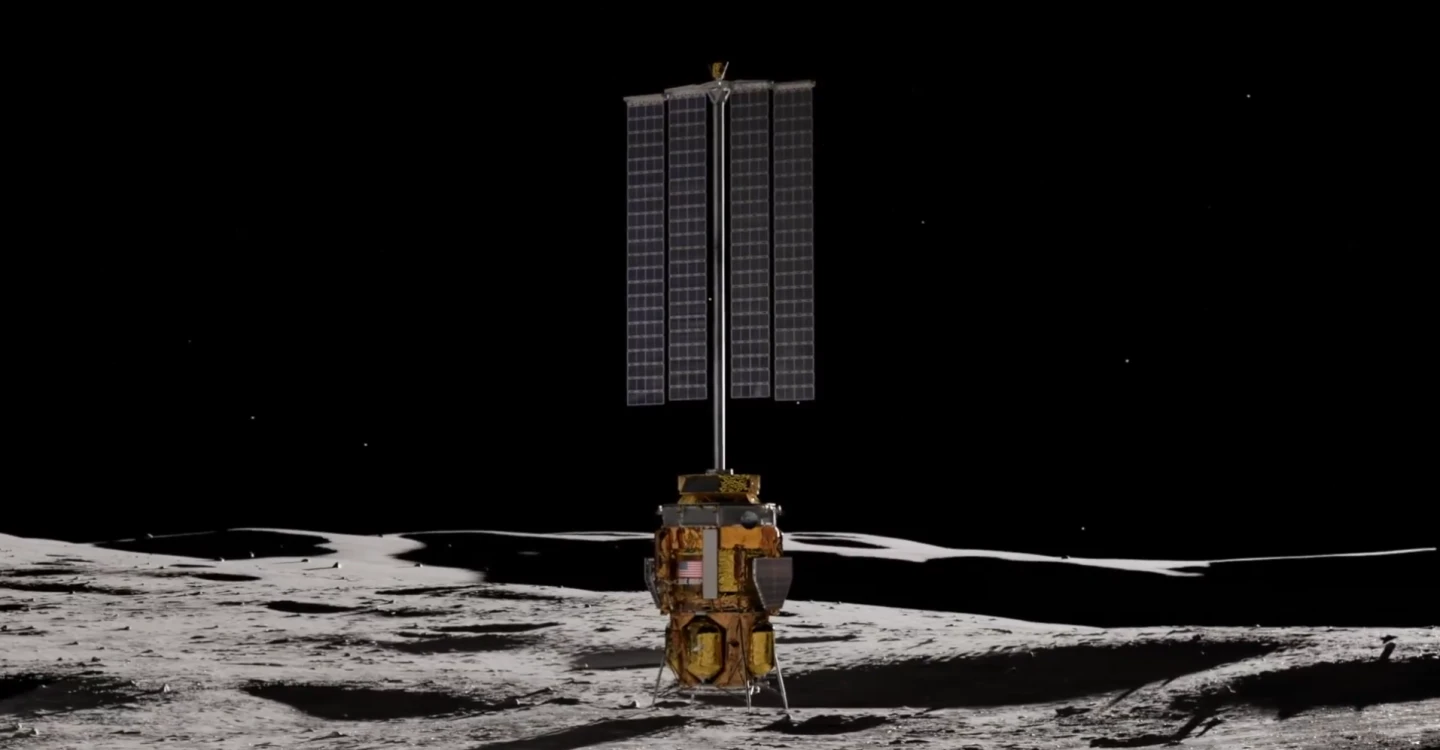
Spiral solar tower promises near-continuous power for Moon bases
Blue Origin has unveiled its Power Tower for future Moon bases, which will be carried by the company's Mark 1 lunar lander. After touchdown, the spacecraft will deploy a 20-m (66-ft)-tall solar array for around-the-clock electrical power. Continue Reading Category: Space Systems , Engineering Tags: artemis , Blue Origin , Solar Powered , Moon
- Interesting Engineering
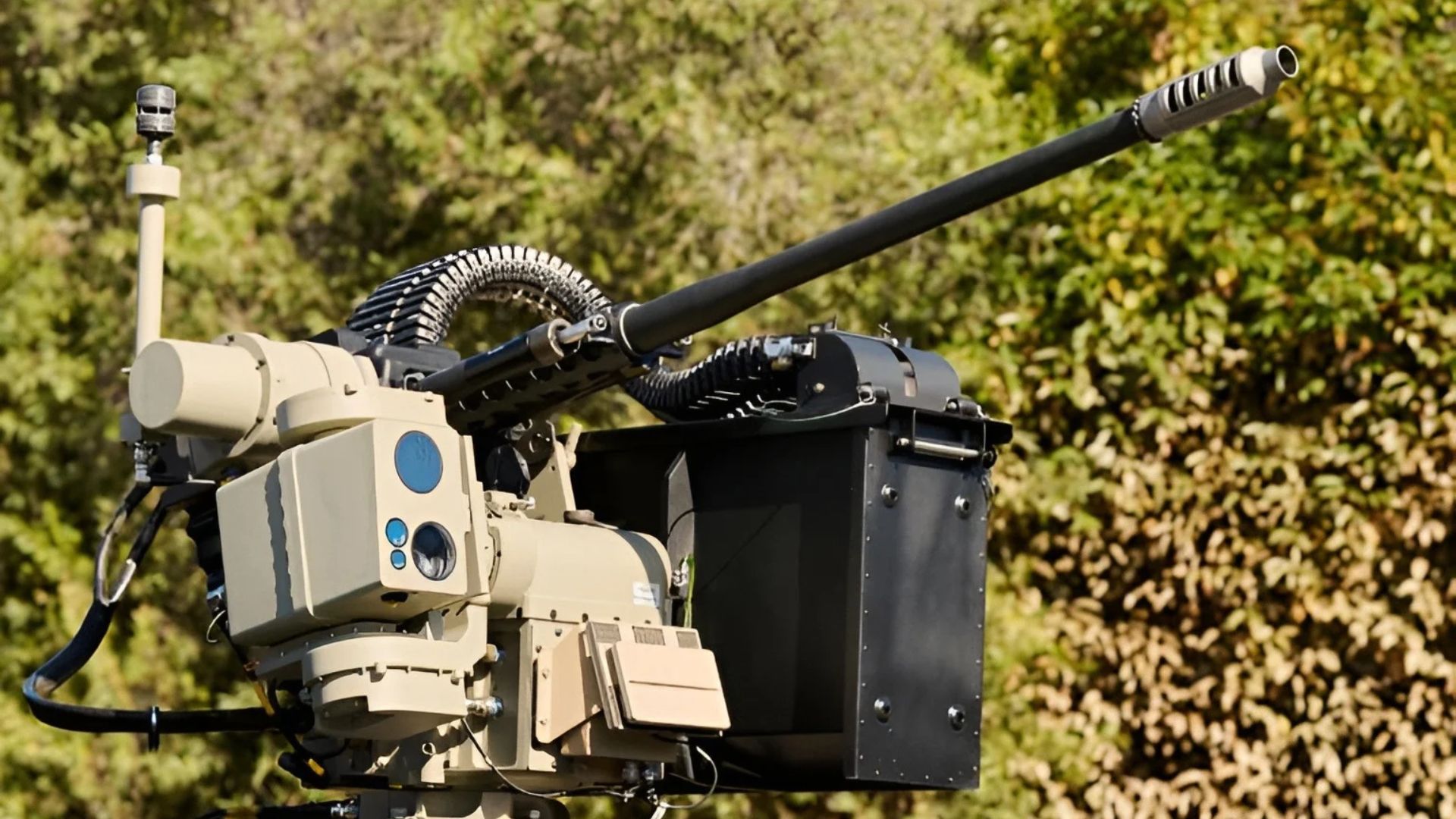
New counter-drone weapon uses 4D radar to track threats over 800 meters while moving
EOS Defense Systems USA is developing a new Slinger counter-drone system with upgraded sensors and...
- The Robot Report
PTC acquisition positions Schneider Electric to challenge Siemens
- South China Morning Post
US issues first outbound investment fine over Chinese robotics AI deal
- TechXplore
Feather star-inspired underwater robot gets 3D maneuverability from only two actuators
Researchers have created an aquatic soft robot inspired by marine invertebrates called feather stars. The feather star robot is able to move through the water in all three dimensions, powered by only two actuators. The paper, "Minimal-Actuation Feather Star–Inspired Soft Swimmers for Multimodal 3D Maneuverability," is published in the journal Science Advances.

- The Verge
The best October Prime Day deals from Apple, Sony, Google, and more
Day two of Amazon’s Prime Big Deal Days event is here, and the sale will end at 3AM ET on Thursday, October 8th. While a few of the best deals from yesterday have already ended, many are still happening, with fresh discounts emerging to make the last day of the sale just as worthy of […]

- Reuters
FireFly Robotics files for Nasdaq direct listing
- The Verge
How Microsoft built its MacBook Pro competitor
Before Microsoft releases a laptop to the public, it needs to put the device through its paces. That all happens inside a windowless, warehouse-like lab on the company's Redmond, Washington, campus, where the team developing Surface devices programs robots to press their buttons thousands of times, pelts devices with radio waves from giant antennas, and […]

- Unite.AI
Chef Robotics Builds Food-Manipulation Robots on NVIDIA Isaac Stack
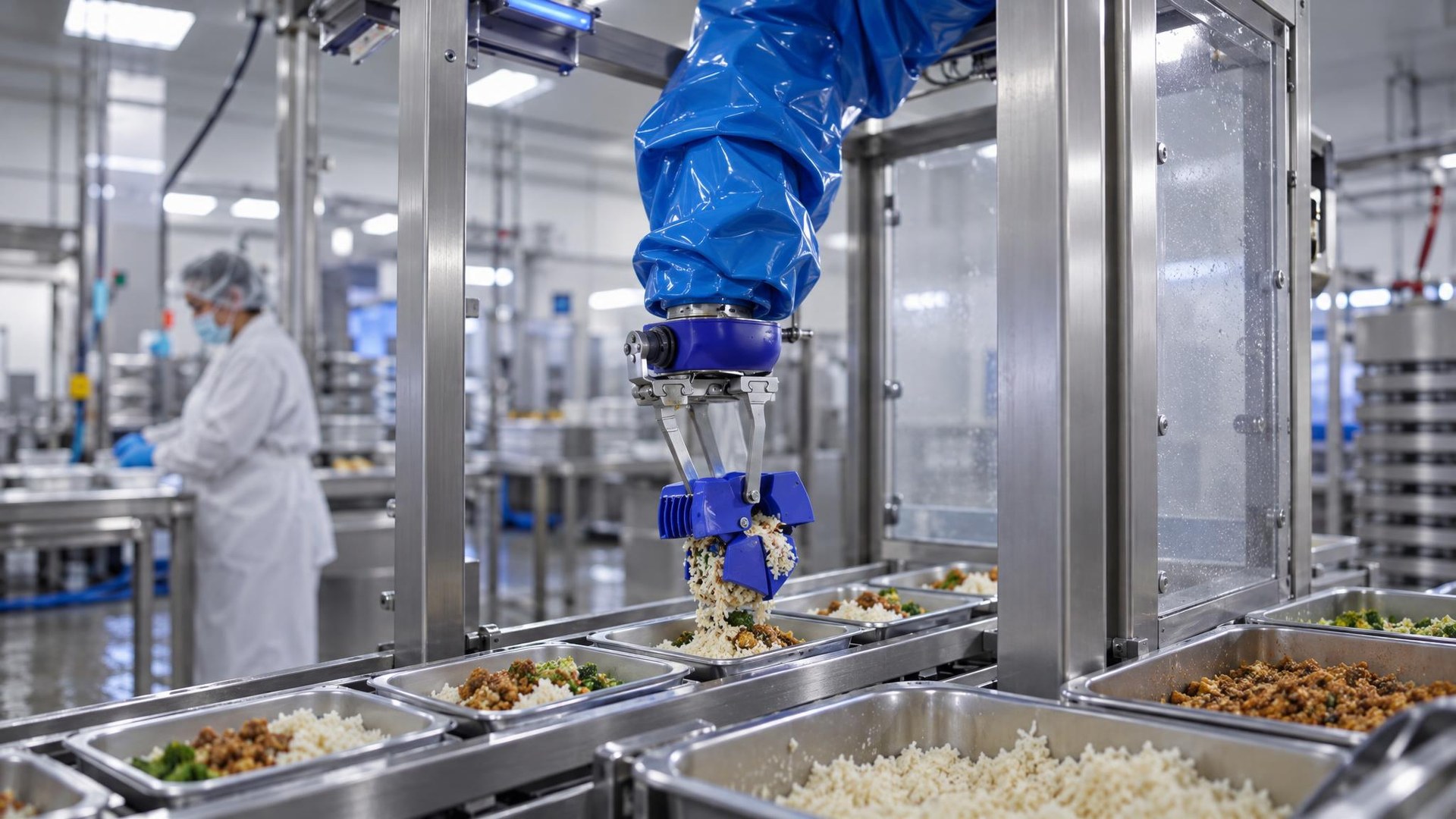
Chef Robotics announced on October 7, 2026, that it is building its food-manipulation robotic systems on NVIDIA's robotics development stack, adopting NVIDIA Isaac Sim, which is built on NVIDIA Omniverse libraries, for simulation and digital-twin work, and NVIDIA cuMotion for GPU-accelerated motion planning. The company, which describes itself as the first to commercialize a scalable physical AI food robotics solution, said the stack is intended to accelerate how it develops and deploys its…
- Unite.AI
NVIDIA Research Finds AI Agents Become Less Safe When Using Tools
AI models such as ChatGPT, Gemini and Claude, can be used to power agents – 'harnesses' that allow the models to interact directly with the real world. It's a recent innovation, and an increasingly controversial one. In any case, agents are not automatically equipped with the abilities they will need when roaming a network or a database, since the requisite tools for various missions and modes will differ. They may need Optical Character Recognition (OCR) capabilities, for instance, in order to…
- The Robot Report
Teradyne Robotics, Elite Robots settle cobot dispute
- Unite.AI
Translated Launches Lara 3, Making the Case for Specialized Translation AI
A translation can read beautifully and still get the job wrong. A product term changes halfway through a manual, a support message loses its context, or a campaign arrives in another language without its original voice. Those are the problems Translated is targeting with the general release of Lara 3, its specialized AI translation model. Announced on October 7, the launch makes Lara 3 available to enterprises, professional translators and individual users through the Lara API, TranslationOS…

- Robot China (Chinese)
World's First! Fully Domestic Electronic Architecture 'Robot Nervous System' Unveiled in Yichang, Can Replace Foreign Solutions
- Robot China (Chinese)
Multiple tailwinds boost physical AI sector; Hong Kong 'intelligent species' leader Quantization Pai surges up to 8.45% intraday; restaurant robots show continuous iteration
- Robot China (Chinese)
Making Woven Robot Electronic Skin Possible
- Robot China (Chinese)
Former Tesla Optimus Director Founds Industrial Robotics Startup
- Robot China (Chinese)
U.S. Company Hosts "World's First Human-Robot Combat": Internet Celebrity Faces 3 Robot Models in "Cage Fight," Kicked Away by 1.8-Meter-High "Terminator"
- Robot China (Chinese)
Tennis robots are hot, but good business starts with counting 'billable hours'
- Robot China (Chinese)
Ledong Robotics Plans Nearly 6 Million Euro Acquisition of German SABO to Accelerate Smart Lawn-Mowing Robot Expansion in Europe