Throughput Math: Pick Rate, Congestion, and the Law of Diminishing Returns
Adding more robots past a certain point makes throughput worse, not better. Here's where that inflection point is.
At 10 robots, adding an 11th almost always increases throughput proportionally. At 30 robots in the same facility, adding a 31st may not increase throughput at all — and at some point, adding more robots actively reduces it.
This is not a hypothetical. It's a documented phenomenon in collaborative AMR deployments, and the threshold varies dramatically by floor geometry, pick station count, and WMS orchestration logic. Operators who sign for 40-robot fleets in facilities sized for 25 are paying for congestion, not capacity.
Understanding the throughput math before you size your fleet is not optional. Here's how to do it.
The Three Throughput Limiters
Every warehouse AMR deployment has three potential bottlenecks. The one that binds first determines your effective throughput ceiling.
1. Robot Travel Time (Usually Not the Binding Constraint)
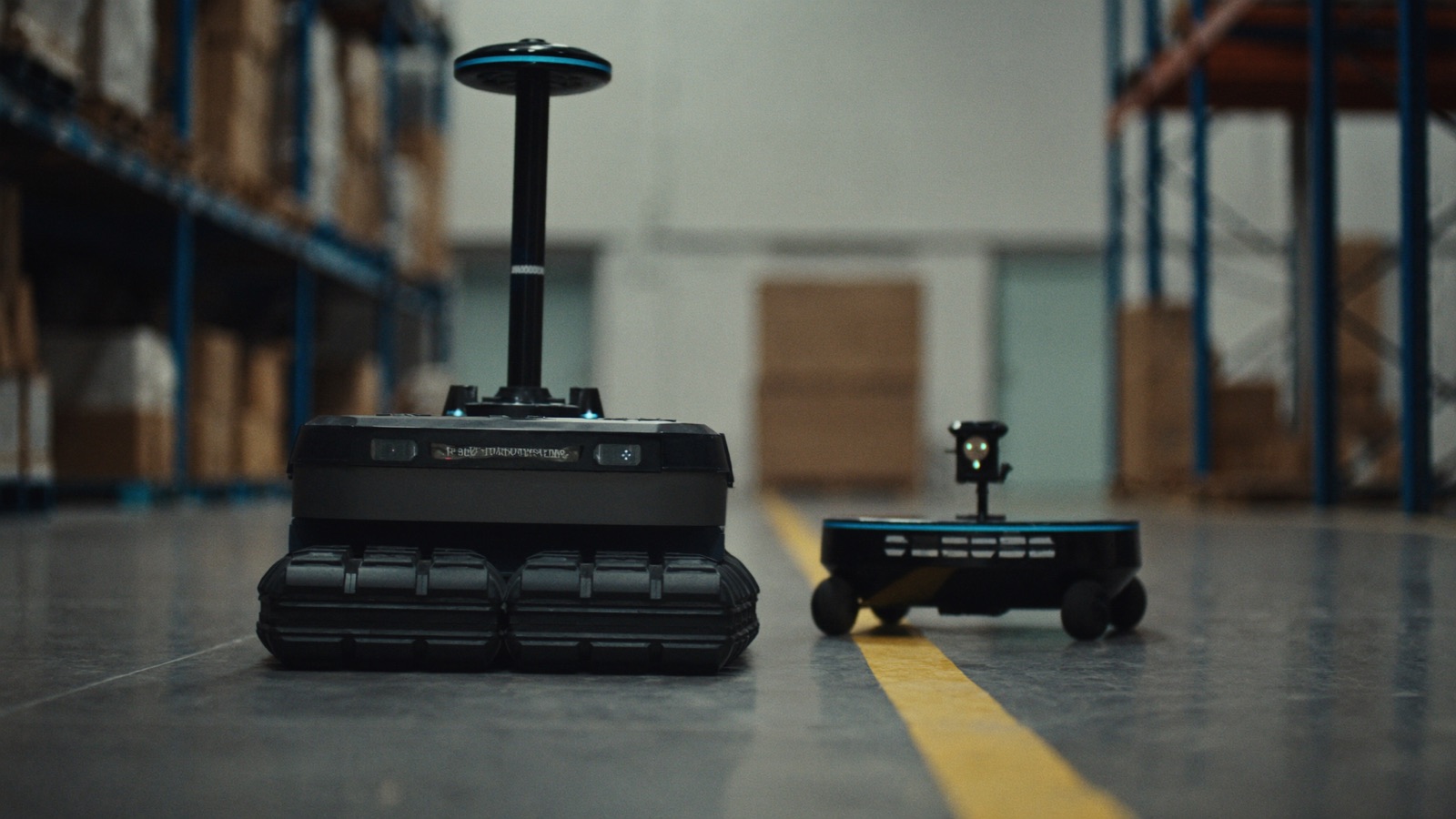
Vendors lead with robot speed because it's measurable and impressive. A Locus LocusBot travels at up to 1.4 m/s. A Geek+ P800 reaches 1.5 m/s. Faster sounds better.
In practice, average robot speed in a live deployment is 40–60% of rated maximum, because:
- Obstacle avoidance slows robots near pick aisles with frequent human traffic
- Traffic deconfliction logic slows robots in multi-robot zones to prevent head-on conflicts
- Acceleration/deceleration time matters in short aisle segments
- The robot stops at each pick location, and dwell time at the shelf adds to cycle time
The real metric is travel time per pick cycle — total robot time from task assignment to task completion, including travel, dwell, return to station or next task, and any queuing for pick station access.
A well-configured collaborative AMR averages 180–280 seconds per pick cycle for a 40,000 sq ft zone. That works out to roughly 130–200 picks per robot per hour at the system level — significantly lower than the vendor's lab-condition peak rate.
2. Pick Station Throughput (Often the Binding Constraint)
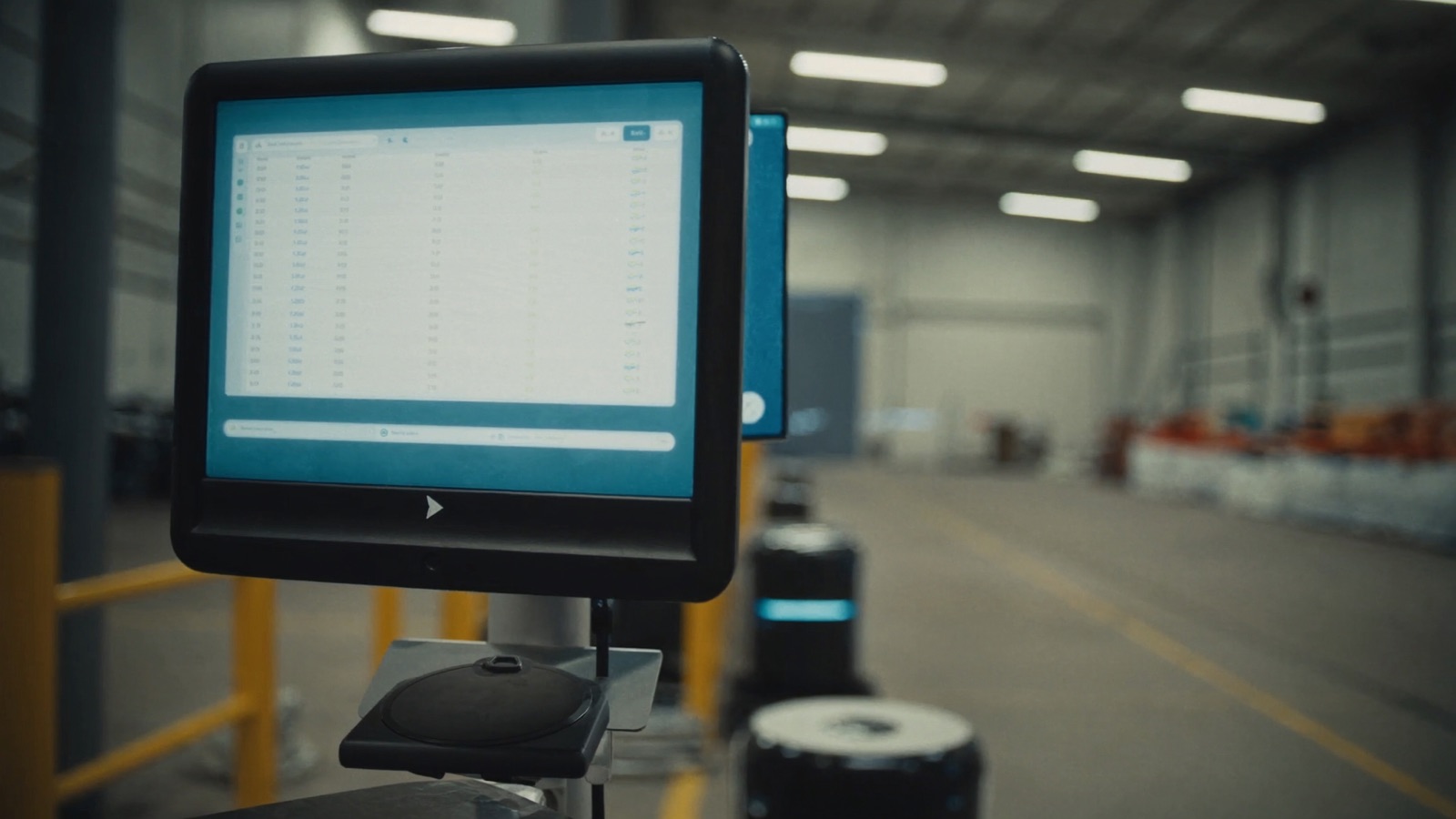
In goods-to-person systems, the picker at a workstation is processing items as robots deliver them. The picker's cycle time per bin — typically 20–45 seconds — determines how many robots that workstation can absorb per hour.
At 30 seconds per bin:
- One workstation can process 120 bins per hour
- If your fleet delivers bins faster than 120/hour to that station, robots queue
- A queue of 3 robots waiting at a single workstation means robots 4 and 5 are idle during their wait
At scale, pick station throughput is almost always the binding constraint in goods-to-person operations. Most operators see the symptom as "the robots aren't picking fast enough" when the actual problem is "the pick stations aren't absorbing bins fast enough."
The fix: more workstations, not more robots.
The right ratio varies by picker cycle time and robot delivery rate. A useful rule of thumb: for every 15–20 collaborative AMRs, you need 3–4 workstations to maintain continuous robot utilization without queue buildup. If you have 30 robots and 2 workstations, your workstations are the ceiling.
3. Aisle Congestion (The Robot-Density Threshold)
Here's where the law of diminishing returns becomes concrete.
In a standard warehouse pick aisle with a single-direction AMR flow, there is a maximum safe robot density — typically 1 robot per 30–40 linear feet of aisle during peak. Beyond that density, robots begin encountering each other at aisle intersections, creating deconfliction events (one robot stops and waits while another passes). Each deconfliction event adds 8–15 seconds to the waiting robot's cycle time.
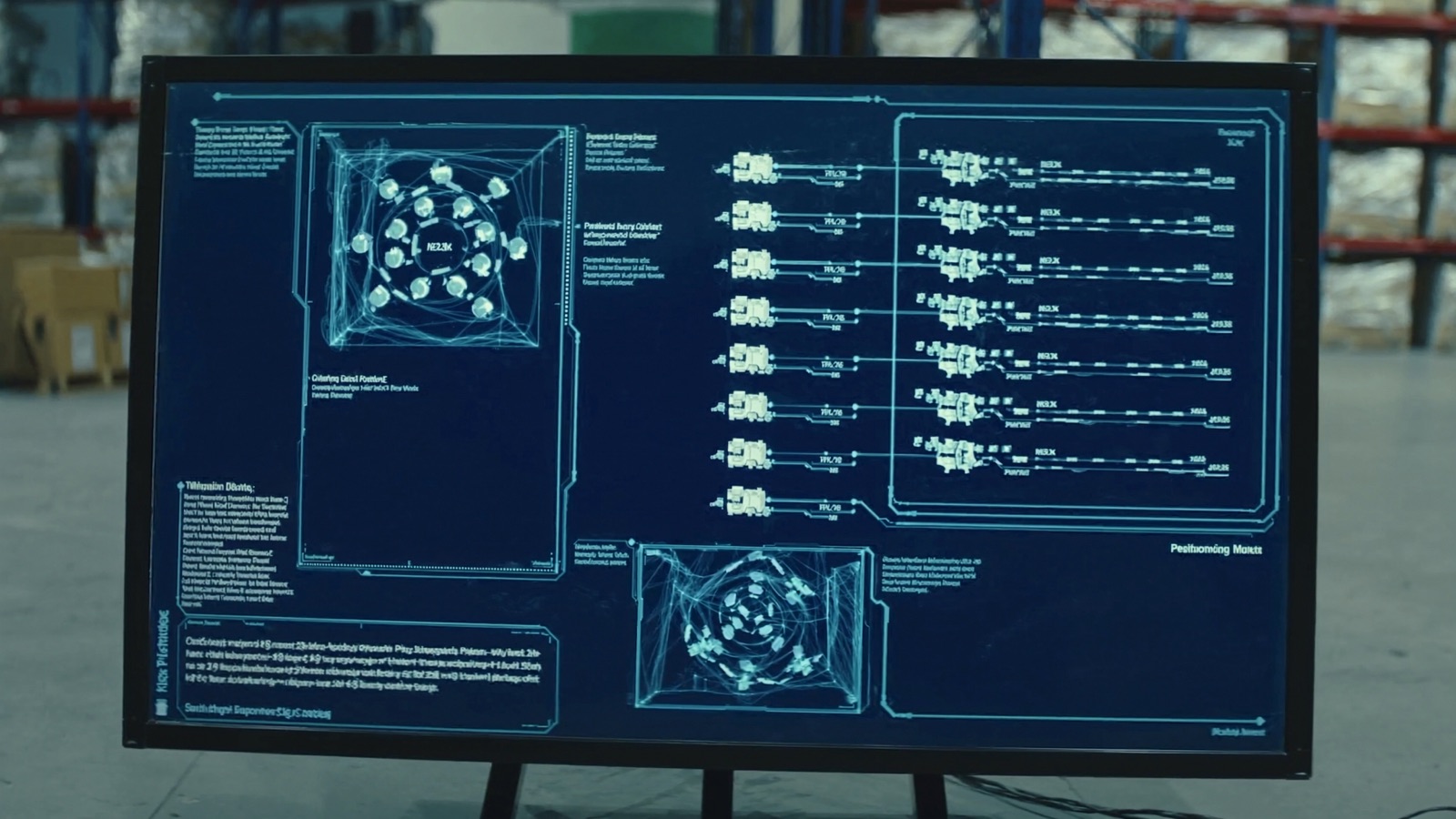
As fleet size increases in a fixed space, the frequency of deconfliction events increases non-linearly. This is the congestion curve:
| Fleet size (in a 100,000 sq ft facility, typical aisle density) | Estimated throughput per robot/hour | Total fleet throughput |
|---|---|---|
| 10 robots | 185 picks/robot/hr | 1,850 picks/hr |
| 20 robots | 170 picks/robot/hr | 3,400 picks/hr |
| 30 robots | 145 picks/robot/hr | 4,350 picks/hr |
| 40 robots | 115 picks/robot/hr | 4,600 picks/hr |
| 50 robots | 85 picks/robot/hr | 4,250 picks/hr |
The inflection point in this example is somewhere around 40–45 robots. Beyond that, total fleet throughput actually declines despite paying for more robots. The per-robot throughput decline is caused by congestion; the absolute throughput decline happens when the congestion penalty exceeds the capacity added by each additional robot.
These specific numbers are illustrative — your facility's inflection point depends on aisle geometry, intersection frequency, and WMS orchestration logic. But the shape of the curve is consistent across deployments.
How to Find Your Facility's Inflection Point
Before sizing your fleet, you need to model the congestion curve for your specific floor. The inputs are:
Average aisle length — longer aisles support more robots before intersection congestion kicks in. A 300-foot aisle can carry 8–10 robots simultaneously without significant deconfliction events.
Aisle intersection frequency — a grid layout with an intersection every 60 feet creates more deconfliction events than a long single-spine layout. Count your intersections.
Robot arrival rate at intersections — derived from fleet size, average travel speed, and task assignment logic. Most fleet management systems can model this in simulation before you go live.
Pick station count — as noted above, insufficient pick stations create robot queuing that compounds congestion in the return-to-station paths.
Most tier-1 vendors will run a digital simulation of your floor plan before contract signature. This simulation should include a congestion model. If the vendor's simulation shows monotonically increasing throughput as fleet size grows, the model is wrong — no real facility exhibits linear scaling past a certain density. Push back and ask where the diminishing returns inflection point appears in their model.
Peak vs. Steady-State: The Sizing Trap
AMR fleets are typically sized for peak throughput — the maximum orders per hour that the DC must handle during its busiest window. But sizing purely for peak without understanding steady-state behavior creates problems.
The peak sizing problem: If your peak demand is 4,000 picks/hour and your 40-robot fleet delivers exactly that in simulation, you have no headroom. Any robot maintenance event, charging cycle overlap, or unexpected order surge puts you immediately below target. Good practice is to size for 110–120% of peak, then manage the fleet at steady-state utilization of 80–90% of capacity.
The off-peak congestion inversion: At 60% of peak demand, a large fleet operates in a space-rich environment — robots rarely encounter each other, deconfliction is minimal, and per-robot throughput is near the theoretical maximum. As demand scales toward peak, the congestion curve kicks in and per-robot throughput drops. This is why fleet ROI calculations based on average daily throughput often look better than fleet ROI calculations based on peak throughput. Be clear about which calculation your business case is using.
Calculating Your Break-Even Pick Rate
Before modeling congestion, establish the pick rate you need to break even on labor cost — the fundamental ROI threshold.
Step 1: Calculate your current labor cost per pick.
Fully loaded cost of an order selector in your market (wages + benefits + equipment cost allocation + management overhead): call this $28/hour for a typical US DC.
At 140 picks per hour per selector (industry average for manual goods-to-person), your current labor cost per pick is $28 ÷ 140 = $0.20 per pick.
Step 2: Calculate your target AMR cost per pick.
For a 20-robot RaaS fleet at $1,500/month per robot, with 20 productive robots operating 2,000 hours/year (single shift, 50 weeks), delivering 170 picks/robot/hour:
Annual RaaS cost: $360,000 Annual picks: 20 × 2,000 × 170 = 6,800,000 Cost per pick: $360,000 ÷ 6,800,000 = $0.053 per pick
At $0.053 AMR cost vs. $0.20 manual labor cost, there's clear room for ROI — assuming the fleet actually delivers 170 picks/robot/hour, which requires the layout and congestion conditions to support it.
Step 3: Stress-test with congestion adjustment.
If congestion reduces per-robot throughput from 170 to 130 picks/hour (a realistic degradation in a dense fleet):
Adjusted annual picks: 20 × 2,000 × 130 = 5,200,000 Adjusted cost per pick: $360,000 ÷ 5,200,000 = $0.069 per pick
Still well below manual labor cost — but 30% worse than the headline number. In a thinner-margin 3PL environment, that 30% gap matters.
Practical Fleet Sizing Formula
For a goods-to-person goods-to-picker collaborative AMR system:
- Target throughput (picks/hour at peak): from your order volume and SLA requirements
- Congestion-adjusted per-robot throughput: start with 150 picks/robot/hour; reduce by 1% for every robot above 20 in a standard-density facility
- Required productive robots: target throughput ÷ adjusted per-robot throughput
- Buffer: multiply by 1.20 (20% buffer for charging and maintenance)
- Pick stations required: (productive robots) ÷ 15, rounded up
- Re-run the congestion model with the station count you calculated — more stations reduce queue-related congestion and may push the inflection point higher
If Step 6 changes your fleet size, iterate until it converges.
When Throughput Plateaus: What to Do
If you've hit your facility's throughput ceiling and still need more capacity, the standard playbook in order of cost and disruption:
- Add pick stations — cheapest intervention; directly addresses the most common bottleneck
- Reslot A-class SKUs — reduces average travel distance per pick, raises effective throughput without adding robots
- Optimize fleet management task sequencing — better WMS-to-robot task batching reduces deconfliction events; usually a software configuration, not a hardware change
- Expand the deployment zone — if a second zone is available, extending the fleet into it reduces robot density in the existing zone and can reset the congestion curve
- Add robots with architectural changes — wider aisles, more intersections removed, one-way traffic lanes — the only path to genuinely higher robot density in a fixed space
Option 5 is the most disruptive and expensive. It is also sometimes necessary for operations that need 5x throughput growth in a fixed footprint. But for most DCs, options 1–4 can deliver 40–60% throughput improvement before you need to redesign the floor.
Continue reading: AMR vs AGV: When Each Is the Right Answer — the structural decision that determines which automation platform fits your workflow before you evaluate vendors.
Discussion
0 commentsNo comments yet. Sign in to be the first.