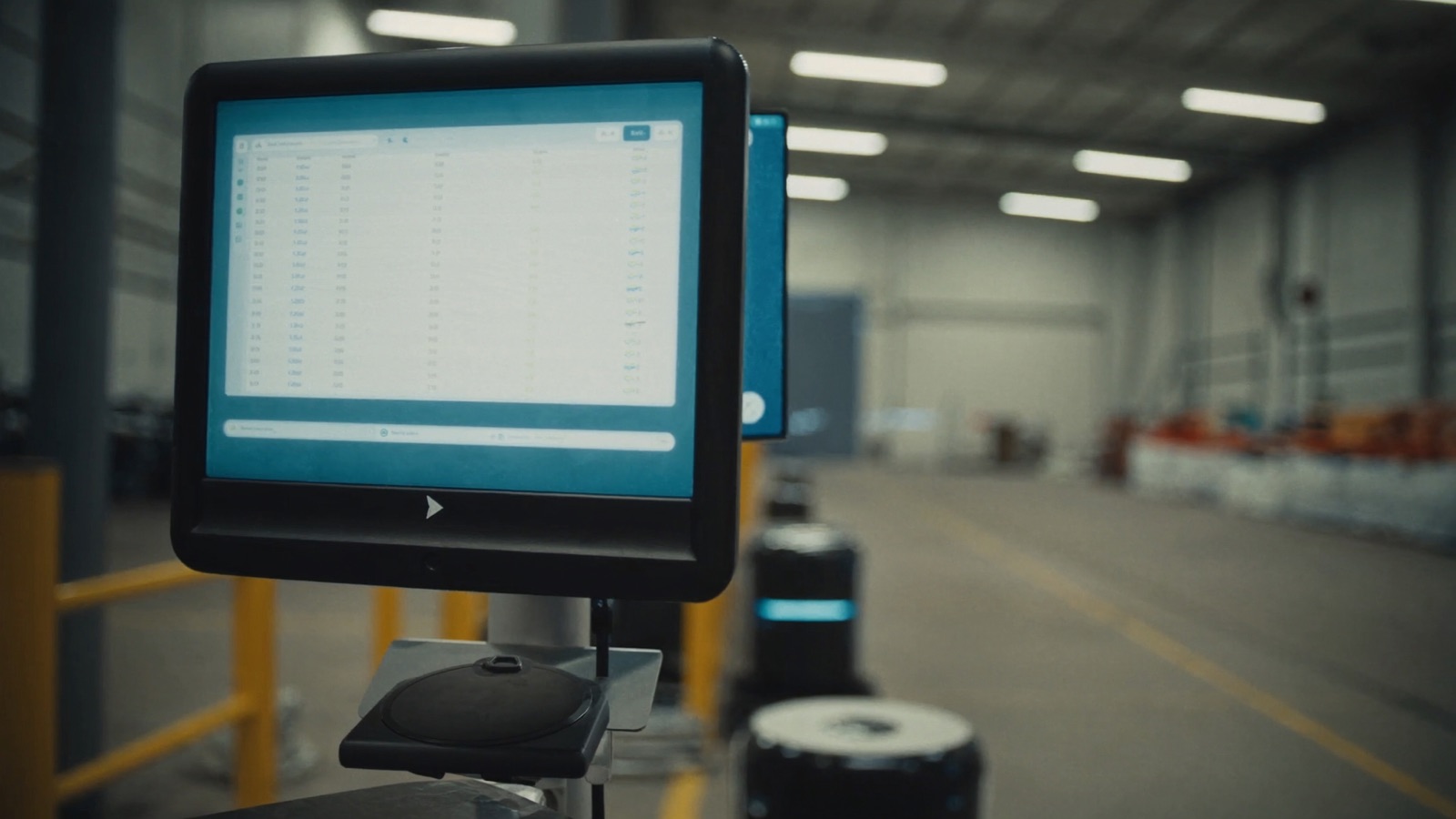
AMR vs AGV: When Each Is the Right Answer
The technology isn't converging as fast as the marketing suggests. For now, they solve different problems.
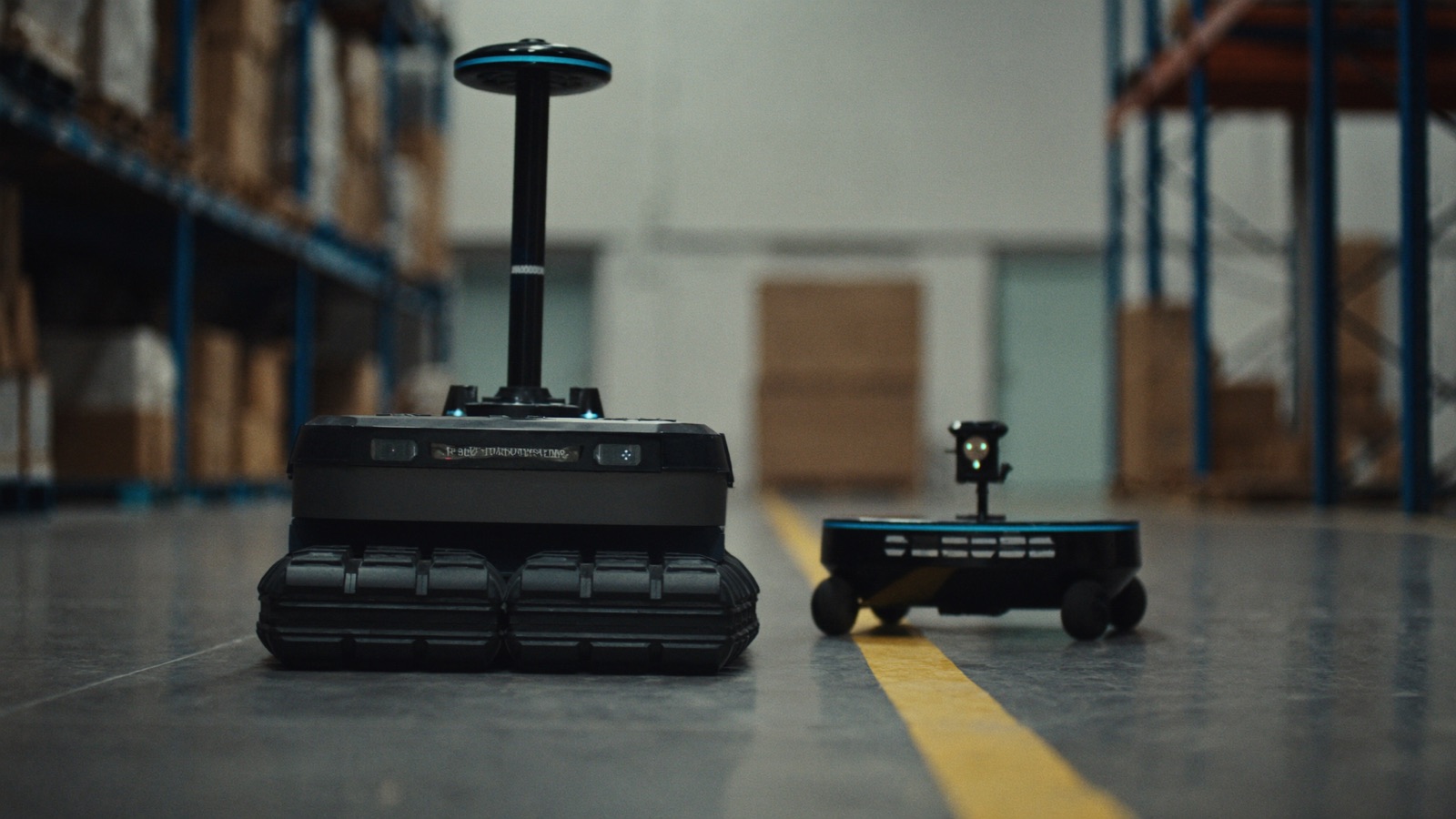
The vendor community has largely collapsed the AMR vs. AGV distinction into a single marketing category called "mobile robots." Partly this reflects genuine technology convergence — some modern AGVs use lidar-based navigation, and some AMRs offer virtual lane constraints that make them behave more like AGVs on primary routes. But mostly it reflects the commercial reality that vendors selling one type don't want ops directors eliminating them early based on a label.
For an operator making a real decision, the distinction still matters. AGVs and AMRs have meaningfully different performance profiles, infrastructure requirements, and suitability criteria. Picking the wrong one is a recoverable mistake — you can add the other later — but it costs time and money and sets back the business case.
Here is the decision framework.
The Core Technical Difference
An Automated Guided Vehicle (AGV) follows a fixed path defined by physical or virtual infrastructure: magnetic tape on the floor, embedded wire guides, reflective markers for laser navigation, or virtual lane maps. When the AGV encounters an unexpected obstacle, its default behavior is to stop and wait for the path to clear.
An Autonomous Mobile Robot (AMR) builds and maintains a real-time map of its environment using sensors (typically lidar + cameras), plans paths dynamically, and routes around obstacles by computing an alternate path. It adapts to changes in its environment without human intervention or infrastructure modification.
This single behavioral difference — stop-and-wait vs. reroute-and-continue — creates divergent performance profiles that map onto very different operational contexts.
When to Choose AGVs
High-volume, fixed-route, repetitive transport
AGVs perform at their best when the task is moving large loads on predictable routes at high frequency. A tire manufacturer moving 400-kg wheel assemblies from press to quality check on a fixed path, 200 times per shift, 3 shifts per day — this is an AGV job. The route never changes. The payload is heavy. Predictability is paramount.
In distribution center contexts, AGVs are appropriate for:
- Pallet transport on defined lanes from inbound receiving to staging, staging to storage, storage to outbound
- Tote conveyor bypass — moving full bins from pick zones to sortation without using conveyor infrastructure
- Tugger trains pulling carts on a fixed milk-run route between replenishment stations and pick zones
- High-bay AS/RS integration — movement within highly structured, fixed-infrastructure automated storage systems
The common thread: fixed endpoints, fixed routes, repetitive cycles, and high per-trip volume.
Environments with limited floor complexity
AGVs struggle when the floor plan changes — a restacked pallet in their lane, a forklift parked in the guide path, a new workstation added that wasn't there when the virtual map was set. Every change requires a map update and, in physical guide systems, potentially physical modification. For warehouses with stable floor plans that haven't significantly changed in years and are unlikely to in the near term, this is not a constraint. For DCs that re-slot seasonally or routinely reconfigure for new clients (common in 3PLs), it is a real limitation.
Lower unit cost justification
AGV base units for pallet transport typically cost $15,000–$45,000 per unit for purchased hardware. The AMR equivalent is $25,000–$80,000, with the premium reflecting the more sophisticated sensor suite and navigation stack.
If your use case is well-suited to AGVs, paying the AMR premium for autonomy you don't need is unnecessary. That said, AGV installations require infrastructure: floor tape at $2–$5 per linear foot, reflector installation at $50–$150 per unit, or virtual lane configuration that requires downtime for initial setup. For a 100,000 sq ft facility, AGV infrastructure commonly adds $40,000–$100,000 to the installation cost that the per-unit comparison doesn't capture.
When to Choose AMRs
Variable workflows and dynamic environments
The primary value proposition of AMRs is adaptability. If your floor plan changes seasonally, if new clients add new product flows to your 3PL operation, if your pick paths shift based on inventory position — AMRs absorb these changes by updating their map, not by requiring physical modification.
A 3PL operator onboarding a new apparel client that requires a different pick zone configuration every quarter is not a good AGV candidate. Reconfiguring AGV guide paths for every client onboarding is a real operational burden.
Collaborative human-robot environments
AMRs were built to work alongside people. They detect humans in their path, slow down, and navigate around them. AGVs stop and wait (unless they have collision detection, which some modern ones do). In a warehouse with significant human traffic — order selectors, forklift operators, receiving staff — AMRs require less traffic segregation than traditional AGVs.
This matters for retrofitting existing facilities. AGV deployment in a legacy DC often requires aisle segregation, safety fencing, or restricted zones that impose on human workflow and require facility modification. AMR deployment in the same space is typically more straightforward because the robots are designed for mixed-traffic operation.
Rapid deployment requirements
AMRs can be operational in a newly mapped facility in 2–4 weeks. The robot maps the floor by driving it (or via a pre-loaded CAD floorplan), the fleet management system learns the environment, and after testing, the fleet goes live.
AGV deployment in a physical guide system can take 8–16 weeks for a medium-sized DC, including floor tape installation, safety system integration, and path validation. Even virtual-guide AGV deployments typically run 6–12 weeks for complex environments.
For a 3PL responding to a new client contract with a 60-day startup requirement, the deployment speed difference is sometimes determinative.
Goods-to-person picking
Collaborative picking AMRs — where the robot accompanies a human picker through the aisle, accepting items scanned into its tote, then autonomously returning to a workstation — are purpose-built for this use case. There is no AGV equivalent for collaborative goods-to-picker workflows. AGVs either carry full pallets or totes; they don't walk alongside people.
The Decision Matrix
| Criterion | AMR | AGV |
|---|---|---|
| Workflow variability | High variability → AMR | Fixed routes → AGV |
| Floor plan stability | Changes frequently → AMR | Stable for years → AGV |
| Human traffic density | High → AMR (safer in mixed traffic) | Low → either |
| Payload weight | Light to medium (up to ~500 kg for most) | Medium to heavy (up to several tonnes) |
| Deployment speed | 2–4 weeks | 6–16 weeks |
| Infrastructure cost | Lower (no guide infrastructure) | Higher ($40K–$100K+ for 100K sq ft) |
| Per-unit hardware cost | Higher ($25K–$80K) | Lower ($15K–$45K) for standard pallet movers |
| RaaS availability | Widely available | Less common; more often CapEx |
| Scalability | Add robots incrementally | Infrastructure must be pre-sized |
| Best-fit use case | Goods-to-person picking, dynamic 3PL, collaborative picking | Pallet transport, fixed inbound-outbound flows, AS/RS integration |
The Convergence Reality
The boundary between AMRs and AGVs is genuinely blurring — but more slowly than marketing suggests.
Modern AGVs from KUKA, Dematic, and Jungheinrich now use lidar for natural-feature navigation rather than floor tape, giving them some degree of path flexibility. Modern AMRs from several vendors support virtual lane constraints that channel robots to defined corridors — limiting flexibility but reducing congestion and improving traffic predictability in high-density deployments.
The practical implication: if you're evaluating a vendor who uses either label, ask the actual behavioral question: "What does this robot do when an unexpected obstacle appears in its path?" If the answer is "it stops and waits," it functions like an AGV regardless of what it's called. If the answer is "it computes an alternate path and continues," it functions like an AMR.
Also ask: "What does re-routing look like in your system when we move a workstation?" If the answer requires a change order and a technician visit, the autonomy is more limited than the label implies.
Hybrid Deployments
For many DCs above 300,000 square feet, the right answer is both.
AGVs for pallet movement — inbound receiving to bulk storage, bulk storage to pick replenishment, outbound staging — on the fixed, high-volume trunk routes.
AMRs for the variable, human-collaborative portion of the workflow — goods-to-person picking, returns processing, put-away where location changes frequently.
The challenge of hybrid deployments is orchestration: keeping both fleets coordinated under a single WMS/WES layer so that pallet replenishment AGVs are delivering to the zones where AMR picks are scheduled. This requires a WES (Warehouse Execution System) layer above the individual fleet management systems. Budget accordingly — WES layer implementation adds $150,000–$400,000 to an already complex project.
Start with the simpler single-platform deployment for your first automation project. Add the second platform in Phase 2, once you have operational experience with the first.
Making the Call
If you can answer "yes" to all three of these questions, choose AMRs:
- Your pick workflow involves human-collaborative goods-to-person processes
- Your floor plan changes more than twice per year (new clients, seasonal re-slotting, or reconfiguration)
- You need to be operational in under 60 days
If you can answer "yes" to all three of these, evaluate AGVs:
- Your primary material movement task is moving pallets or large totes on defined routes
- Your floor plan has been stable for 3+ years and is unlikely to change significantly
- Your budget favors lower per-unit cost over faster deployment
If your answers are mixed, you likely have a use case that warrants a closer look at one of the newer hybrid platforms — or a staged deployment that starts with AMRs (faster to deploy) and adds AGVs later for the trunk routes that emerge as high-frequency and fixed.
Continue reading: AMR Pilot in an Existing Warehouse: The 90-Day Playbook — the sequenced approach to running a first deployment without disrupting live operations.
Discussion
0 commentsNo comments yet. Sign in to be the first.