AMR Vendor Selection: Orchestration, Integration, and Scaling
The demo will look great. These are the questions that reveal whether the platform will work at your scale, with your WMS, five years from now.
In 2019, Shopify acquired 6 River Systems, maker of the collaborative "Chuck" AMR, for $450 million — one of the largest warehouse robotics acquisitions at the time. By 2023, Shopify had divested 6 River Systems to Ocado Group. The Chuck platform continues to operate today as Ocado Robotics, deployed in over 100 warehouses. But operators who had built their automation strategy around a Shopify-backed vendor discovered that the support organization, roadmap priorities, and integration investment changed substantially through two ownership transitions in four years.
This is not a cautionary tale about any specific vendor — it's an illustration of a structural reality in warehouse robotics: the market is consolidating, and the vendor you sign a 5-year RaaS contract with today may be a different company — with different owners, different roadmap priorities, and different support resources — by year 3.
Vendor selection criteria that focus on demo performance and sales relationship miss the most important questions. Here's what to ask instead.
Question Set 1: Fleet Orchestration Architecture
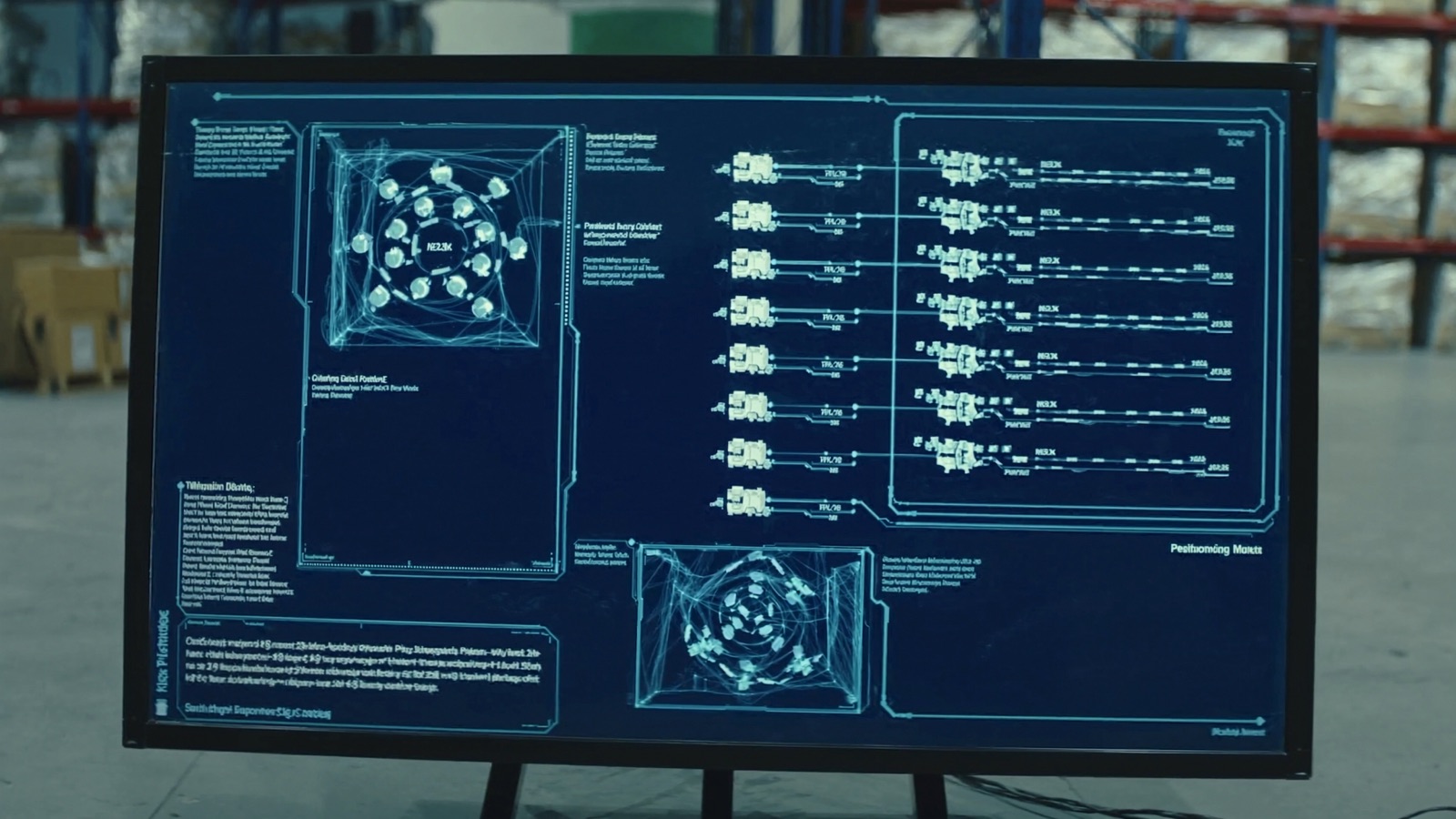
Before you evaluate any vendor's robot, evaluate their fleet orchestration platform. This is the software that assigns tasks, manages charging, deconflicts traffic, and reports on fleet performance. It is, in practice, more important to your operation than the robot hardware.
"What is your fleet orchestration system's task assignment logic? Does it batch or real-time assign?"
Batch assignment: the WMS releases a wave of picks; the fleet manager assigns all of them at once and the fleet executes. Efficient for high-volume uniform workflows. Less responsive to dynamic demand changes during a shift.
Real-time assignment: the fleet manager continuously reassigns tasks based on robot position, battery state, and pick station queue depth. More adaptable to surge conditions and exception handling. Requires tighter WMS integration.
Neither is universally better — the right choice depends on your workflow. But you need to know which architecture you're buying before you model throughput at peak demand.
"What happens to in-flight tasks during a fleet management system outage?"
This question reveals architectural maturity. The answers range from "all robots stop and hold position" (safest, most disruptive) to "robots complete their current task and park at the nearest safe location" (better) to "robots continue operating in degraded mode from cached task queues" (most resilient). Ask for a documented failover procedure, not a verbal description.
"How many concurrent robots does your fleet orchestration system scale to? At what fleet size have you seen performance degradation?"
Most vendors can demonstrate smooth performance with 20–30 robots in a demo. Real stress-test questions: what's the largest fleet a single orchestration instance manages in production today? What's the latency on task assignment at that fleet size? What's the software architecture for multi-zone or multi-site orchestration?
If you're planning a 50-robot single-site deployment or a multi-DC rollout, the fleet orchestration architecture needs to be proven at that scale before you commit.
Question Set 2: WMS Integration Depth
"Show me your integration architecture diagram for [our specific WMS]."
If the vendor has a pre-built connector for your WMS, they should be able to show you the data flow diagram within a week of the first conversation. If they're describing it verbally or "it's a standard REST integration," push for documentation. Undocumented WMS integrations are a frequent source of implementation overruns.
"What data does your fleet manager send back to our WMS? Can it update inventory records in real time?"
This question separates pick-and-report systems (the robot completes picks; inventory is updated manually or in batch) from fully integrated systems (the fleet manager sends real-time inventory signals back to the WMS, enabling dynamic replenishment, inventory accuracy updates, and exception flags). The operational impact of real-time inventory feedback is significant — it affects replenishment cycle time, inventory accuracy, and whether your WMS can accurately promise order ship dates during the pick cycle.
"What does integration maintenance look like when our WMS vendor releases a major update?"
This is the total cost of ownership question vendors least want to answer. WMS vendors release major versions on 12–24 month cycles. Each major version may require integration updates. Who does that work? Is it included in your RaaS contract? Is there a professional services fee per WMS upgrade? How long has the integration historically taken to update after a WMS major release?
For a 5-year contract, you're looking at 2–3 WMS major version cycles. If integration maintenance costs $25,000 per cycle in professional services, that's $50,000–$75,000 in TCO that doesn't appear on the per-robot quote.
Question Set 3: Scaling Architecture
"What changes when we go from 20 robots to 80 robots? What changes when we add a second site?"
The answers reveal whether you're buying a platform designed for enterprise-scale deployment or a solution that scales through heroic professional services effort.
Enterprise-grade fleet orchestration should handle fleet size increases through configuration — more robots, same software instance, no re-architecture. Multi-site orchestration should have a defined model (separate fleet managers per site with a central analytics layer, or a single multi-tenant orchestration layer) that has been proven in production, not designed for your deployment.
"What is your robot hardware refresh cycle? What happens to our RaaS contract at hardware end-of-life?"
AMR hardware has a 5–7 year operational life at typical warehouse utilization. At year 5–7, your robots will require either hardware refresh (new units) or intensive maintenance contracts. What does the vendor's contract say about this? RaaS contracts that don't specify hardware refresh terms leave the ops director in a difficult negotiating position mid-term.
"Do you support multi-vendor robot orchestration? If we want to add a different manufacturer's robots to the fleet, can your orchestration layer manage them?"
The warehouse robotics industry has developed standards (VDA 5050, MQTT-based fleet management APIs) that should theoretically allow multi-vendor orchestration. In practice, most vendors support their own robots and have limited, poorly-tested integrations with competitors. If you're planning a best-of-breed approach (one vendor's pallet mover, another's collaborative picker), verify that the orchestration layer can actually manage both — and ask for a reference site doing so.
Question Set 4: Vendor Health and Acquisition Risk
This section will feel uncomfortable to raise with a vendor salesperson. Raise it anyway.
"What is your current ARR and funding status?"
For venture-backed AMR vendors, this is publicly trackable information. Locus Robotics raised at a $2 billion valuation in 2021 and subsequently went through layoffs and financial restructuring. The company has recovered and reported record growth in 2025, but operators who signed 5-year contracts during the 2021 high-water-mark period experienced real uncertainty during 2023–2024.
Publicly traded automation vendors (Zebra Technologies, Kion Group, Toyota Industries) offer more visibility into financial health than private VC-backed startups. Neither is automatically better, but the risk profiles are different.
"Who are your largest customers by fleet size? Can we speak with one of them directly?"
Reference checks are table stakes. But most vendors will connect you with a happy reference site — the site that had an ideal implementation and is inclined to speak well of the vendor. Ask specifically for a reference site that had a challenging implementation and recovered. That conversation is more informative than a straightforward success story.
Also ask: how many of your top 10 customers by fleet size have been with you for more than 3 years? A vendor with a 5-year operational history and high multi-year renewal rates is demonstrably different from one with recent growth but low renewal data.
"If you were acquired tomorrow, what would happen to our contract? What would happen to your support organization?"
Most RaaS contracts have change-of-control provisions — read them before signing. Common provisions require the new parent to honor existing contracts, but support quality and roadmap priority are not contractual. The 6 River Systems ownership chain (Shopify → Ocado) is the most visible example, but warehouse robotics has seen multiple acquisitions: Fetch Robotics acquired by Zebra Technologies, 6 River Systems by Ocado, various smaller integrators absorbed by tier-1 automation vendors.
If the vendor has plausible acquisition targets among the industrial automation primes (ABB, Kion, Dematic, Symbotic, Autostore), understand what their acquisition would mean for your deployment.
Vendor Landscape Reference (2025–2026)
| Vendor | Robot type | RaaS availability | WMS integration maturity | Scale ceiling | Ownership |
|---|---|---|---|---|---|
| Locus Robotics | Collaborative picking AMR | Yes (primary model) | Strong; pre-built connectors for top WMS | 100+ robot fleets in production | Private (VC-backed) |
| 6 River Systems (Ocado Robotics) | Collaborative picking AMR (Chuck) | Yes | Good; 70+ customer deployments | 100+ robot fleets | Ocado Group (public) |
| Zebra/Fetch (Zebra Robotics) | Collaborative AMR, autonomous forklift | Both CapEx and RaaS | Good; Zebra ecosystem integration | 200+ robot fleets | Zebra Technologies (public) |
| Geek+ | Goods-to-person AMR, sorting AMR | Both | Strong in Asia-Pacific; growing in North America | 500+ robot fleets globally | Private (largest Chinese AMR vendor) |
| MiR (Mobile Industrial Robots) | Autonomous transport AMR | Both | Strong industrial integration | 10,000+ units globally | Teradyne (public) |
| Symbotic | Goods-to-robot AS/RS + AMR | CapEx / custom | Tight Walmart ecosystem integration; limited external | Walmart and 3PL scale | Public (Walmart-backed) |
Note: Symbotic is not a standard RaaS vendor and requires substantial facility investment. It is included here because it is frequently mentioned in enterprise 3PL RFPs and represents a fundamentally different deployment model.
The RFP Scorecard
When running a formal vendor evaluation, weight the criteria to reflect long-term operational impact, not demo quality:
| Criterion | Weight | Evaluation method |
|---|---|---|
| WMS integration depth and documentation | 25% | Architecture review + reference check with matching WMS |
| Fleet orchestration scalability | 20% | Demo at simulated peak volume + architecture review |
| On-site support SLA and technician proximity | 20% | Contract review + technician location verification |
| Financial stability and M&A risk | 15% | Public financials / funding documentation |
| Per-robot TCO (including all layers) | 10% | Full TCO model per the TCO guide |
| Demo performance | 5% | On-site visit at a reference facility, not vendor showroom |
| Roadmap alignment | 5% | 12-month committed roadmap in writing |
Note the demo performance weighting: 5%. Demos are controlled environments. They are the least predictive of real-world performance on your floor. Weight them accordingly.
Red Flags in Vendor Conversations
"We handle all integrations." (But won't show you the integration architecture.) All sophisticated vendors have documented integration architectures. If they can't show you one, the integration is likely more complex and expensive than they're representing.
"We've never had a failed deployment." Every vendor with significant deployments has had difficult ones. A vendor who claims otherwise is either very small or not being honest. The question is not whether they've had failures, but what they learned from them.
"Our robots are self-maintaining." AMR hardware requires periodic maintenance — wheel replacements, battery degradation checks, sensor calibration, firmware updates. Self-maintaining is a marketing claim. Ask for the actual maintenance schedule and who performs it.
"We can integrate with any WMS." This is technically possible. The real question is cost, timeline, and ongoing maintenance burden. "Can" and "have" are different verbs.
No local field support. For any deployment larger than 10 robots, the nearest vendor field technician should be within 4 hours of your facility. Ask for the technician's office location, not the vendor's headquarters.
This concludes the Robolist.ai Warehouse AMR guide series. For a full directory of AMR vendors and their technical specifications, see the Warehouse AMR section on Robolist.
Discussion
0 commentsNo comments yet. Sign in to be the first.