Exoskeleton decision framework: passive vs. powered, industrial vs. medical
A structured approach to matching device type to your task, worker, or patient population
The device landscape is broader than the demos suggest
Most exoskeleton conversations start the wrong way: a vendor demonstrates a device, and the buyer evaluates whether that device fits their situation. The better sequence runs in reverse — you define the task and worker profile, then identify the device architecture that fits, then evaluate vendors within that category.
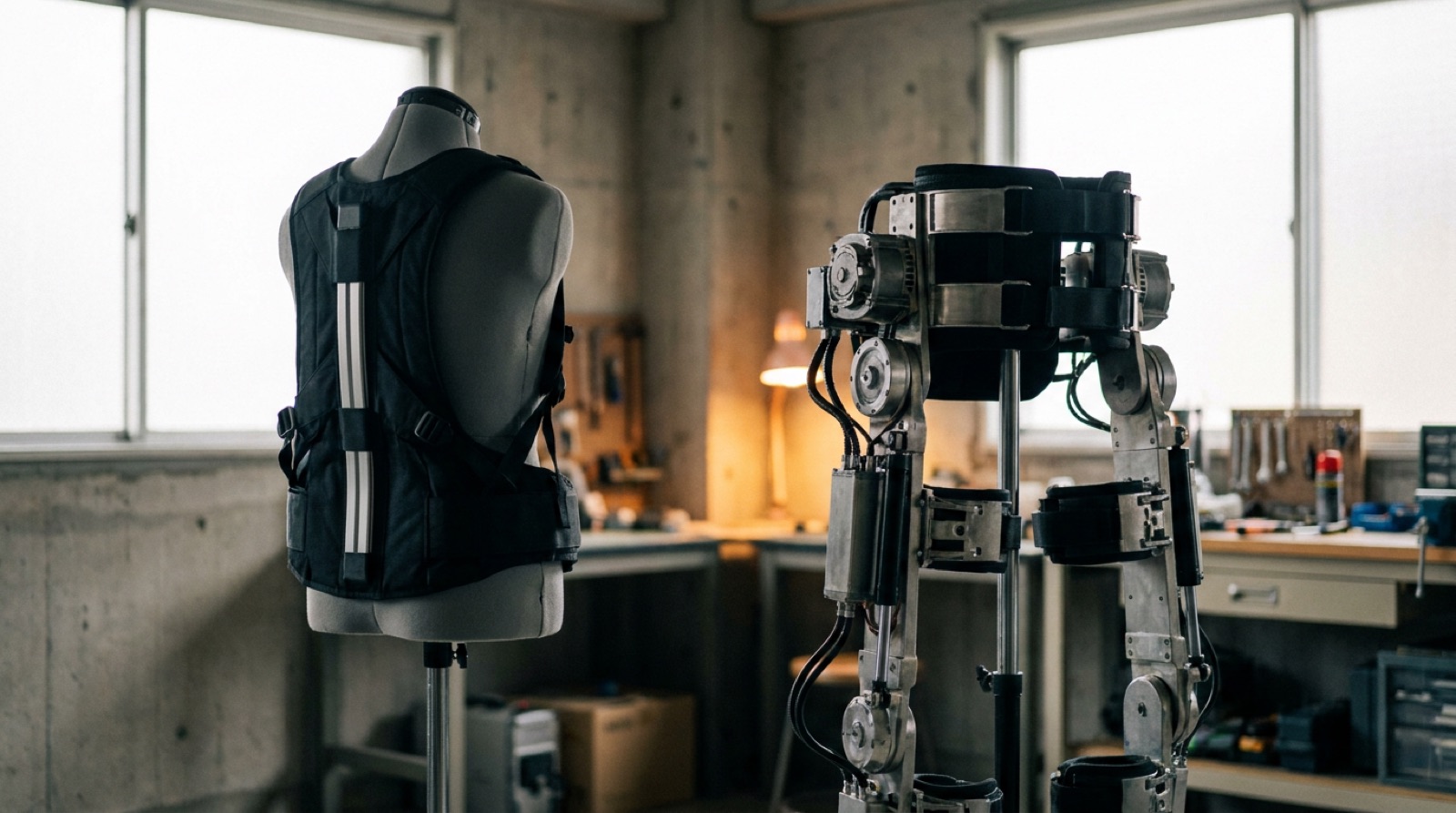
The exoskeleton market in 2025 spans four primary device architectures, each serving a different use case, and a hard split between industrial and medical/rehabilitative applications. Getting the architecture wrong wastes capital and produces the adoption failures described in Article 1. Getting it right still leaves significant vendor-level decisions, which is where Article 6's RFP framework applies.
This article gives you the decision tree.
Primary dimension 1: Industrial vs. medical/rehabilitation
This is the first fork, and it is not a spectrum — it is a binary.
Industrial exoskeletons are designed to reduce physical strain during occupational tasks. They are worn by workers who are physically capable of performing the task; the device reduces cumulative load, fatigue, and injury risk. In most jurisdictions, industrial exoskeletons used in standard occupational settings do not require medical device regulatory clearance. Key buyers: EHS managers, ergonomics professionals, operations leaders.
Medical/rehabilitation exoskeletons are designed to augment, restore, or replace lost motor function in patients with neurological or orthopedic conditions. They may be used in clinical settings (hospitals, rehabilitation centers) or prescribed for home use. They are regulated as medical devices (FDA 510(k) in the US, CE-marked MDR Class II in the EU). Key buyers: clinic directors, physical therapists, rehabilitation engineers, hospital procurement.
Some devices operate in both spaces — a lower-limb powered exoskeleton might have an FDA-cleared therapy variant for clinical use and an industrial variant for load-bearing occupational use. These are typically distinct products with distinct regulatory pathways even if they share hardware ancestry. Never assume a clearance in one category transfers to another.
Primary dimension 2: Passive vs. powered (active)
Within both industrial and medical categories, the second major split is between passive and powered (also called active) designs.
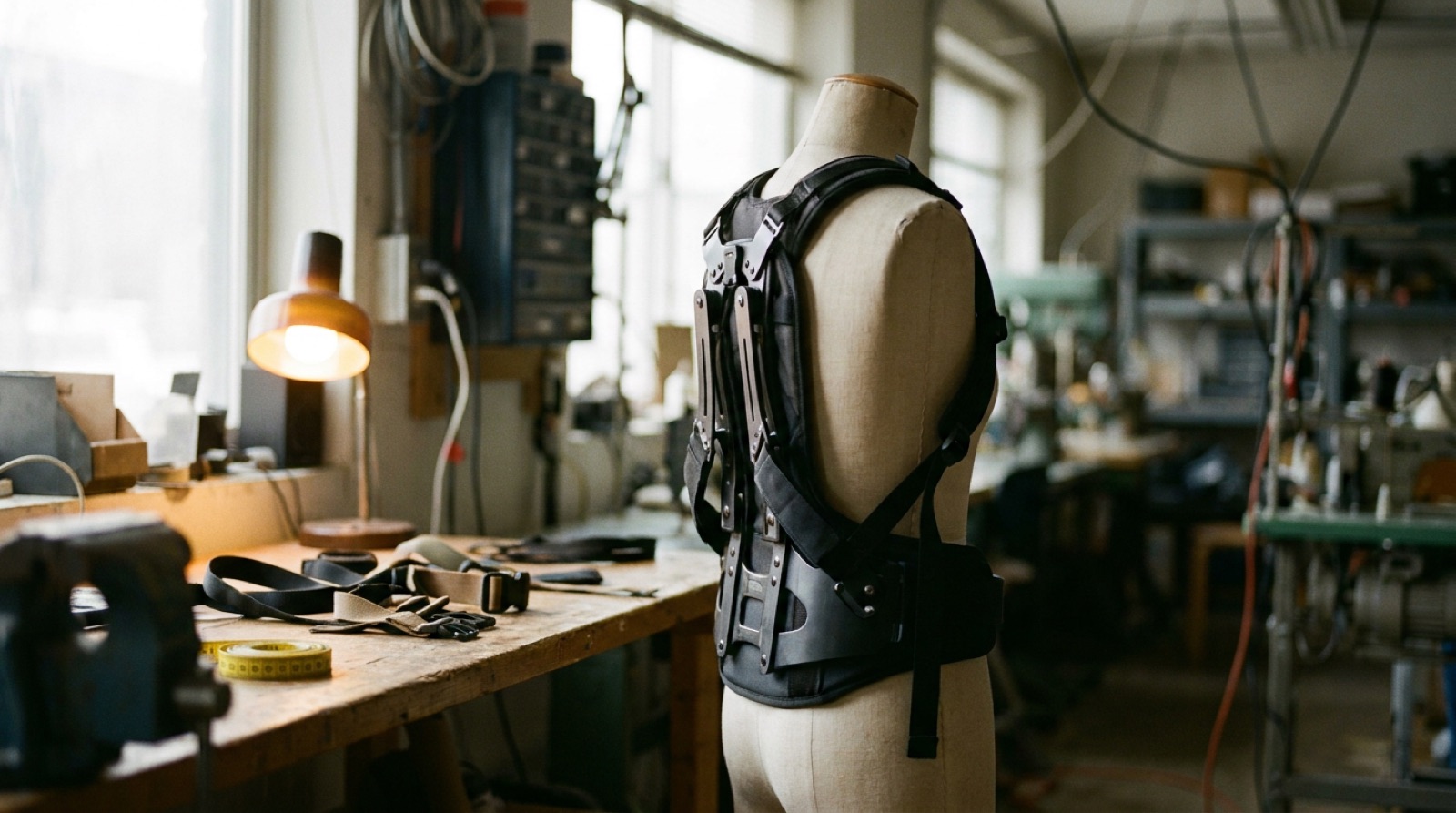
Passive exoskeletons use mechanical energy storage — springs, elastic elements, counterbalances, rigid structures — to redistribute or reduce load. They have no motor, no battery, and no electronic control system. They are simpler, lighter, lower-cost, lower-maintenance, and require no battery logistics. They work only in the postures or motion patterns for which they are mechanically designed.
Powered exoskeletons (also called active exoskeletons) use electric motors, pneumatics, or hydraulics, controlled by onboard electronics, to actively generate torque or force. They can adapt to movement variation, provide larger torques, and in rehabilitation applications can actively assist or guide movement. They are heavier, more expensive, require charging, require more maintenance, and introduce software and battery failure modes.
The decision between passive and powered is often framed as "how much assistance is needed." A better framing: what is the task's mechanical demand, and what failure mode is more costly?
For industrial applications: passive devices are appropriate when the task is consistent and repetitive, the strain mechanism is well-defined (e.g., static lumbar flexion), and the required range of motion reduction is achievable through mechanical means. Powered devices are warranted when the task demands vary significantly, when the required assistance exceeds what passive mechanisms can provide, or when the device needs to adapt to different workers or tasks.
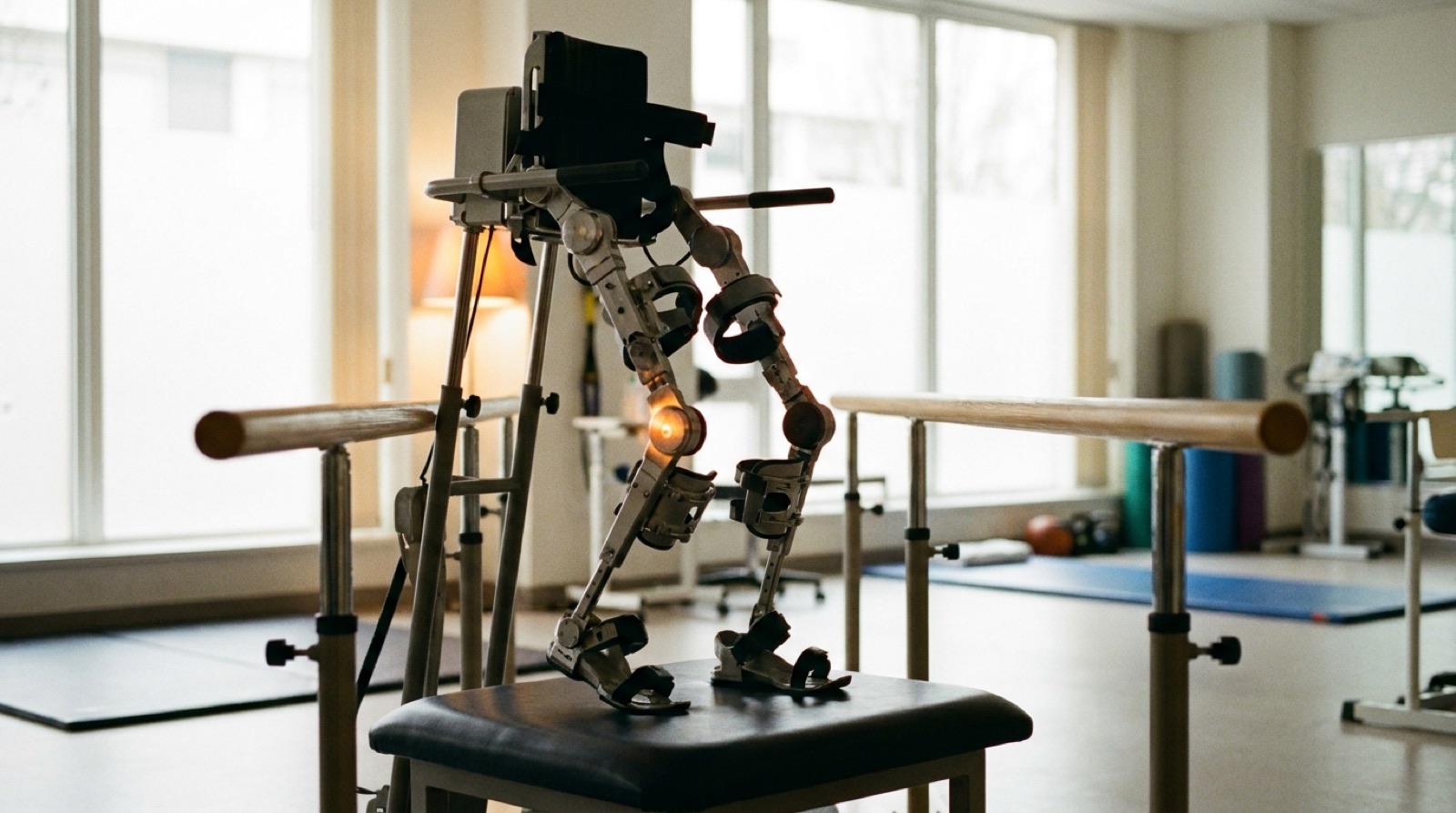
For medical/rehabilitation applications: passive devices have limited therapeutic application (they cannot actively assist movement in neurologically impaired patients). Most rehabilitation exoskeletons for gait training, neurological recovery, or strength augmentation are powered.
Body region and task-fit map (industrial)
Industrial exoskeletons are designed for specific body regions and movement patterns. Using a device outside its designed envelope reduces effectiveness and can increase risk.
| Device category | Primary task fit | Movement pattern | Examples from catalog |
|---|---|---|---|
| Passive lumbar / back-support | Manual material handling, static bending, picking at waist height | Sagittal flexion/extension | HeroWear Apex 2 (/robots/apex-2), Auxivo CarrySuit (/robots/carrysuit) |
| Powered back-support | Heavy lifting, variable-height material handling, fatigue-intensive logistics | Sagittal + some lateral | German Bionic Cray X (/robots/cray-x) |
| Shoulder / arm support | Overhead assembly, overhead welding, overhead picking | Shoulder abduction, arm elevation | Auxivo DeltaSuit (/robots/deltasuit) |
| Chairless chair / sit-stand | Semi-static postures, assembly line standing, quality inspection | Knee/hip support in pseudo-seated posture | Auxivo Chairless Chair 2.0 (/robots/chairless-chair-2-0) |
| Hand / grip assist | Gripping, tool holding, assembly tasks requiring sustained grip force | Finger flexion support | Bioservo Carbonhand (/robots/carbonhand) |
| Full lower-limb (industrial) | Heavy load carry, slope/stair traversal, long-distance logistics | Hip/knee/ankle | LG CLOi SuitBot (/robots/cloi-suitbot) |
Task-fit assessment checklist
Before matching a device category, document:
- Primary strain region (back, shoulder, knee, hand): from OSHA 300 and WC claims
- Dominant movement pattern: forward bend, overhead reach, sustained posture, repetitive grip, load carry
- Required range of motion: does the task need lateral bend, rotation, knee flexion > 90°?
- Task duration: continuous hours in the high-strain posture per shift
- Mobility requirements: does the worker walk, climb, kneel, run during or between high-strain tasks?
- Workplace constraints: confined spaces, vehicle ingress/egress, proximity hazards
Any "yes" on mobility constraints (climbing, confined spaces, vehicle entry) requires explicit verification that the device can be safely worn during those activities, or that workers remove it for those segments.
Body region and clinical indication map (medical/rehabilitation)
Rehabilitation exoskeletons are designed for specific patient populations and clinical indications. The device architecture must match the patient's neurological or orthopedic profile.
| Clinical category | Typical indication | Device type | Examples from catalog |
|---|---|---|---|
| Lower-limb gait training | Post-stroke hemiplegia, spinal cord injury, acquired brain injury | Powered bilateral or unilateral lower-limb | Ekso Indego Therapy (/robots/ekso-indego-therapy), Wandercraft Calvin-40 (/robots/calvin-40) |
| Lower-limb personal mobility | SCI, progressive neurological conditions, post-surgical | Powered, personal/home use | Ekso Indego Personal (/robots/ekso-indego-personal) |
| Pediatric neurological | CP, SCI, acquired brain injury in children | Powered, pediatric-sized | Marsi Bionics Atlas Pediatric Exo (/robots/atlas-pediatric-exo) |
| Gait rehabilitation (bilateral) | SCI with some preserved function, stroke bilateral | Bilateral powered | ExoAtlet Bambini (/robots/bambini-midi), Angel Legs M20 (/robots/angel-legs-m20) |
| Upper extremity / hand | Stroke-related hand impairment, grip weakness | Powered hand/glove | Bioservo Carbonhand (/robots/carbonhand) |
Clinical fit assessment checklist
Before matching a device to a patient population:
- Primary diagnosis and neurological level: device clearance is indication-specific
- Ambulatory status and functional goals: is the clinical goal gait re-education, standing tolerance, community ambulation, or home mobility?
- Anthropometric range: does your patient population fall within the device's height, weight, and joint range specifications?
- Spasticity level: high spasticity may contraindicate some devices or require specific programming
- Weight-bearing capacity: can the patient bear weight unilaterally or bilaterally?
- Trunk control: many lower-limb exoskeletons require some preserved trunk control; verify the minimum threshold
- Cognitive capacity: most devices require patient participation; verify minimum cognitive requirements
- Clinical setting: is the device cleared for your intended setting (inpatient, outpatient, home)?
The passive/powered decision framework (summary)
| Factor | Points toward passive | Points toward powered |
|---|---|---|
| Task consistency | High (same posture, same load) | Variable (different postures, loads) |
| Required assistance level | Low to moderate | High or variable |
| Budget | Limited | Larger program |
| Workforce turnover | High (simple onboarding) | Lower (training investment viable) |
| Battery logistics | Not feasible | Manageable |
| Maintenance capacity | Limited | Dedicated maintenance |
| Patient population (medical) | N/A — rehab almost always powered | Active motor assist required |
The table you should build before any vendor conversation
Document your task profile or patient population profile in this format:
Task/Patient profile:
- Body region at risk: [back / shoulder / knee / hand / lower-limb]
- Movement pattern: [specify]
- Required range of motion: [specify degrees / directions]
- Duration per shift/session: [hours]
- Workforce/patient anthropometrics: [height/weight range]
- Mobility constraints: [list any]
- Regulatory requirement: [industrial / FDA-cleared / CE-marked]
- Budget (hardware): [range]
- Maintenance capacity: [low / medium / high]
Bring this document to vendor conversations. Any vendor who cannot demonstrate their device performing your specified movement pattern on your anthropometric range — with your constraints applied — is not ready to serve your program.
Next in this series: A 90-day deployment playbook for industrial exoskeleton programs — from ergonomics baseline to full-shift adoption, step by step.
Discussion
0 commentsNo comments yet. Sign in to be the first.