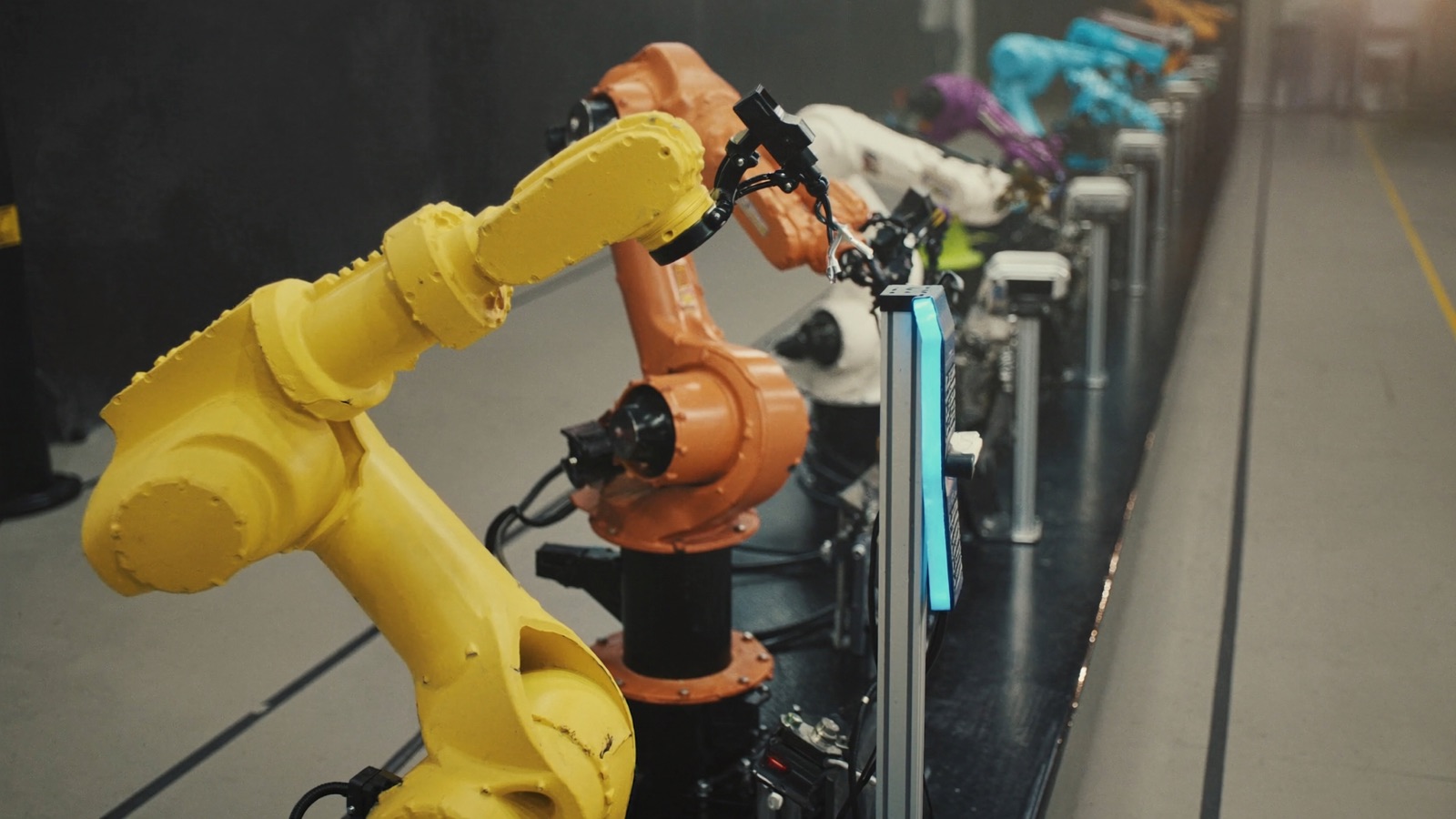
TCO of a 6-Axis Arm Cell: Hardware, EOAT, Integration, Programming
The arm is typically 25–35% of total cell cost. Budget for the rest before you sign the hardware PO.
When plant engineers present robot automation proposals to finance, the number on the PO is the robot. The number that determines whether the project pencils is the system — and the system costs two to four times the robot.
This disconnect kills robot projects in two ways. The first is budget failure: a $65,000 robot turns into a $220,000 installed cell and the project gets killed mid-implementation when the invoices don't match the original approval. The second is scope failure: the project gets approved at a low number, the integrator is forced to cut corners on EOAT engineering and safety validation, and the cell underperforms for years.
A realistic TCO model built before procurement prevents both.
The Cost Stack: What You're Actually Buying
A complete robot arm cell has seven distinct cost buckets. The arm is one of them.
1. Robot Hardware
This is the number that gets quoted first and is the least surprising part of the bill.
A standard 6-axis arm at 10–20 kg payload — the configuration that covers pick-and-place, machine tending, light assembly, and welding — runs $35,000–$80,000 from the Big Four OEMs. Higher payloads (50–150 kg), used for palletizing and heavy-part handling, run $60,000–$120,000.
| OEM | Entry 6-axis (10–20 kg) | Mid-range (50 kg) | Heavy (150 kg+) |
|---|---|---|---|
| FANUC | $38,000–$55,000 | $65,000–$90,000 | $90,000–$140,000 |
| ABB | $40,000–$60,000 | $70,000–$95,000 | $95,000–$145,000 |
| KUKA | $42,000–$62,000 | $68,000–$92,000 | $95,000–$150,000 |
| Yaskawa | $35,000–$52,000 | $62,000–$88,000 | $88,000–$135,000 |
These are approximate street prices for the arm and controller, before any integration work, tooling, or safety infrastructure. Prices vary significantly by region, distributor relationship, and volume. The differentials between OEMs are smaller than the marketing would suggest.
Chinese-branded alternatives (ROKAE, JAKA, Doosan in some configurations) price in the $15,000–$35,000 range for comparable payload classes, with significantly thinner domestic support networks in North America and Europe.
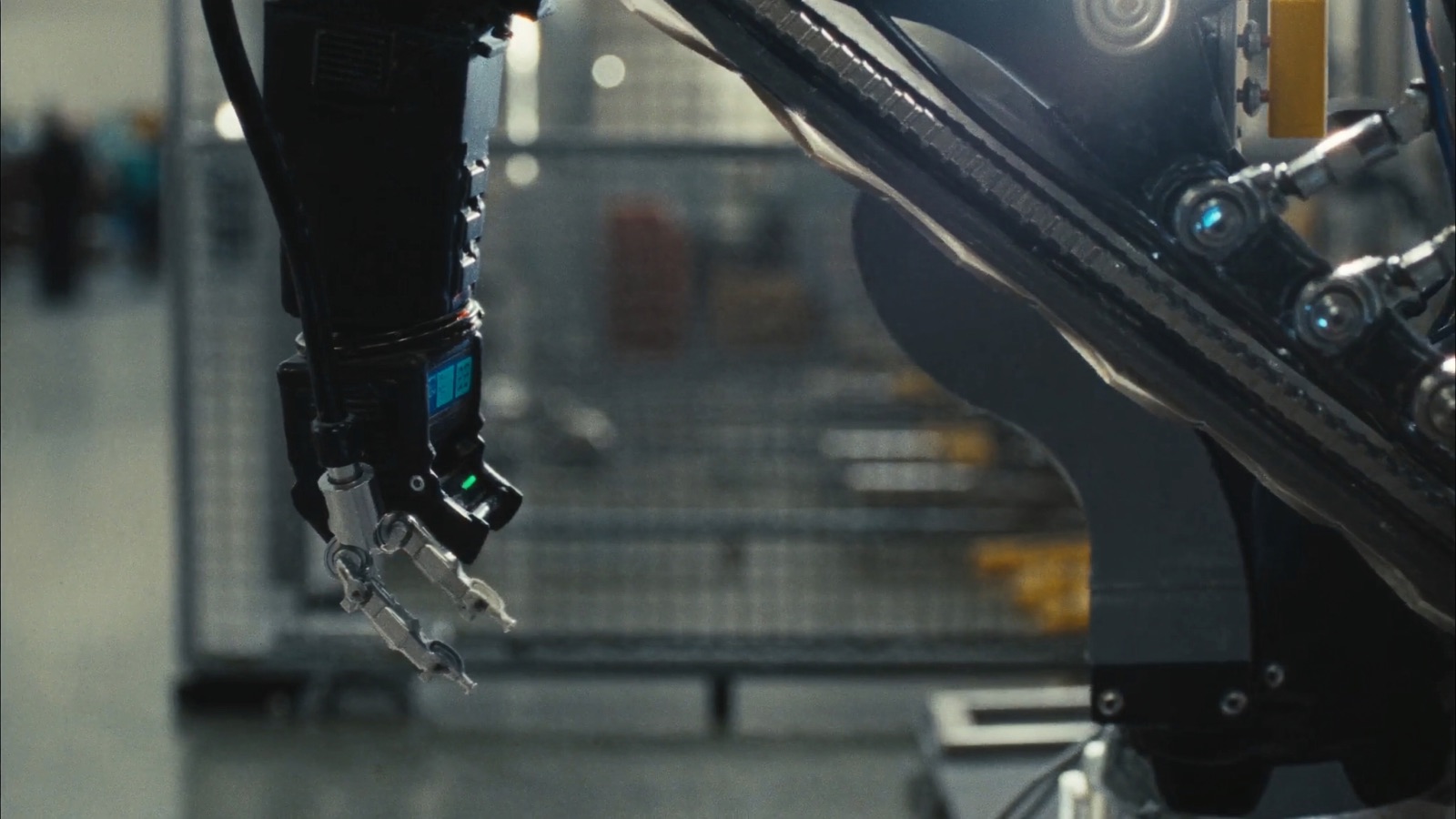
2. End-of-Arm Tooling (EOAT)
EOAT is the most frequently underestimated budget line. It is also the component most directly responsible for whether the cell hits its cycle-time target.
A simple two-jaw pneumatic gripper for a well-defined part: $3,000–$8,000 including mounting hardware and pneumatic lines. A custom gripper designed for a family of 12 part variants with a quick-change mechanism: $25,000–$60,000. A welding torch package for a MIG cell: $8,000–$20,000. Vision-guided adaptive tooling for bin-picking: $30,000–$80,000.
EOAT design is also where lead time risk concentrates. Custom tooling from specialty suppliers typically runs 8–14 weeks — longer than the arm itself in some configurations. Projects that order the arm first and then start EOAT design are routinely delayed at commissioning while waiting for the gripper.
Rule of thumb: budget EOAT at 15–35% of robot hardware cost for simple applications; 50–80% for complex multi-variant or adaptive tooling.
3. System Integration
This is the largest single cost bucket for most cells and the one most underestimated by operators doing initial feasibility math.
Integration covers: cell layout engineering, safety architecture design, PLC programming, robot programming, HMI development, machine interface wiring (to the CNC, press, conveyor, or other equipment the robot is serving), commissioning, acceptance testing, and documentation.
Industry integrators typically price at $100–$175/hour in North America. A simple single-arm machine-tending cell takes 400–800 hours. A multi-robot welding cell with part-tracking and adaptive seam following runs 1,500–3,000 hours.
| Cell complexity | Integration hours | Integration cost (at $130/hr) |
|---|---|---|
| Single arm, simple pick-and-place, few I/O points | 300–500 hr | $39,000–$65,000 |
| Single arm, machine tending, CNC interface, 20+ I/O | 600–900 hr | $78,000–$117,000 |
| Dual-arm cell, coordinated motion, vision guidance | 1,200–2,000 hr | $156,000–$260,000 |
| Multi-station welding line, 3+ robots, seam tracking | 2,500–4,000 hr | $325,000–$520,000 |
Integration is where "3x the robot price" comes from as a rule of thumb. For simple cells, that ratio is too conservative; for complex ones, it's an undercount.
4. Safety Infrastructure
A fenced traditional industrial cell with a single arm requires at minimum: physical guarding (steel or polycarbonate fencing), a safety-rated door interlock, an e-stop system, and a safety PLC or safety relay system. Minimum installed cost: $8,000–$20,000.
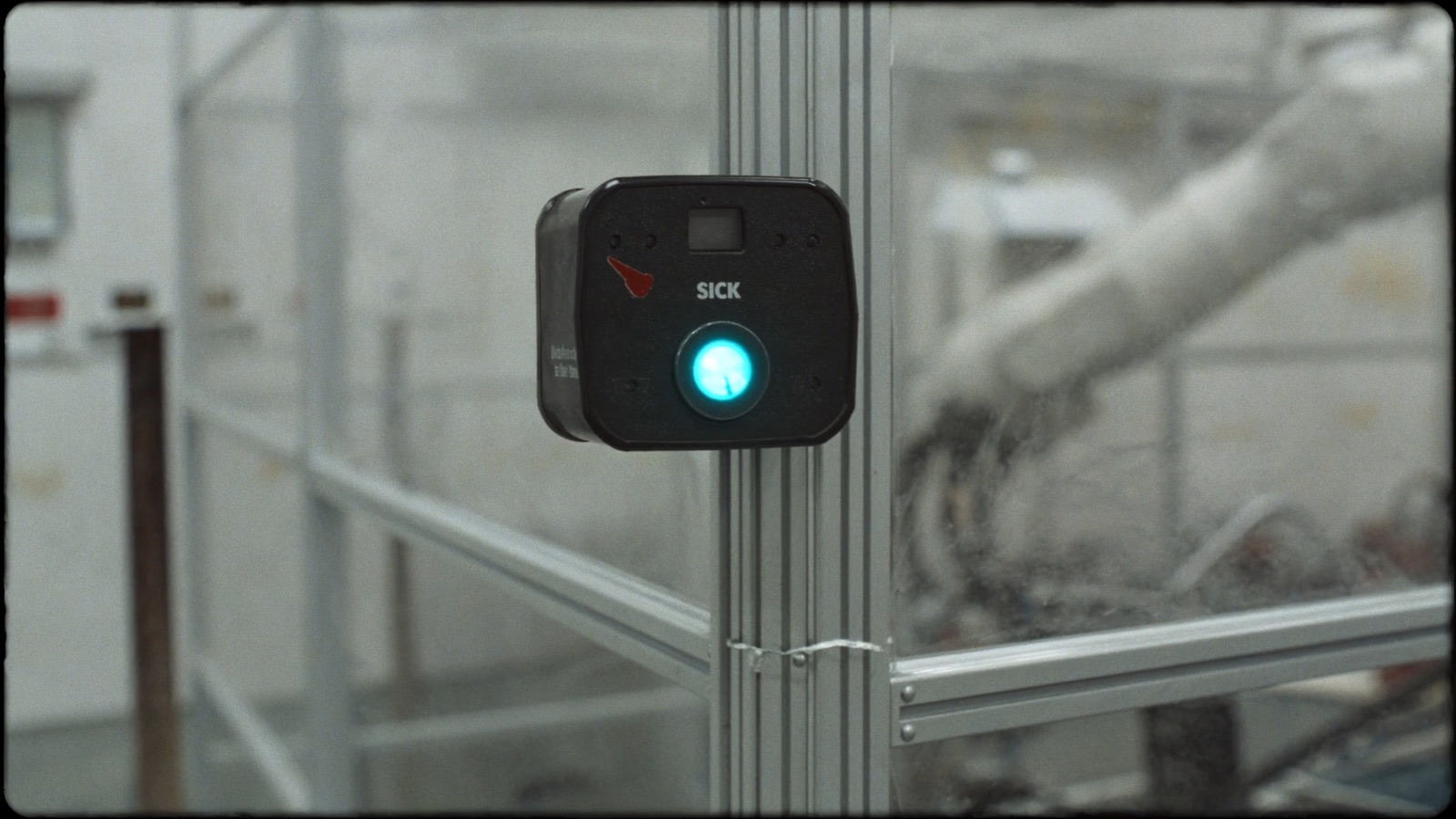
Adding area scanners — typically Pilz, SICK, or Banner units — for a zone-management approach instead of hard fencing adds $15,000–$35,000 per scanner zone, including the scanner hardware, safety controller configuration, and validation work.
ISO 10218-2 (revised 2025) requires a formal risk assessment for every robot cell, which an integrator or independent safety consultant must document. That assessment runs $5,000–$15,000 for a single-arm cell.
Collaborative robot (cobot) cells forgo the physical fence but don't eliminate safety costs. Force-torque monitoring, end-of-arm guarding, and validated safety-rated controller configurations add $10,000–$25,000 over a comparable conventional arm setup.
Budget line: safety infrastructure — fencing or scanner-based — typically runs 10–20% of total installed cell cost.
5. Fixturing and Peripherals
Parts must be presented to the robot in a repeatable, consistent orientation. If the upstream process doesn't provide this — for example, parts coming off a conveyor in random orientation — you need a bowl feeder, a vision system, or a mechanical fixture to establish it.
- Mechanical fixture for a defined part family: $5,000–$25,000
- Vibratory bowl feeder system: $15,000–$40,000
- 2D vision system for orientation correction: $12,000–$30,000
- 3D bin-picking vision system: $35,000–$90,000
Additional peripherals that appear on most final invoices: a cable management track for the arm ($1,500–$4,000), a robot floor mount or pedestal ($2,000–$8,000), pneumatic conditioning equipment, a teach pendant mount, and a commissioning laptop loaded with OEM software.
6. Initial Programming and Commissioning
Even if you use offline programming to develop the program before commissioning (see Article 5 in this series), on-site commissioning work is unavoidable. Programs developed in simulation require touchup on the physical robot — typically 10–20% of the originally programmed points need adjustment to account for as-built vs. CAD model differences.
Commissioning labor on site runs at the same rate as integration, typically $100–$175/hour. Budget 60–120 hours for a simple cell, 200–400 hours for a complex one.
7. Annual Operating Costs
Year-one cost is what gets approved. Total cost of ownership includes years 2–7, which is where robot cells either pay off or don't.
| Cost category | Annual range | Notes |
|---|---|---|
| Maintenance (preventive) | $3,000–$8,000 | Joint grease, battery replacement, cable inspection |
| OEM support contract | $4,000–$12,000 per arm | Optional but highly recommended years 1–3 |
| Programming changes | $5,000–$30,000 | Part family changes, product launches, recipe updates |
| EOAT wear and replacement | $2,000–$15,000 | Depends heavily on cycle rate and material abrasion |
| Energy | $1,500–$4,000 | 6-axis arm at medium cycle rate, 2-shift operation |
Programming changes are systematically underestimated. When a new product launches, a part variant changes, or the upstream machine is modified, the robot program needs updating. If your integrator wrote the program in a proprietary style without documentation, every change is a billable service call.
The Full TCO Picture: Three Representative Cells
| Configuration | Robot HW | EOAT | Integration | Safety | Peripherals | Year-1 Operating | Total Year 1 |
|---|---|---|---|---|---|---|---|
| Simple pick-and-place (20 kg arm) | $45,000 | $12,000 | $55,000 | $15,000 | $10,000 | $10,000 | $147,000 |
| Machine tending, CNC interface (20 kg arm) | $50,000 | $18,000 | $90,000 | $20,000 | $15,000 | $18,000 | $211,000 |
| Palletizing (80 kg arm, layer stack) | $90,000 | $30,000 | $120,000 | $25,000 | $20,000 | $22,000 | $307,000 |
For a 7-year operational horizon at stable production volumes, the operating line (maintenance, programming, EOAT wear) adds $70,000–$210,000 per cell depending on configuration. A simple pick-and-place cell has a realistic 7-year TCO of $215,000–$250,000. A machine-tending cell with active product variation runs $290,000–$360,000.
Where Operators Go Wrong on Budget
Mistake 1: Requesting arm quotes without integration scope. An integrator can quote you an arm for $50,000. They can also tell you the cell will cost $180,000. These are not the same document, and asking for the first without the second creates the conditions for budget failure.
Mistake 2: Using robot-as-percentage-of-labor to project ROI. A robot arm replacing 1.5 operator-shifts at $58,000/year in burdened labor cost does not pay back in 1.6 years if the cell cost $220,000. It pays back in 3.8 years — before accounting for programming changes, maintenance contracts, or EOAT replacements. The math still works; the timeline is just longer than the simplified version suggests.
Mistake 3: Treating programming as a one-time cost. For a stable production environment with one part family and no expected product changes, programming is largely a one-time cost. For a contract manufacturer running 15 part families with quarterly changeovers, ongoing programming cost can rival the original integration cost over a 5-year period.
Mistake 4: Selecting the cheapest integrator. Integration is not a commodity service. The quality of the safety architecture, the documentation, the code structure, and the commissioning rigor determines whether the cell runs reliably for 10 years or needs a full rework after 18 months. The cheapest integrator on a fixed-price job has the strongest incentive to cut corners in the places you can't easily inspect: PLC code quality, signal timing margins, safety validation thoroughness.
Building the Business Case Correctly
The TCO model should be built in three scenarios:
- Base case: stable production volume, one product family, standard maintenance schedule
- Downside case: 15% lower production volume than projected, one major programming rework in year 3
- Upside case: second shift added in year 2, ramp to full-volume in year 4
Each scenario should include a realistic payback calculation against the labor and quality costs the cell displaces. If the downside case still shows payback within your organization's required horizon — typically 3–5 years — the project is robust. If the base case barely clears the hurdle, the project is a betting proposition, not an engineering decision.
Next: Payload, reach, and cycle time — choosing the right size arm →
Discussion
0 commentsNo comments yet. Sign in to be the first.