Why 40% of Industrial Arm Projects Miss Their Cycle-Time Targets
The robot isn't the bottleneck. EOAT, cell layout, and integration choices usually are.
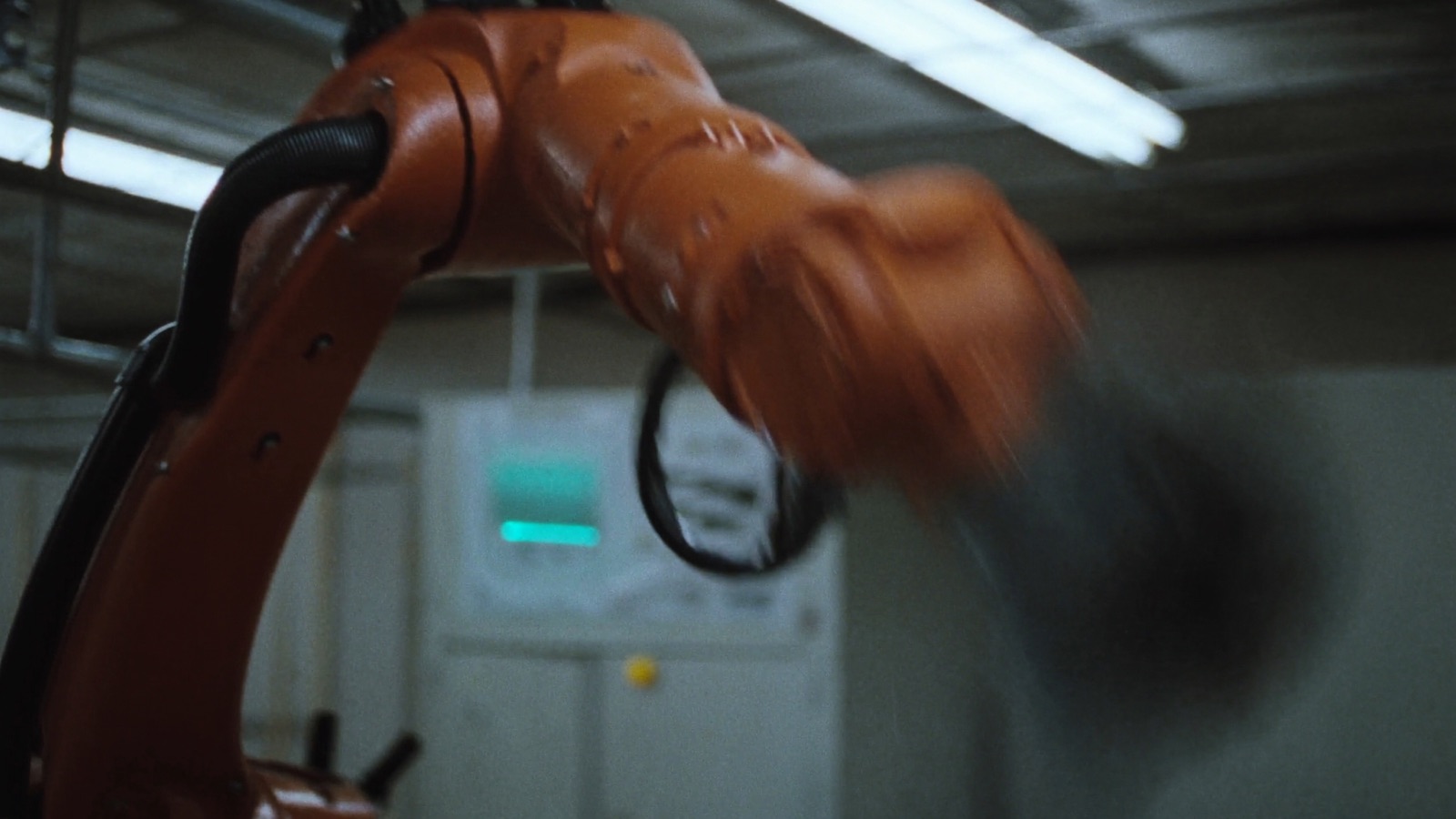
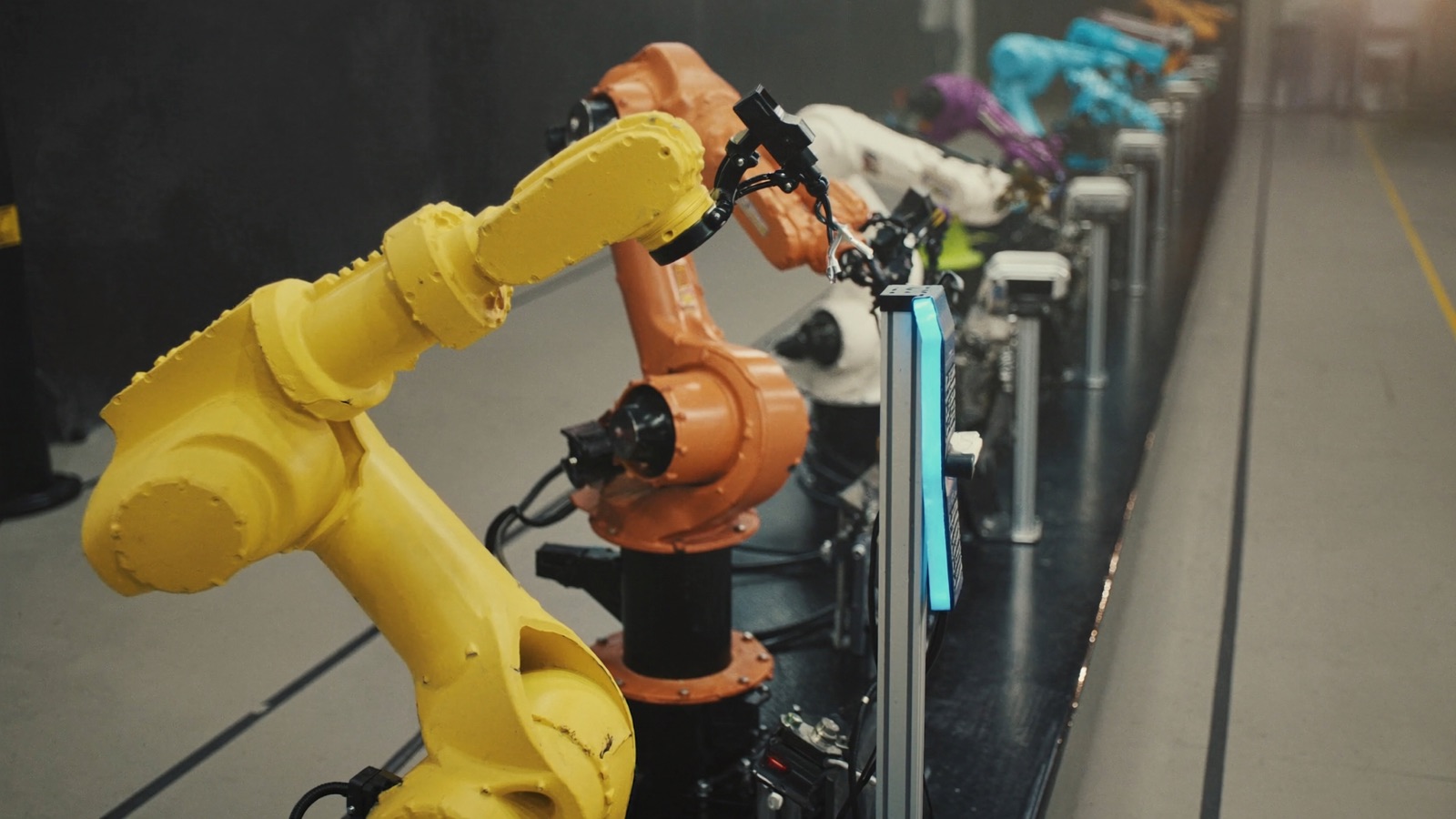
A Tier-1 automotive supplier in Ohio commissioned a FANUC M-710iC cell for crankshaft transfer between two CNC machining centers. The simulation showed 14.2 seconds per part — fast enough to keep pace with the line's 16-second takt. Commissioning took eleven weeks instead of six. At go-live, the measured cycle time was 19.4 seconds. The cell ran for three months in a production-throttled state while the integrator and OEM traded emails about who owned the problem.
The arm itself was not the problem. The arm was doing exactly what it had been programmed to do. The problem was a pneumatic EOAT with two-second actuation delays that hadn't been modeled in the simulation, a parts-present sensor that required a 0.8-second dwell before the gripper could confirm a good pick, and a safety interlock that forced a full-speed-down event every time the cell door was opened for minor adjustments — which operators were doing roughly four times per shift.
This story, with different robots and different parts, is representative of a pattern that shows up across discrete manufacturing wherever robot arms are integrated into existing production lines. The robot is fast. The cell is slow.
What "Cycle Time" Actually Measures in a Robot Cell
Before diagnosing shortfalls, it's worth being precise about what cycle time counts.
Robot simulation software — Roboguide, RobotStudio, KUKA.Sim — calculates motion time: how long the arm takes to execute its path at programmed speed, accounting for acceleration, deceleration, and joint-limit constraints. That is not the same as cell cycle time, which includes:
- I/O handshake delays: time waiting for the PLC to confirm machine-ready, clamp-open, or part-present signals
- EOAT actuation time: pneumatic gripper open/close cycles, vacuum build/break, tool-change dwell
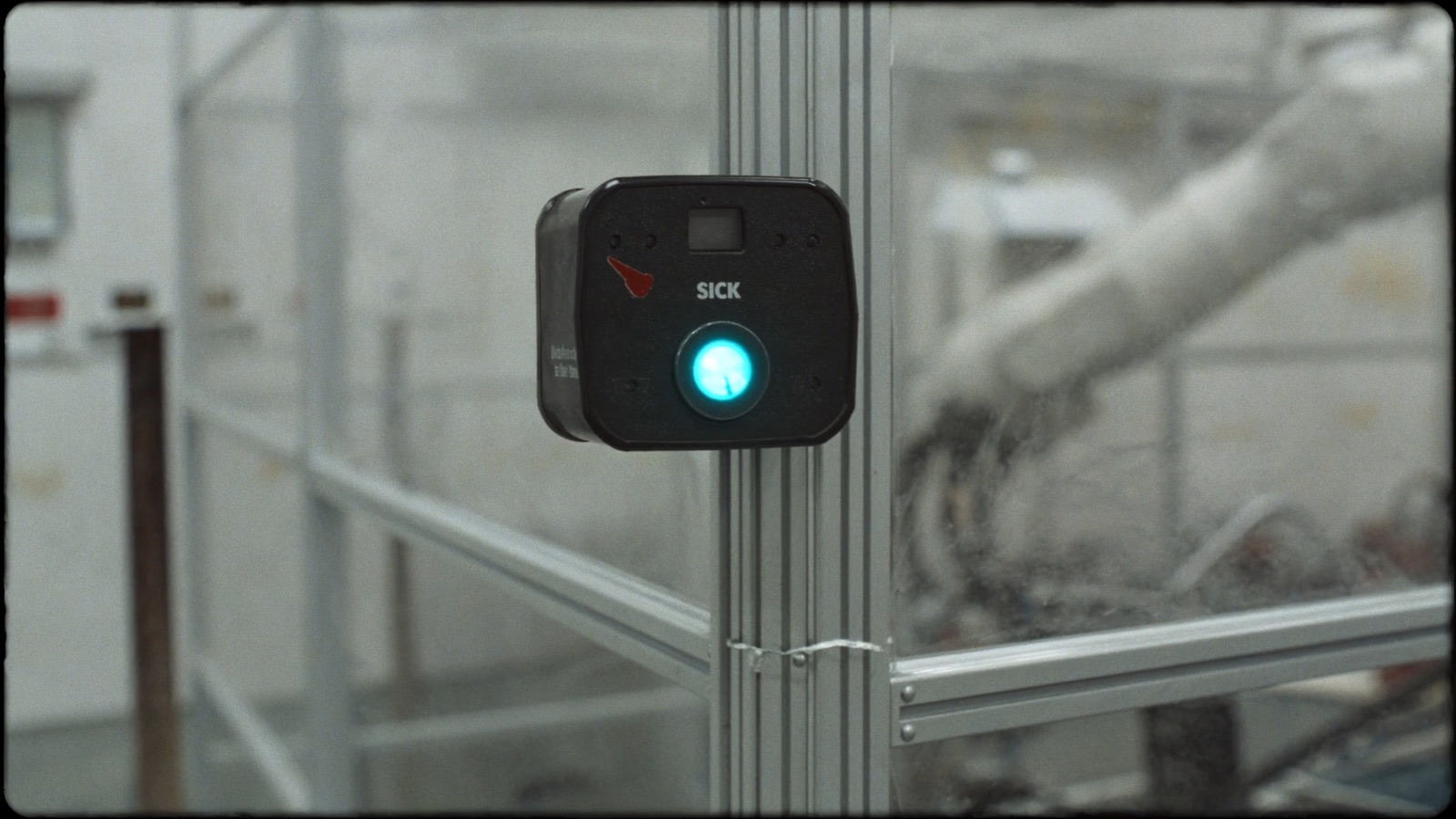
- Safety-zone transitions: speed reductions or full stops triggered by area scanners when people approach
- Upstream feed variability: parts arriving late from a conveyor, a press, or a prior station
- Error recovery: unjam cycles, pick-retry logic, sensor-fault resets
Motion time typically accounts for 55–70% of total cell cycle time in a well-designed cell. The rest is handshake and wait states. In poorly designed cells, motion time can drop below 40% — meaning the arm is idle more than half the time.
Simulation tools model motion time with high accuracy. They model I/O handshake time inaccurately or not at all, because the handshake logic depends on PLC code that doesn't exist yet when the simulation is being built.
Four Root Causes of Cycle-Time Shortfalls
1. EOAT Actuation Not Modeled in Simulation
End-of-arm tooling is where the biggest hidden time lives. A pneumatic two-jaw gripper running at 6 bar typically actuates in 0.3–0.6 seconds per open or close stroke. That sounds trivial. Across a cycle that requires three grip/release events, you're looking at 1.8–3.6 seconds — on top of a motion profile that the simulation optimized to 12 seconds. You've just added 15–30% to cycle time before production starts.
Vacuum tooling adds another variable: vacuum build time. Pulling a seal on a porous or non-ideal surface can take 0.5–1.2 seconds depending on cup diameter, pump capacity, and surface condition. Simulation defaults assume ideal pick surfaces.
Servo-actuated tooling is faster and more controllable than pneumatic, but it adds cost and programming complexity. The trade-off should be evaluated explicitly against cycle-time targets, not left for the commissioning phase.
The fix: require the EOAT supplier to provide actuation timing data — not catalog specs but measured values at the actual operating pressure, temperature, and stroke — before the simulation is locked. Build EOAT actuation into the simulation as explicit wait states.
2. I/O Handshake Logic Designed After the Simulation
A common sequencing mistake: the simulation is approved, the robot is ordered, and then — during integration — the PLC programmer and the robot programmer meet for the first time to design the signal handshake protocol.
Every wait-for-signal in a robot program is a potential cycle-time hole. A clamp-confirm signal that takes 400 ms to stabilize after a hydraulic clamp closes is 400 ms gone. If the robot is waiting for that signal three times per cycle, you've added 1.2 seconds — invisible in the simulation because the simulation assumed instantaneous I/O.
Industry-standard practice in high-performance cells is to specify signal timing requirements — maximum allowable handshake latency for each I/O pair — in the cell design specification before integration begins. If the machine tool's native I/O can't meet the spec, you add buffering logic in the PLC rather than adding wait states in the robot program.
3. Reach Envelope Chosen for Cost, Not Cycle Time
Robot selection is often driven by payload and a rough reach estimate. An arm that can physically reach every point in the work envelope is not necessarily an arm that can reach those points at the speeds required.
Speed at the TCP (tool center point) is constrained by joint-velocity limits and arm geometry. At the extremes of the reach envelope — long-arm, elbow-out configurations — the arm is operating at a mechanical disadvantage. Motions that look clean in simulation can end up restricted in speed because the joint-velocity limits prevent the programmed acceleration at that configuration.
A robot spec'd at 70% of its reach envelope, with the work zone centered near the arm's geometric sweet spot, will consistently outperform the same robot spec'd to reach its maximum radius. The cycle-time difference can be 10–20% on comparable paths.
The table below shows the pattern for a generic 6-axis arm at 20 kg payload, moving a 300 mm TCP path:
| Arm configuration | Reach used | Measured cycle time |
|---|---|---|
| Work zone at 55% max reach | 1,100 mm | 3.4 s |
| Work zone at 75% max reach | 1,500 mm | 4.1 s |
| Work zone at 90% max reach | 1,800 mm | 5.2 s |
Integrators working to a tight cell-footprint budget tend to push arms to the outer reach to avoid adding floor space. The 10–15% cycle-time penalty typically costs more in lost production over the cell's life than the additional square footage would have.
4. Safety Zone Geometry That Interrupts Production
Area scanners protecting robot cells work by triggering protective stops when a person enters a defined zone. The recovery sequence — personnel exits, guard reset, program resume — takes 8–20 seconds depending on the safety controller configuration and whether the operator needs to perform a physical reset.
If the safety zone geometry is too aggressive (scanner field extending beyond the true hazard boundary), minor workflow activities — a forklift driving past, a maintenance tech walking by, a quality inspector checking a nearby station — trigger stops that shouldn't happen. In a production cell running a 15-second cycle, two spurious stops per hour eat 5–8 minutes of OEE.
Safety zone geometry is set during integration, not by the arm vendor. It requires a formal risk assessment per ISO 10218-2 (updated 2025) to be done correctly, and the geometry has to be validated on the actual floor before production starts. Cutting this work short — accepting the integrator's default scanner placement without validation — is one of the most common sources of OEE loss in new robot cells.
What Accurate Upfront Simulation Costs, and What It Saves
The crankshaft cell described at the top of this article spent roughly $85,000 in additional integration labor and $120,000 in lost production revenue during the three months it ran below target. The simulation package that could have caught the EOAT and handshake issues costs $15,000–$40,000 for a proper offline programming environment with I/O timing models.
This is not an argument for buying more simulation software. It is an argument for treating simulation fidelity as part of the integration specification, not an afterthought. The questions to ask your integrator before signing:
- Does the simulation model EOAT actuation time as explicit wait states, with actual timing data from the tooling supplier?
- Does the simulation include I/O handshake delays based on the target machine tool's signal timing specs?
- Has the reach envelope been validated at production speeds, not just at the configuration level?
- Has the safety zone geometry been reviewed against the actual floor layout, accounting for adjacent traffic?
If the answer to any of these is "we'll finalize that during commissioning," you are accepting cycle-time risk that your simulation didn't capture.
A Framework for Setting Realistic Targets
Operators who reliably hit cycle-time targets tend to follow a four-step process before integration begins:
Step 1 — Define the target with margin. If takt requires 16 seconds, target 14 seconds in simulation to leave 12% margin for real-world variability. Cells designed to hit takt exactly almost never do.
Step 2 — Build the simulation with full timing model. EOAT actuation, I/O handshakes, scanner recovery times — all modeled as explicit wait states with measured values, not assumptions.
Step 3 — Validate simulation against a comparable reference cell. Ask the integrator for a recent cell of similar configuration. Compare the as-simulated vs. as-built cycle time from that project. A good integrator should be able to show that their simulation is typically within 5% of as-built. An integrator who can't show this has no track record to stand behind.
Step 4 — Specify simulation fidelity in the contract. The integration contract should include a cycle-time guarantee: at acceptance testing, the cell must demonstrate the target cycle time under production conditions for a defined sample run. If the cell fails acceptance, remediation is at the integrator's cost.
Cells built to this discipline consistently hit targets. The 40% that miss are usually missing Step 1 (the margin was eaten by optimistic simulation), Step 2 (EOAT and I/O timing were modeled late or not at all), or Step 4 (there was no contractual acceptance test tied to cycle time).
The Deeper Issue: Who Owns Integration Risk?
The robot OEM — FANUC, KUKA, ABB, Yaskawa — sold you an arm that meets its data sheet. The EOAT supplier sold you a gripper that meets its data sheet. The PLC programmer wrote code to spec. The system integrator coordinated the pieces.
When the cell runs 37% slower than simulated, none of those suppliers is individually wrong. The gap lives in the interfaces between them, and owning that gap is the integrator's job.
The best protection for a plant manager is a fixed-price contract with a cycle-time acceptance test tied to payment. This puts integration risk where it belongs: on the party with visibility into the full system. An integrator who won't accept a cycle-time guarantee is telling you something important about how confident they are in their simulation.
Next in this series: TCO of a 6-axis arm cell: hardware, EOAT, integration, programming →
Discussion
0 commentsNo comments yet. Sign in to be the first.