A decision framework for choosing a drone platform class
Matching mission requirements to the right aircraft type, from multirotors to fixed-wing VTOL to docked systems
Why platform class is the first decision, not the last
Most organizations that buy the wrong drone platform do so because they started with a vendor relationship or a product recommendation rather than a mission specification. A multirotor optimized for close structural inspection is not the right tool for a 500-hectare farmland survey. A fixed-wing mapping platform is not the right tool for confined-space pipe inspection. The aircraft class decision should be driven by five mission parameters: area to cover, inspection altitude and proximity, required data type, operating environment, and regulatory operating mode.
Getting this decision wrong is expensive. A fixed-wing platform purchased for a 10-acre industrial roof survey is an overqualified, hard-to-operate aircraft in an environment that requires hover capability and precise proximity flight. A small consumer-class multirotor deployed on a 2,000-acre linear pipeline survey will need 40 battery swaps and a full day where a fixed-wing would fly the same area in 90 minutes.
The four platform classes
Class 1: Multirotor
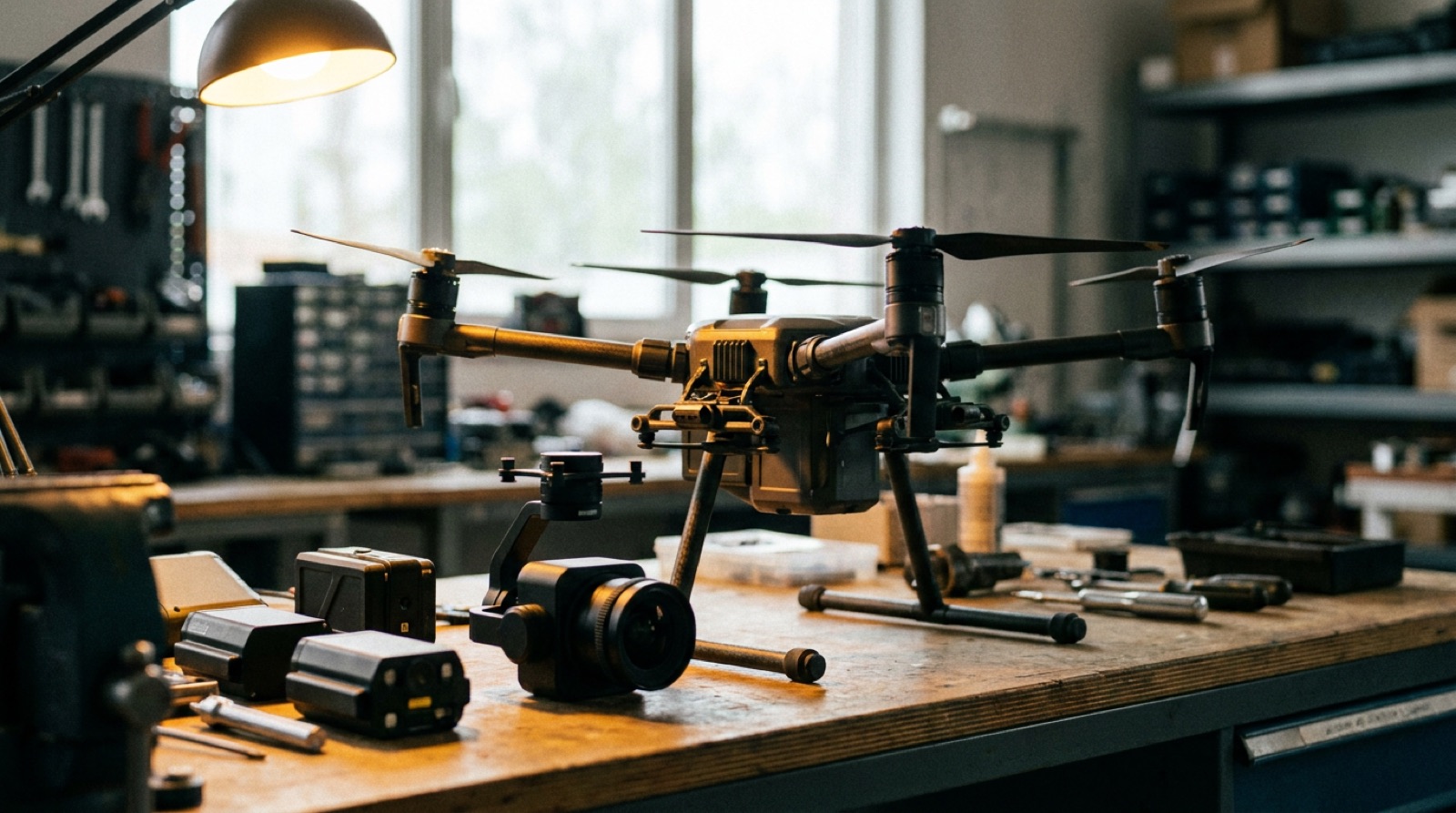
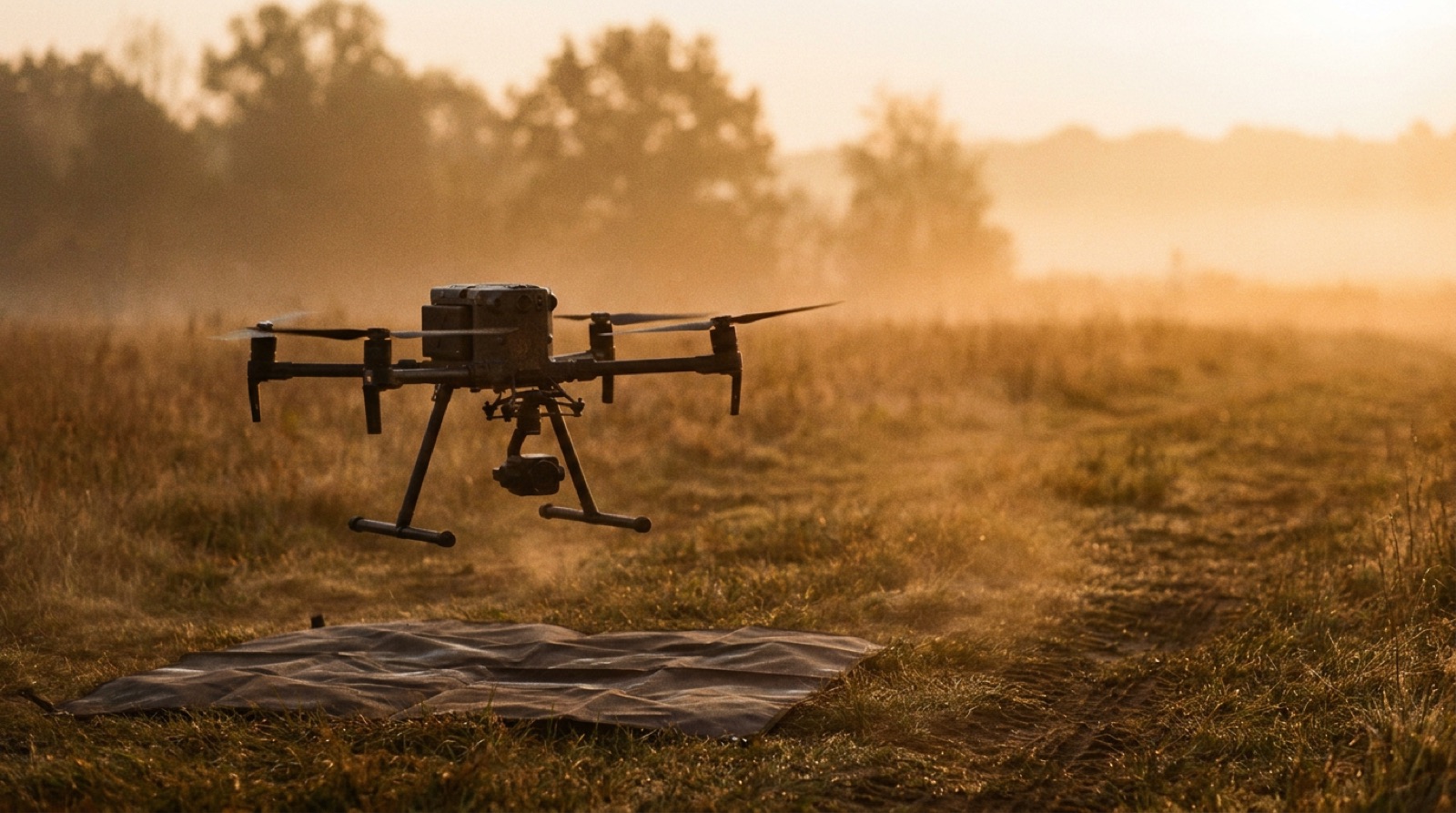
Multirotors — typically 4, 6, or 8 rotors — are the default platform for most commercial drone programs. They hover, maneuver precisely in tight spaces, take off and land vertically without a runway or catapult, and carry interchangeable payload options. They are operationally forgiving: a pilot can stop mid-flight, hold position, and reframe a shot or inspection point. Most enterprise inspection aircraft fall in this class.
Strengths: Hover capability, VTOL, wide payload ecosystem, low operator training threshold, widely available service and parts.
Limitations: Flight endurance is typically 20–55 minutes per battery at inspection payloads. Maximum range is limited by battery capacity and regulatory visual-line-of-sight requirements. Not efficient for large-area survey work (high flight time per hectare compared to fixed-wing).
Representative use cases: Structural inspection (bridges, towers, building facades), close-range infrastructure survey, security patrol on fixed routes, photogrammetry on sites under 50 hectares, thermal inspection of solar arrays and roofs.
Real catalog examples: DJI Matrice 350 RTK and Matrice 30 Series are widely deployed in enterprise inspection roles. Autel EVO Max 4T is a multirotor positioned for inspection and public safety applications.
Class 2: Fixed-wing and hybrid VTOL
Fixed-wing aircraft — aircraft that generate lift from wings rather than rotors — are efficient over distance. A comparable payload flown on a fixed-wing aircraft covers 3–8 times the area per battery charge compared to a multirotor. The trade-off is that fixed-wing aircraft require runway space or a catapult for launch and a landing zone for recovery, which limits their usefulness in constrained urban or industrial environments.
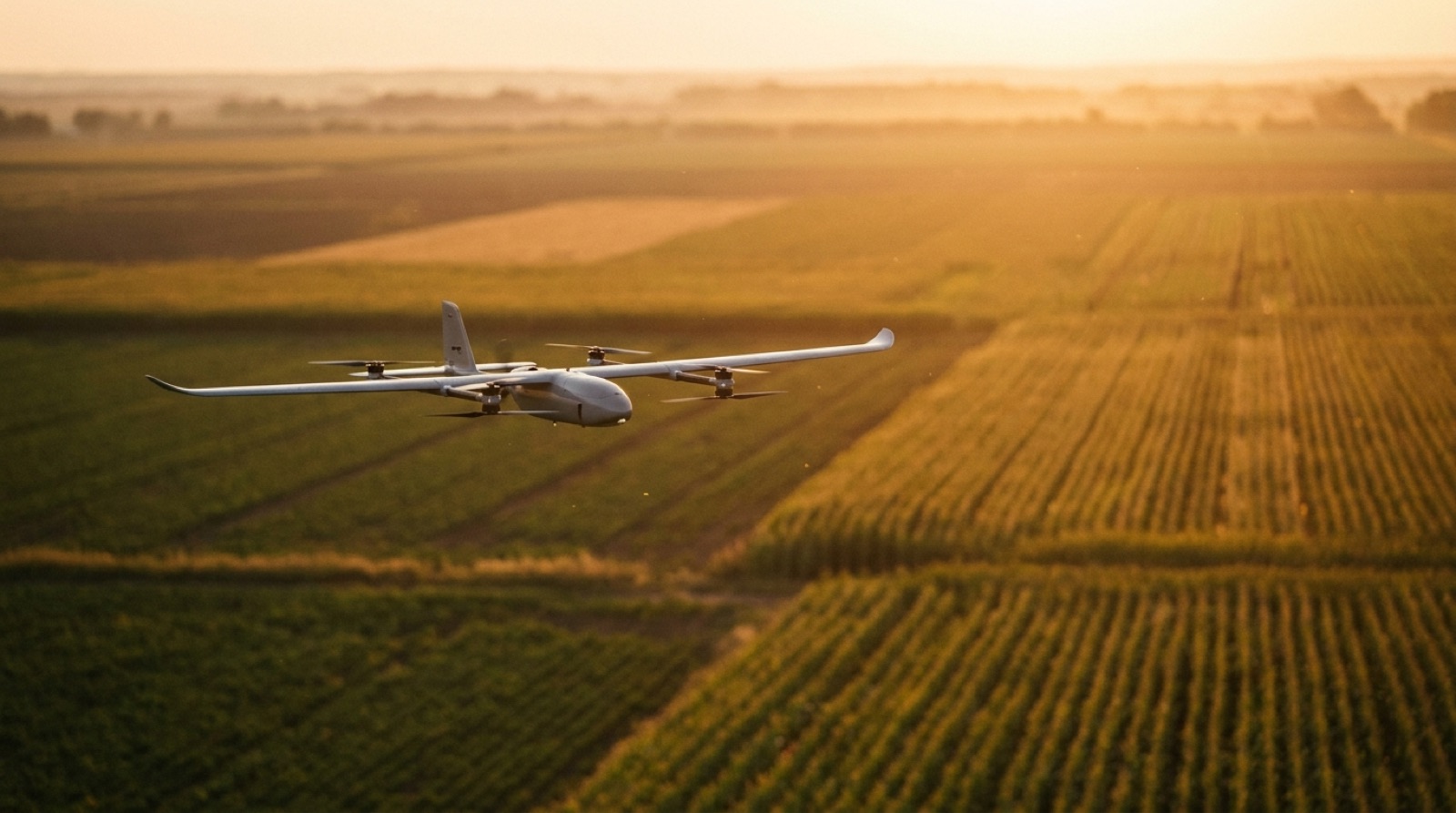
Hybrid VTOL (vertical takeoff and landing) designs address the launch/recovery problem by combining a fixed-wing airframe with rotor systems that allow vertical takeoff and landing. Once airborne, the aircraft transitions to fixed-wing flight for efficient cruise. This class is well-suited for medium-to-large area surveys where both area coverage efficiency and flexible deployment sites matter.
Strengths: High area coverage per flight hour, long endurance (1–3 hours or more), efficient for linear infrastructure (pipelines, transmission lines, shorelines).
Limitations: Higher operator training requirement. Fixed-wing platforms need landing zones; hybrid VTOL reduces but does not eliminate this requirement. Generally less useful for hover-dependent inspection tasks (close structural inspection, confined access). Higher aircraft cost than multirotors in the same payload class.
Representative use cases: Agricultural survey and mapping (precision agriculture, crop health assessment), topographic mapping, large mining or quarry surveys, linear asset inspection (pipeline, power line, rail), coastal and environmental monitoring.
Real catalog examples: WingtraOne GEN II is a hybrid VTOL used in survey and mapping applications. Quantum Systems Trinity Pro and Vector AI are fixed-wing VTOL platforms positioned for military and industrial survey work. AeroVironment JUMP 20 is a hybrid VTOL with long endurance suited to persistent surveillance tasks.
Class 3: Specialized inspection platforms
A subset of inspection missions requires platforms specifically engineered for confined, GPS-denied, or hazardous environments. Indoor inspection of pressure vessels, pipe interiors, storage tanks, and industrial structures demands an aircraft with protective caging, onboard obstacle detection, and the ability to operate without GPS.
This class does not compete with open-air multirotors on outdoor inspection tasks. It exists specifically because those tasks would destroy an unprotected multirotor and because the value of replacing a rope-access inspection with a drone flight is substantial in hazardous environments.
Strengths: Can fly inside structures with zero GPS signal. Protective cage allows contact with surfaces. Suitable for confined-space, ATEX (potentially explosive atmosphere) environments with appropriate certification.
Limitations: Shorter endurance than outdoor platforms. Higher per-flight cost due to specialized operator training. Limited payload flexibility. Not useful for outdoor open-air tasks.
Representative use cases: Boiler and pressure vessel inspection, oil and gas tank interiors, mine shafts, culverts, large-diameter pipes, enclosed infrastructure.
Real catalog example: Flyability Elios 3 is a caged indoor inspection multirotor used in confined-space industrial applications.
Class 4: Dock-based autonomous systems
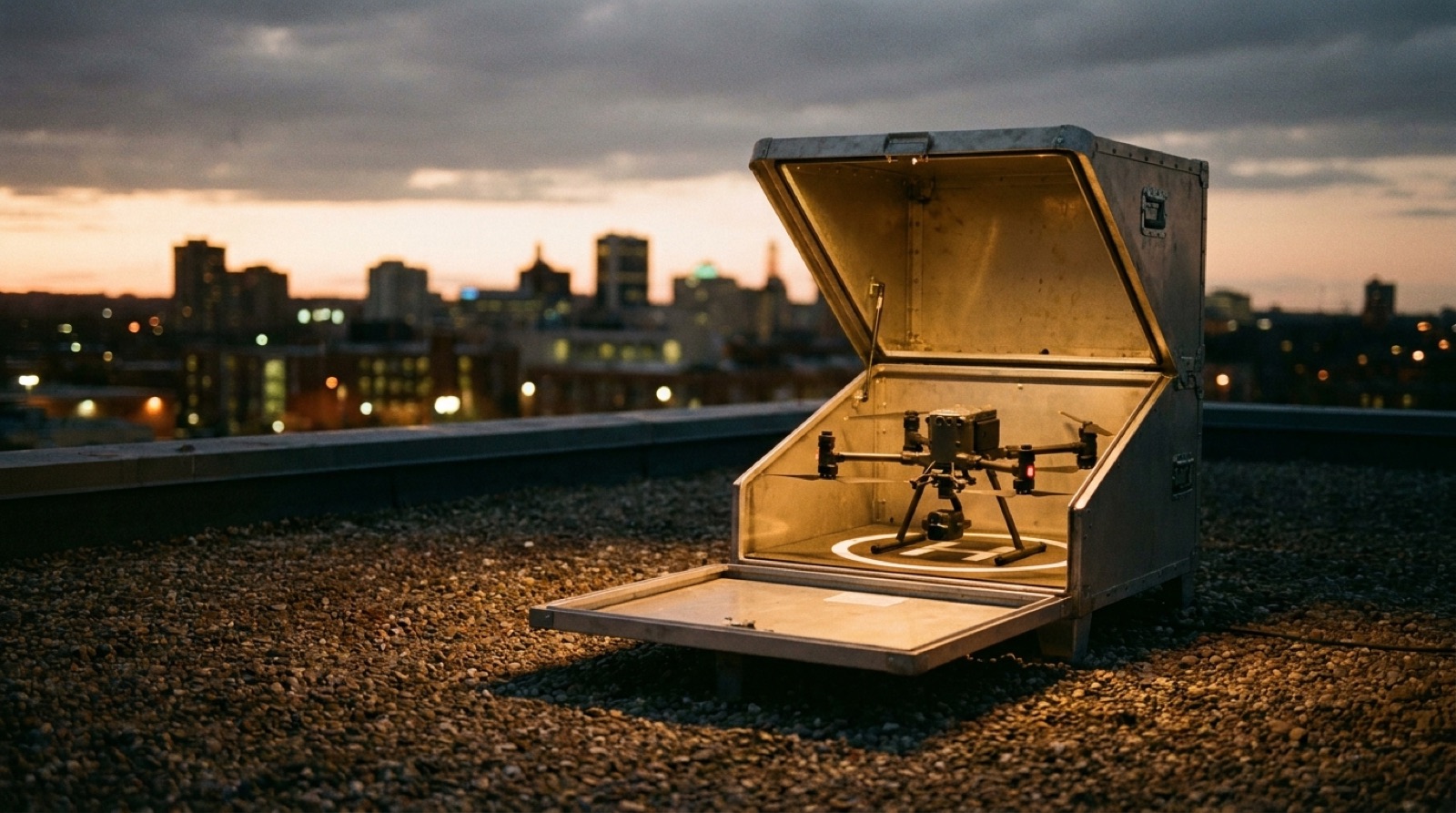
Covered in depth in the previous article, dock-based systems are characterized by their ability to operate recurring missions without a pilot present at the launch site for each flight. The platform class is defined by the dock infrastructure and BVLOS authorization requirement as much as by the aircraft itself.
Strengths: Lowest per-mission labor cost at high mission frequency. Enables persistent or near-continuous site coverage. Integrates well with remote monitoring infrastructure.
Limitations: High upfront capital for dock installation. BVLOS authorization required for full autonomous operation in the US. Poor fit for low-frequency or single-site programs. High civil works cost in older facilities.
Representative use cases: Perimeter security, recurring site inspection (weekly/daily), construction progress monitoring, utility asset surveillance.
Real catalog examples: Skydio X10 with dock capability. Autel Dragonfish Nest. Asylon Guardian Drone, positioned specifically for perimeter security patrol.
Decision tree: matching mission to platform class
Work through these questions in order. The first filter that applies determines the platform class to evaluate first.
Step 1: Is the target environment indoors, in a confined space, or in a GPS-denied area?
- Yes → Class 3 (specialized confined-space inspection platform). Stop here.
- No → Continue.
Step 2: What is the survey area per mission?
- Under 50 hectares (approximately 125 acres) → Class 1 (multirotor) is a viable primary option.
- 50–500 hectares → Class 2 (fixed-wing/hybrid VTOL) is more efficient. Class 1 can work but will require many battery changes.
- Over 500 hectares → Class 2 strongly preferred unless hover capability is required for specific inspection points.
Step 3: Is hover and precise proximity flight required?
- Yes (close structural inspection, facade work, hover over a specific point) → Class 1 (multirotor) required.
- No (area coverage, linear asset survey, mapping) → Class 2 efficient; also consider Class 4 for recurring patterns.
Step 4: What is the mission frequency?
- Less than once per month → Class 1 (in-house multirotor) or outsource to a DSP (drone service provider).
- Weekly or more frequently → Class 4 (dock-based) economics become favorable. Evaluate against Class 1 recurring program costs.
- Daily or multiple times per day → Class 4 is the primary model to evaluate.
Step 5: Is this a security/surveillance use case with defined patrol routes?
- Yes → Class 4 (dock-based security drone). Evaluate guard substitution payback from the previous article.
- No → Class 1 or 2 based on area and hover requirements.
Platform class versus drone service provider
The platform-class decision assumes in-house operation. Before committing to hardware ownership, evaluate whether outsourcing to a DSP is the better model for your mission profile.
| Factor | Favor in-house | Favor DSP |
|---|---|---|
| Mission frequency | Weekly or higher | Monthly or less |
| Site access | Your own site, consistent schedule | Client sites, variable access |
| Data sensitivity | High (internal data must not leave premises) | Low (third-party processing acceptable) |
| Operational learning value | High (you want to build internal capability) | Low (you want output data, not skills) |
| Program timeline | Multi-year, stable | Short-term, project-based |
| Budget structure | CapEx available for hardware | OpEx preferred, no CapEx appetite |
Many organizations start with a DSP to validate mission value before committing to in-house infrastructure. This is generally sound risk management: the DSP delivers output data, the organization learns what "good" looks like, and the decision to internalize is made from evidence rather than speculation.
A note on Chinese-manufactured platforms and US procurement context
A significant portion of commercial drone platforms in the multirotor and survey classes are manufactured by companies headquartered in China. Organizations operating in US federal government, critical infrastructure, Department of Defense-adjacent, or certain regulated utility environments should be aware that procurement restrictions apply.
The National Defense Authorization Act (NDAA) restricts certain federal procurements; the Blue UAS program (a Department of Defense-vetted list of drone systems deemed safe for government use) designates specific platforms as compliant for government use. Platforms from DJI and several other Chinese-headquartered manufacturers are not currently on the Blue UAS cleared list and face restrictions in specific US government and critical-infrastructure procurement contexts.
This does not mean Chinese-manufactured platforms are unusable in commercial private-sector applications. It means buyers operating in regulated or government-adjacent contexts need to check current NDAA and Blue UAS status as part of their procurement process. Platforms with Blue UAS designation include Parrot ANAFI Ai, Skydio X10, and several others. The Blue UAS list is updated periodically; verify against the current DoD-published list before procurement.
The decision framework for platform class is not changed by these restrictions — the mission requirements still determine the class. But the vendor shortlist within a given class may be constrained by compliance requirements.
For a complete procurement checklist including NDAA compliance, data-sovereignty questions, and red flags to watch for in vendor RFP responses, see the article The drone vendor RFP: questions and red flags.
Discussion
0 commentsNo comments yet. Sign in to be the first.