The real cost of a commercial drone inspection program
A full three-year TCO breakdown, including the line items that surprise most buyers
The number you quoted versus the number you spent
A regional utility company approves a drone inspection budget based on three aircraft purchases and a one-year software subscription. Two years later, finance is looking at a spend line that is 2.8 times the original approval. Nobody lied in the proposal. They just quoted the sticker price and left out the rest.
The "rest" — regulatory compliance, pilot certification and attrition, crash replacement, data storage, photogrammetry licensing, insurance riders, and the analyst time to turn raw footage into actionable reports — is typically larger than the hardware budget over a three-year horizon. This article gives buyers a framework for estimating the full number before they commit.
What goes into a drone inspection TCO
TCO (total cost of ownership) for a commercial drone inspection program has seven cost categories. Some are one-time or front-loaded; most recur annually.
1. Aircraft and core payload
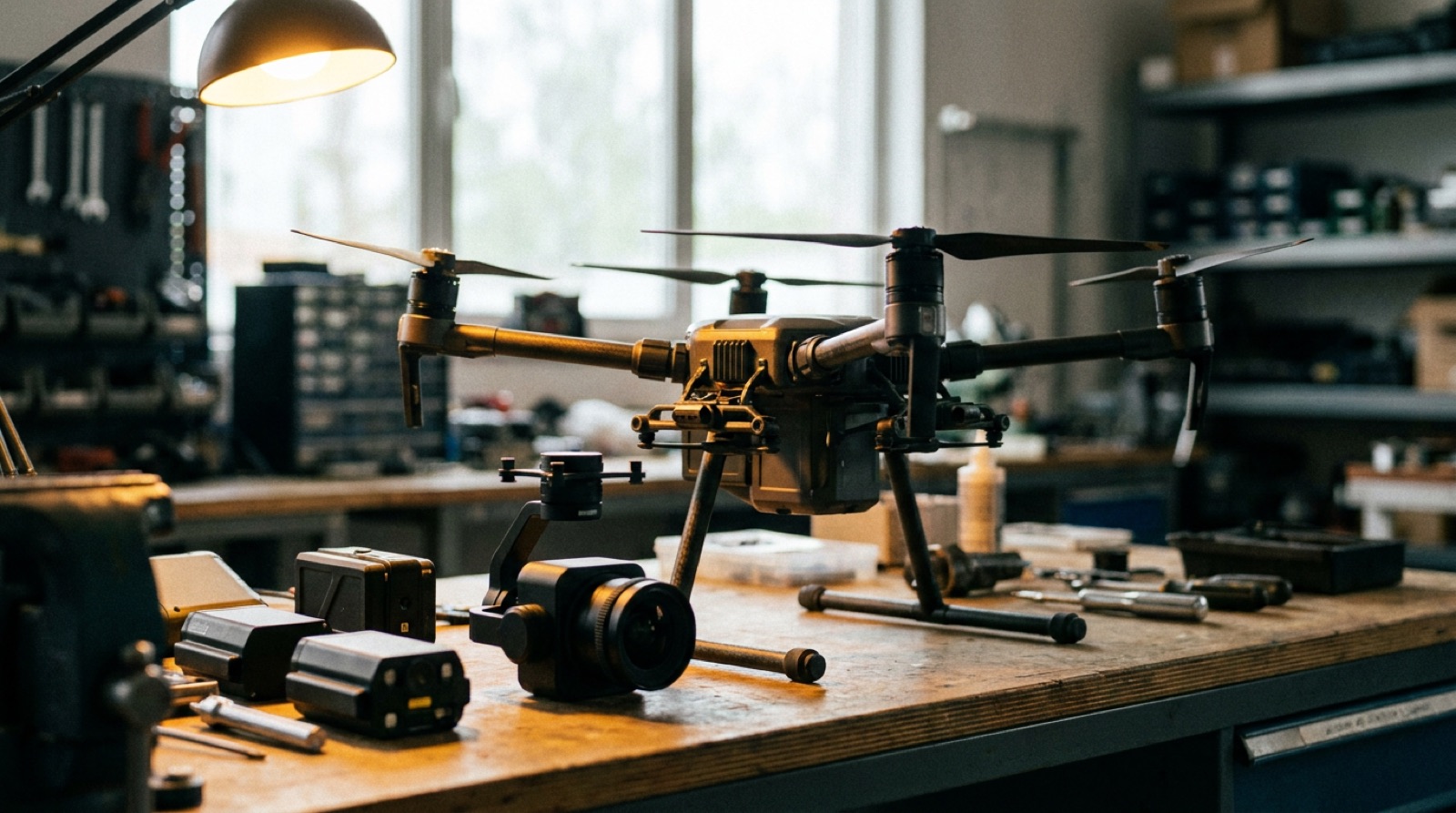
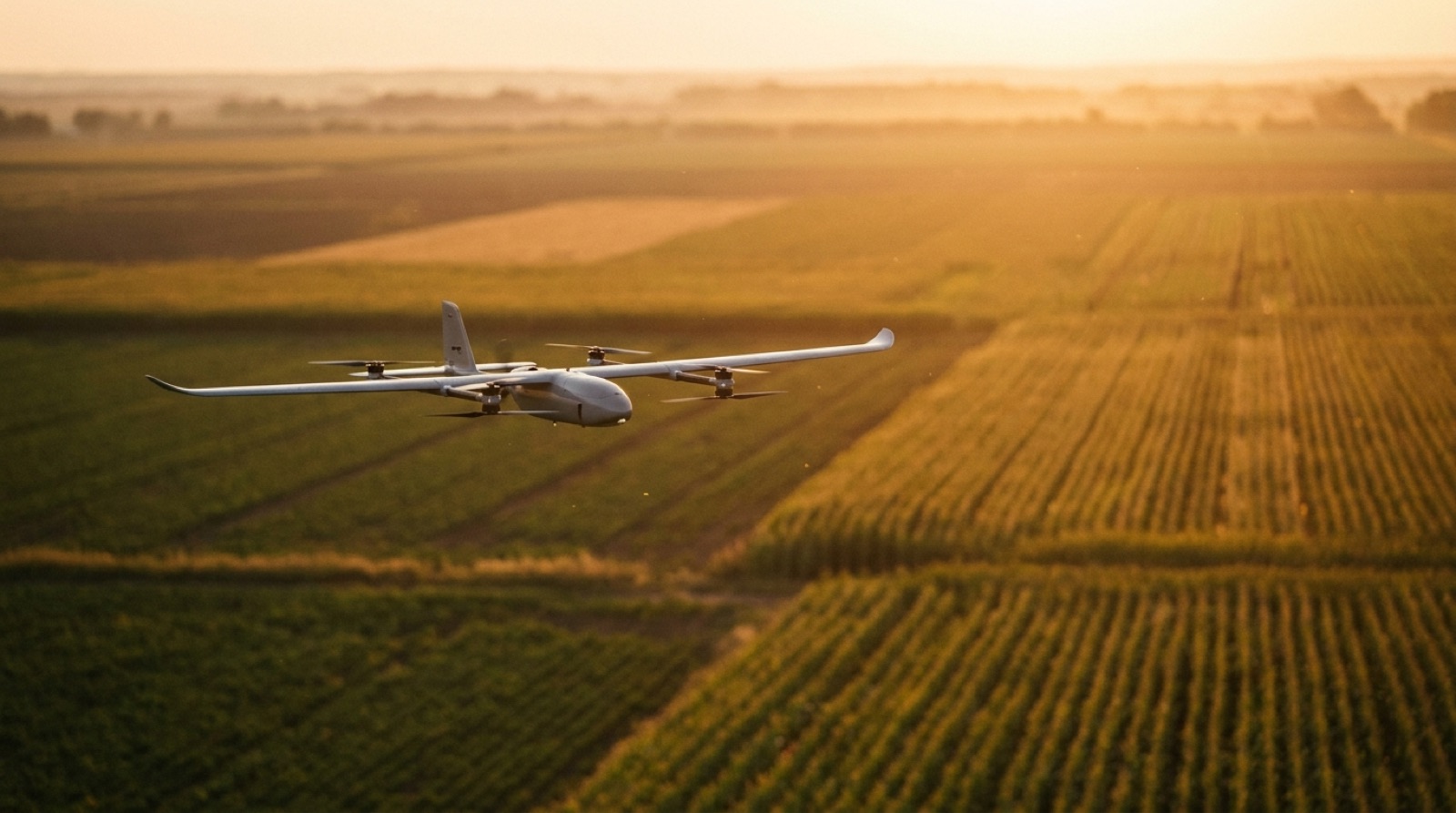
The aircraft purchase is the number everyone knows. Enterprise inspection multirotors — platforms in the class of the DJI Matrice 350 RTK or the Autel EVO Max 4T — typically list in the $6,000–$15,000 range per unit depending on configuration. Fixed-wing VTOL survey platforms like the WingtraOne GEN II or Quantum Systems Trinity Pro run higher, often $25,000–$60,000 per unit, reflecting longer endurance and precision positioning hardware.
Most programs configure a minimum of two aircraft: one primary, one standby for maintenance windows or crash recovery. Single-aircraft programs stall the moment the primary goes down for repairs.
Payload lenses and sensor modules are priced separately from the aircraft body. A thermal payload for building envelope or electrical inspection typically adds $2,000–$8,000. A multispectral sensor for agricultural or environmental survey work can add $5,000–$15,000. LiDAR payloads run $15,000–$50,000 and up.
2. Batteries and consumables
Battery packs are the most chronically underbudgeted line item. An enterprise multirotor typically uses 2–4 batteries per aircraft to support a full field day without charging delays. Intelligent flight batteries degrade over charge cycles — most manufacturers rate packs to 200–400 cycles before replacement is recommended. At two to four field days per month, a battery set needs replacement every 18–30 months.
Battery cost per unit ranges widely, from roughly $150 for a small multirotor pack to $500–$800 for high-capacity enterprise packs. A realistic consumables budget for a two-aircraft multirotor program, including batteries, propellers, and minor replacement parts, runs $3,000–$8,000 per year.
3. Regulatory compliance and certification
Part 107 certification (the FAA's Remote Pilot Certificate, required for commercial drone operations in the United States) costs roughly $175 in exam fees per pilot. The more significant cost is preparation time: most pilots report 20–40 hours of study for the initial exam, and recurrent knowledge tests are required every 24 months.
Programs that need to fly in controlled airspace use LAANC (Low Altitude Authorization and Notification Capability, an FAA near-real-time authorization system) at no direct cost, but the authorization workflow takes staff time to manage.
Programs that need BVLOS (beyond visual line of sight) operations — required for autonomous dock-based flights, long linear asset inspection, or large area surveys without visual observers — face a materially different compliance cost. BVLOS waivers require a detailed safety case, sometimes with third-party consultant support. Waiver consulting engagements in the US range widely, but programs should budget $15,000–$50,000 for a full BVLOS authorization effort when engaging outside counsel or a specialized aviation attorney. This is a one-time cost, but not a trivial one.
Programs operating near airports should also budget for local airspace consultation, which may include coordination with facilities management, legal review, and NOTAM (Notice to Air Missions, a notice to pilots of potential hazards or changes to procedures along a route) filing costs.
4. Pilot labor and training
Pilot labor is one of the largest recurring costs in a drone program, and one of the least visible in initial proposals. A Part 107 pilot operating as a dedicated drone pilot is typically budgeted as a full-time or part-time role rather than a task added to an existing job description. Programs that treat drone operations as an add-on duty to an existing technician role frequently find the drone flights are always deprioritized.
Fully-loaded annual cost for a dedicated Part 107 pilot (including salary, benefits, and overhead) in a US market varies by geography but is typically in the $65,000–$110,000 range for a field-focused role. Programs that outsource flights to a drone service provider (DSP) instead pay per-flight or per-day rates; these vary significantly by mission type, geography, and volume, but a DSP day rate for an inspection mission commonly runs $1,500–$4,000 all-in.
Attrition is a real factor. Drone pilot roles are in demand, and organizations that do not build certification depth across multiple people find themselves grounded when the primary pilot leaves. Each certification rebuild costs time and training overhead.
5. Data processing software
Raw drone imagery has no value until it is processed. A photogrammetry platform (software that stitches overlapping images into georeferenced 2D maps and 3D models) is a non-negotiable software cost for inspection and survey programs. Platforms in this space charge annual per-seat licenses; most enterprise contracts run $3,500–$8,000 per seat per year at volume.
Programs with thermal imagery need thermal analysis software or a platform that integrates thermal and RGB layers. AI-assisted defect detection modules, where available, add further license cost.
Cloud storage for raw imagery is a recurring line item that grows with program scale. A single survey day can generate 10–40 GB of raw imagery. At 100 flight days per year, a program accumulates 1–4 TB annually. Enterprise cloud storage at that scale runs $500–$2,000 per year depending on provider and redundancy requirements.
6. Insurance
Most commercial general liability policies do not cover UAS (unmanned aerial system) operations. A UAS-specific insurance rider is required; many clients, site managers, and facility owners require proof of coverage before flights are permitted.
UAS liability coverage for a two-aircraft commercial inspection program typically runs $1,500–$4,000 per year for a $1M–$5M liability limit. Hull insurance (coverage for the aircraft itself in case of crash or damage) adds further cost: hull coverage is often priced as a percentage of aircraft value, commonly 5–12% of hull value annually.
Programs that operate at client sites, near utilities, or in urban environments should review their coverage limits carefully. Standard minimum limits required by site owners have risen as drone programs have become more common.
7. Crash replacement and maintenance
Crashes are not edge cases in commercial drone programs — they are actuarial certainties at scale. Crash rates vary by environment and program maturity; programs flying in complex environments (confined spaces, near structures, in wind) see higher rates than open-field survey programs. Budgeting for one minor incident per 20–50 flight hours and one significant incident per 200–500 flight hours is conservative but not unreasonable for program planning.
Minor incidents (prop damage, sensor gimbal impact) might run $200–$800 in parts and 1–4 hours of labor. Significant incidents that require airframe replacement could mean $5,000–$15,000 per event.
Scheduled maintenance — motor inspections, gimbal calibrations, firmware updates, sensor calibration checks — adds a routine labor cost that is easy to ignore until it causes a data quality incident.
Three-year TCO model
The following table uses representative planning ranges for a mid-scale commercial inspection program: two enterprise multirotors, one dedicated pilot (internal, half-time allocation), quarterly survey missions across a single 50-acre industrial site, standard Part 107 operations (no BVLOS), and a single-seat photogrammetry license.
| Cost category | Year 1 | Year 2 | Year 3 | 3-Year total |
|---|---|---|---|---|
| Aircraft (2 units, mid-tier multirotor) | $18,000–$28,000 | — | — | $18,000–$28,000 |
| Payload (RGB + thermal, per aircraft) | $8,000–$16,000 | — | — | $8,000–$16,000 |
| Batteries & consumables | $4,000–$7,000 | $4,000–$7,000 | $5,000–$8,000 | $13,000–$22,000 |
| Part 107 certification (2 pilots) | $1,500–$3,000 | $500–$1,000 | $500–$1,000 | $2,500–$5,000 |
| Pilot labor (half-time allocation) | $35,000–$55,000 | $35,000–$55,000 | $35,000–$55,000 | $105,000–$165,000 |
| Photogrammetry software (1 seat) | $4,000–$8,000 | $4,000–$8,000 | $4,000–$8,000 | $12,000–$24,000 |
| Cloud storage | $500–$1,500 | $800–$2,000 | $1,000–$2,500 | $2,300–$6,000 |
| UAS insurance (liability + hull) | $3,000–$6,000 | $3,000–$6,000 | $3,000–$6,000 | $9,000–$18,000 |
| Crash replacement / maintenance | $2,000–$5,000 | $3,000–$8,000 | $3,000–$8,000 | $8,000–$21,000 |
| Total | $76,000–$130,000 | $50,500–$87,000 | $51,500–$88,500 | $178,000–$305,000 |
A three-year program cost of $180,000–$305,000 for a single-site, two-aircraft, no-BVLOS program may surprise buyers who approved a $25,000 hardware purchase. The aircraft represent roughly 10–15% of total program cost over three years.
Where autonomous and dock-based operations change the math
Programs that deploy docked autonomous drones (aircraft that launch, fly a mission, and return to land without a remote pilot in the loop for each flight) have a materially different cost structure. Pilot labor, the largest recurring line item above, is substantially reduced or eliminated. Regulatory cost increases: BVLOS authorization is required, and dock hardware adds $20,000–$60,000 per dock installation. But at scale — multiple sites, daily or weekly flights — the dock model can produce lower per-mission cost than a manned flight program. The next article in this series, Drone-in-a-box economics and payback, walks through the break-even math in detail.
How to use this framework
Run your own numbers against each category before presenting a budget. The table above is a planning tool, not a quote. Your actual costs will depend on aircraft class, geographic labor market, mission complexity, volume, and whether you operate in-house or through a DSP. The useful exercise is forcing every line item into the proposal before approval — so finance is not surprised, and the program is not defunded when the Year 2 renewal arrives.
For programs evaluating the build-vs-buy decision, see the article A decision framework for choosing a platform class, which covers the trade-offs between in-house capability and drone service provider models alongside the platform hardware decision.
Discussion
0 commentsNo comments yet. Sign in to be the first.