Why Classroom Robots End Up in the Closet
The anatomy of a failed school robotics purchase — and the framework that makes programs stick.
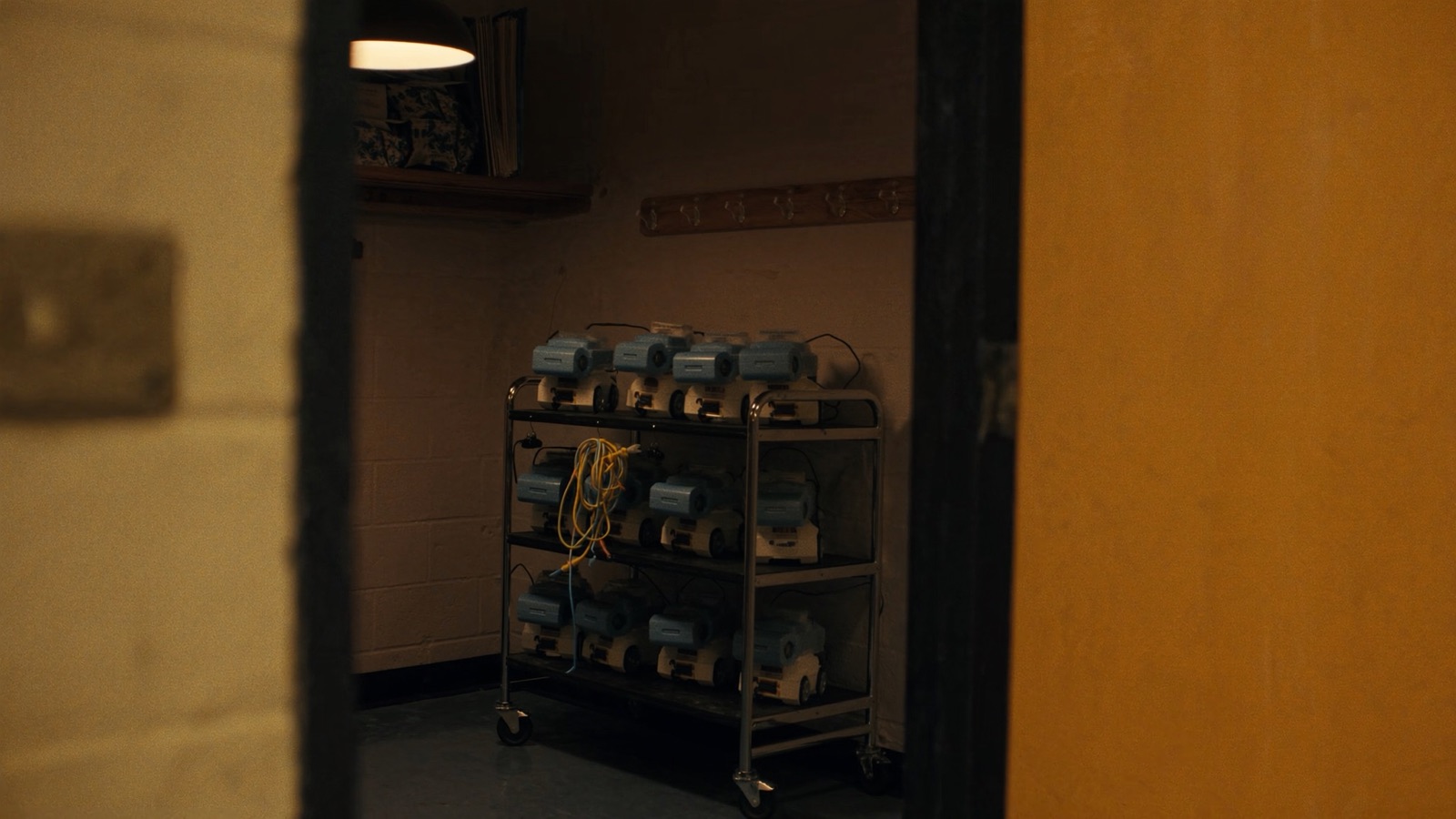
In the fall of 2022, a mid-sized school district in the Pacific Northwest purchased 32 block-coding robot kits — one class set for each of its four elementary schools. The district's technology coordinator, a veteran educator who had championed the purchase for two years, was proud. The line item had survived three budget cycles. The robots were high-quality, well-reviewed, and aligned with the district's stated goal of expanding computational thinking in grades 3–5.
By spring of 2023, all 32 kits were in a storage closet at the district's central office.
Not because the robots were broken. Not because the teachers were incompetent or disinterested. Because the program around the hardware was never built.
This story is more common than the education technology press tends to acknowledge. Vendors report sell-through; they rarely report utilization. Districts count the line item; they rarely count hours-per-kit. If you're a STEM coordinator, makerspace lead, or district procurement officer evaluating a classroom robotics program, the hardware decision is the easy part. The hard part is everything else.
What Actually Happened in That District
The technology coordinator had done everything a reasonable buyer does. She had demoed the robots at two education conferences. She had read reviews in ed-tech publications. She had visited a neighboring district that used the same platform. She had confirmed the kits were age-appropriate and that the vendor offered a curriculum.
What she had not done — and what almost no one does without having been burned first — was audit the gap between the vendor's curriculum and the teachers who would have to deliver it.
The vendor's curriculum was real. It existed as a PDF guide, a set of lesson plans, and a companion app. But it assumed a baseline of computational thinking comfort that four of the district's eight elementary STEM teachers did not have. It also assumed 50-minute class periods; the district ran 40-minute blocks. And it was written for a 1:1 deployment where each student had a robot; the district had purchased one kit per four students, which changed the activity pacing entirely.
Professional development (PD) was not budgeted. The coordinator had assumed the vendor's getting-started webinar — 90 minutes, recorded, optional — would suffice. It did not.
By February, two teachers were using the robots consistently. Three were using them occasionally. Three had stopped. The closet story began not with a failed spring semester but with a quietly failing fall.
Why This Failure Mode Is Structural
The Pacific Northwest district's story has five structural causes, none of which are specific to that district or that platform.
Hardware arrives before curriculum integration. In most purchasing workflows, the robot is the deliverable. Once the purchase order closes and the kits ship, the project manager's work is done. Curriculum alignment, scope and sequence integration, and lesson plan development are treated as a follow-on problem — but they're actually the primary problem.
Teacher PD is underfunded relative to hardware. A common rule of thumb in ed-tech implementation is that PD budget should equal hardware budget. In practice, most districts allocate 5–15% of hardware cost to PD. For classroom robotics, which requires hands-on practice, comfort with iterative failure, and often a new pedagogical mode (student-centered tinkering vs. direct instruction), that ratio is wildly insufficient.
Deployment ratios are purchased without testing activity designs. One kit per four students is a reasonable cost optimization. It is also a fundamentally different instructional environment than one kit per student. Activity designs for pair-share or team-based robot use are different in structure and timing from solo-use designs. Vendors often publish both, but the distinction gets lost in procurement.
There is no utilization measurement. If a district does not track hours-of-use per kit per semester, it has no signal that a program is drifting toward the closet until the closet is already full. Utilization measurement is almost never built into the purchase.
No one owns the program after installation. Technology coordinators move on. Teachers rotate. The principal who championed the purchase retires. Without a durable program owner — a role, not a person — robotics programs lose continuity every time there is turnover.
The Five-Part Framework for Programs That Stick
The districts and schools that sustain robotics programs over multiple years — the ones where utilization climbs instead of falling, and where teachers advocate for additional kits rather than quietly returning them — tend to share five practices.
1. Curriculum First, Hardware Second
Before committing to a platform, map the specific learning objectives you want to achieve against grade-band standards — ideally NGSS (Next Generation Science Standards) engineering practices, Common Core mathematical practices, or your state's CS standards. Then evaluate platforms against that map, not against a vendor demo.
Questions to answer before purchasing:
- Which specific standards does this platform address, and how does the vendor demonstrate that alignment?
- Does the vendor provide a scope-and-sequence (a multi-week or multi-semester progression of skills, not just a collection of activities)?
- Can a teacher new to robotics deliver the curriculum, or does it require a CS background?
- Is the curriculum included in the platform price, or is it a separate license? (Many platforms charge per-teacher or per-seat per year for curriculum access — this affects your total cost of ownership significantly.)
2. Teacher PD Before Student Use
No student should use the robot until the teacher has used it for at least three hours of self-directed exploration. No class should begin a curriculum module until the teacher has run through the module themselves. This sounds obvious. It is routinely skipped because PD requires substitutes, schedule disruption, and budget.
The minimum viable PD model: two full PD days before the program launches, one focused on the hardware and app, one focused on facilitation techniques for student-centered robotics learning. Supplement with a peer cohort — a small group of teachers across grades or buildings who share lesson reflections quarterly.
3. Start With One Classroom, One Teacher
The impulse to scale district-wide on day one is the single biggest accelerant of the closet outcome. A pilot with one teacher in one classroom for one semester generates the data, the lesson plan adaptations, and the institutional knowledge that makes district-wide rollout actually work.
A one-classroom pilot is not a compromise. It is the engineering practice that the curriculum itself teaches: prototype, test, iterate, then scale. Districts that skip this step are making a decision without data.
4. Build Utilization Into the Program Design
A class set of robots sitting in a cart is not a program. A program has a schedule: which classes, which weeks, how many sessions per unit. That schedule should be entered into a shared calendar at the start of the year and treated like any other curriculum commitment.
Track utilization: number of sessions completed vs. planned, and (where feasible) student time on task. If utilization falls below 50% of plan in the first semester, treat that as a signal that something in the program design needs to change — not as a reason to accept low use.
5. Assign a Program Owner (a Role, Not Just a Person)
A robotics program needs someone whose job includes its continuity. That might be the STEM coordinator, the makerspace teacher, or a lead classroom teacher. The role should be explicit: reviewing utilization data each semester, facilitating teacher PD, managing consumables and maintenance, and advocating for curriculum updates when the platform evolves.
When the person in that role leaves, the first task for their successor is a program review, not a fresh start.
Applying the Framework Before You Buy
The most useful application of this framework is not retrospective — it is prospective. Before you issue a purchase order, work through these questions:
| Question | What you need in writing |
|---|---|
| Which standards are we targeting? | Grade-band, subject, specific standard codes |
| What is the teacher PD plan? | Hours, format, who delivers, budget line |
| What is the deployment ratio? | Students per kit, and activity design for that ratio |
| What is the pilot scope? | One class, one teacher, one semester |
| Who owns the program? | Role title, not person's name |
| How will we measure utilization? | Tracking method, cadence, threshold for intervention |
If you cannot answer all six in writing before the purchase closes, the purchase is not ready to close.
What the Closet Actually Costs
The Pacific Northwest district spent approximately $28,000 on 32 kits. That number is visible in the budget. The invisible cost is harder to quantify: two years of advocacy from the technology coordinator, the opportunity cost of budget that could have been allocated to a program with infrastructure, and — most concretely — the erosion of institutional appetite to try again.
Districts that experience a closet outcome often wait three to five years before attempting another robotics initiative. That gap has real costs for students, particularly in communities where school is the only access point to engineering and computational thinking tools.
The framework above does not guarantee success. It shifts the question from "did we buy the right robot?" to "did we build the right program?" — which is where the question should have been from the start.
For a detailed look at the multi-year cost of a classroom robotics program — hardware, curriculum licenses, PD, consumables, and storage — see The Real Cost of a Classroom Robotics Program.
Discussion
0 commentsNo comments yet. Sign in to be the first.