The Week in Robotics
Humanoid robots got their first public share price this week: $9 billion for Unitree — a company that earns 13% of its revenue in the country now restricting its robots.
Humanoid robots just got their first public price
THE ONE THING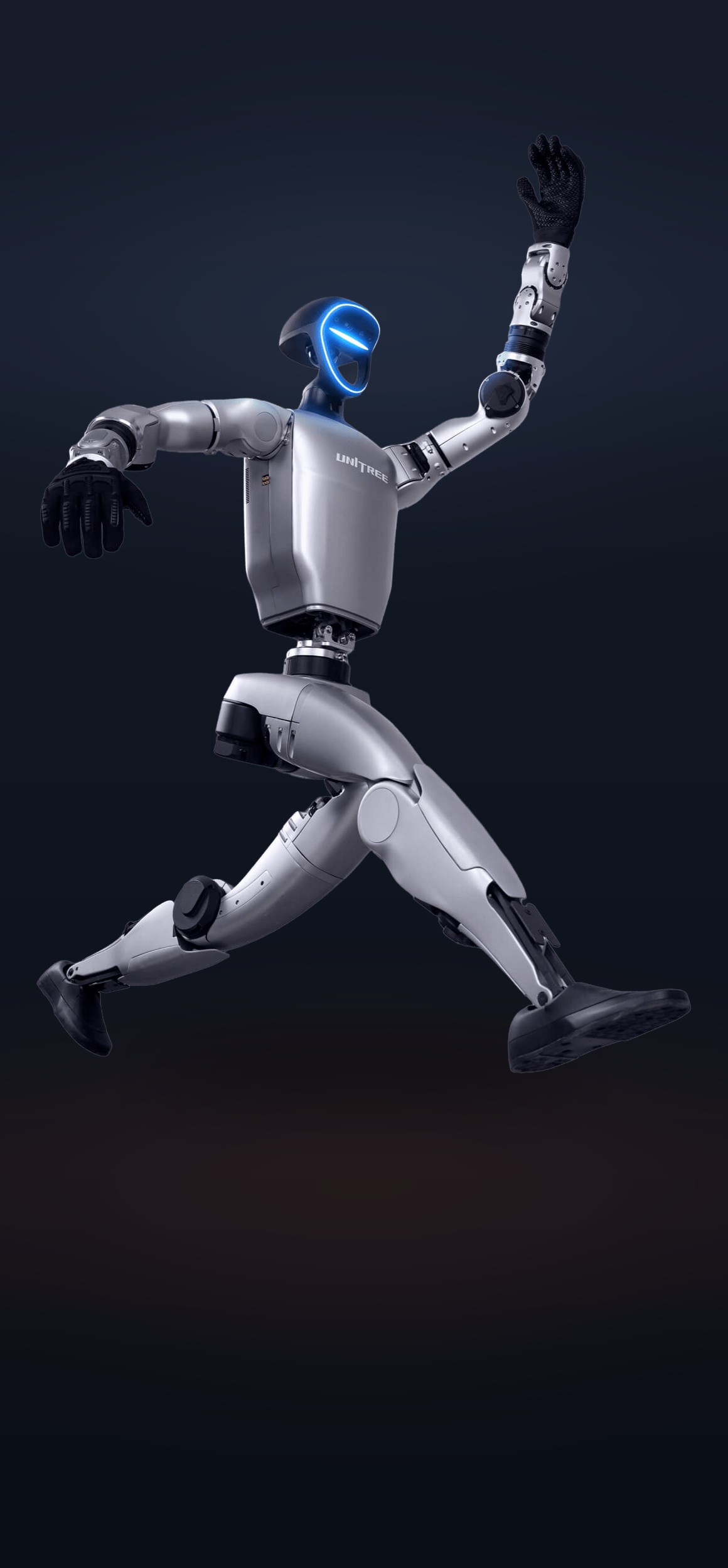 Unitree’s G1. Humanoid sales overtook the company’s four-legged robots for the first time in 2025.
Unitree prices its Shanghai IPO at a $9 billion valuation
Unitree priced its Shanghai listing at 150.8 yuan ($22.34) a share on Thursday, valuing the company at about 61 billion yuan ($9.04 billion). In a filing to the Shanghai Stock Exchange, the Hangzhou company — also known as Yushu Technology — said it is seeking to raise 6.1 billion yuan, selling 40.45 million new shares, or 10% of its enlarged share capital, on the STAR Market. Subscriptions open August 10.
That makes Unitree the first mainland-listed maker of humanoid robots, and it is the first time the public market has put a number on a pure-play humanoid company in China. The price came in above an earlier target of up to 50 billion yuan. Chinese AI company DeepSeek is among the strategic investors in the offering.
The prospectus is the more interesting document. Revenue more than quadrupled to 1.7 billion yuan in 2025, and humanoids — at 867.8 million yuan — overtook four-legged robots as the largest business for the first time. But growth is cooling and margins are being spent: first-quarter revenue rose 68.5% to 422.8 million yuan while profit excluding one-off items fell 52.6% to 40.3 million yuan, as Unitree pushed money into R&D and marketing.
The timing is the story. Unitree lists into the trade fight we led with last week: the U.S. has restricted imports of foreign-made humanoid and four-legged robots, and Unitree told investors that 13.3% of its revenue last year came from the U.S. Its current models have U.S. approvals; it warned that future ones may not.
Follow the Money
INVESTMENTMoove raises $250M to build the boring layer under robotaxis
Moove closed a $250 million Series C at a $2.1 billion valuation, led by Mubadala Investment Company, Woven Capital, Toyota’s Growth Fund and Ion Pacific. The money goes into fleet ownership and "Nests" — depots that charge, service, maintain and orchestrate autonomous vehicles.
Moove already operates third-party autonomous fleets for Waymo in Phoenix and Miami, with London planned. It says it will grow its autonomous-vehicle workforce from around 150 people to 500 by the end of the year.
"Every major technology revolution becomes an infrastructure race," said co-CEO Ladi Delano. "The internet required data centers. AI required compute. Autonomy requires fleets, charging, maintenance, data systems and 24/7 operations in every city."
Reimagine Robotics leaves stealth with "monkey-see, monkey-do" training
Reimagine Robotics emerged from stealth on August 3, building robots that a line worker can teach directly instead of a programmer re-coding them for each task change.
Its co-founder and CEO Jonathan Scholz founded Google DeepMind’s Applied Robotics team in London and led it for seven years. He started Reimagine in April 2025 with former colleagues Oleg Sushkov, Akhil Raju and Misha Denil. It is headquartered in London and Sydney.
The company did not disclose a funding figure, so we are not quoting one.
New Iron
TECH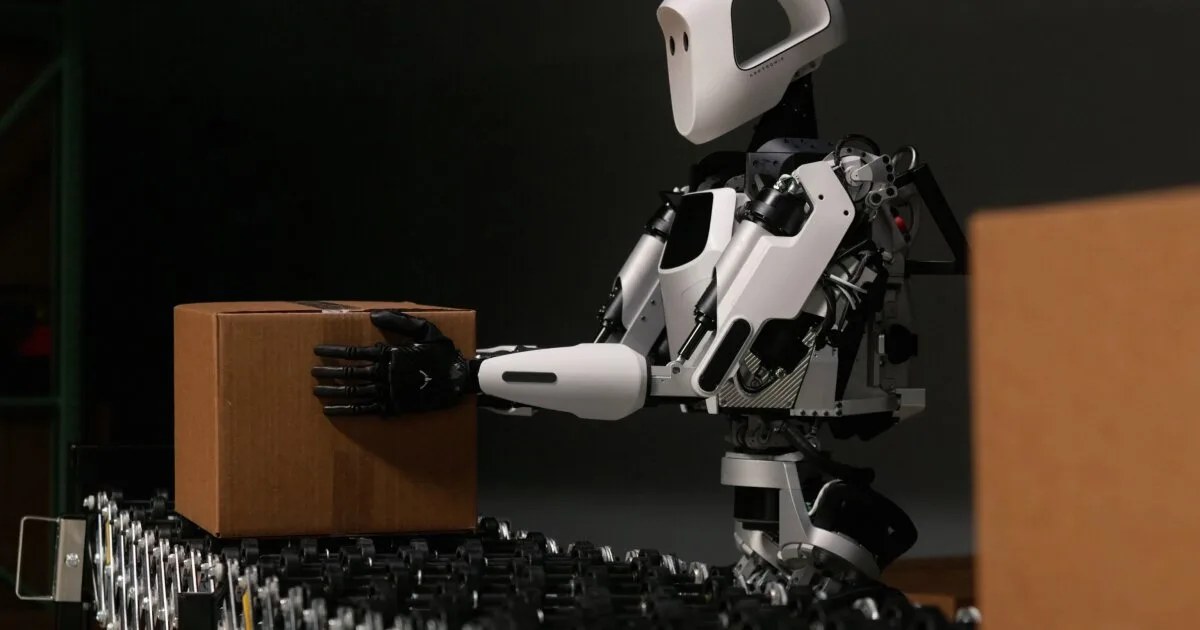 Apptronik’s Apollo. DeepMind used the Apollo 2 to demonstrate whole-body control.
Gemini Robotics 2 moves from tabletop to the whole body
Google DeepMind released Gemini Robotics 2 on July 30 — after our last issue closed, which is why you are reading about it now. The previous models drove a humanoid’s upper body for tabletop work. This one controls the whole robot: walking to a table, picking up a watering can, stepping to a shelf and placing it.
On Apptronik’s Apollo 2, DeepMind says the model drives a five-fingered, 22 degree-of-freedom SharpaWave hand through jobs like tying knots and sealing a ziplock bag. It also runs standard two-finger grippers on a Franka Duo.
The claim worth watching is adaptation: the on-device model is said to take on a new bi-arm robot body in a few hours, "typically with less than 200 examples." A companion model, Gemini Robotics ER 2, acts as the high-level planner and is on Google AI Studio now.
Zoox freezes the design and goes for volume
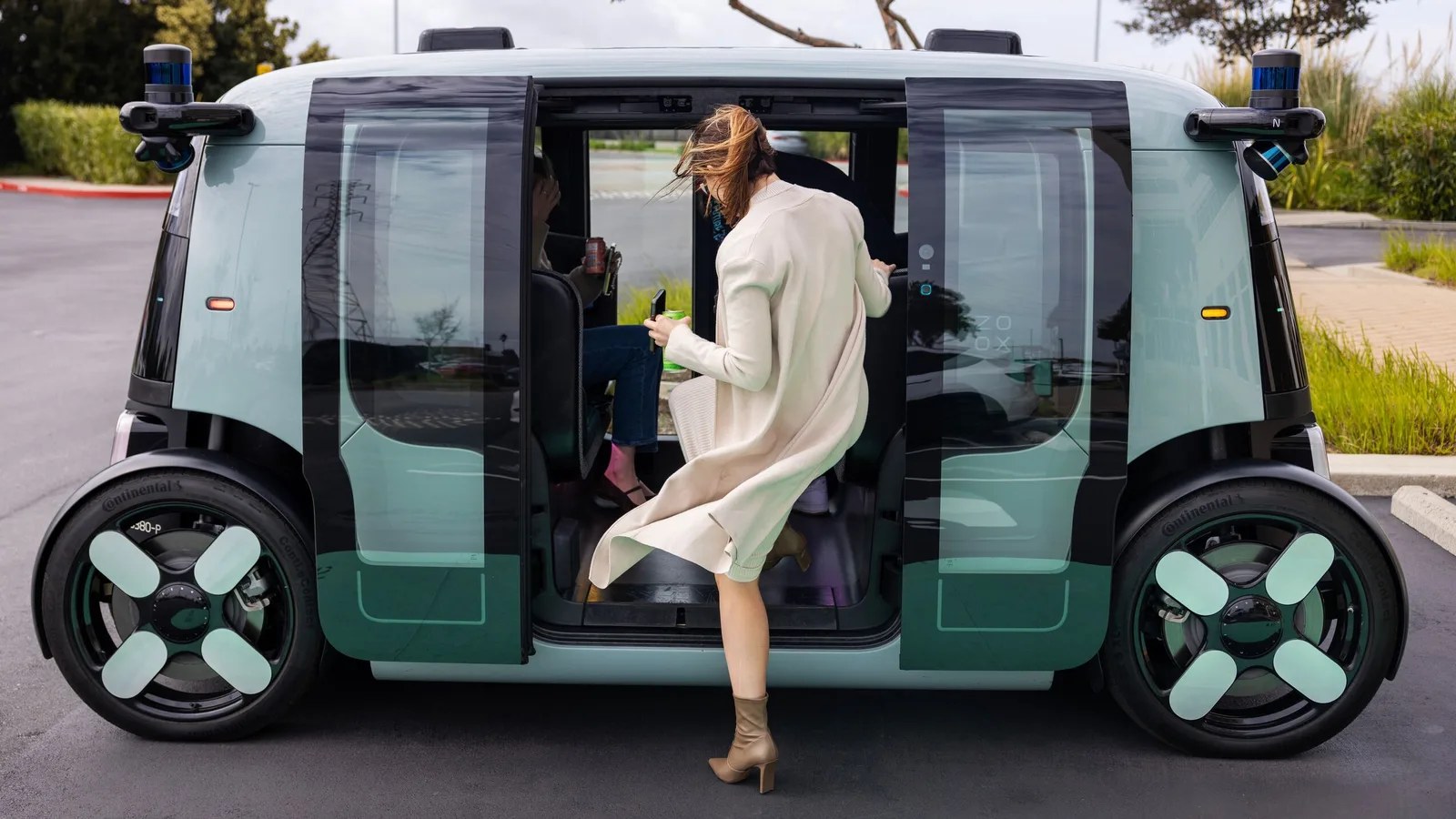
Zoox unveiled the final production design of its purpose-built robotaxi — the carriage-style cabin with no steering wheel and four seats facing each other — and said it is scaling toward 100 vehicles a week.
The Amazon subsidiary opened its Las Vegas service to the public a year ago and says it has carried more than half a million riders. Free service continues in San Francisco, with Austin, Miami, Dallas and Phoenix named next.
The change is mostly interior: lighter monochrome seating and materials chosen for urban wear. Freezing a design is the unglamorous signal that a vehicle programme is done experimenting.
Boots on the Ground
DEPLOYMENT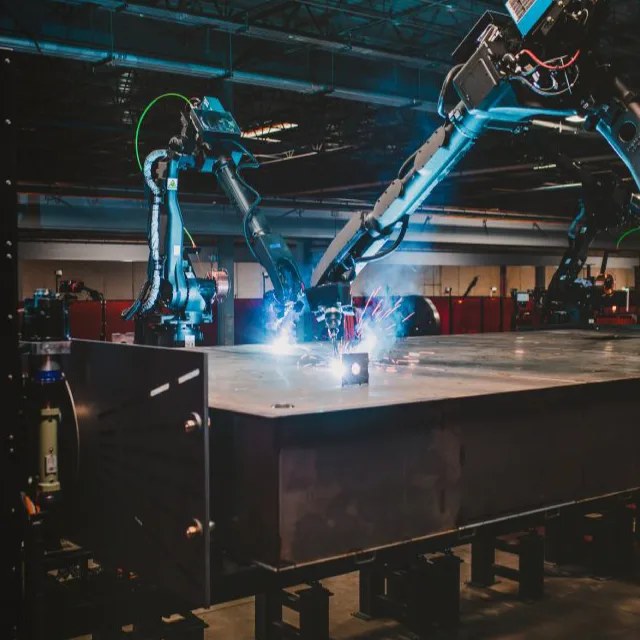 Path Robotics’ welding systems. Its Obsidian model is listed on Robolist.
HII puts up to $900M behind robotic welding and sanding for Navy ships
Huntington Ingalls Industries announced long-term, performance-based production agreements with Path Robotics (robotic welding) and GrayMatter Robotics (robotic sanding). HII said it intends to award up to $900 million of total shipbuilding work to the two companies across seven years.
Read the conditions, because they are the whole deal: the funding is contingent on both companies hitting defined technology and manufacturing readiness and performance milestones. There is a Navy-grade development stage first — validating and qualifying high-precision techniques — and only then a delivery stage where HII actually starts sourcing work through the new line, "contingent upon favorable cost, schedule, and quality performance."
Both companies sit inside HII’s High-Yield Production Robotics (HYPR) programme, launched in April. The work targets aircraft carriers, submarines, destroyers, amphibious ships, future frigates and unmanned surface vessels.
The Movers
RANKINGSThe biggest score moves this week were ours, not the field’s
Our scoring math has been stable since July 30, so unlike last week the numbers were finally comparable. We ran the movers anyway and then threw the table out.
The top six risers all gained between 7.8 and 12.1 points. When we checked what actually changed on those records, it was the same three fields every time: a hero image, image variants, and a signals flag. We spent this week adding photographs to the catalog. Not one of those robots did anything in the world.
A leaderboard that reports our own data-entry as industry momentum is a leaderboard that lies slowly. So there is no movers table this week either. When a robot moves because the robot moved, you will get the table.