Why Warehouse AMR ROI Depends More on Layout Than the Robot
The vendor's demo will work. Your floor probably won't perform the same way — unless you've done the geometry first.
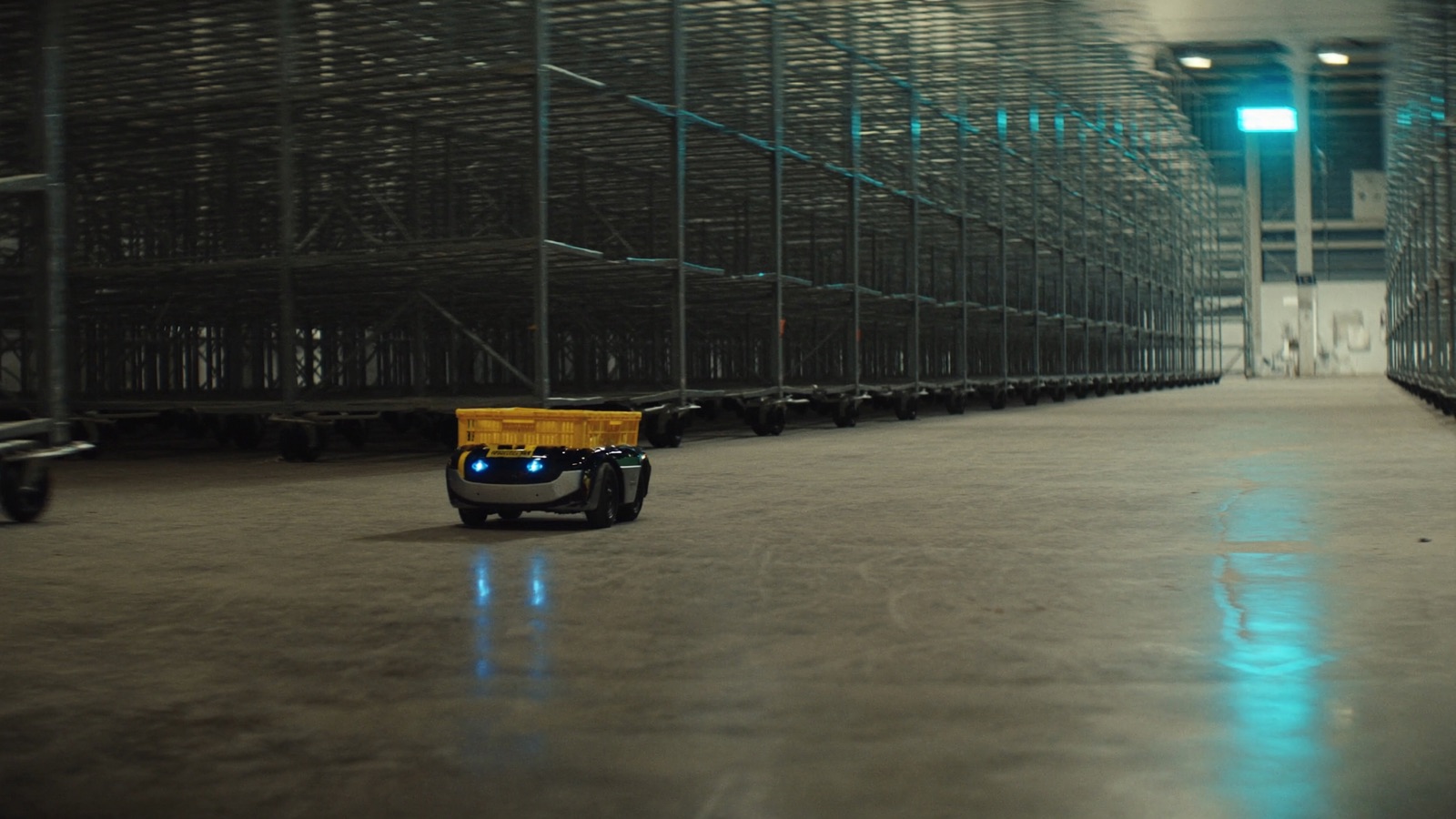
In June 2024, DHL Supply Chain announced its 500 millionth pick using Locus Robotics AMRs — a milestone celebrated at its Toledo, Spain facility. By early 2026, the fleet had crossed 1 billion picks. The DHL deployment is one of the most cited success stories in warehouse robotics, and vendors use it the way SaaS companies use enterprise logos.
What the press releases don't say: DHL's Toledo facility was purpose-built for goods-to-person automation. Wide aisle clearances, high-density shelving configured for robot access, charging stations distributed across zones, and a WMS already integrated with Locus's fleet management. That is not the typical warehouse an ops director inherits.
If your facility was built before 2015, was designed around manual picking, and uses standard 48-inch racking at arbitrary intervals, your AMR will perform differently than DHL's — and the gap comes from geometry, not from the quality of the robot.
This is the most important insight you can take from the AMR literature: the robot is not the variable. The floor is the variable.
The Four Layout Factors That Determine AMR ROI
1. Aisle Width and Traffic Architecture
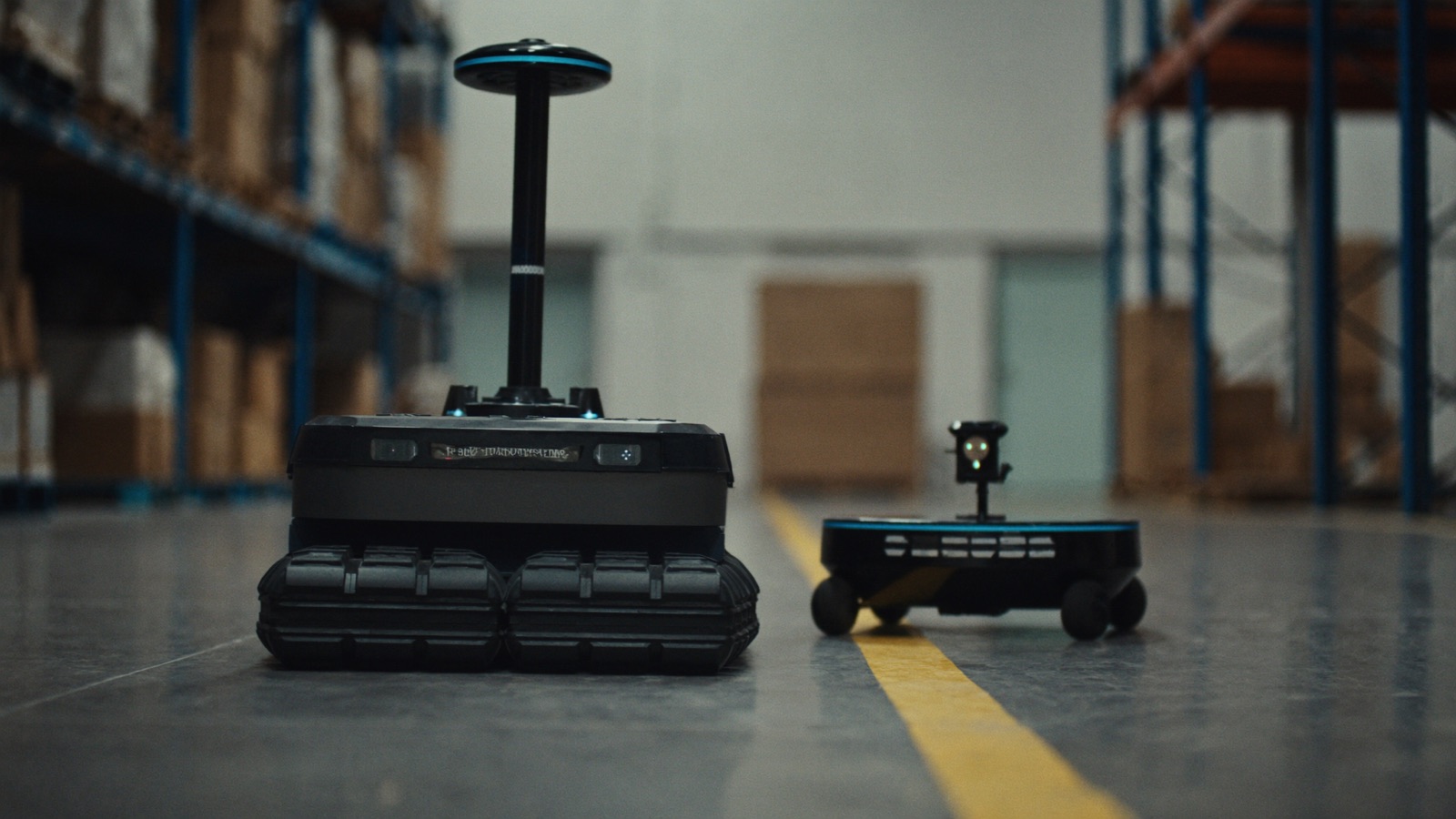
AMRs are not created equal on aisle width. A mid-size collaborative AMR — the Locus LocusBot, the 6 River Systems Chuck, the Zebra/Fetch Freight series — needs a minimum of 60 inches of clear aisle width to navigate reliably with a loaded shelf unit following behind. Best-in-class deployments operate in 72–84 inch aisles to allow two-robot passing with margin.
The problem: most warehouses built before 2018 use 42–48 inch aisles optimized for reach trucks and order selectors on foot. Retrofitting to 60+ inches means either reducing racking density (losing storage capacity) or accepting that your AMRs will operate in single-file, single-direction traffic — which introduces queuing delays that erode your throughput math before you've placed your first order.
Measure your aisle widths before you issue an RFP. Then ask every vendor to show you a deployment at a facility with the same aisle profile.
2. SKU Velocity Distribution (the Pareto Curve)
In a typical warehouse, 20% of SKUs generate 80% of picks — the standard Pareto distribution. In an AMR-optimized layout, the A-class (fastest-moving) SKUs are slotted nearest the pick stations or goods-to-person workstations. Robots travel shorter distances per pick cycle, increasing utilization and reducing cycle time.
In an unconverted legacy layout, A-class SKUs are often slotted by supplier or product family, not by velocity. The consequence is that your AMR travels the full aisle length for the same high-frequency SKU multiple times per hour, burning travel time that directly raises your effective cost per pick.
The ROI impact of reslotting A-class SKUs before an AMR deployment is frequently larger than the robot's own contribution. Operators who skip the reslotting step and go straight to robot deployment consistently report pick rates 25–35% below the vendor's projection.
Reslotting takes time — typically 4–8 weeks for a medium-sized DC — and it costs labor. Factor it into your project budget and timeline. The vendors will not do this for you.
3. Charging Station Placement and Fleet Sizing
AMR utilization curves have a dirty secret: the robots spend somewhere between 12% and 25% of every shift charging, depending on battery chemistry, workload intensity, and how the charging stations are laid out relative to pick zones.
A fleet of 20 robots at 20% charging time is effectively a fleet of 16 productive robots at peak. If your charging stations are clustered near the dock doors (the most common layout, because it's the easiest place to run power), robots assigned to the far end of the facility spend additional dead time traveling to and from the charging zone. That dead travel time eats into your effective pick rate.
The right answer is distributed charging: stations placed in two to three clusters at different points in the pick path so that a robot can charge close to where it will next be assigned. This requires more electrical infrastructure up front — typically 20–30% higher installation cost than a centralized charging station — but it increases net productive robot hours by 8–15% across a shift.
Run the math before you commit to a layout. For a 20-robot fleet at $1,500/month per robot on RaaS, a 10% improvement in productive utilization is worth $3,000/month in effective pick capacity — more than covering the electrical upgrade in under a year.
4. Pick Station Ergonomics and Workstation Queuing
In a goods-to-person setup, the robot brings product to a stationary human picker at a workstation. The picker selects items, repacks, and signals completion. The robot then moves to the next assignment.
The bottleneck in almost every goods-to-person installation is not the robot — it is the picker's cycle time at the workstation. If the picker takes 35 seconds per bin and the robot arrives every 28 seconds, the robot queues. A queue of 3 robots at a single workstation means the 4th robot assigned to that station is sitting idle for 84 seconds waiting for station clearance.
The fix is dual-sided pick stations (the picker can address a robot on either side simultaneously) or staggered station assignment in the fleet management software. But neither fix works if the physical workstation layout doesn't accommodate the queue geometry.
Before finalizing any AMR workstation design, run a queue simulation. Most vendors will do this for free as part of pre-sales. If they won't, run it yourself: estimate picker cycle time from your own data (it's almost always 25–45 seconds), divide by planned robot arrival interval, and calculate average queue depth. If queue depth exceeds 1.5 robots during peak, you need more workstations.
The Layout Audit: What to Do Before Signing Anything
This is a pre-contract deliverable, not a nice-to-have.
| Audit item | What you're measuring | Who does it |
|---|---|---|
| Aisle width survey | All aisle widths in the deployment zone in inches | Facilities team + measuring tape; 1 day |
| Wifi heat map | Signal strength and handoff reliability across the full floor | IT contractor with site survey software; $300–$800 |
| SKU velocity pull | Top 100, 500, 1000 SKUs by pick frequency over prior 90 days | WMS report; 1 hour |
| Slotting gap analysis | Delta between current slotting and velocity-optimized slotting | 1–2 days with a slotting analyst |
| Electrical capacity survey | Available circuits for charging station installation at 3–5 candidate locations | Electrical contractor; $500–$1,500 |
| Pick station throughput baseline | Actual picker cycle time, measured across 5–10 pickers per shift for 2 weeks | Operations team; no cost beyond supervisor time |
Total cost: typically $2,000–$4,000 for a facility under 300,000 square feet. That is roughly 1% of first-year RaaS fees for a 15-robot fleet, and it is the difference between a confident "yes" or "no" decision and a $300,000 mistake.
Layout vs. Robot: A Real Comparison
Consider two operators, both running the same collaborative AMR platform, both with 20-robot fleets:
Operator A — legacy facility, 44-inch aisles, no reslotting, centralized charging near dock, one-sided pick stations.
- Effective robot utilization: 68%
- Pick rate: 140 picks/hour/robot
- Cost per pick (RaaS at $1,500/month): ~$0.18
- Payback period on labor offset: 36+ months
Operator B — same robots, 72-inch aisles (rebuilt one racking section), A-class SKUs reslotted to inner zone, distributed charging in 3 clusters, dual-sided pick stations.
- Effective robot utilization: 84%
- Pick rate: 205 picks/hour/robot
- Cost per pick (same RaaS rate): ~$0.12
- Payback period: 18–22 months
Same vendor. Same robot. Same monthly fee. The difference in cost per pick is 50%, driven entirely by layout decisions.
The vendors will project the Operator B performance for every customer because it represents their best-case scenario. The ops director's job is to honestly assess which scenario their floor actually resembles — and fix the gap before signing.
What to Do When Your Layout Won't Accommodate Best Practices
Not every facility can be rebuilt. Lease terms, capital constraints, and the realities of operating a live DC while trying to retrofit automation mean that some layout compromises are unavoidable. When that's the case:
Reduce scope before reducing ambition. If only 40% of your floor has robot-compatible aisles, deploy AMRs in that 40%. Don't force them into zones they can't navigate effectively. A smaller, well-configured AMR deployment delivers better ROI than a large, poorly configured one.
Sequence the investment. Reslotting is cheap relative to robots. Do the slotting work first. You'll see the pick-rate improvement from reslotting alone within weeks, and you'll have cleaner baseline data for your AMR business case.
Negotiate layout consulting into the contract. The better AMR vendors (Locus, Geek+, MiR/Zebra) have solutions engineers who will do a layout review as part of the sales process. Get this commitment in writing before the demo. If the vendor won't do a layout assessment before signing, that's a yellow flag.
Accept a lower-density first phase. Phase 1 with 10 robots in an optimized zone will teach you more about your floor's real performance than 25 robots crammed across a non-optimized DC.
The Takeaway
The robots work. The technology has passed the proof-of-concept stage. DHL's billion picks, GXO's humanoid tote handling, the dozens of 3PLs running collaborative AMR fleets at scale — none of that is fiction.
What doesn't work automatically is the transition from "the robot works in the demo" to "the robot generates the ROI we planned." That transition is 80% layout planning and 20% robot selection.
Before you evaluate a single vendor, audit your floor. Measure the aisles. Pull the velocity data. Map the wifi. None of this is glamorous project work, but it is where the ROI lives.
Continue reading: AMR TCO: Fleet Size, Charging Infrastructure, and WMS Integration — the full cost model for a warehouse AMR deployment, including the line items vendors don't quote upfront.