AMR TCO: Fleet Size, Charging Infrastructure, and WMS Integration
The robot fee is the visible line item. These are the ones that blow up a budget.
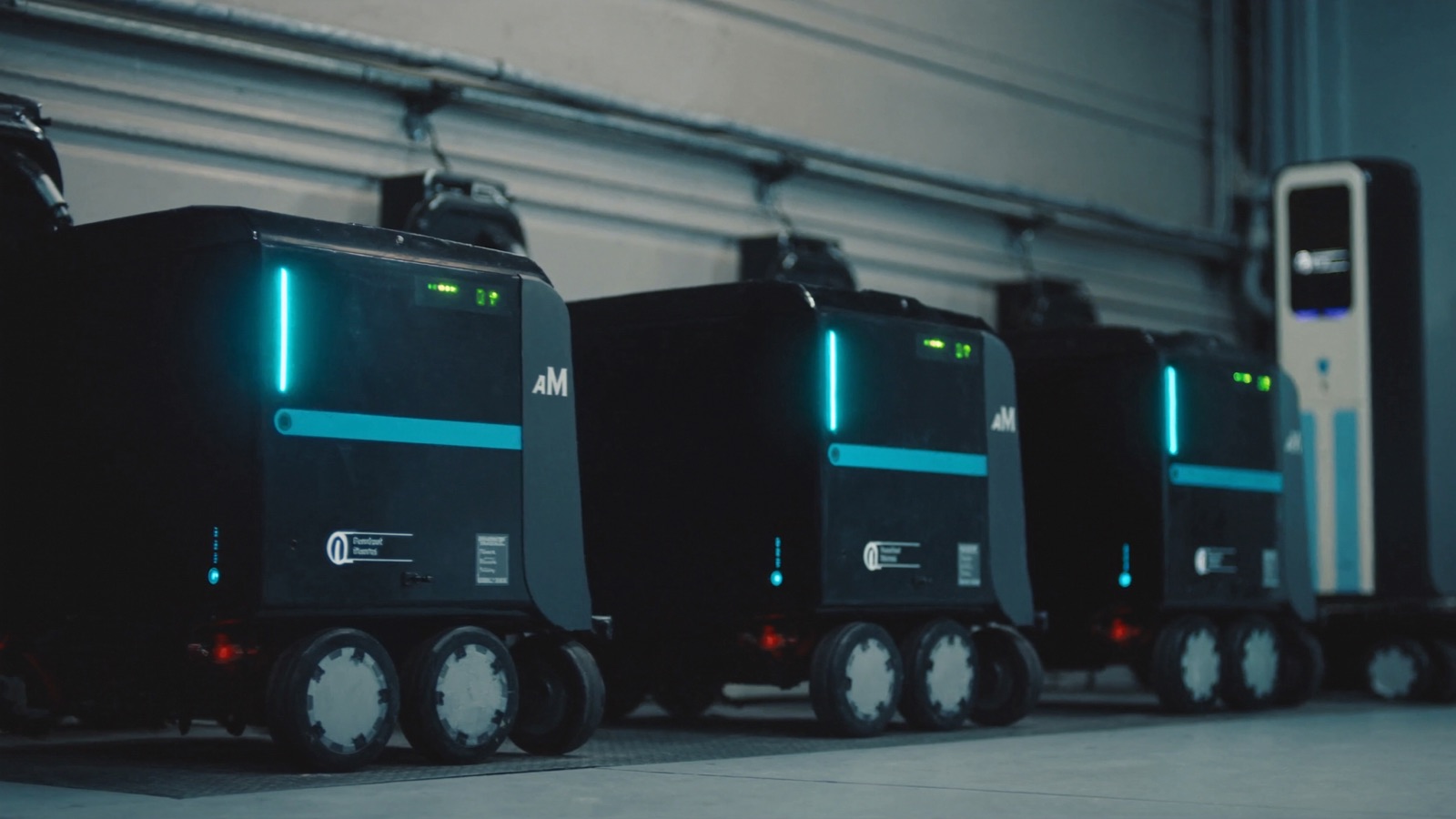
The leasing model for collaborative warehouse AMRs has matured. Most tier-1 vendors — Locus Robotics, 6 River Systems (now Ocado Robotics), Zebra/Fetch, Geek+ — offer Robotics-as-a-Service (RaaS) contracts that bundle the robot hardware, software, fleet management, and maintenance into a monthly per-robot fee. On paper, this converts a large capital purchase into a predictable operating expense. In practice, the per-robot fee is the floor, not the ceiling, of what you'll pay.
Operators who model AMR TCO using only the per-robot RaaS rate consistently underestimate their real cost by 40–70%. The gap lives in fleet sizing math, charging infrastructure, WMS integration, staff productivity during transition, and ongoing software licensing.
This is the complete cost model.
Layer 1 — The Per-Robot Fee (The Visible Cost)
RaaS pricing for collaborative picking AMRs in the 2025–2026 market runs roughly $750–$2,500 per robot per month, depending on robot type, fleet size, contract term, and vendor.
| Robot class | Typical RaaS range | Notes |
|---|---|---|
| Collaborative picking AMR (goods-to-picker) | $1,200–$1,800/month | Locus LocusBot, 6RS Chuck tier |
| Autonomous forklift / pallet mover | $2,000–$4,000/month | Higher payload, more complex nav |
| Smaller shelf-carrying AMR | $750–$1,200/month | Geek+ shelf-to-person variants |
For a 20-robot fleet at $1,500/month per unit, that's $360,000/year in base RaaS fees. That's the number that goes into most TCO models. Here's what gets left out.
Layer 2 — Fleet Sizing Buffer (Almost Always Underestimated)
The fleet size you need to achieve your target throughput is not the fleet size you can have available at any given time. Robots charge (12–25% of time), undergo software updates, and occasionally require maintenance windows. The planning ratio used by most experienced integrators is 15–20% buffer on top of your calculated productive fleet.
If your throughput model says you need 20 robots to hit your pick rate during peak, you need 23–24 robots in the contract to reliably deliver that throughput when 3–4 are charging or in maintenance.
At $1,500/month, those 3–4 buffer robots cost $54,000–$72,000 per year. They are not doing productive work most of the time. They are operational insurance.
Additionally, most vendors charge for fleet software seats on a per-robot basis. The buffer robots generate full licensing cost even on days they're not deployed.
Rule: Always calculate your fleet size as (required productive robots) ÷ 0.80 and contract for that number.
Layer 3 — Charging Station Infrastructure
Charging station hardware is frequently included in the RaaS contract. The electrical installation — running circuits from the facility's panels to the charging station locations — almost never is.
A standard AMR charging station draws 30–50 amps per unit. For a 20-robot fleet with distributed charging across 3 zones (6–7 stations per zone), you're looking at:
| Cost item | Typical range |
|---|---|
| Charging station hardware (if CapEx, not RaaS) | $3,000–$8,000 per station |
| Electrical panel capacity upgrade (if needed) | $5,000–$25,000 |
| Circuit runs to charging stations (per station, 50–150 ft) | $800–$2,500 |
| Installation labor | $1,500–$4,000 per station |
| Total electrical install for 20-robot fleet | $35,000–$90,000 |
This is a one-time capital cost, but it is real. For a 3-year RaaS contract, amortize it across 36 months: $970–$2,500/month added to the effective per-robot cost.
Vendors who charge for charging hardware separately (rather than bundling it in RaaS) may quote $3,000–$8,000 per station. For a 20-robot fleet needing 10–15 stations, that's another $30,000–$120,000 up front.
Negotiate charging station inclusion as part of the RaaS contract. It is becoming increasingly standard to include hardware; the electrical installation almost never is.
Layer 4 — WMS Integration (The Most Variable Cost)
This is where TCO models most often explode.
Integrating an AMR fleet with an existing WMS is not a checkbox. The AMR fleet management system needs to receive pick orders from the WMS, acknowledge task completion, handle exception states (robot out of bounds, item not found, pick station error), and return inventory accuracy signals. The complexity of that integration scales with:
- WMS age and architecture. A modern cloud-native WMS (Blue Yonder, Manhattan Associates' cloud WMS, SAP EWM in API mode) can integrate with an AMR fleet manager in 4–8 weeks using standard REST or MQ interfaces. A legacy on-premise WMS running a 15-year-old codebase may require a custom middleware layer that takes 3–6 months and costs significantly more.
- Batch vs. real-time mode. Batching orders to the fleet (sending 100 picks at once, getting results in bulk) is cheap and simple. Real-time task orchestration (the WMS assigns a specific robot to a specific task in real time and receives live status) is more powerful and significantly more complex to integrate.
- Vendor-provided connectors. Locus, 6 River, and Zebra/Fetch maintain pre-built connectors for the most common WMS platforms (Manhattan, Blue Yonder, SAP, Oracle WMS Cloud, Infor). If your WMS is on that list, integration cost is lower — typically $15,000–$40,000 in professional services. If it isn't, budget for custom integration: $50,000–$150,000, sometimes more.
| WMS scenario | Integration cost estimate | Timeline |
|---|---|---|
| Modern cloud WMS with pre-built connector | $15,000–$40,000 | 4–8 weeks |
| On-premise WMS with API access | $30,000–$80,000 | 8–16 weeks |
| Legacy WMS, no connector, custom middleware | $75,000–$200,000+ | 3–6 months |
| Full WES (Warehouse Execution System) layer | $150,000–$400,000 | 4–9 months |
Important distinction: some integrators will quote WMS integration and WES implementation as one line item. A Warehouse Execution System sits between the WMS and the robot fleet and orchestrates human and robot resources simultaneously — a genuinely powerful capability, but also a 3–6x cost multiplier over basic WMS integration. Clarify what you're buying before comparing quotes.
Layer 5 — Ongoing Software and Support Costs
RaaS contracts include software licensing for the fleet management platform. What they frequently don't include:
Fleet analytics and reporting. Dashboards that show pick rate by zone, robot utilization curves, charging event frequency, and maintenance history are often a separately licensed module. Budget $500–$2,000/month depending on fleet size and vendor.
Annual software upgrade fees. As fleet management software versions advance, on-premise installations may require upgrade fees. Cloud-hosted fleet managers typically roll updates automatically, but verify this in the contract.
Premium support SLA. A standard RaaS contract may include next-business-day support with a 4-hour initial response SLA. If your DC runs 24/7 or handles time-sensitive fulfillment, you may need a premium support tier with 2-hour on-site response — often $2,000–$5,000/month additional for a medium-sized fleet.
Training. Initial operator training is typically included in implementation. Retraining due to staff turnover — a constant in high-churn DC environments — is often billed at $500–$1,500 per session.
Layer 6 — Productivity Drag During Transition
This cost is real but almost never appears in a vendor TCO model.
During the 4–12 weeks of AMR installation, map learning, WMS integration, and staff training, your facility will not be at full productivity. Robots in learn mode are slower. Staff are distracted by training. Exception handling that will eventually be automated requires human intervention during cutover.
Operators who plan for a clean cutover typically experience 20–40% productivity degradation during the first 4 weeks of live operation. For a 200,000 sq ft DC processing 15,000 orders per day, that degradation has a real cost in either overtime labor or delayed shipments.
Plan the cutover during your slowest season. If you're a general merchandise 3PL, Q1 is usually your window. Launching AMR integration in October is how pilots fail.
The Complete TCO Model: 3-Year Example
For a 20-robot collaborative picking fleet in a 200,000 sq ft DC, 2 shifts/day, 5 days/week:
| Cost item | Year 1 | Year 2 | Year 3 | 3-Year Total |
|---|---|---|---|---|
| RaaS fees (23 robots incl. buffer) | $414,000 | $414,000 | $414,000 | $1,242,000 |
| Electrical installation | $60,000 | — | — | $60,000 |
| WMS integration (pre-built connector) | $35,000 | $5,000 (support) | $5,000 | $45,000 |
| Analytics/reporting software | $18,000 | $18,000 | $18,000 | $54,000 |
| Premium support SLA | $36,000 | $36,000 | $36,000 | $108,000 |
| Training and retraining | $8,000 | $4,000 | $4,000 | $16,000 |
| Productivity drag (est.) | $40,000 | — | — | $40,000 |
| Total | $611,000 | $477,000 | $477,000 | $1,565,000 |
The per-robot RaaS fee implied a 3-year cost of $1,242,000. The real number is $1,565,000 — 26% higher. In a custom WMS scenario (no pre-built connector), the integration cost alone pushes the 3-year total past $1,700,000.
What to Negotiate
Not everything in the TCO model is fixed. These items are routinely negotiable:
Charging station hardware inclusion. Ask for charging stations included in the RaaS fee. First-year buyers at significant fleet size ($500K+ annually) usually have leverage here.
WMS integration as a project fee vs. ongoing support. Vendors prefer to convert integration cost into a recurring SaaS line item. Push for a flat project fee with a clear scope of work. Ongoing support after integration completes is a separate negotiation.
Fleet size ramp-up. Rather than contracting for your full fleet from day one, negotiate a ramp: 10 robots in month 1–3, 15 in month 4–6, 20 in month 7+. This aligns payment with actual utilization and reduces risk during the transition period.
SLA teeth. Specify a rebate or credit mechanism if the vendor fails to meet uptime SLAs. A 98% uptime SLA with no penalty for breach is not an SLA. Get a specific credit — typically 5–15% of monthly fee per percentage point of downtime below the SLA threshold.
The Bottom Line
The per-robot RaaS fee is the starting point, not the answer. A complete TCO model requires:
- Buffer fleet sizing (add 20% to your productive robot count)
- Electrical installation (budget $40,000–$90,000 for a 20-robot fleet)
- WMS integration (budget $15,000–$200,000 depending on WMS age)
- Ongoing software and support costs (add $500–$7,000/month)
- Productivity drag during transition (plan for 4–8 weeks at 60–80% throughput)
Total these up before you sign. The vendors are sophisticated enough to know their per-robot fee looks attractive in isolation. You need to be sophisticated enough to know what you're really buying.
Continue reading: Throughput Math: Pick Rate, Congestion, and the Law of Diminishing Returns — the calculations that determine whether your fleet size will actually hit your target.
Discussion
0 commentsNo comments yet. Sign in to be the first.