Payback by task: which construction robot categories deliver
Separating proven economics from promising-but-early across layout, demolition, drilling, surveying, and printing
The honest maturity map
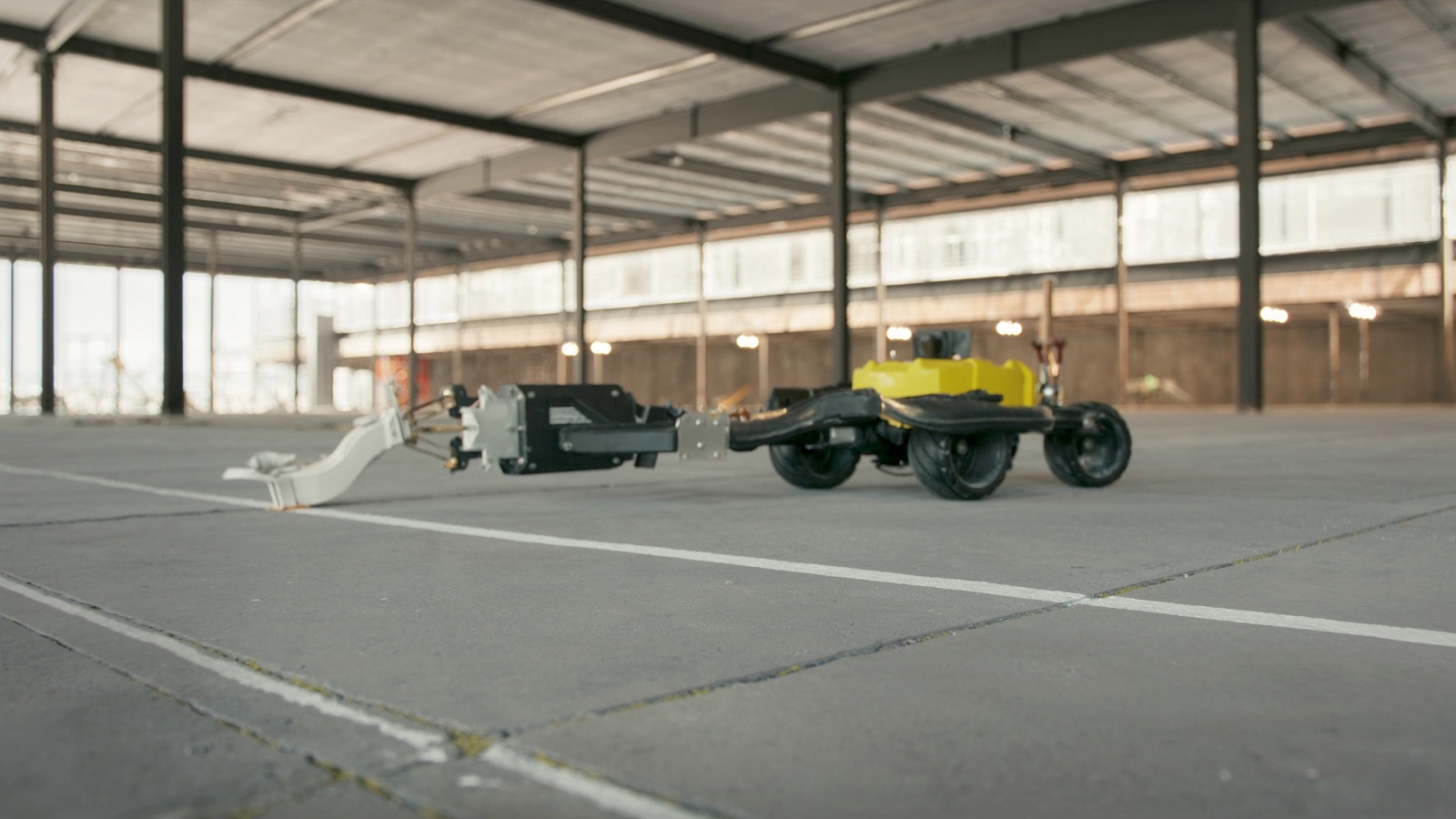
"Construction robots" is not a single market with a single maturity level. It is a collection of task-specific categories that happen to share a job site, and they are at wildly different stages of commercial viability.
Remote demolition robots have been in continuous commercial use since the 1980s. Layout marking robots are in early commercial deployment on a relatively narrow set of project types. Autonomous earthmoving is in limited commercial operation on large civil and mining sites. 3D concrete printing has been used on specific building types — single-family residential, barracks construction, infrastructure elements — but is not general-purpose commercial construction equipment. Bricklaying robots have generated significant media attention and limited field deployment.
A contractor evaluating "construction robots" as a category needs to evaluate each task class separately, with a clear-eyed view of which ones have real payback data and which are still proving the concept. This article provides that map.
Task class 1: Layout and marking — early commercial, narrow project fit
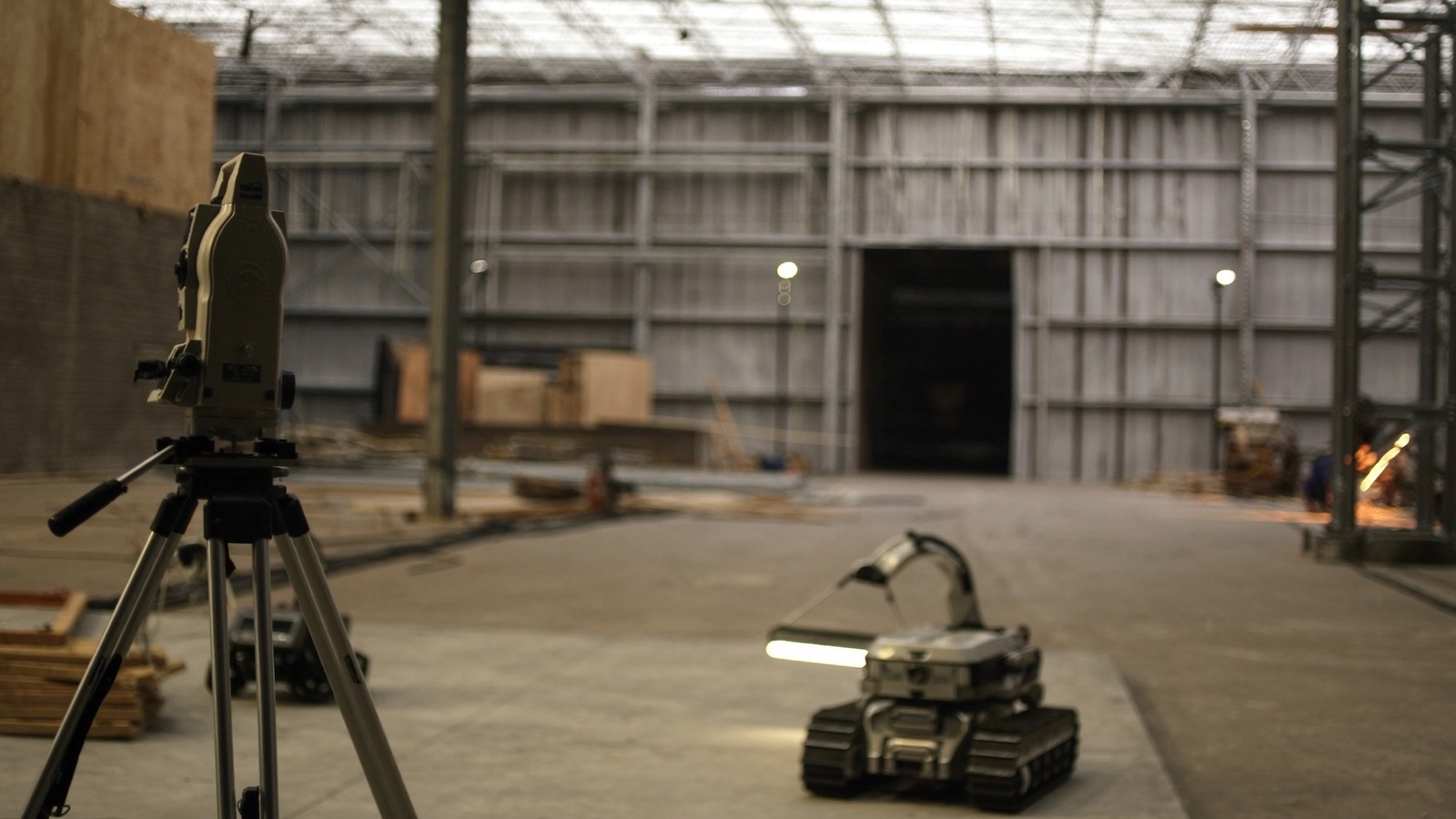
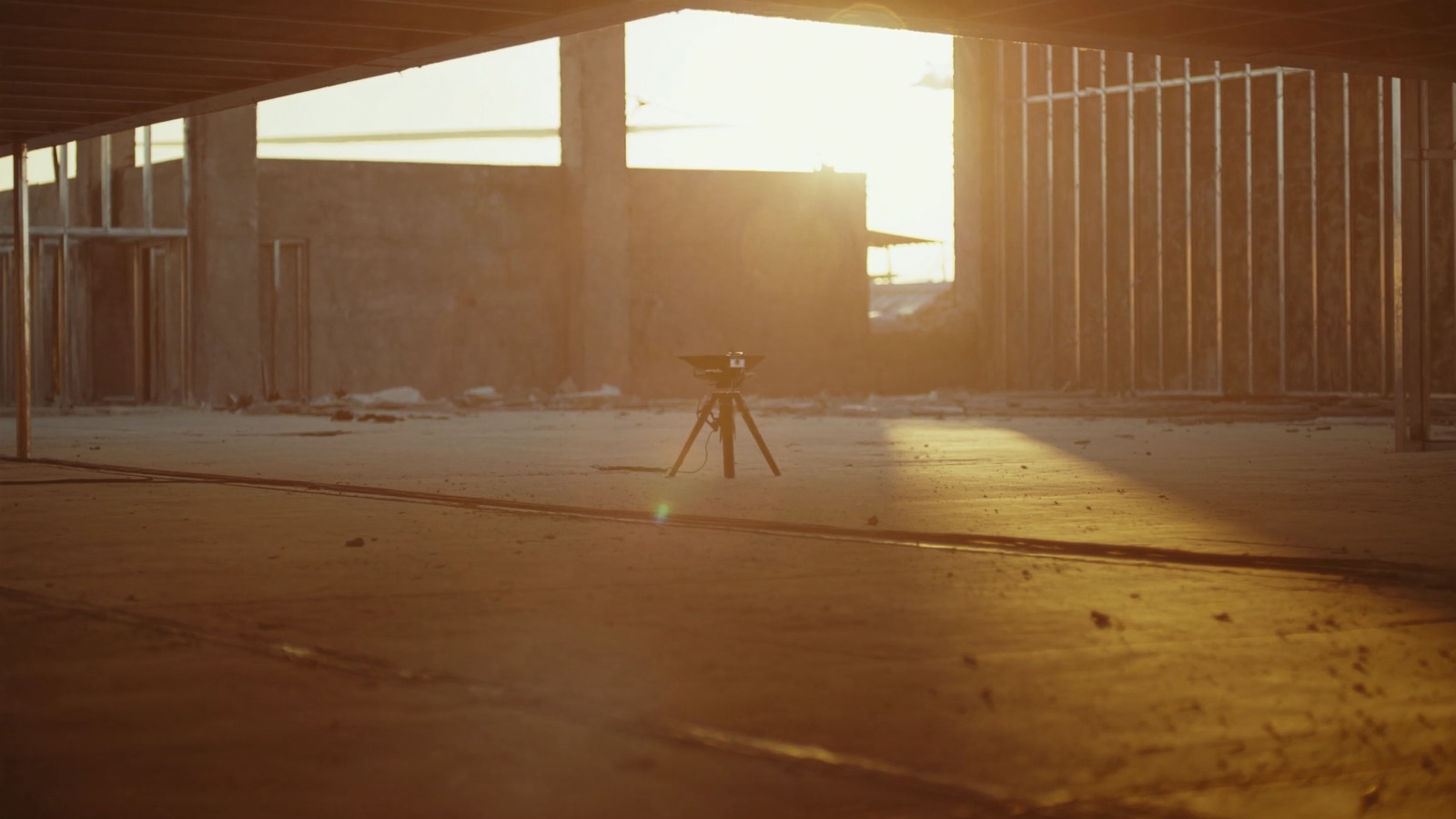
What it does: Autonomous or semi-autonomous robots (typically wheeled platforms with a total station interface and chalk or ink marking system) print layout lines, points, and embedded floor markings on concrete slabs, replacing the manual layout process done by surveyors and layout crews.
Known example in the market: Dusty Robotics FieldPrinter is the most widely cited commercial system in this class. It operates indoors on flat concrete slabs, registering to control points via a total station, and prints from a BIM model.
Where the payback is real:
- Large, open floor-plate projects: distribution centers, warehouses, big-box retail, data centers
- Projects with high layout density (mechanical room coordination, raised floor systems, complex MEP)
- Projects where rework from layout errors is a documented cost driver
Where the payback is marginal or negative:
- Complex interior renovations with irregular floors, step changes, or surface contamination
- Multi-story construction where the machine must be elevated and re-registered on every floor
- Projects with fewer than ~20,000 sq ft of continuous open slab
Realistic productivity comparison: In optimal conditions, a layout robot can mark significantly more square footage per day than a two-person survey crew and does so with GPS-independent accuracy (sub-¼ inch is the standard claim). On a 500,000 sq ft distribution center, this can represent meaningful labor reduction and a material reduction in rework. On a 15,000 sq ft office renovation with 60 walls and varying floor levels, the mob/demob overhead consumes most of the gain.
Honest maturity assessment: Early commercial. Multiple systems have completed real projects. Economics are positive on well-matched project types. Still operator-dependent, still requires total station support on most systems, and still sensitive to site conditions. Not a commodity — experienced operators and careful site selection remain important.
Payback rating: Proven on matched projects. Fragile on unmatched ones.
Task class 2: Remote demolition — proven, specialty-dependent
What it does: Remote-controlled demolition robots carry interchangeable hydraulic tool attachments (hammers, crushers, cutter heads) and are operated by a remote operator, allowing demolition in environments hazardous or inaccessible to workers: contaminated environments, structurally compromised buildings, confined spaces with silica/asbestos/lead exposure, and precision interior demolition where vibration control is required.
Catalog anchor: The Brokk line — including the Brokk 110, 170, 200, 300, and 500 — represents the most widely deployed remote demolition equipment in this category. Electric-powered, remote-operated, and sized for a range of applications from confined-space interior work to heavy structural demolition.
Where the payback is real:
- Any environment where manual demolition requires full PPE (Tyvek, respirator, supplied air) for silica, asbestos, or lead exposure — the avoided health-protocol cost is significant
- Confined spaces where personnel entry is regulated and slow (tanks, tunnels, vaults)
- Precision demolition where vibration must be minimized (hospital renovation adjacent to occupied floors, historic building selective demolition)
- High-ceiling or overhead work where scaffolding and personnel access is expensive and slow
Where the payback is marginal:
- Clean, open demolition work on standard commercial projects where a standard excavator or skid-steer with a hammer is accessible and safe
- Small-volume demolition where mob/demob cost of the robot exceeds the task duration
Realistic productivity comparison: Remote demolition robots are not faster than an excavator with a hammer in an open site. They are safer, more precise, and accessible in environments the excavator cannot reach. The ROI frame is not "faster than current method" but "enables work that current method cannot do safely or at all." For specialty demolition contractors, this is the core business case.
Honest maturity assessment: Mature. Remote demolition robots have been in commercial use for decades. The technology is proven, the dealer/service network is established (at least for the major vendors), and the operating protocols are documented. The primary barriers are capital cost and specialized operator training — not technology maturity.
Payback rating: Strong for specialty demolition contractors. Weak for general trades without specialty demolition scope.
Task class 3: Surveying and site scanning — emerging commercial, high data value
What it does: Mobile scanning robots (and some unmanned ground vehicles with LiDAR and photogrammetry payloads) traverse jobsites autonomously or semi-autonomously, capturing point cloud and photographic documentation for as-built verification, progress monitoring, and QC.
Known examples in the market: Boston Dynamics Spot has been deployed in construction scanning configurations by several construction firms. Autonomous scanning systems from companies including NavVis, Trimble, and others provide related capability.
Where the payback is real:
- As-built verification before MEP rough-in, where finding a layout error before the ceiling goes up is worth hundreds of thousands of dollars in avoided rework
- Progress documentation for owner reporting, particularly on complex public or institutional projects
- Clash detection between installed work and BIM model on projects with tight tolerances
Where the payback is marginal:
- Simple progress photography (cheaper tools exist for this)
- Projects without a meaningful BIM model to compare scans against
- Sites where scan data cannot be processed and delivered to the field team fast enough to catch errors before the next trade proceeds
Honest maturity assessment: The scanning hardware is proven. The workflow integration — getting scan data from robot to point-cloud to actionable comparison against the BIM model, fast enough to be useful on an active project — varies significantly by firm and project. The ROI depends more on the data workflow than the robot itself.
Payback rating: Real but workflow-dependent. Don't buy the robot without knowing who processes the data and how quickly.
Task class 4: Drilling and fastening — limited commercial deployment
What it does: Drilling robots mount a drill head on an arm or gantry and drive fasteners, anchor bolts, or core holes at programmed locations based on a digital plan. The pitch is elimination of manual layout + drilling sequences for MEP anchoring, curtain wall fastening, or post-installed anchor installation.
Known example in the market: Hilti has developed the Jaibot, a semi-autonomous ceiling drilling robot. Kewazo and others have prototyped or deployed robotic drilling systems on specific project types.
Where the payback might be real:
- High-bay ceilings with dense, repetitive fastener patterns (data centers, manufacturing facilities, distribution)
- Projects with documented injury risk from overhead drilling (ergonomic injury is a real cost driver for mechanical and electrical contractors)
- Seismic anchor installation where exact positioning is code-required
Honest maturity assessment: Limited commercial deployment. Several systems have completed real projects, but the category is still in early commercial scaling. Operator expertise is concentrated at vendors and a small number of early-adopter contractors. Buying into this category currently means accepting a higher support dependency on the vendor than in mature categories.
Payback rating: Case-by-case. Evaluate with caution and a conservative utilization assumption.
Task class 5: 3D concrete printing — proven on specific project types, not general commercial
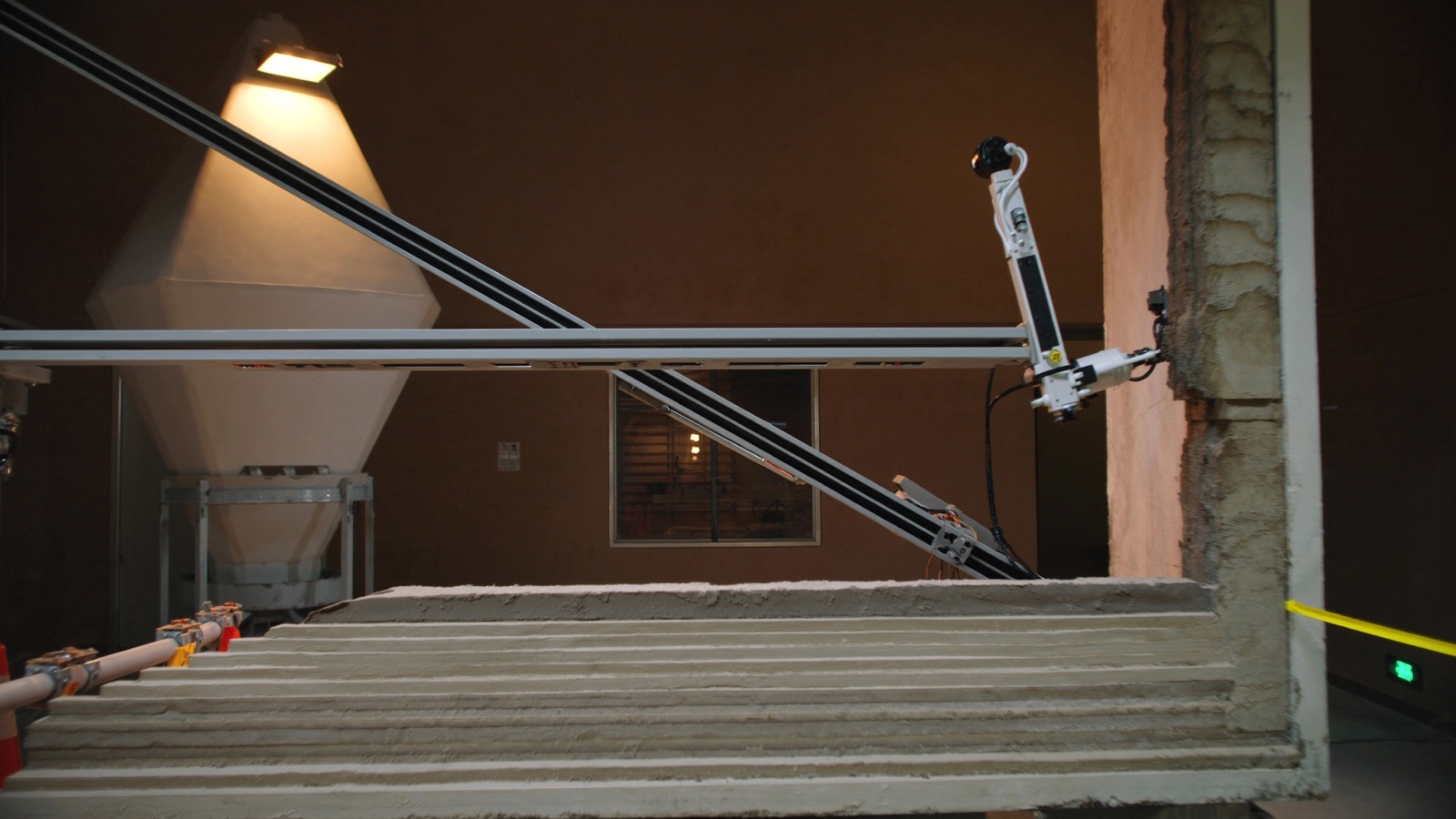
What it does: Large-format gantry or robotic arm systems extrude concrete mix layer by layer to form walls, structural elements, or entire buildings without conventional formwork.
Catalog anchor: COBOD BOD2 (/robots/bod2) and PERI 3D Construction printer (/robots/3d-drucker) represent gantry-based concrete printing systems in commercial deployment.
Where it has been used: Single-family residential construction (multiple completed homes in the U.S. and Europe), military barracks (U.S. Army Corps of Engineers projects), infrastructure elements (bridge abutments, flood barriers), emergency housing.
Where the payback has not been demonstrated:
- General commercial construction: multi-story above-grade commercial, high-rise residential, mixed-use
- Any project requiring conventional reinforcing schedules, multiple embedded penetrations, or complex above-grade structure
Honest maturity assessment: Real systems, real projects, genuine structural results — but on a narrow set of project types. The cost of printing concrete is not necessarily lower than forming it conventionally; the advantage comes in specific scenarios: complex organic geometry, labor-short markets, rapid deployment in remote or infrastructure settings, and elimination of formwork cost on low-rise structures. Do not interpret "3D-printed house" case studies as a proxy for general commercial construction viability.
Payback rating: Proven in niche applications. Not ready for general GC evaluation on standard commercial work.
Task class 6: Masonry and bricklaying — commercially limited
What it does: Robotic masonry systems lay brick, block, or other unit masonry under automated or semi-automated control, reducing reliance on skilled masonry labor.
Known example in the market: Construction Robotics SAM100 (semi-automated mason) has been deployed commercially on specific masonry projects.
Honest maturity assessment: Demonstrated on real masonry projects, but deployment has been limited relative to the market size. Skilled masonry labor is genuinely scarce in many markets, which strengthens the business case, but the system requires setup time, project complexity constraints, and operator skills that have limited broad adoption.
Payback rating: Emerging. Stronger in labor-scarce markets and repetitive masonry facades.
Task class 7: Autonomous earthmoving — early commercial on civil and infrastructure only
What it does: Autonomous or semi-autonomous dozers, graders, and compactors carry out earthmoving operations guided by GPS-referenced terrain models.
Known example in the market: Built Robotics has deployed autonomous excavators and dozers on civil infrastructure projects. Komatsu, Caterpillar, and others have autonomous and semi-autonomous grade control systems for equipment they manufacture.
Honest maturity assessment: Relevant to civil and infrastructure GCs, not to vertical building construction. The technology is commercially deployed on large earthmoving sites — landfill operations, mining, large grading projects — but requires large, relatively clear sites with stable GPS and is not applicable to typical vertical building construction.
Payback rating: Real for civil and infrastructure contractors on appropriate projects. Not applicable to vertical building GCs.
Summary table
| Task class | Maturity | Payback profile | Best project fit |
|---|---|---|---|
| Layout / marking | Early commercial | Positive on matched projects | Large open-slab commercial |
| Remote demolition | Mature | Strong for specialty contractors | Hazmat, confined space, precision demo |
| Surveying / scanning | Emerging commercial | Workflow-dependent | As-built QC, complex institutional |
| Drilling / fastening | Limited commercial | Case-by-case | High-bay MEP, repetitive anchor |
| 3D concrete printing | Niche proven | Specific project types only | Low-rise, infrastructure, housing |
| Masonry / bricklaying | Emerging | Labor-shortage markets | Repetitive facade masonry |
| Autonomous earthmoving | Commercial (civil only) | Real for civil/infrastructure | Large civil grading and earthwork |
What comes next
Knowing which task classes have proven payback narrows the evaluation. The next step is matching those tasks to your specific project types and deciding whether to rent, buy, or use RaaS. That decision framework — including how to evaluate each delivery model against your project calendar — is in the next article: Decision framework: is your construction project robot-ready, and should you rent, buy, or subscribe?
Discussion
0 commentsNo comments yet. Sign in to be the first.