Why construction robot pilots don't make it to the second jobsite
The framework for a robot that actually travels project to project
The $280,000 machine that sat in a warehouse
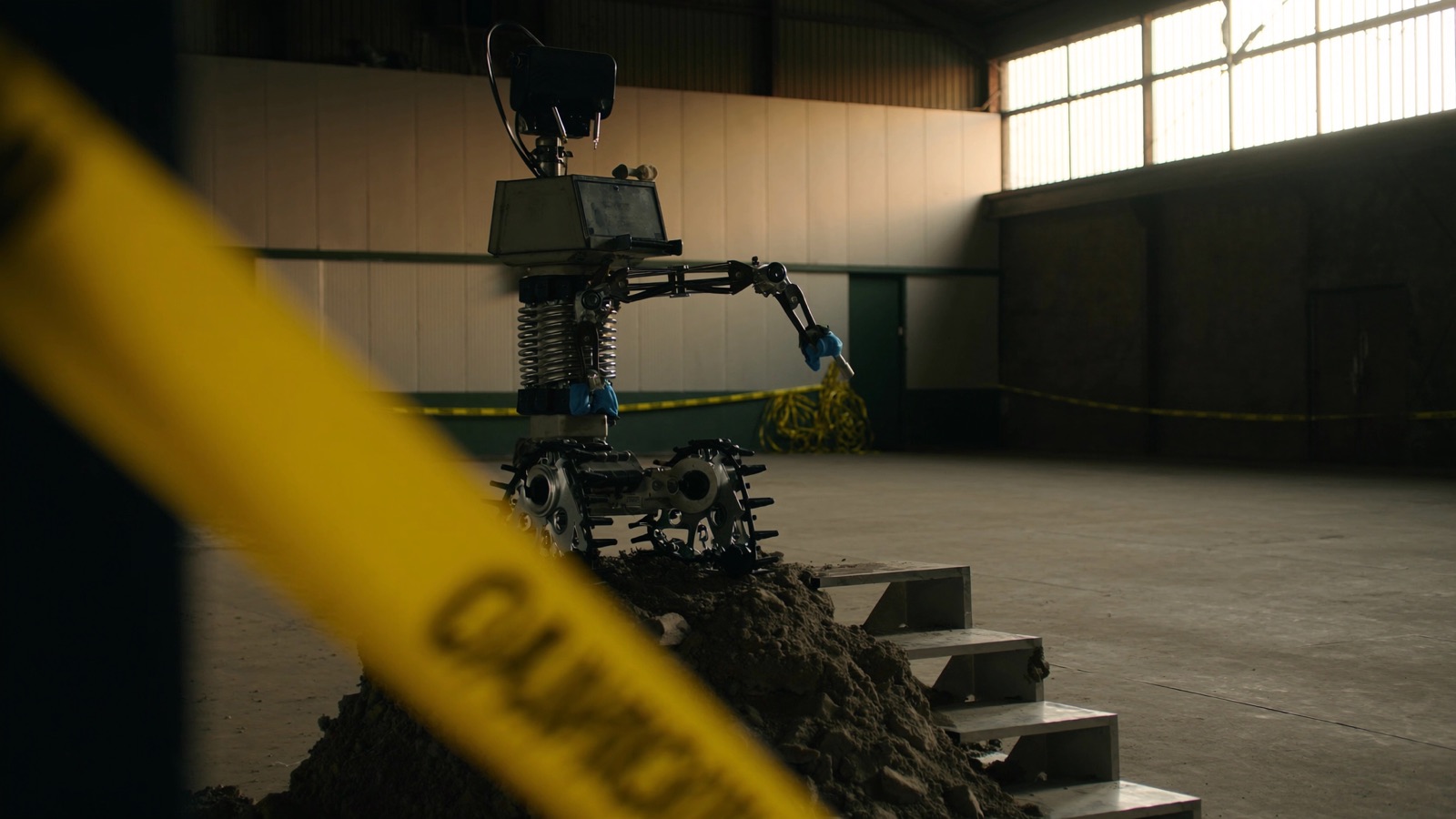
In early 2023, a mid-size general contractor in the Midwest ran a three-month pilot of a layout robot on a 200,000-square-foot tilt-up warehouse project. The results looked compelling on a slide deck: the machine printed layout lines with sub-quarter-inch accuracy, the foreman reported fewer rework calls from the framing crew, and the pilot vendor's success metrics all came in green.
Then the project wrapped. The GC had four active jobs in the pipeline — a hotel interior fit-out, a hospital renovation, a school expansion, and a parking structure. The robot didn't deploy to any of them.
This story is more common than the vendor webinars suggest. The question isn't why the pilot worked. It's why the next deployment never happened.
Why pilots succeed and deployments don't
There is a structural mismatch between the conditions that make a pilot succeed and the conditions that define a real construction calendar.
Pilots are curated. Vendors — reasonably — want their product to look good. They steer pilots toward projects with flat, clean slabs, long uninterrupted runs, and a cooperative superintendent. The hotel renovation with suspended ceilings, the hospital renovation where you're working around occupied floors, the school with 40 trades and a six-week punch list — those don't get offered as pilot sites.
Pilots receive extraordinary support. A vendor's best field technician is on site for a pilot, often for free or at steeply discounted day rates. The machine gets recalibrated daily. Integration with the total station (the optical instrument that feeds the robot its position reference) happens with vendor hand-holding. When the GC buys or leases the machine, that support structure disappears or becomes billable.
Pilots don't measure mobilization and demobilization. Moving a robot between jobsites — safely transporting it, re-registering it to the new site's coordinate system, retraining the site's crew, resetting any jobsite-specific configurations — takes time and costs money. Pilot metrics almost never capture this overhead because the robot is delivered to the pilot site and picked up when the pilot ends. The next deployment starts a new cost clock.
Pilot ROI doesn't translate across project types. The tilt-up warehouse is genuinely a good environment for a layout robot: large, flat, repetitive. The hotel fit-out has 200 individual rooms with different configurations, walls at odd angles, occupied adjacent floors, and a concrete deck that may not be clean. The task-match that made the pilot compelling is gone.
The real question pilots don't ask
Most pilot frameworks are built around a single question: did the robot complete the task accurately?
The right question is: under what project conditions does this robot deliver positive unit economics, and how many of our projects per year match those conditions?
This reframe changes everything. A layout robot that delivers a positive ROI on large, open-structure projects — warehouses, distribution centers, big-box retail — might break even on mid-size commercial and actively lose money on complex interior renovations. If you run three of the first type and twelve of the second type per year, the math on ownership doesn't close.
The deployment calculus has three variables:
- Match rate — what percentage of your annual project volume matches the robot's operating envelope?
- Utilization rate — given that match, how many weeks per year is the robot actually deployed and running?
- Fully-loaded cost per week — total cost of ownership spread across deployed weeks, including the idle weeks you can't escape.
If your match rate is 30% and your utilization within matched projects is 60%, your effective utilization is 18%. A robot that costs $400,000 capital and $80,000 per year in support, amortized over five years, needs to return real savings during those 18% weeks to justify the whole number.
Most pilots are designed to prove accuracy and speed. Almost none are designed to calculate utilization-adjusted ROI.
What a robot that travels actually requires
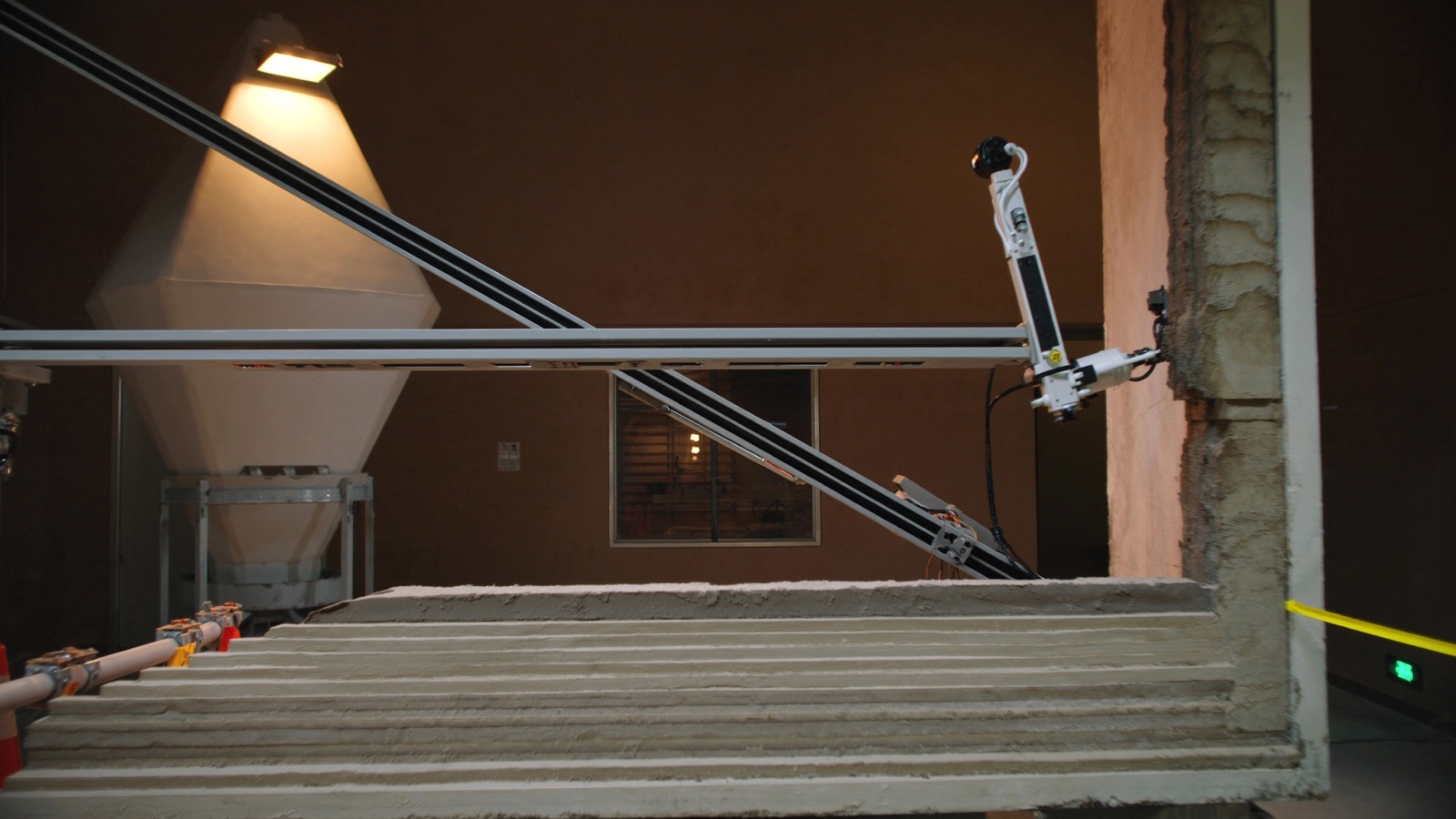
Not all construction robots are equal on mobility. Some are engineered for relatively static deployments (a 3D concrete printing gantry like the COBOD BOD2, which is installed and operated on a single structure, not moved between jobs daily). Others are explicitly designed for site-to-site portability, like remote demolition robots (the Brokk line ships in standard containers, operates on electric power, and is typically serviced by a regional dealer).
For task-mobile robots — layout, surveying, drilling, material handling — four factors determine whether a machine can realistically travel your project roster:
1. Transport footprint and handling. Will it fit in a standard pickup bed, a box truck, or does it require a dedicated trailer? Does the operator need a forklift to load it, or can two people manage it? What does transit insurance cost per movement?
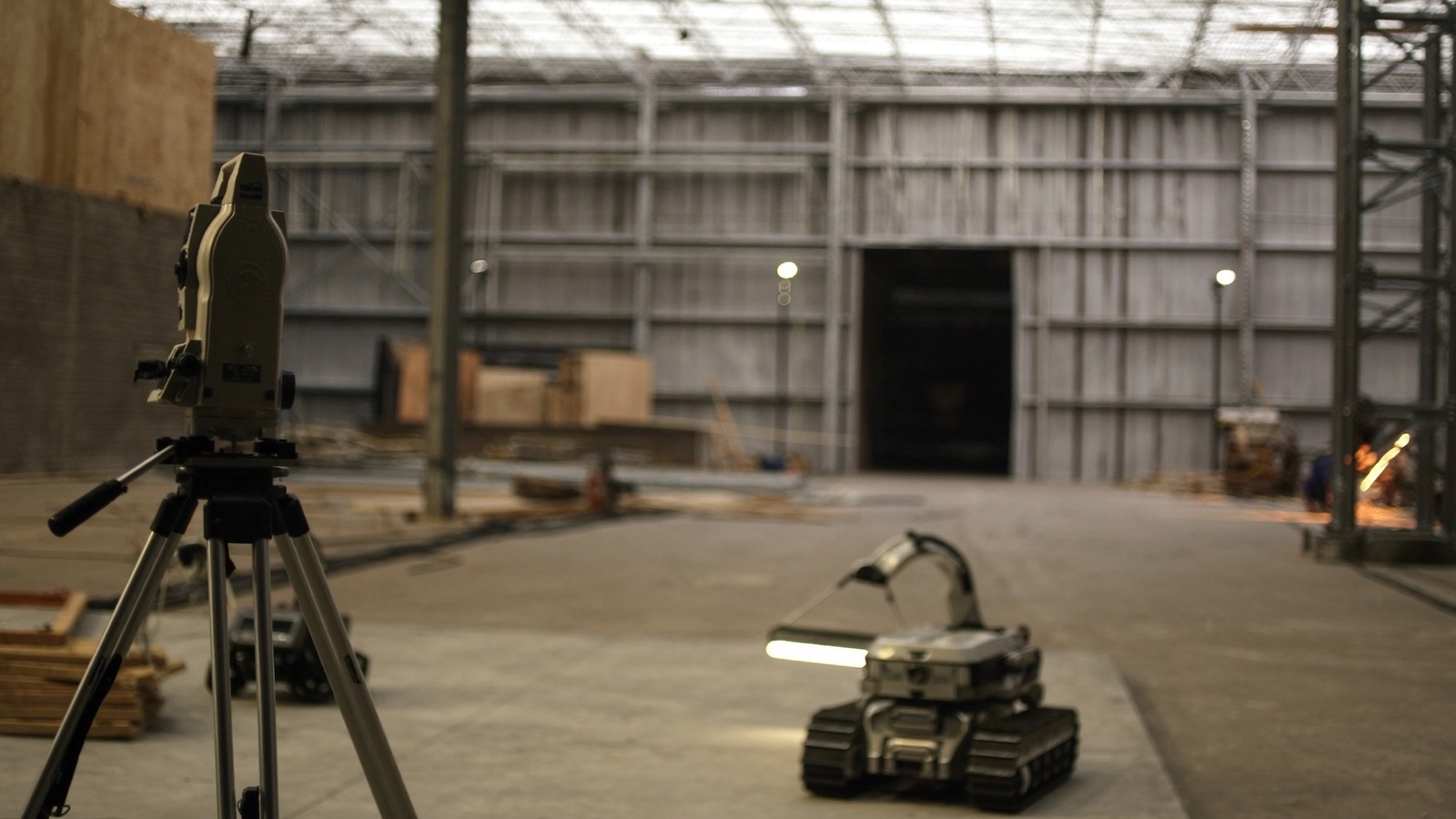
2. Site registration time. Most autonomous or semi-autonomous layout and scanning robots need to be registered to each site's coordinate system — typically by sighting known control points with an onboard or separate total station. How long does this take? Who does it — the operator alone, or does it require a survey crew? Is this step documented well enough that a new operator can execute it without vendor support?
3. Trade and safety coordination. An active jobsite is not a controlled environment. Other trades, overhead work, mobile equipment, and shifting conditions mean the robot can't simply run. Who is responsible for sweeping the robot's path? Is this the operator alone, or does it require a dedicated spotter from another trade? Whose labor budget does the spotter come from? The general contractor often discovers in practice that the spotter is a line item nobody budgeted.
4. Operator continuity. Robots don't transfer between operators without training. If the operator who ran the pilot gets pulled to another job, who runs the machine? Is there a certified second operator? If the answer is "the vendor comes back," that cost must be included in the deployment budget.
A checklist before you sign the next pilot agreement
Run this before committing to a pilot — not after:
| Question | Why it matters |
|---|---|
| What project type is this robot proven on — and how similar is it to our typical work? | Avoids the curated-pilot trap |
| What does mobilization and demobilization cost, and who pays during the pilot? | Surfaces the hidden deployment overhead |
| How many weeks per year do we have projects that match this robot's operating envelope? | Forces utilization math before capital commitment |
| What does site registration require, and who on our staff can do it unsupported? | Determines real post-vendor operator independence |
| What is the vendor's support model after the pilot ends? | Distinguishes demo pricing from ownership pricing |
| What does a second-year look like if the primary operator leaves? | Tests operator-continuity risk |
| Does your fleet manager / insurance carrier have a policy on autonomous or remote-operated equipment on site? | Catches insurance and liability surprises early |
The goal isn't to make the pilot harder to run. It's to make the second deployment real.
The shift in mindset that makes robots work
Contractors who have built sustainable robotics practices — mostly in large commercial, infrastructure, and specialized self-perform work — describe the same mental shift: they stopped thinking about robots as tools and started thinking about them as workflows.
A hammer exists. A robot requires a system: the right project type, a trained operator, a site-prep protocol, a data integration path, a maintenance schedule, and a clear scope of work that starts and ends in a defined way. The contractors who got traction didn't buy a robot and deploy it. They designed the workflow first and then acquired the robot to execute it.
That means the right entry point is often not the largest, most capable system on the market, but the narrowest task-specific tool with the simplest operating requirements. Fewer variables in the workflow means more reliable replication across projects.
What comes next
If the pilot framework above resonates, the next step is to build the full cost picture before any procurement decision. That means accounting for every cost that doesn't appear on the vendor's proposal — transport, operator time, spotter labor, maintenance, and idle overhead. The next article in this series, The real cost of a construction robot, walks through a complete TCO model by task class.
For demolition contractors, remote demolition robots have the most established multi-project deployment track record of any category currently in the market. The Brokk line is the most widely deployed example and is described at /robots/brokk-300 and related catalog entries. For 3D concrete printing, the COBOD BOD2 (/robots/bod2) represents a different mobility model — large-structure, single-site installations — and requires a different deployment calculus entirely.
Discussion
0 commentsNo comments yet. Sign in to be the first.