Decision framework: matching quadruped to terrain and mission
How to select the right platform class, autonomy level, and payload configuration for your inspection environment
The decision you actually have to make
A facilities engineering director at a water treatment authority is evaluating two quadruped platforms. Platform A has a published list price roughly 8x higher than Platform B. Both platforms have four legs, walk on stairs, and can carry a thermal camera. The director needs to know whether Platform A's price reflects genuine capability relevant to this site or represents brand premium and research-grade engineering that the site doesn't need.
This article provides the framework for answering that question rigorously. It covers the four matching dimensions — terrain and environment, mission and payload, autonomy maturity requirement, and support and compliance — and maps each dimension to the platform tiers currently available in the market.
The two platform tiers
The quadruped inspection market currently contains two distinct commercial tiers. Understanding what differentiates them is the precondition for a sound procurement decision.
Enterprise inspection platforms
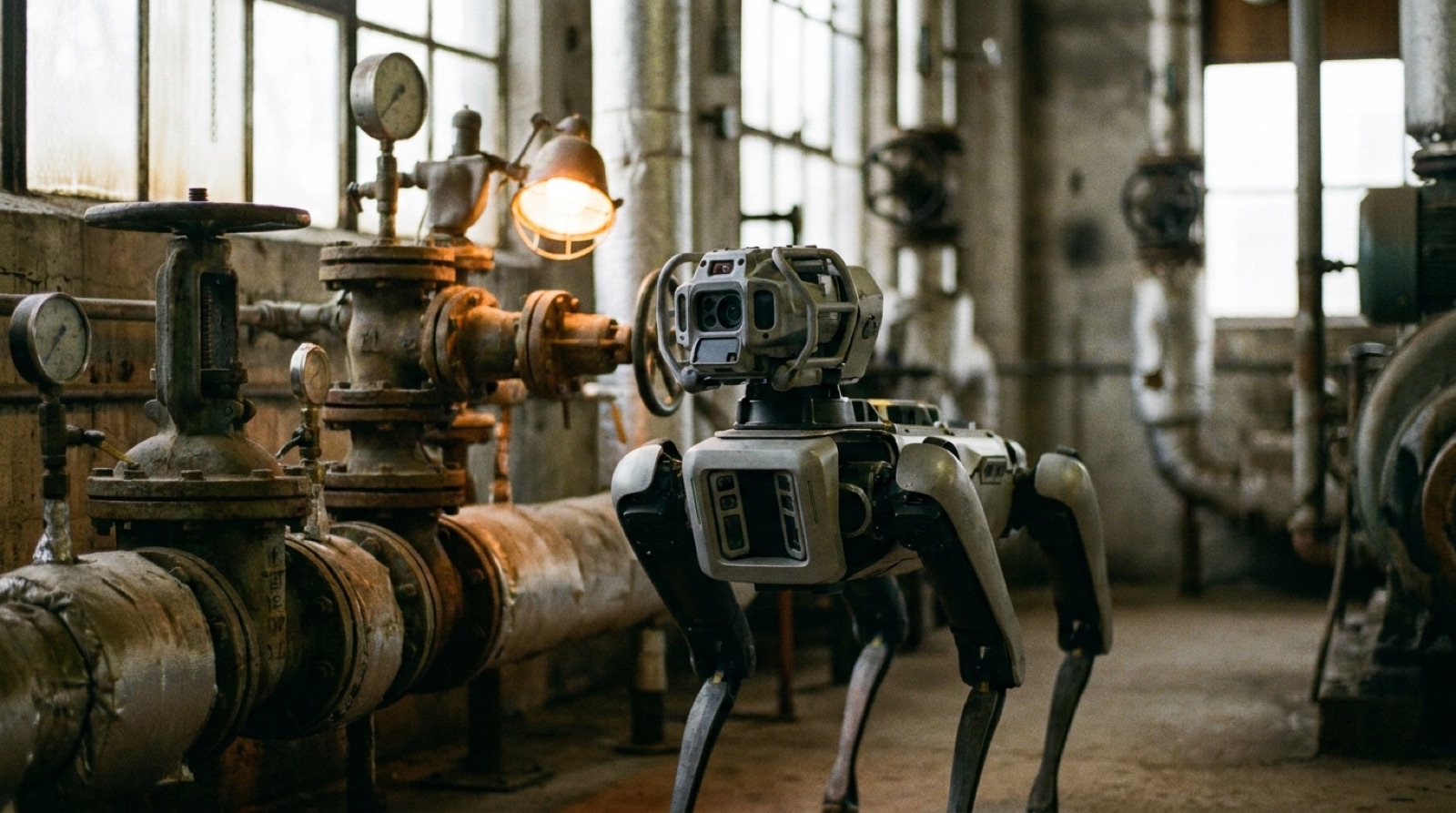
Enterprise inspection platforms are designed and sold for industrial deployment with commercial support obligations. Current examples in this tier include the Boston Dynamics Spot, the ANYbotics ANYmal C, ANYmal D, and ANYmal X, and a small number of emerging Chinese industrial platforms including the DEEP Robotics M20 industrial quadruped, which is positioned for hazardous-environment inspection in industrial settings.
What distinguishes this tier:
Validated environmental protection ratings. IP67 or higher — IP67 denotes dust-tight construction and temporary submersion resistance to 1 meter for 30 minutes — is standard. Some platforms in this tier carry ATEX Zone 1 or Zone 2 certification and IECEx certification — ATEX and IECEx are international certification standards for equipment safe to operate in explosive atmospheres, such as gas-processing facilities, fuel storage, and mining — which is a binary requirement for many oil-and-gas and chemical applications. No IP rating can be retrofitted; it must be inherent to the platform design.
Structured payload certification ecosystem. Enterprise platforms publish payload integration specifications, certify third-party payloads against their hardware interface, and maintain a catalog of supported sensor integrations. This matters because an inspection program's value is in its sensors, not the robot body.
Commercial autonomy software. Teach-and-repeat route execution, waypoint management, scheduled round dispatch, and data export are packaged as supported commercial software — not as open-source repositories that require integration work. Support SLAs are documented.
Multi-year spare parts availability and support contracts. Enterprise customers require guaranteed spare availability over a deployment horizon of 3–7 years. Enterprise platform vendors commit to this; research-grade vendors typically do not.
Validated in actual industrial environments. Deployment references in operating oil-and-gas plants, substations, chemical facilities, and mining operations are publicly documented for platforms in this tier.
Research and lower-cost platforms
Research-grade and lower-cost platforms include the Unitree Go2 Air, B2-W, and Aliengo; the DEEP Robotics Lite3 and Jueying X30; Xiaomi CyberDog 2; and MIT's Mini Cheetah, among others. These platforms have driven significant advances in legged locomotion research and are genuinely capable hardware.
What distinguishes this tier:
Open-source or ROS2 SDK-first approach. These platforms expose their control interfaces through standard robotics middleware — ROS2 (Robot Operating System 2) is an open-source framework for building robotic systems, widely used in both research and commercial development — enabling engineering teams with robotics expertise to build custom inspection workflows. This is a feature for organizations with that expertise; it is a cost driver for organizations without it.
Lower validated IP ratings. Published ratings for research platforms are typically IP54 or IP65 — dust-protected and splash-resistant, not submersion-rated — and ATEX certification is not available on research-grade platforms as of this writing. This is not a limitation for dry indoor environments, but it is a hard disqualifier for washdown environments, outdoor harsh weather, or any explosive-atmosphere application.
Limited or no certified payload catalog. Sensor integration is possible but requires engineering work to mount, calibrate, and write data-capture software. Third-party vendors do not typically publish certified integrations for research platforms.
No commercial service contract or guaranteed spare availability. Research-grade platforms are not sold with multi-year support commitments.
Lower per-unit price. Published retail prices for research platforms are substantially lower than enterprise platforms — in many cases an order of magnitude lower. For organizations with internal robotics engineering capability and compatible site conditions, this represents real value.
Matching matrix: terrain and environment
The first matching dimension is physical environment. Answering these questions correctly eliminates platform options before touching capability or price.
| Environment characteristic | Enterprise required? | Notes |
|---|---|---|
| Explosive-atmosphere areas (Zone 1/2) | Yes (hard requirement) | Only ATEX/IECEx certified platforms qualify |
| Outdoor harsh weather (sustained rain, snow) | Enterprise preferred | Research platforms may have IP54-only ratings |
| Chemical washdown environments | Enterprise preferred | Verify specific chemical resistance, not just IP rating |
| Dry indoor industrial floor | Either tier workable | Decision shifts to autonomy and support dimensions |
| Mixed stairwells and grating | Either tier workable | Both tiers handle stairs; test specific grating geometry |
| Sub-zero or high-temperature extremes | Verify per platform | Operating temperature ranges vary significantly |
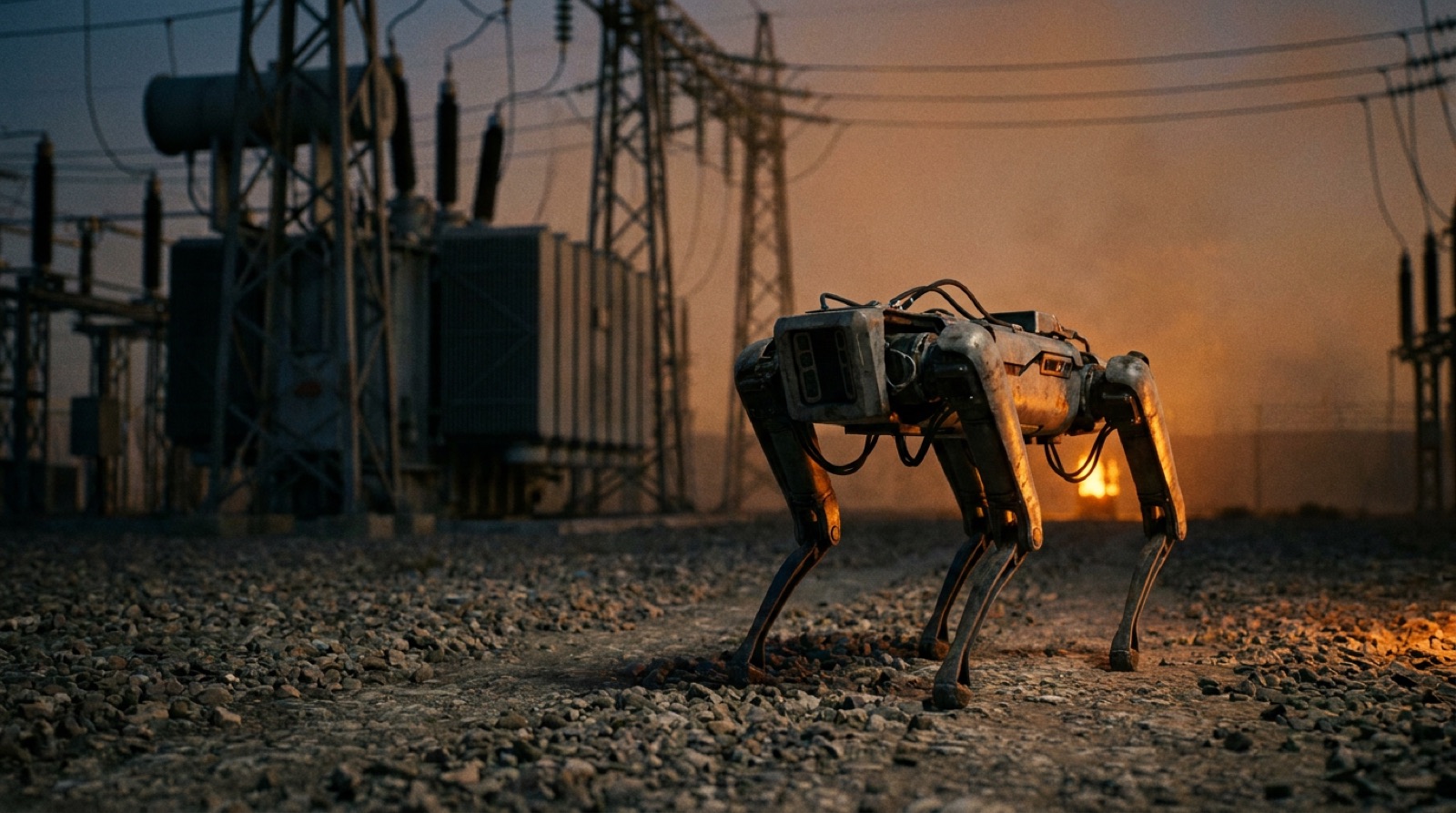
If the deployment environment includes any explosive-atmosphere area, the decision is made at this step. ATEX/IECEx certification requirements eliminate all research-grade platforms and most lower-cost platforms; the ANYbotics ANYmal X is among the platforms that has carried ATEX certification for specific explosive-atmosphere zones.
Matching matrix: mission and payload
| Inspection mission | Payload required | Platform tier implication |
|---|---|---|
| Motor winding thermal survey | Thermal camera | Enterprise: certified module available. Lower-cost: engineering integration required |
| Acoustic compressed-air leak detection | Acoustic imager | Enterprise: certified integrations exist. Lower-cost: limited vendor support |
| Optical gas imaging (OGI) for hydrocarbon plume detection | OGI camera | Enterprise: certified integrations from major OGI manufacturers. Lower-cost: not typically certified |
| Gauge read automation | Pan-tilt-zoom + vision AI | Both tiers: integration complexity varies |
| Radiation monitoring | Survey meter payload | Enterprise: available from specialist vendors. Lower-cost: custom integration |
| SLAM-based 3-D mapping | LiDAR payload | Both tiers, but ROS2 integration complexity differs |
The payload matching step often makes the platform decision before the autonomy discussion. If the inspection program requires an OGI camera from a major manufacturer, the engineering team should verify which platforms that manufacturer certifies before investing in platform evaluation.
Matching matrix: autonomy maturity requirement
Autonomy maturity describes what the organization needs the robot to do without a human operator present. There are three practical levels:
Level 1 — Teleoperation. A trained operator drives the robot in real time, positioning it at each inspection point and triggering sensor capture manually. No autonomous navigation required. Both tiers support this mode; it has a high operator labor cost per inspection round.
Level 2 — Semi-autonomous (supervised). The robot executes a pre-mapped route autonomously but with an operator monitoring progress and available to intervene. This is the practical starting point for most new inspection programs. Both tiers can reach this level, but enterprise platforms reach it faster with less engineering overhead.
Level 3 — Scheduled autonomous. The robot executes routes on a schedule from a dock, completes data capture, returns, charges, and exports data — all without operator initiation per round. An operator reviews reports; they do not run the robot. This level requires mature autonomy software, a reliable dock, and a stable environment. Enterprise platforms are designed for this mode; achieving it on a research platform requires significant engineering investment.
Match the autonomy level to both your current operational capability and your 18-month target state. Buying a Level 3 capable platform for a team that cannot staff Level 2 operations produces a shelved robot. Buying a Level 1 platform for a team with a clear 12-month path to scheduled autonomy limits long-term value.
Matching matrix: support and compliance
| Requirement | Enterprise tier | Research/lower-cost tier |
|---|---|---|
| Multi-year spare parts guarantee | Typically available | Not typically available |
| On-site service response SLA | Available (contract terms vary) | Not available |
| Regulatory/insurance inspection substitution documentation | Platform documentation available; acceptance by regulator/insurer varies by jurisdiction | Limited documentation; harder to support substitution argument |
| NDAA / government procurement compliance | Verify per platform and component supply chain | Verify carefully; some lower-cost platforms use components subject to procurement restrictions |
| Cybersecurity / data sovereignty requirements | Enterprise platforms generally have documented data handling architectures | Verify per platform; documentation varies |
The NDAA compliance row deserves explicit attention for any government facility, utility under FERC or NERC jurisdiction, or defense-adjacent site. The National Defense Authorization Act restricts procurement of telecommunications and video surveillance equipment from certain manufacturers. Quadruped robots with onboard cameras and network connectivity may fall under these restrictions depending on component sourcing and the facility's procurement rules. Confirm compliance status with the vendor and with the facility's legal or compliance team before procurement.
The decision in practice
The framework produces a tiered decision, not a binary one:
- Any explosive-atmosphere area or sustained washdown environment → Enterprise only. ATEX/IP68+ is a hard requirement; evaluate ANYmal X and equivalent certified platforms.
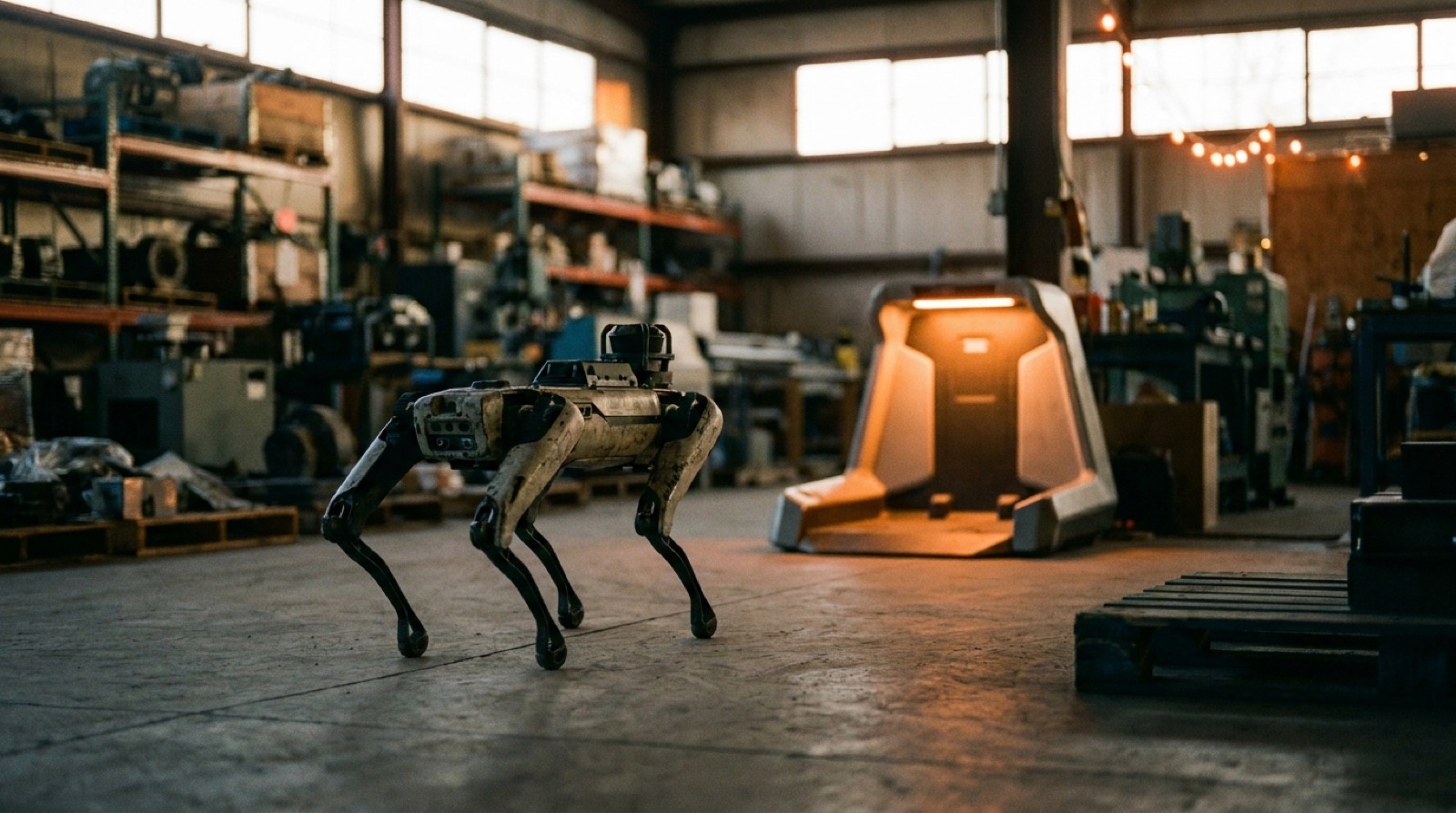
- Indoor dry industrial environment, operator team without robotics engineering background, need for commercial support SLA → Enterprise preferred. The engineering overhead of integrating a research platform typically exceeds the cost premium of enterprise software and support.
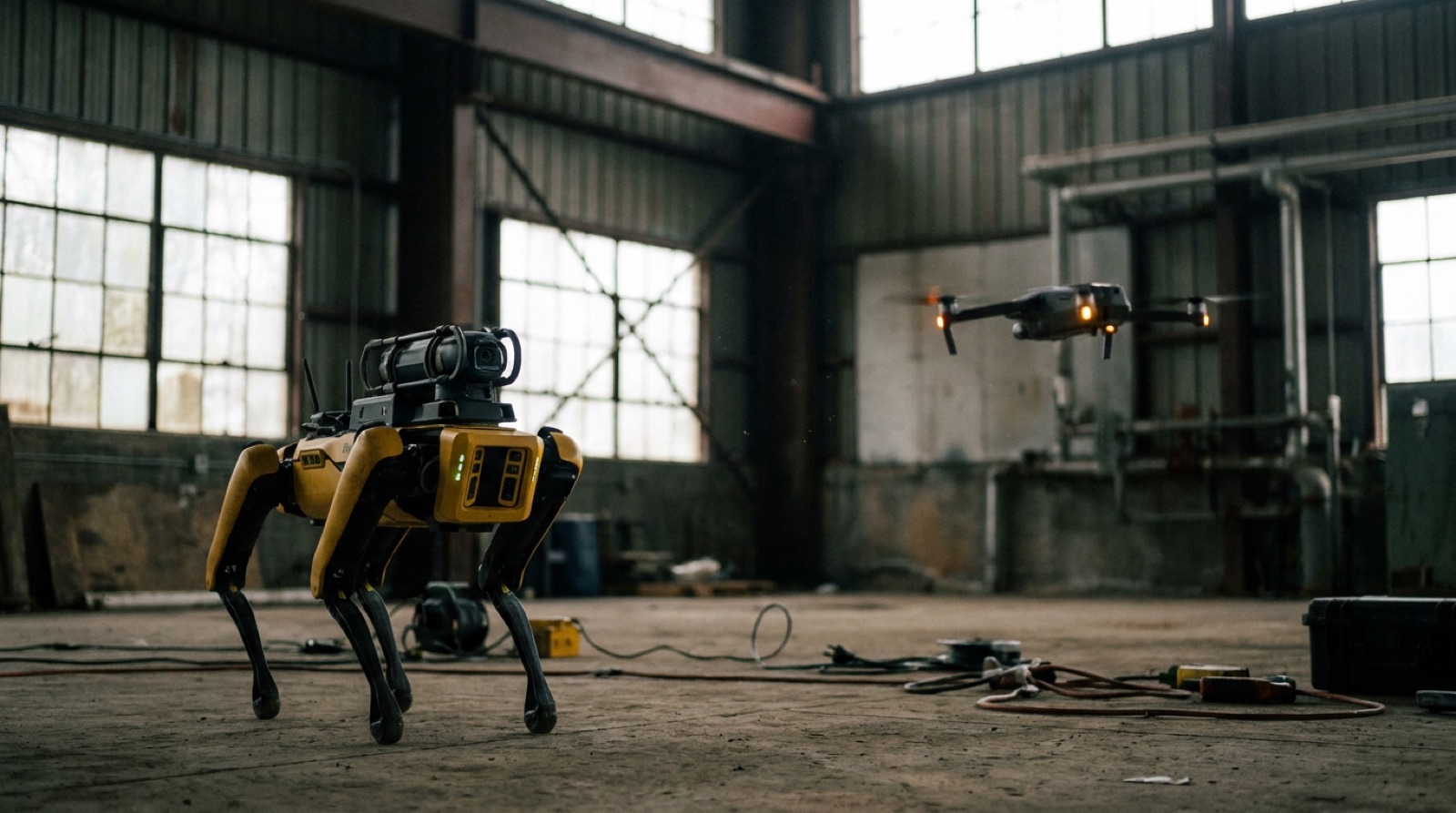
- Indoor environment, internal robotics engineering team, cost-driven procurement, research or pilot-phase program → Lower-cost platforms are viable. Unitree B2-W and DEEP Robotics Jueying X30 are deployable for this profile with appropriate engineering investment.
- University lab, R&D program, prototype development → Research platforms (Unitree Go2 Air, Aliengo, Mini Cheetah) are well-suited. They are not designed for commercial inspection operations and should not be evaluated on those terms.
The next article, A 90-day playbook to deploy autonomous inspection rounds, translates the platform selection into a concrete deployment sequence — from initial site mapping through the first measurable autonomous round.
Discussion
0 commentsNo comments yet. Sign in to be the first.