Why the quadruped you bought is sitting on a shelf
What separates a robot dog bought for the demo from one that earns its keep
The demo that cost $85,000
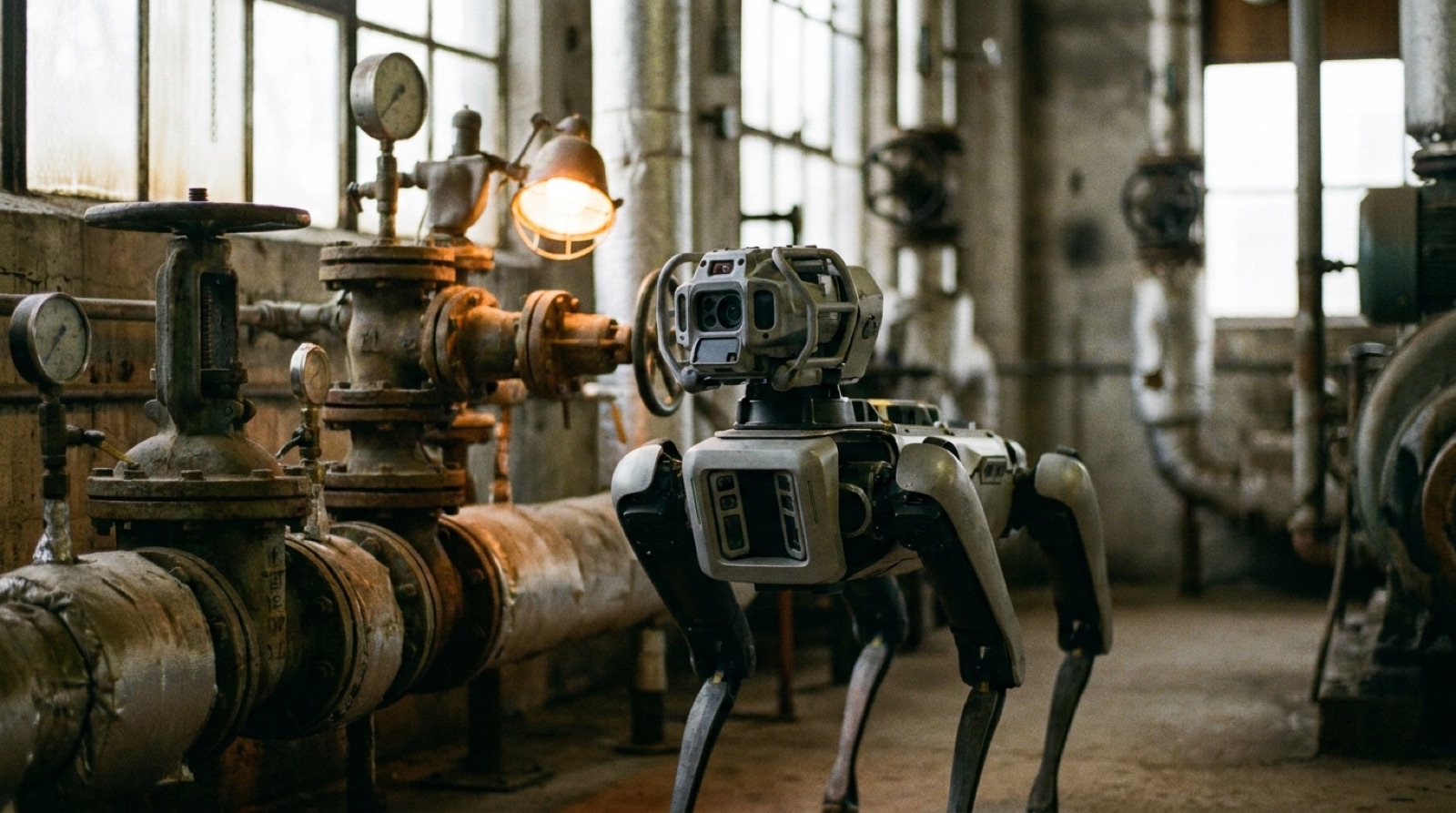
A utilities operations manager sees a quadruped robot at an industry conference. The four-legged machine walks over a cluttered floor, climbs a short staircase, and stops precisely beneath a pressure gauge — all without a human guiding it step by step. Leadership approves a capital purchase. Months later the robot sits in a storage room, powered off, because nobody can answer a basic question: what exactly is it supposed to do next Tuesday?
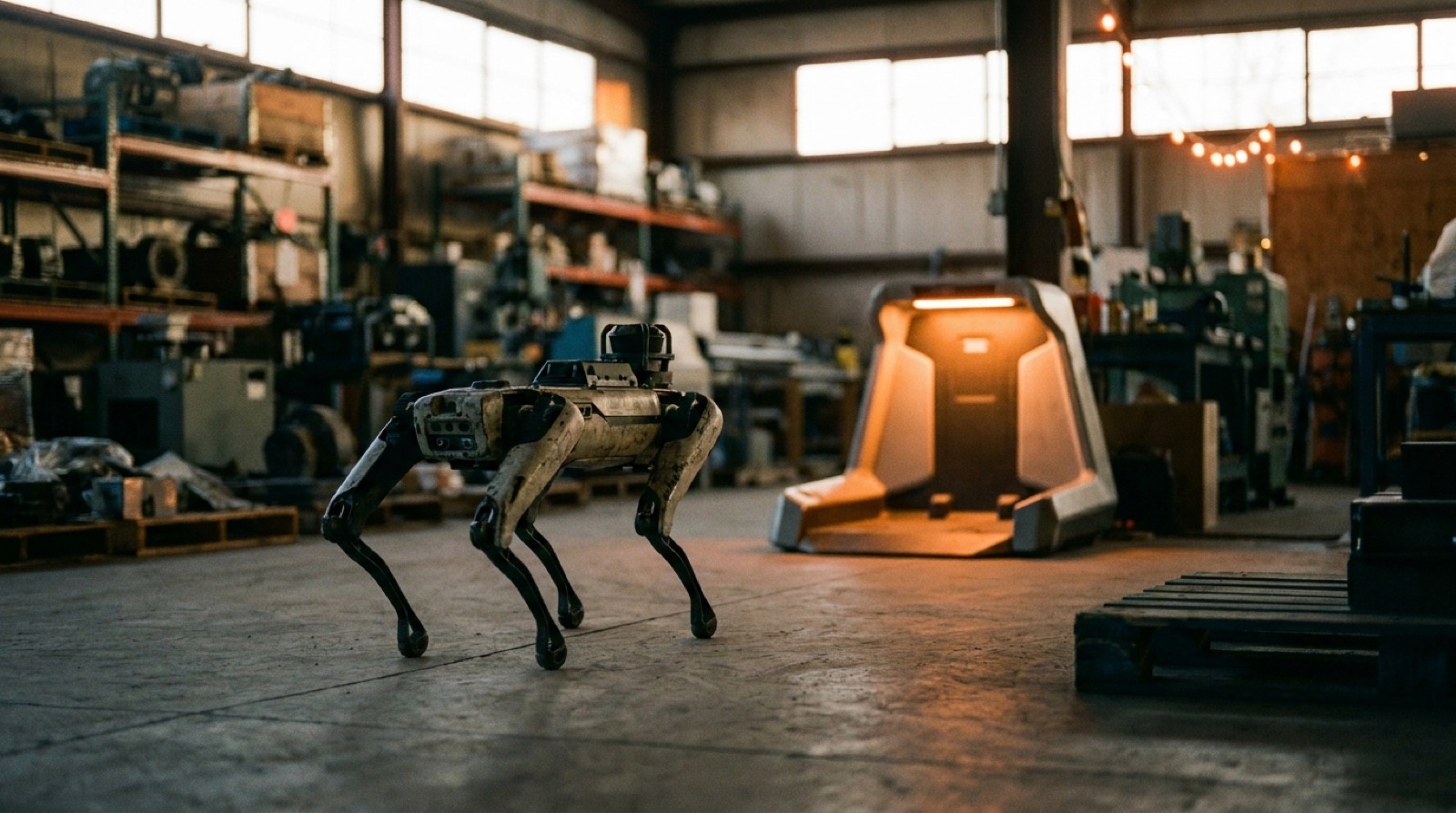
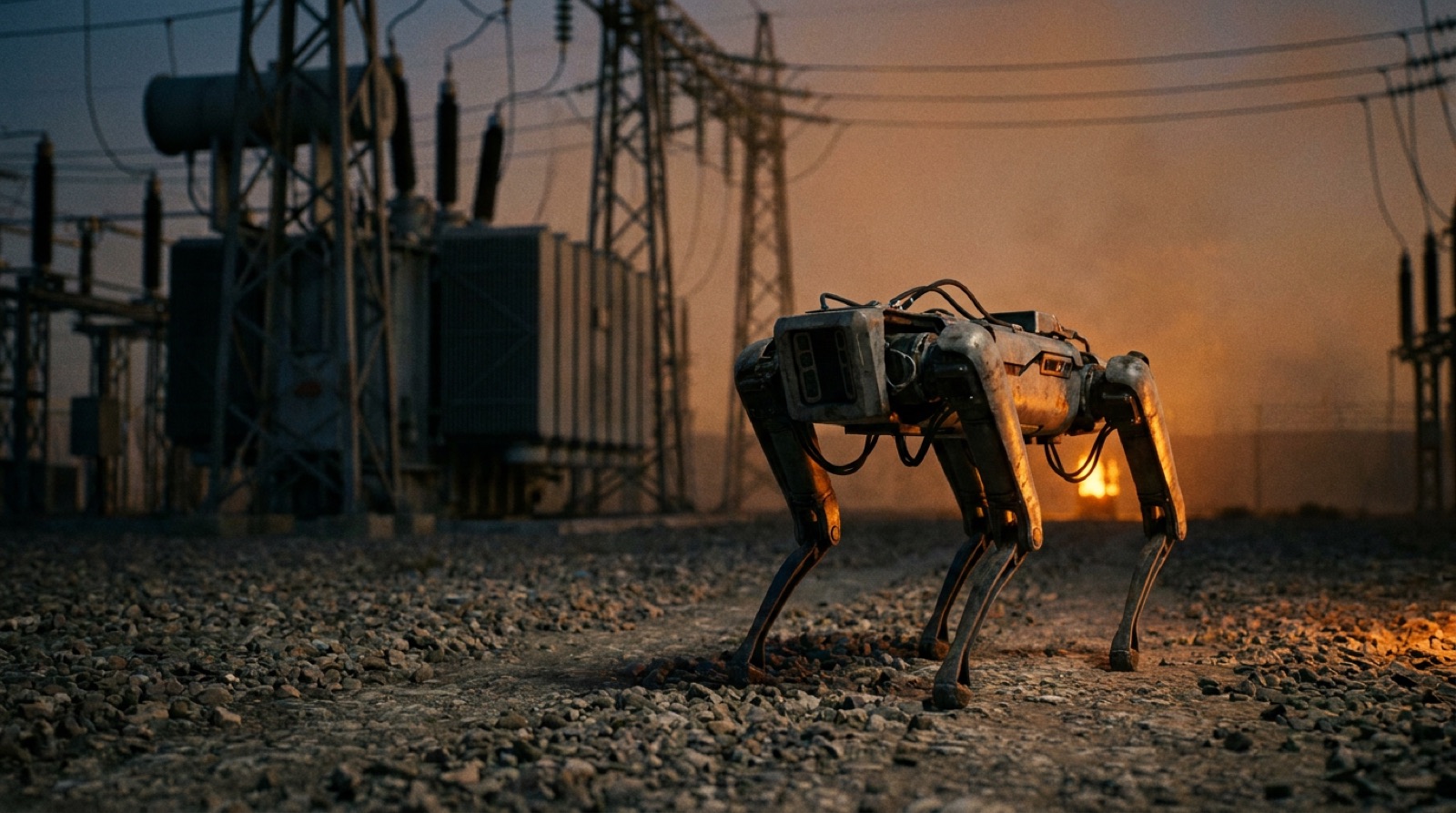
This is not an edge case. Across oil-and-gas plants, substations, water treatment facilities, and manufacturing campuses, a predictable pattern has emerged: organizations buy a quadruped based on platform capability, without first defining an inspection mission, a payload configuration, or an autonomy plan. The robot arrives; the first few demo runs impress visitors; then the real environment — wet concrete, unmarked staircases, a gas-sensor calibration cycle nobody owns — stops the program cold.
The machine was not defective. The procurement process was.
Three failure modes, consistently
Failure mode 1: Platform without payload
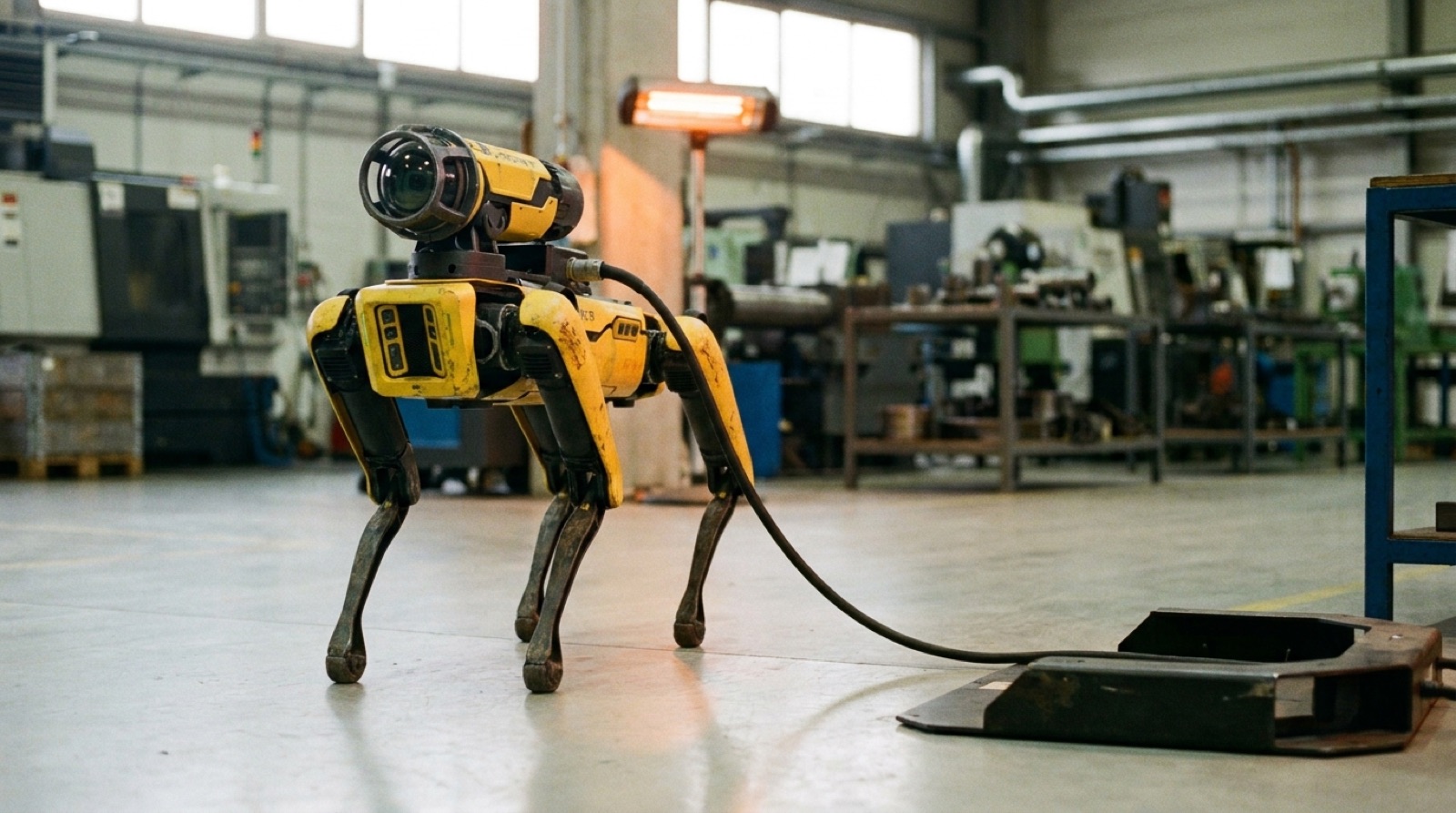
A quadruped robot body is a mobility chassis. Inspection value comes from the sensors it carries — thermal cameras to detect heat signatures on motor windings, acoustic imagers to pinpoint ultrasonic signatures in compressed-air leaks, optical gas-imaging cameras for hydrocarbon plumes, visual pan-tilt-zoom cameras for gauge reads. A robot purchased as a base unit, with the intention of "adding sensors later," usually discovers that the payload ecosystem for that platform is narrow, expensive, or still under development. A thermal camera that costs $4,000 as a standalone instrument can cost $15,000 or more as a platform-certified payload module with the software integration included.
The test: Before purchase, list every data type you want to capture on the first real inspection round. Then verify, by part number, that a certified payload exists for that sensor type on the specific platform you are evaluating. "Compatible with" is not the same as "ships an SDK with a documented ROS2 interface and a worked inspection example."
Failure mode 2: Autonomy expectation mismatch
The conference demo showed the robot navigating independently. What the demo did not show: the 4-to-6 hours of teach-and-repeat mapping — the process of manually walking the robot along each intended route once so it can build a localization map and replay that route autonomously — required before autonomous operation is possible in a new environment. It also did not show the operator re-mapping required every time a temporary obstruction, scaffolding change, or forklift park invalidates the existing map.
Enterprise inspection quadrupeds — here used to mean platforms sold with full industrial support, structured autonomy software, and payload ecosystems for commercial inspection, such as the Boston Dynamics Spot and the ANYbotics ANYmal series — typically include autonomy software that makes teach-and-repeat tractable. Lower-cost research-oriented platforms, such as the Unitree Go2 Air or DEEP Robotics Lite3, may ship with open-source ROS interfaces that require significant internal engineering to build into a repeatable inspection workflow.
Neither category is wrong for every buyer. But confusing one for the other is a reliable path to a shelved robot.
The test: Ask the vendor how long it takes a first-time operator to execute one autonomous inspection round from initial site mapping through data export, using only the vendor-supplied software and no internal engineering. Ask for a reference customer in a comparable environment who can confirm that timeline.
Failure mode 3: No data consumer
Even when a quadruped maps correctly, carries the right sensors, and completes an autonomous round, the program stalls if there is no downstream system to receive the data. Thermal images accumulate in a directory on a laptop. Acoustic logs have no integration with the facility's existing computerized maintenance management system (CMMS — the software platform maintenance teams use to schedule work orders, track asset health, and log inspection results). Gauge readings taken by the robot's vision system are not formatted for entry into the plant historian.
A quadruped inspection program is a data pipeline with a robot at the front end. Organizations that skip the data-consumer design step buy a data source with no consumer.
The framework for a quadruped that earns its keep
The following five questions, answered in order before procurement, distinguish programs that run from programs that stall.
1. What is the named inspection mission?
Not "general plant inspection." A specific mission: monthly thermal survey of the motor room on Level 2 of Building C, covering 14 designated asset points, producing a report in the format required by the insurance policy rider for remote inspection substitution.
Named missions have a frequency, a list of asset points, a required data format, and an owner who accepts the output report.
2. What payload delivers the data that mission requires?
Thermal imaging, acoustic imaging, visual inspection, gas detection, and radiation monitoring each map to a specific sensor class. The sensor class must exist as a certified, supported payload for the platform being evaluated — not as a future roadmap item.
3. What level of autonomy is achievable at this site within 90 days?
Fully autonomous scheduled inspection requires a stable environment with minimal dynamic obstructions, reliable localization references, and a mapped route. Semi-autonomous operation — where an operator initiates each round and monitors progress — requires less infrastructure but more human time. Remote teleoperation requires an operator for every movement.
Honest autonomy staging prevents purchasing a fully autonomous system for an environment that cannot support it within a realistic timeline.
4. Where does the data go after the round?
Define the destination system (CMMS, data historian, inspection management platform, or manual report), the format required, and who owns the integration work. If the vendor does not offer the integration and internal IT cannot build it within the deployment timeline, the program needs a different data strategy before purchase.
5. Who owns operations ongoing?
A quadruped inspection program requires a named operator or team responsible for route maintenance, battery management, payload calibration, firmware updates, and data quality review. Programs that treat the robot as shared infrastructure with no single owner consistently drift into disuse within 6–12 months.
What the price gap actually signals
Enterprise inspection platforms in the Spot and ANYmal class have sold at price points ranging from the high five figures to well over $100,000 depending on configuration, payload package, and support contract. That price gap relative to lower-cost alternatives reflects several things worth understanding before procurement: a validated IP (ingress protection) rating for washdown or explosive-atmosphere environments — IP67 means dust-tight and submersible to 1 meter; ATEX/IECEx certification means rated for explosive atmospheres — a mature payload certification program, multi-year commercial support with guaranteed spare parts availability, and autonomy software that has been validated in actual industrial facilities rather than research labs.
Lower-cost platforms represent genuine value for organizations that have internal robotics engineering capability, are willing to build their own inspection software stack, and do not require third-party-certified environmental protection ratings. They are not lesser products — they are products for a different buyer profile.
Buying an enterprise platform for a team that needed a research platform — or a research platform for a team that needed industrial reliability — produces the same outcome: a robot on a shelf.
The total cost of the robot body is typically the smallest line item in a real inspection program. The next article in this series, The real cost of a quadruped inspection program, builds the full three-year TCO model: payloads, software, docking, data pipeline, training, and maintenance.
Discussion
0 commentsNo comments yet. Sign in to be the first.