Why security robots get pulled after a few months
The deployment failure pattern — and the framework that avoids it
The 90-day failure arc
A regional distribution facility outside Memphis brought in an autonomous patrol robot to cover its 180,000-square-foot warehouse floor overnight. The pitch was straightforward: reduce overnight guard headcount by two FTEs, improve coverage consistency, and generate a video record of every aisle. Total contract value: a RaaS (Robot-as-a-Service) commitment of roughly $8,500 per month over 36 months.
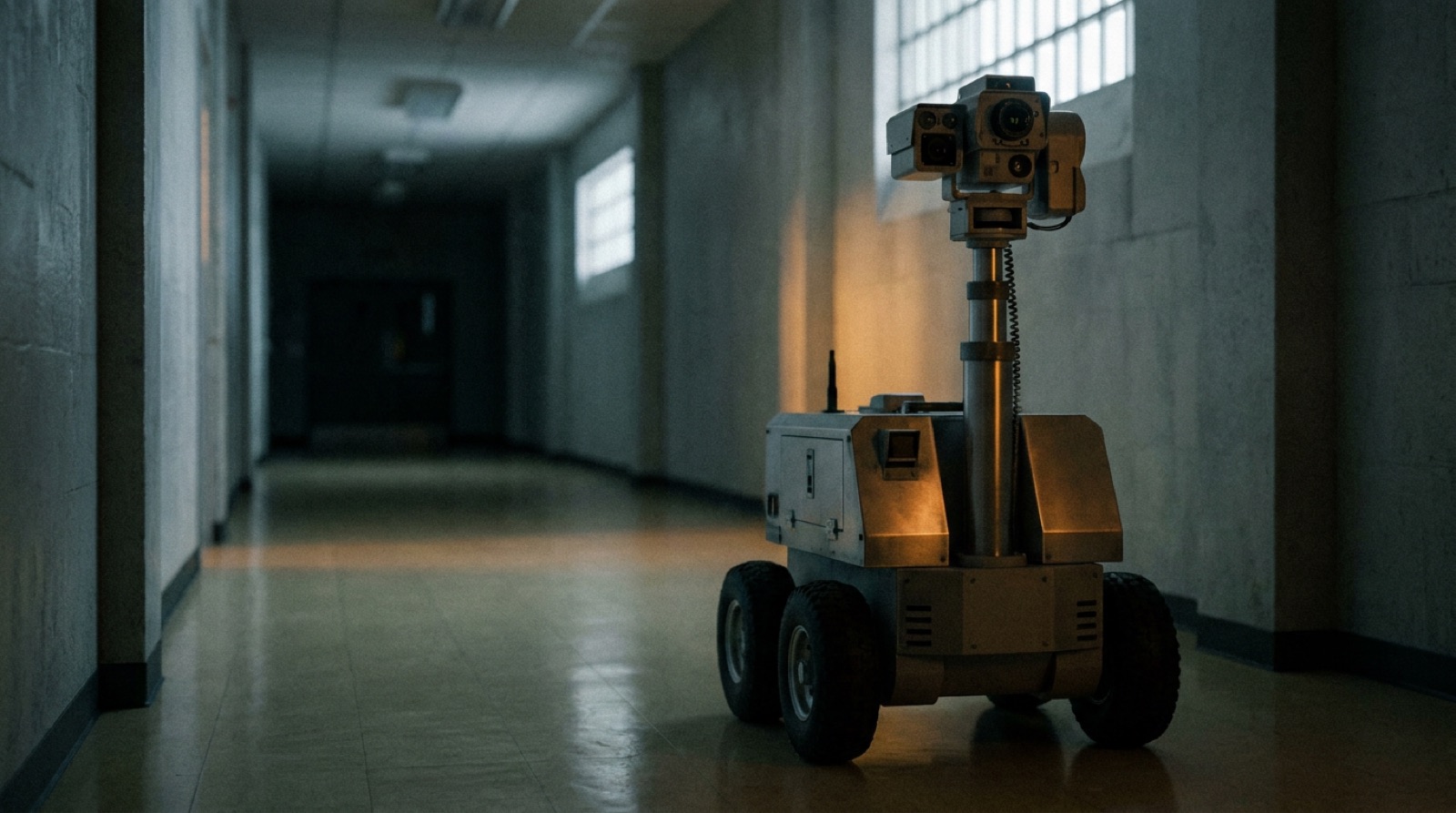
By month three, the robot was parked in a maintenance closet.
What happened between the signing and the shutdown is the same story that plays out at dozens of corporate campuses, parking structures, and logistics facilities every year. Understanding it is the prerequisite to any serious evaluation of security robotics.
What actually went wrong
The false-alarm problem came first. The robot's onboard sensors — a combination of thermal imaging, LiDAR, and a wide-angle camera array — were calibrated for outdoor environments. Inside the warehouse, reflective racking, forklift traffic from the previous shift that left debris on the floor, and fluctuating temperatures from an aging HVAC system triggered between 15 and 40 alerts per night in the first two weeks. The SOC (Security Operations Center) handling remote monitoring was based in a city two hours away. Every alert required a human to log in, review footage, and classify it. After week two, the overnight operators began ignoring alerts from that site. Alert fatigue had already neutralized the robot's primary value proposition.
The VMS integration never happened. The facility ran a Video Management System (VMS) from a mid-tier provider. The robot vendor's API documentation was three major versions behind the VMS release the facility had deployed. The vendor's technical team promised integration "in the next software release." That release was delayed four months. In the meantime, video from the robot lived in a separate portal that the security team checked sporadically. It was never correlated with incident reports, VMS timeline reconstructions, or guard shift logs.
The patrol route logic was set up once and never revisited. The robot was given a route map on day one. Over the following weeks, warehouse managers moved racking, staged pallets in the robot's path, and temporarily blocked two fire-exit corridors with equipment. Nobody updated the route. The robot began making constant stops to report path-blocked conditions. The guarding contractor responsible for overseeing the deployment had no one assigned to manage robot operations as part of their service contract. That person simply didn't exist in the org chart.
Guard headcount was cut before the integration was proven. Based on the sales projections, the facility manager reduced overnight staffing by one FTE in month two. When the robot went offline for a firmware update in week nine — a four-day outage — there was nobody available to cover the floor. A small theft incident during that window, which may or may not have been related, became the political reason to terminate the contract.
The framework that works
Security robots deployed successfully share a set of conditions that have nothing to do with the specific hardware platform. Before selecting a vendor, a buyer should be able to answer yes to every item in this checklist.
1. You have an existing SOC or monitoring operation to augment
Security robots are sensors on wheels. They generate continuous streams of video, audio, thermal, and positional data. Without a human-staffed SOC or an automated SIEM (Security Information and Event Management) platform to absorb that data, the robot is an island. The monitoring infrastructure — including alert triage SOPs, escalation thresholds, and defined response protocols — must exist before the robot arrives.
If your facility relies on a guarding contractor for overnight monitoring, that contractor must explicitly accept responsibility for robot alert handling as a deliverable in their contract, priced and staffed accordingly.
2. Your VMS integration is confirmed, not promised
Before a purchase order is signed, the robot's manufacturer or RaaS provider should demonstrate a live API integration to your current VMS version in a staging environment. ONVIF (Open Network Video Interface Forum) compliance is a floor-level requirement for any wheeled patrol platform operating alongside fixed cameras; it is not a differentiator. Ask for the specific VMS compatibility matrix and verify your version is on it.
3. You have a named owner for the deployment
A security robot deployment is not a fire-and-forget product installation. It is an ongoing operational program. Someone on your team or at your guarding contractor must own:
- Route and zone updates as the facility changes
- Alert threshold calibration (typically monthly for the first six months)
- Coordination with maintenance, janitorial, and facilities teams for schedule conflicts
- Firmware and software update scheduling
- Monthly performance reviews against agreed KPIs
This person does not need to be a robotics engineer. They need operational authority and 5–10 hours per week of dedicated attention, especially in the first 90 days.
4. Guard roles are redefined, not eliminated
The evidence from deployments that work consistently shows the same pattern: guards who previously walked patrol routes are redeployed to response, access control, or escort functions. The robot handles deterrence and detection coverage; the guard handles anything that requires presence, judgment, or physical intervention. Attempts to cut guard headcount before the robot has completed a full operational quarter at confirmed performance levels almost always trigger the failure arc described above.
5. The environment has been scoped for the platform
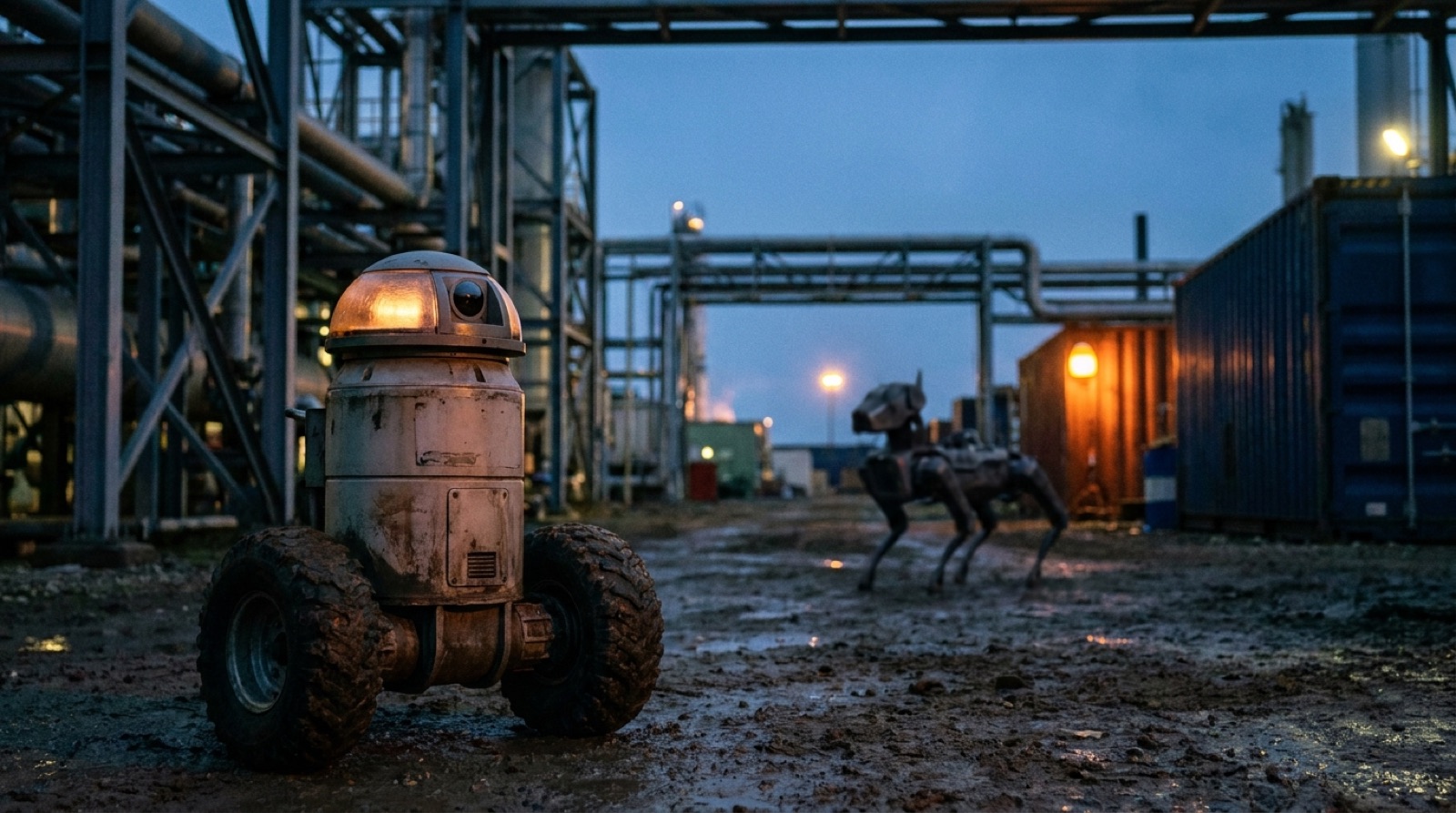
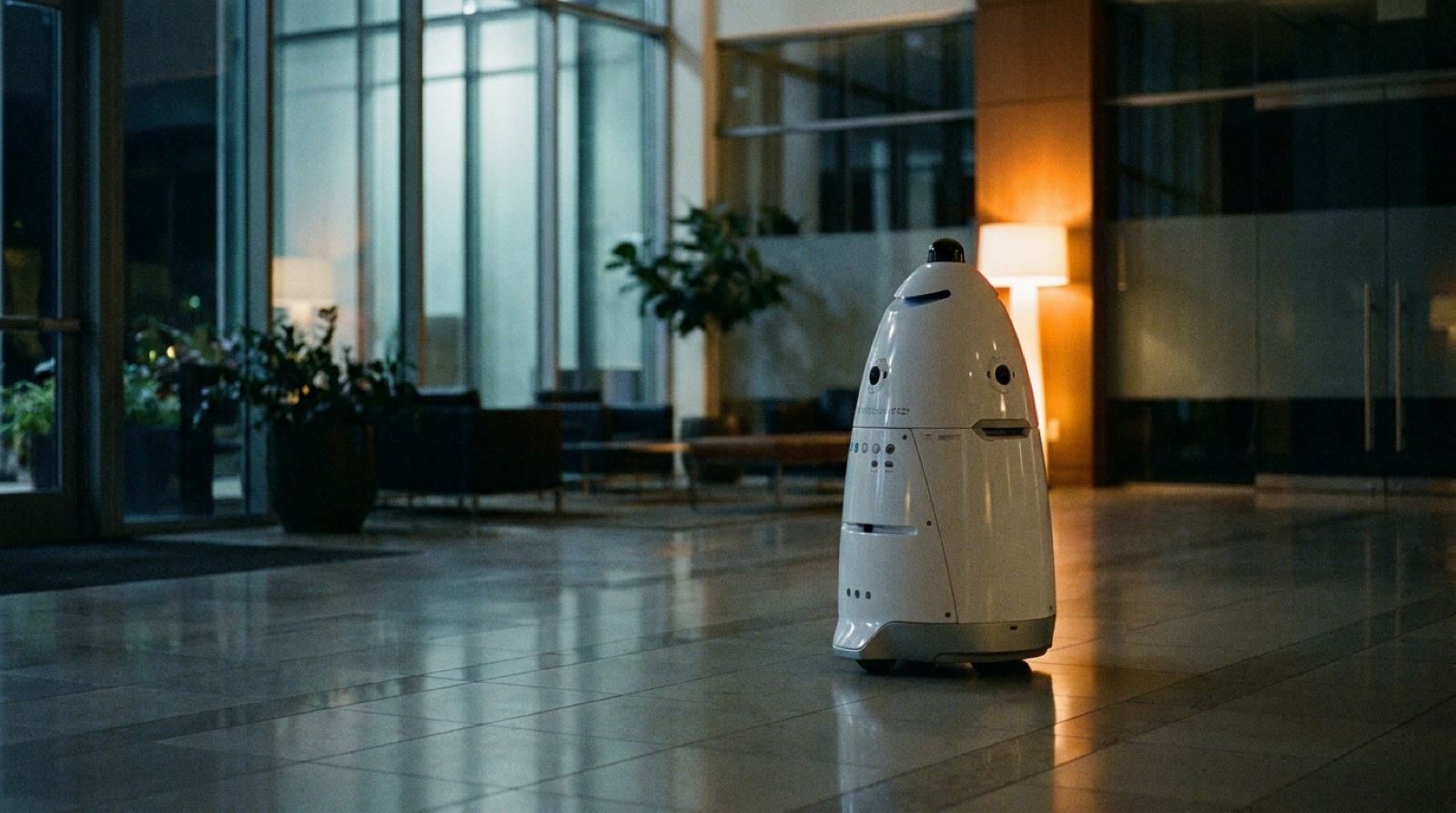
Wheeled robots — including most of the commercially deployed platforms such as the Knightscope K5 (an outdoor/indoor wheeled patrol robot designed for flat surfaces), SMP Robotics Argus S5.3 (an outdoor-only wheeled patrol robot for perimeter work), and Ascento Guard (a two-wheeled legged outdoor robot for mixed terrain) — have specific environmental requirements. Indoor warehouses with racking, outdoor campuses with curbs and gravel, parking structures with low-clearance ramps, and perimeter fences with uneven ground all require different platform choices. Forcing an indoor platform into an outdoor perimeter patrol role is a very common pre-contract mistake.
The augmentation model versus the replacement model
The language that surrounds security robot sales is frequently built around labor replacement. Vendors publish cost-per-hour comparisons that show a robot operating at a fraction of the cost of a licensed guard. Those numbers are not wrong on their face, but they exclude the monitoring labor, the connectivity costs, the maintenance overhead, and the guard hours that remain mandatory for response functions.
The more accurate frame is augmentation. A properly integrated security robot extends the effective coverage area of a fixed guard force. A single guard monitoring two or three robot patrol feeds can maintain awareness across a significantly larger area than the same guard walking a route. The robot's consistent, logged patrol record creates evidentiary documentation that manual patrols rarely produce at the same fidelity.
Facilities that deploy with the augmentation model — where the robot is explicitly positioned as an extension of the guard force rather than a substitute for it — report significantly higher retention of the technology past the 12-month mark. Facilities that deploy with an explicit headcount-reduction target set before the integration is proven are the ones that fill maintenance closets with parked robots.
What this series covers
This article is the entry point for a six-part buyer-education series on security and surveillance robots. The articles that follow work through:
- The honest total cost of ownership comparison between a security robot and a guard (including monitoring, maintenance, and RaaS fees)
- Payback timelines and the deployment models — outdoor patrol, fixed-post augmentation, drone perimeter — where robots reduce guard hours versus where they add monitoring burden
- A decision framework matching wheeled, legged, and drone platforms to specific threat environments and operational requirements
- A 90-day operational playbook covering SOC integration, route design, alarm SOPs, and false-alarm tuning
- An RFP question set and red-flags checklist for vendor evaluation
The goal is not to advocate for or against security robotics as a category. It is to give security directors and facility managers the vocabulary and framework to make a buying decision on the merits.
Start with the cost math. Continue with "The real cost of a security robot versus a guard."
Discussion
0 commentsNo comments yet. Sign in to be the first.