Why UBTech U1 trended in Q3 2026
UBTech unveiled the UWORLD U1 humanoid line on 30 June, the day before the quarter began. Home deliveries in China began on 16 September, according to reports, with no delivered count disclosed.
UBTech unveiled its UWORLD U1 humanoid line at an event in Shenzhen on 30 June, the day before this quarter began; its press release and video reached most readers in early July. The release's headline called it the world's first full-size, mass-produced "ultra-bionic" humanoid robot, while the body of the same release says it is the first "designed for mass production". New Atlas repeated the mass-production claim in its headline, Fast Company ran the headline "The first commercial human-like robot is here. Are replicants next?", and TechEBlog's headline described the robots as companions built to listen, remember and move naturally.
UBTech said it had 13,361 cumulative orders by launch day; these are orders, not deliveries. Home deliveries in China began on 16 September, Startup Fortune and Intelligent Living reported. No delivered count has been disclosed.
Not all of the reaction was warm. TechRadar argued that what UBTech really wants to do is make robot replicas of loved ones, and called that "a hard no." In August, the South China Morning Post asked whether China's companion robots can win a place at home.
What is still unclear is how many U1 units have actually reached buyers, and whether buyers want a lifelike companion robot at all.
Demo forensics
UnverifiableThe core facts were never stated. This is not an accusation — it is a description of what is missing.
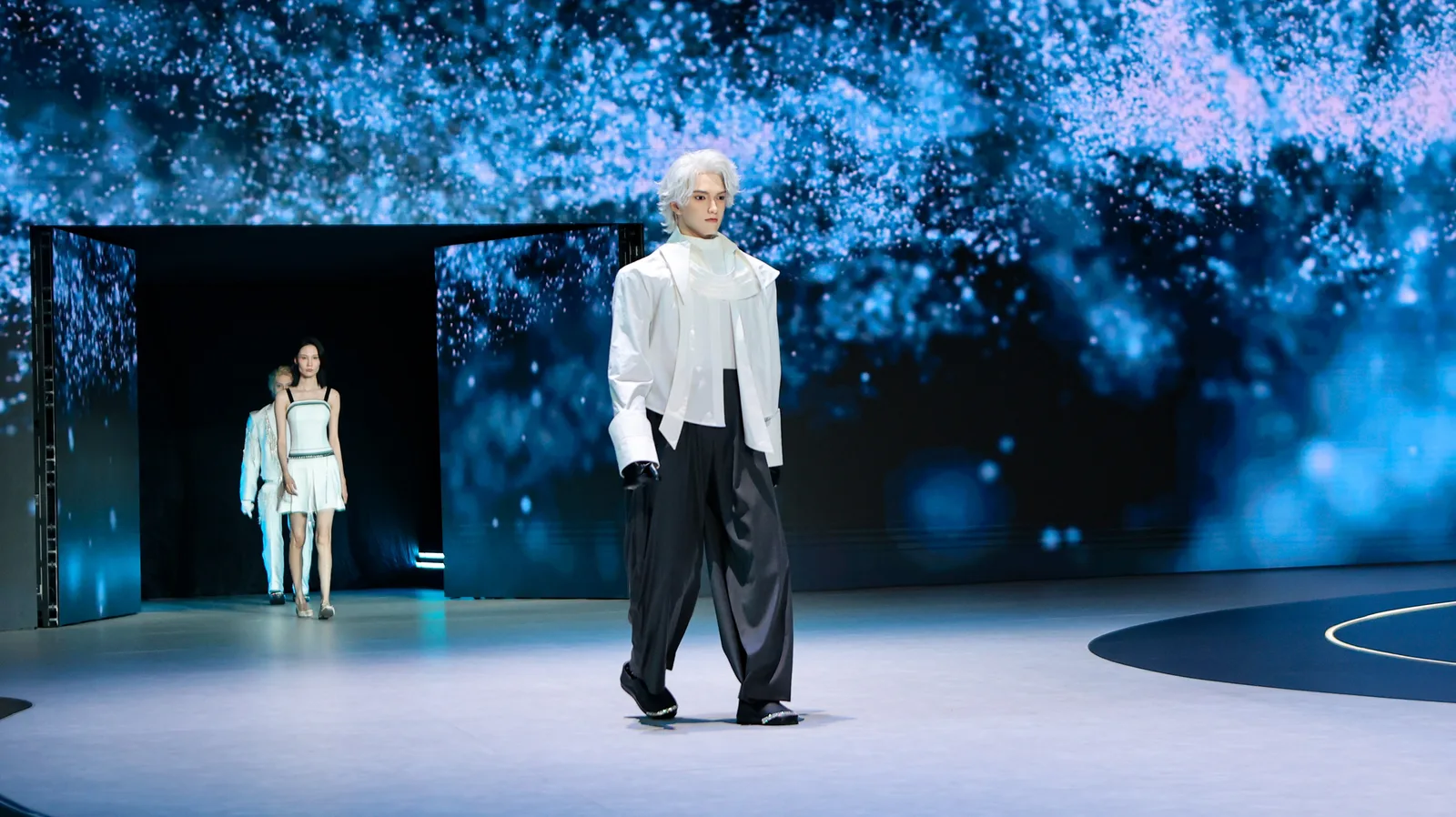
The demo that spread was UBTech's Shenzhen launch show. U1 Ultra robots walked a stage alongside human performers, and one danced with a man in a tuxedo. The show itself was on 30 June. It reached most viewers in July, through the press release and UBTech's own 116-second video, posted on 2 July. Neither the release nor the video says whether the walking and dancing were autonomous, scripted or remote-controlled. Neither says whether the video was sped up or cut.
The headline calls U1 "mass-produced". The body of the same release says it was "designed for mass production" and that U1 is "expected to become" a growth engine. TechNode reported that shipping of the first batch was planned to begin on 16 September, which is after the claim was made. The body of the release words the claim more carefully than the headline does.
One point in UBTech's favour: this was a live event in front of an audience, with several units on stage. Mike Kalil reports criticism of how the machines looked in person compared with the promotional material. That is more than a single studio clip offers.
Was the viewer told whether the robot was autonomous, teleoperated, or a mix?
“Powered by a next-generation embodied intelligence system, UWORLD U1 redefines human–robot interaction with breakthrough capabilities”
“To further prove their believability, UBTech had one robot dance with a tuxedoed human. At times, it looked as if he might be supporting a potentially teetering UWorld U1 robot.”
Was the footage real-time, and was any speed change or cut disclosed?
A staged set, or the real place the robot is meant to work?
“On June 30, 2026, UBTECH hosted its 2026 Global Launch Event in Shenzhen, unveiling its long-term vision for human–robot symbiosis and officially introducing the UWORLD U1 Series”
“During the launch on June 30, 2026, several UWorld U1 Ultra humanoids walked the stage, interspersed with actual humans.”
One take, or evidence it works more than once?
Did anyone not employed by the maker see it work with their own eyes?
Does what was shown support what was said?
“officially unveiled the UWORLD U1 Series of full-size ultra-bionic humanoid robots, the first in the world designed for mass production.”
“The industrial Walker S Series has already entered mass production and commenced deliveries, while UWORLD is expected to become the company's second growth engine as it brings humanoid robotics to consumer markets.”
“The company plans to begin shipping the first batch of orders on September 16.”
“Nevertheless, the company says it received over 13,000 orders on the day of the launch. Many of those orders, though, came from demonstration halls and government procurement programs rather than private consumers.”
- The edition window. The launch event was on 30 June 2026, one day before the quarter began. The release went out on 30 June at 22:27 US Eastern time, and UBTech's video went up on 2 July. Both fall in Q3 by publication date. The event itself does not.
- How the launch walk and the dance were controlled: autonomous, choreographed playback, or remote-controlled. UBTech has not said, and we found no reporter who asked.
- Whether the human dance partner was holding up the robot. TechRadar wrote that it "looked as if" he might be. No source confirms it either way.
- Whether UBTech's official 116-second video contains speed changes, or cuts that hide resets. This needs a frame-by-frame review, which we have not done. We also have not confirmed that the dance appears in that cut.
- A named, first-hand account from an attendee not employed by UBTech. Mike Kalil reports on attendees' reactions and on one X user. We did not open that X post, so we do not cite it.
- Whether, and in what numbers, U1 units actually reached homes from 16 September. The only delivery report we opened (Startup Fortune, 16 Sep) is secondhand, attributed to TechNode and IndexBox, and we could not open either. Pandaily's delivery article returned no readable text.
- How many of the 13,361 orders are deposit-backed consumer orders, and how many come from institutions. UBTech gives a single total. New Atlas says many came from demonstration halls and government procurement, but gives no breakdown. The release's subheading says "more than 10,000", and TechNode quoted the founder at "more than 11,000" on the same day.
- The claim that U1 can "replicate up to 90% of fundamental human movements". No published test or method was found.
Demo forensics measures disclosure, not quality — and is independent of the RoboScore. We grade the disclosure, not the machine — absence of a disclosure is not evidence of deception. How we grade