Why Boston Dynamics Atlas trended in Q2 2026
Boston Dynamics committed its entire 2026 electric-Atlas production run to Hyundai and Google DeepMind; the shipments were announced in January and were not confirmed as delivered during the quarter.
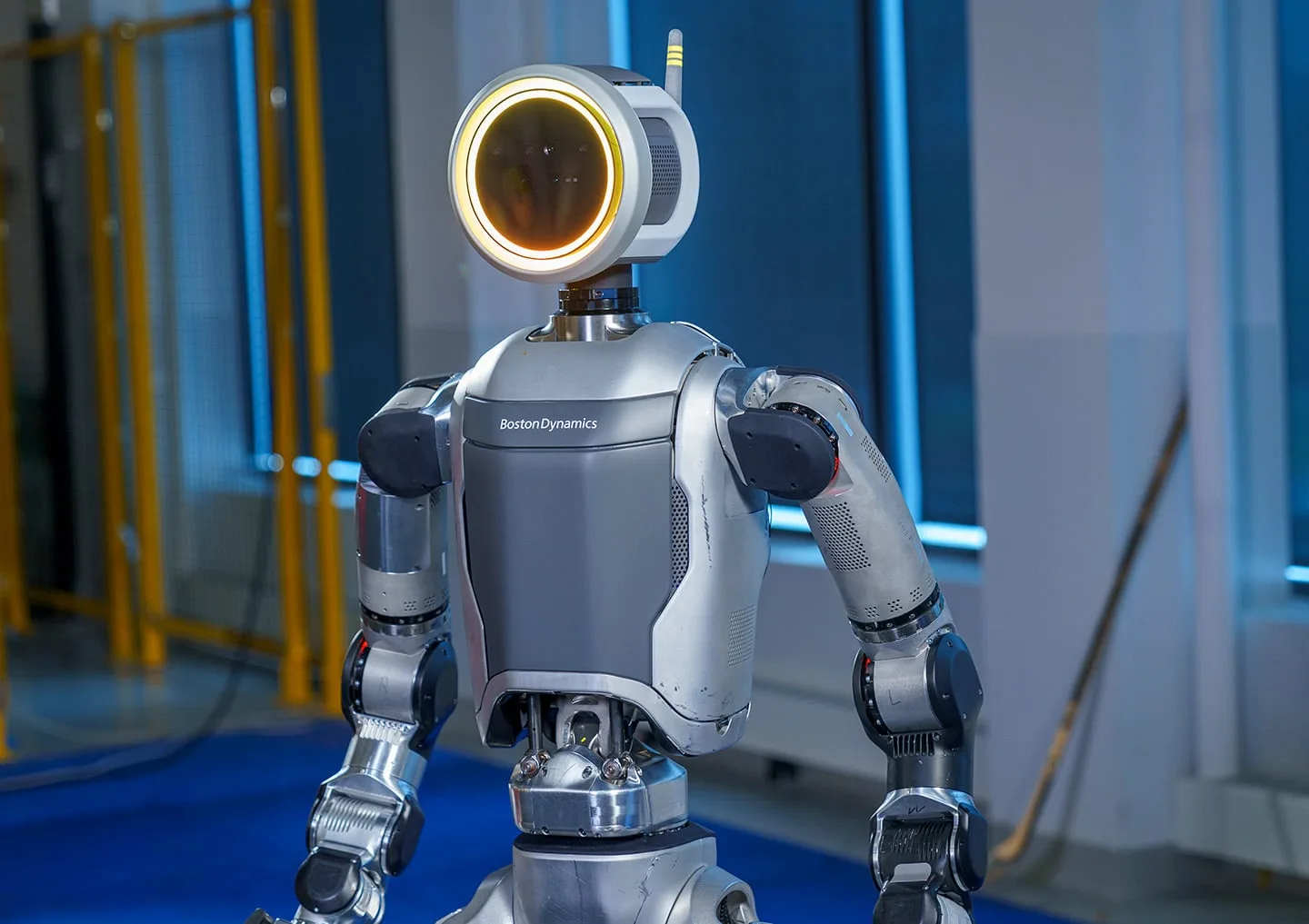
Boston Dynamics moved the electric Atlas toward a working product this quarter, though not yet onto a production line. The company’s January announcement committed every 2026 Atlas unit to Hyundai’s Robotics Metaplant Application Center and to Google DeepMind, with fleets "scheduled to ship in the coming months." No delivery was confirmed during the quarter, and Boston Dynamics targets parts sequencing on a Hyundai line in 2028.
The software story advanced alongside the hardware. Continued collaboration with Google DeepMind pointed Atlas toward more general, embodied reasoning: the kind of capability that lets a humanoid handle unscripted tasks rather than a fixed, pre-programmed routine.
Placing the first units inside Hyundai plants is a meaningful step, but it is also a captive deployment — the customer and the manufacturer belong to the same corporate family. The open question for the coming quarters is whether Atlas wins orders outside that relationship.
For now, Atlas trended on a credible production milestone: a humanoid that spent years as a research showcase finally starting to ship, even if its first home is very much in-house.
Demo forensics
Partially verifiableSome axes were disclosed. The important gap is named below.
Boston Dynamics discloses its control mode as a matter of standing practice, and Hyundai’s football video goes further than almost anyone by disclosing the attempt count. The company’s own language is careful throughout.
The failure is downstream. Boston Dynamics reported that Atlas moved a loaded fridge weighing more than 100 pounds, having been trained on 50–70 pound loads — a single generalisation result, reported as such. Interesting Engineering’s headline turned this into Atlas lifting "100-pound industrial loads at scale." That phrase appears neither in Boston Dynamics’ post nor in Interesting Engineering’s own article body. One fridge, once, in testing, became "at scale" in the space of a single line of type.
Not disclosed: playback speed or edits on the quarter’s videos, and no independent witness.
Was the viewer told whether the robot was autonomous, teleoperated, or a mix?
Was the footage real-time, and was any speed change or cut disclosed?
A staged set, or the real place the robot is meant to work?
One take, or evidence it works more than once?
Did anyone not employed by the maker see it work with their own eyes?
Does what was shown support what was said?
“the robot successfully moved a loaded fridge with a total weight of more than 100 pounds”
“The company said Atlas was trained on 50-70 pound loads, but successfully moved a fridge weighing more than 100 pounds during testing.”
- Whether any Atlas unit physically shipped to Hyundai’s application centre or to Google DeepMind during the quarter. Only the January 2026 commitment is confirmed.
- Whether the quarter’s Boston Dynamics videos disclose playback speed or edits. Boston Dynamics has published failure footage before; we could not confirm it for these releases.
- Whether the football clips shown are first-take. Hyundai says "nearly all" skills worked on the first try, which is a statement about the skills, not about the footage.
Demo forensics measures disclosure, not quality — and is independent of the RoboScore. We grade the disclosure, not the machine — absence of a disclosure is not evidence of deception. How we grade